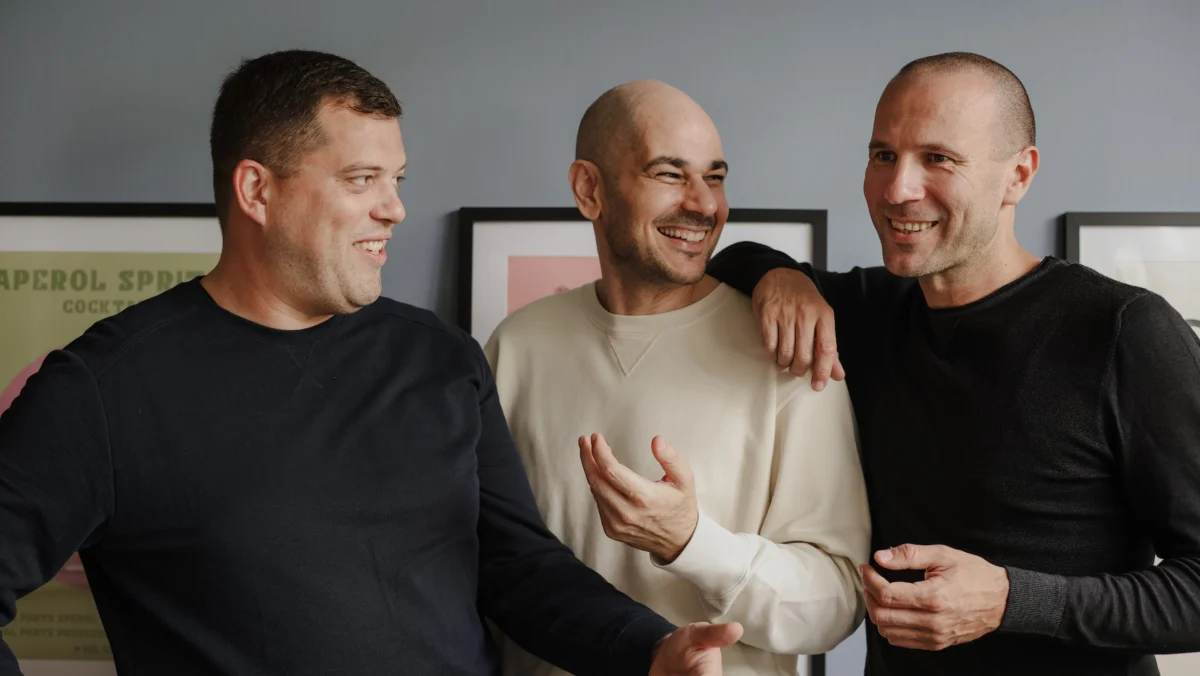
In the sweltering heat of late May, during a bustling tech festival in Athens, Neil Rimer—the veteran venture capitalist and co-founder of Index Ventures—offered a prognosis that cut through the typical boosterism of the industry. Amidst a landscape where Artificial Intelligence is minting trillionaires at an unprecedented clip, Rimer voiced a sentiment that has remained a persistent, haunting thought for those watching the current wealth explosion: “I have a strong sense that there will be some sort of a redistribution.”
Rimer did not leave it at a mere observation. He added a clarifying, if unsettling, caveat: “It’ll either be voluntary or it’ll be involuntary, but it’ll happen, and I hope it’s voluntary.” For a man who helped shape the modern venture capital landscape over the last thirty years, such a statement represents a striking departure from the traditional ethos of Silicon Valley, where wealth accumulation is generally viewed as an unalloyed good.
The Architect of a New Era
To understand the weight of Rimer’s words, one must understand the man behind them. Rimer is not a firebrand populist; he is a titan of the asset class. Since the inception of Index Ventures, the firm has raised approximately $15 billion, backing category-defining companies that have fundamentally altered the global economy. Last year alone, a series of high-profile exits—most notably the Figma IPO and the sale of cybersecurity firm Wiz to Google—reportedly netted the firm roughly $9 billion in gains.
Despite his enormous influence, Rimer has spent recent years stepping back from the day-to-day grind of venture investing, splitting his time between his base in Athens and global philanthropic efforts. His resume includes a tenure as chair of Human Rights Watch from 2019 to 2025 and significant investments in educational infrastructure, such as the Rimer Building at McGill University. Unlike many of his peers, who curate a specific aesthetic of "tech-billionaire chic," Rimer’s approach to both his life and his capital remains understated, focused on the long-term health of the institutions he supports.
The Erosion of the Philanthropic Social Contract
Rimer’s call for voluntary redistribution lands at a moment when traditional American philanthropy is undergoing a profound identity crisis. The Giving Pledge, launched in 2010 by Bill Gates and Warren Buffett to encourage the ultra-wealthy to donate half their fortunes, was once the gold standard of "conscious capitalism." Today, it is effectively in decline.
The data is stark: after an initial wave of 113 signatories in the Pledge’s first five years, momentum has stalled. Only four families joined in 2024. As one recent New York Times report highlighted, the prevailing sentiment among the new class of tech moguls—typified by Elon Musk’s assertion that his businesses are his philanthropy—is that building a company is a higher form of public service than writing a check to a non-profit.
This shift extends beyond the billionaires. According to the Stanford Social Innovation Review, the number of American households donating to charity has plummeted for five consecutive years, falling by 4.5% in 2024 alone. Even among the affluent, the participation rate in charitable giving has slipped from 90% in 2017 to 81% last year. In the corridors of Silicon Valley, the new guard is opting for aggressive angel investing and serial entrepreneurship over traditional endowment-building. Financial planners for the newly wealthy report that when clients discuss their liquidity events—such as those surrounding Anthropic’s rise—philanthropy is rarely the priority.
The Legislative Counter-Movement
As voluntary giving wanes, the political machinery is beginning to rotate toward forced redistribution. The most prominent example is California’s proposed 5% one-time wealth tax on billionaires. The prospect of this legislation has already spurred a "great migration," with high-profile founders like Google’s Sergey Brin and Larry Page relocating their primary residences to Florida to mitigate tax exposure.
Furthermore, the timing of major IPOs is increasingly being viewed through a fiscal lens. Reports suggest that OpenAI is eyeing a 2027 public offering, partially as a strategic maneuver to navigate the complexities of wealth taxation, which would calculate net worth based on worldwide assets as of the end of the current calendar year.
This legislative pressure has invited intense debate. Opponents, including Governor Gavin Newsom and a chorus of economists, warn that wealth taxes historically lead to capital flight, citing the repeal of such measures in numerous industrialized nations since 1990. Simultaneously, some companies are attempting to pre-empt regulation through creative structural shifts. OpenAI, for instance, has reportedly discussed granting the U.S. government a 5% equity stake. While CEO Sam Altman frames this as a way to share the upside of AI with the public, skeptics see it as a desperate bid to buy political cover in Washington. As Sequoia’s Roelof Botha famously quipped, “Some of the most dangerous words in the world are: ‘I’m from the government, and I’m here to help.’”
By the Numbers: The New Gilded Age
The anxiety surrounding this concentration of wealth is rooted in hard data. In the third quarter of last year, the top 1% of U.S. households held 31.7% of total household wealth—the highest level since the Federal Reserve began tracking the metric in 1989.
While this remains below the 1916 Gilded Age peak of 45%, the concentration at the very top is more extreme than ever. Economist Gabriel Zucman has noted that at the turn of the 20th century, the four largest fortunes in America comprised 4% of U.S. GDP. Today, the 19 wealthiest households command an staggering 14% of GDP. With 45 new AI billionaires identified in the 2026 Forbes rankings—worth a combined $2.9 trillion—and companies like SpaceX minting the world’s first trillionaire, the scale of wealth creation is moving into uncharted territory. Should Anthropic and OpenAI proceed with their respective IPOs, their combined employee base would possess enough capital to effectively purchase one-third of all residential real estate in the San Francisco metropolitan area.
Historical Precedents: The Gospel vs. The Soak
History suggests that when wealth concentration reaches these extremes, the system corrects itself. The last time the U.S. faced such disparity, the dynamic played out in two distinct acts:
- The Voluntary Path: Andrew Carnegie’s 1889 essay, The Gospel of Wealth, argued that the wealthy have a moral obligation to distribute their fortunes during their lifetimes. It was the intellectual foundation for modern philanthropy.
- The Involuntary Path: By the 1930s, when the "Gospel" proved insufficient to satisfy a struggling public, the political climate shifted toward figures like Senator Huey Long, whose "Share Our Wealth" program advocated for radical redistribution. In response, Franklin D. Roosevelt enacted the "soak-the-rich" tax, pushing top marginal rates to 79%.
Rimer is acutely aware of this cycle. His concern, however, is not just about taxes; it is about the "moral center" of the tech industry. He reminisces about his days at Stanford in 1984, when Apple was a beacon of progress and Steve Jobs was viewed as a hero for democratizing technology. He fears that the current generation of tech leaders is losing that status, noting that his own children speak of major tech firms with the same skepticism once reserved for tobacco or defense contractors.
The Final Reckoning
Rimer acknowledges the irony of his position: as an investor in companies like Anthropic, he is a primary beneficiary of the very wealth explosion he suggests must be redistributed. However, he views the current trajectory as unsustainable.
Silicon Valley faces a binary choice. It can embrace a new, robust era of voluntary philanthropy—revisiting the spirit of the Gospel of Wealth to address the systemic inequalities that AI is exacerbating—or it can wait for the inevitable, and likely more painful, intervention of the state. As Rimer suggests, history rarely offers a third option. The industry is currently betting that it can maintain the status quo, but as the gap between the "tippy top" and the rest of the economy widens, the pressure for a forced correction is mounting. Whether Silicon Valley chooses the "easy way" or the "hard way" will likely define the political and economic landscape of the next decade.