The home cinema market has long been divided into two distinct camps: the uncompromising purists who build dedicated rooms with ceiling-mounted projectors and multi-speaker AV receiver setups, and the casual viewers who favor the convenience of compact, all-in-one portable smart projectors.
With the launch of the Nebula X1 Pro, Soundcore (a subsidiary of consumer electronics giant Anker) attempts to shatter this dichotomy. Billed as the "world’s first mobile theatre system," the X1 Pro is an ambitious, high-end hybrid that packages a 4K triple-laser projector, a dual-driver subwoofer, and four detachable wireless Dolby Atmos satellite speakers into a single mobile unit.
However, with a premium price tag of £4,499 / $4,999 / AU$8,999 and a hefty physical footprint, this system faces intense scrutiny. Does this all-in-one cinema-in-a-box truly deliver on its promise of premium, hassle-free immersion, or does it fall victim to the engineering compromises inherent in hybrid devices?
1. Main Facts: The Concept Behind the Nebula X1 Pro
The Soundcore Nebula X1 Pro is designed to be a complete, self-contained home theater system that can be transported between rooms, out to the backyard, or to social events.
The Core Design
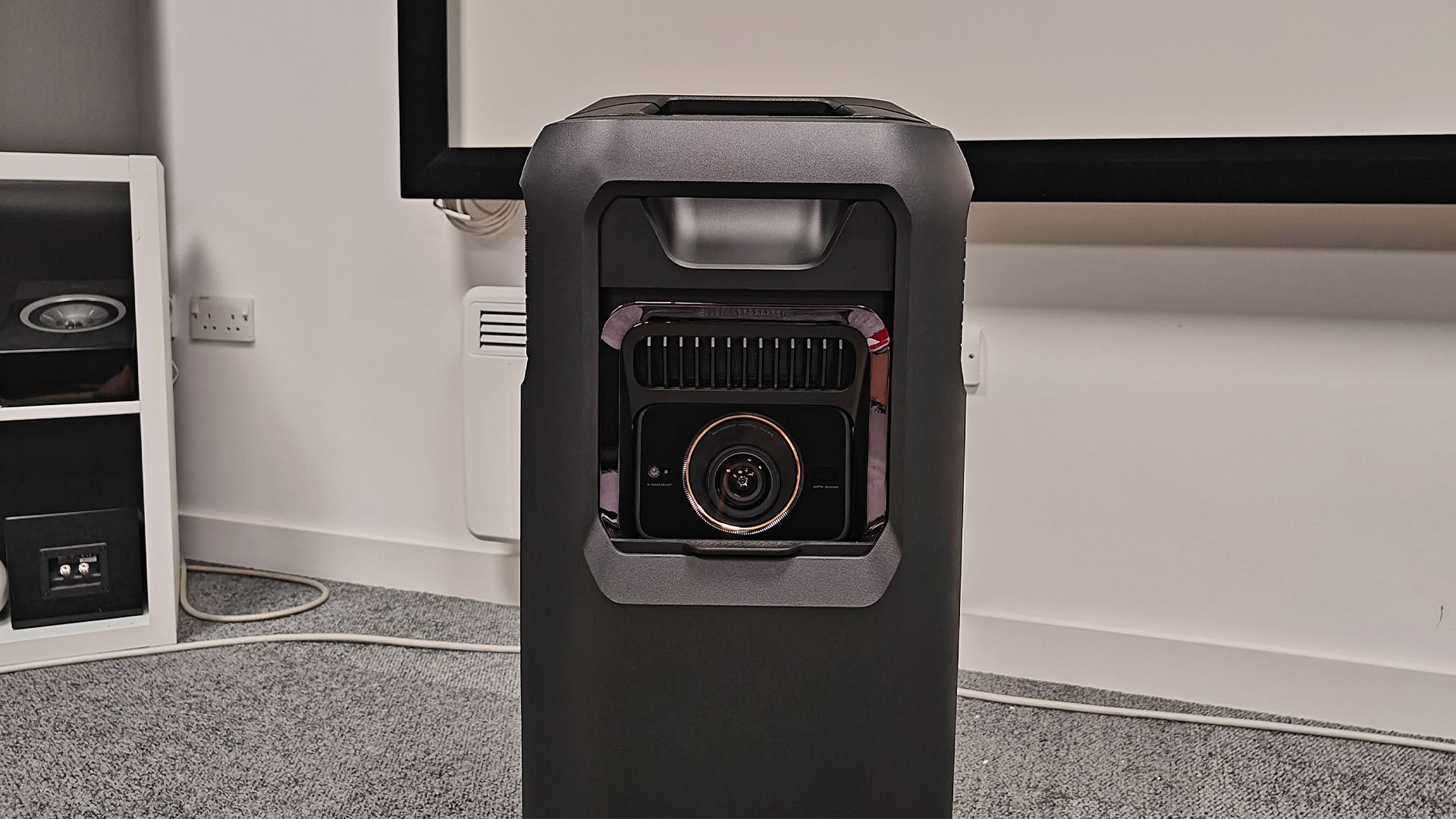
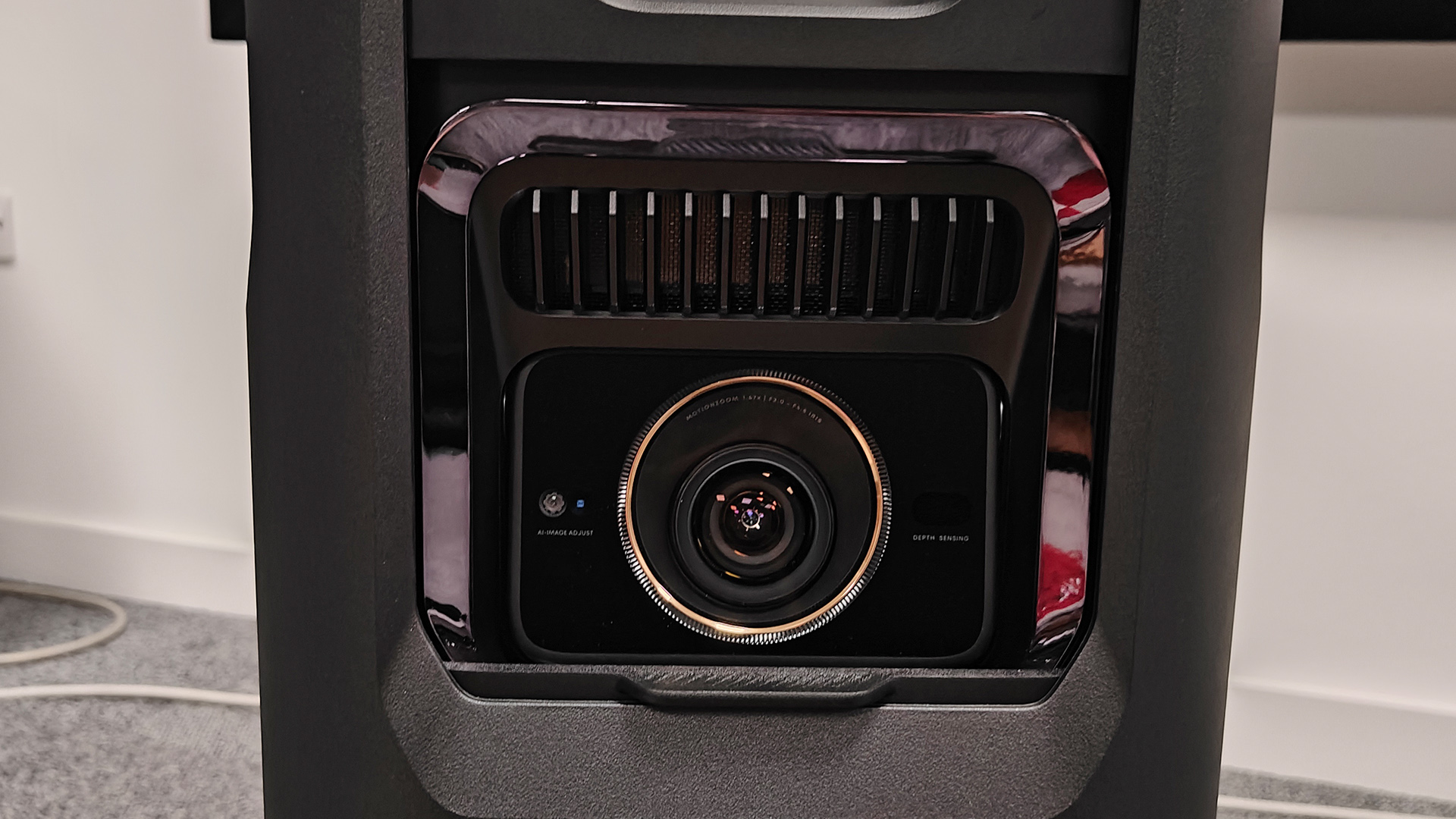
At the heart of the system is a high-brightness 4K DLP projector powered by a premium triple-laser light source. While traditional portable projectors struggle with dimness, the X1 Pro boasts a claimed brightness of 3,500 ISO lumens, allowing it to project an image up to 300 inches diagonally.
The Audio System
Rather than relying on simple stereo speakers built into the projector chassis, Soundcore has engineered a unique 7.1.4-channel audio system. The projector housing contains:
- An integrated subwoofer with two 13cm drive units.
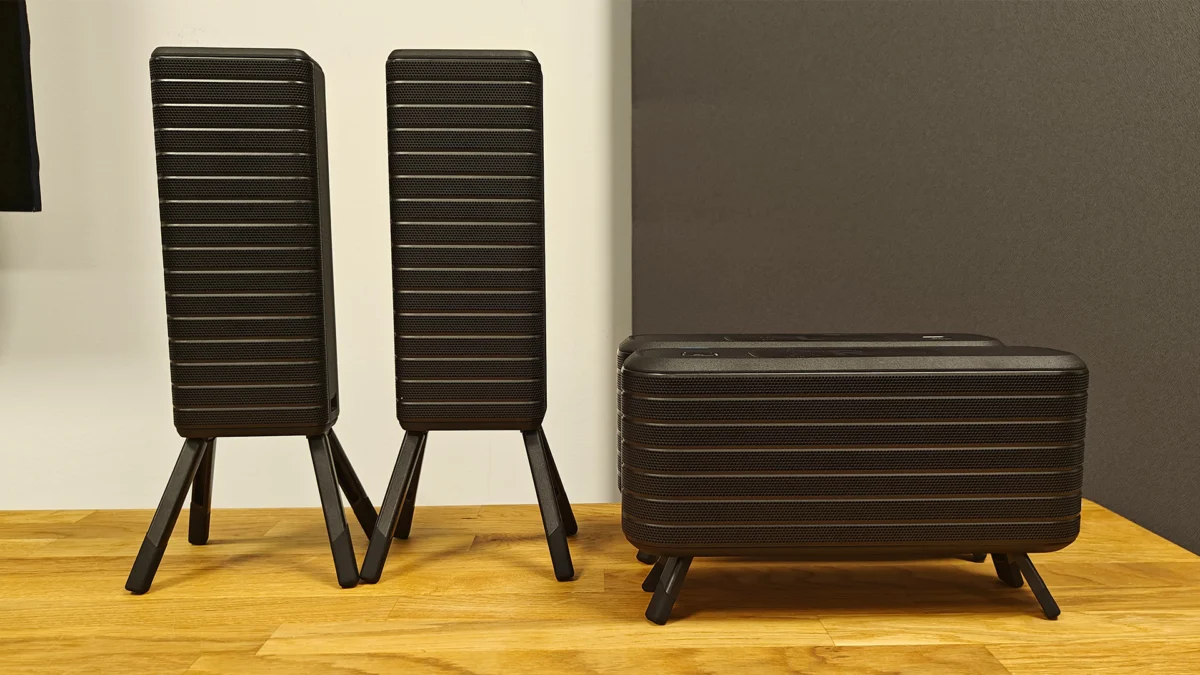
- Four detachable, battery-powered satellite speakers that can be placed around the room to serve as surround and height channels.
The Portability Paradox
To accommodate this massive array of hardware, the X1 Pro weighs a substantial 33 kilograms (approx. 72.7 lbs). To justify its "mobile" designation, Soundcore has fitted the bottom of the rugged chassis with a set of wheels and a heavy-duty handle, allowing users to roll the theater system from room to room.
2. Chronology: The Evolution of Lifestyle Projection
[Late 2010s: Rise of Pico Projectors]
Low resolution, sub-500 ANSI lumens, basic built-in mono/stereo speakers.
       │
       ▼
[2020–2022: The Lifestyle Laser Boom]
Introduction of 4K UST (Ultra Short Throw) and portable smart LED/Laser projectors (XGIMI, Samsung).
       │
       ▼
[2023–2024: The Quest for High-End All-in-Ones]
Brands attempt to integrate better sound, but remain limited by chassis size and physical speaker placement.
       │
       ▼
[Present: The Soundcore Nebula X1 Pro Launch]
Soundcore attempts to solve physical surround sound limitations by engineering detachable, dockable Dolby Atmos satellites inside a 33kg wheeled mobile unit.
The development of the Nebula X1 Pro represents the culmination of a decade-long trend in consumer entertainment: the pursuit of the "instant cinema."
- The Pico Era (Late 2010s): Portable projectors were initially novelty items. They offered low resolutions (often sub-1080p), weak light sources (under 500 lumens), and tinny, integrated 5W speakers. They were suitable for dark bedrooms but useless for serious cinema.
- The Smart Projector Revolution (2020–2022): Brands like XGIMI, Nebula, and Samsung introduced high-quality LED and laser portable projectors. These units integrated streaming platforms (Android TV) and improved audio partnerships (such as Harman Kardon), but they still projected sound from a single source—the projector itself—failing to replicate a true surround sound stage.
- The Detachable Audio Breakthrough (Present): Recognizing that virtualized surround sound cannot match physical speaker placement, Soundcore leveraged its background in wireless audio to design the X1 Pro. By creating satellite speakers that dock directly into the projector body for charging and storage, they have attempted to eliminate the cable clutter and installation headaches of traditional 7.1.4 systems.
3. Supporting Data & Technical Specifications
To understand the engineering scale of the Nebula X1 Pro, we must examine its technical specifications across its dual disciplines of projection and audio engineering.
| Category | Feature | Specification |
|---|---|---|
| Visual Technology | Optical Engine | DLP (Digital Light Processing) |
| Light Source | Triple-Laser (RGB) | |
| Resolution | 4K UHD | |
| Brightness | 3,500 ISO Lumens | |
| Maximum Screen Size | Up to 300 inches | |
| Audio Technology | Channel Configuration | 7.1.4 Dolby Atmos |
| Satellite Speakers | 4x Wireless Detachable (Fronts: 8cm wide / Rears: 6cm wide) | |
| Satellite Features | Fold-out rubber feet, USB-C charging, integrated docking ports | |
| Internal Subwoofer | Dual 13cm (approx. 5.1-inch) drivers | |
| Physical Specs | Weight | 33 kg (72.7 lbs) |
| Mobility | Integrated bottom wheels, heavy-duty handle | |
| Price | £4,499 / $4,999 / AU$8,999 |
The Satellite Speaker Design
The engineering of the four wireless satellite speakers is one of the X1 Pro’s standout achievements.
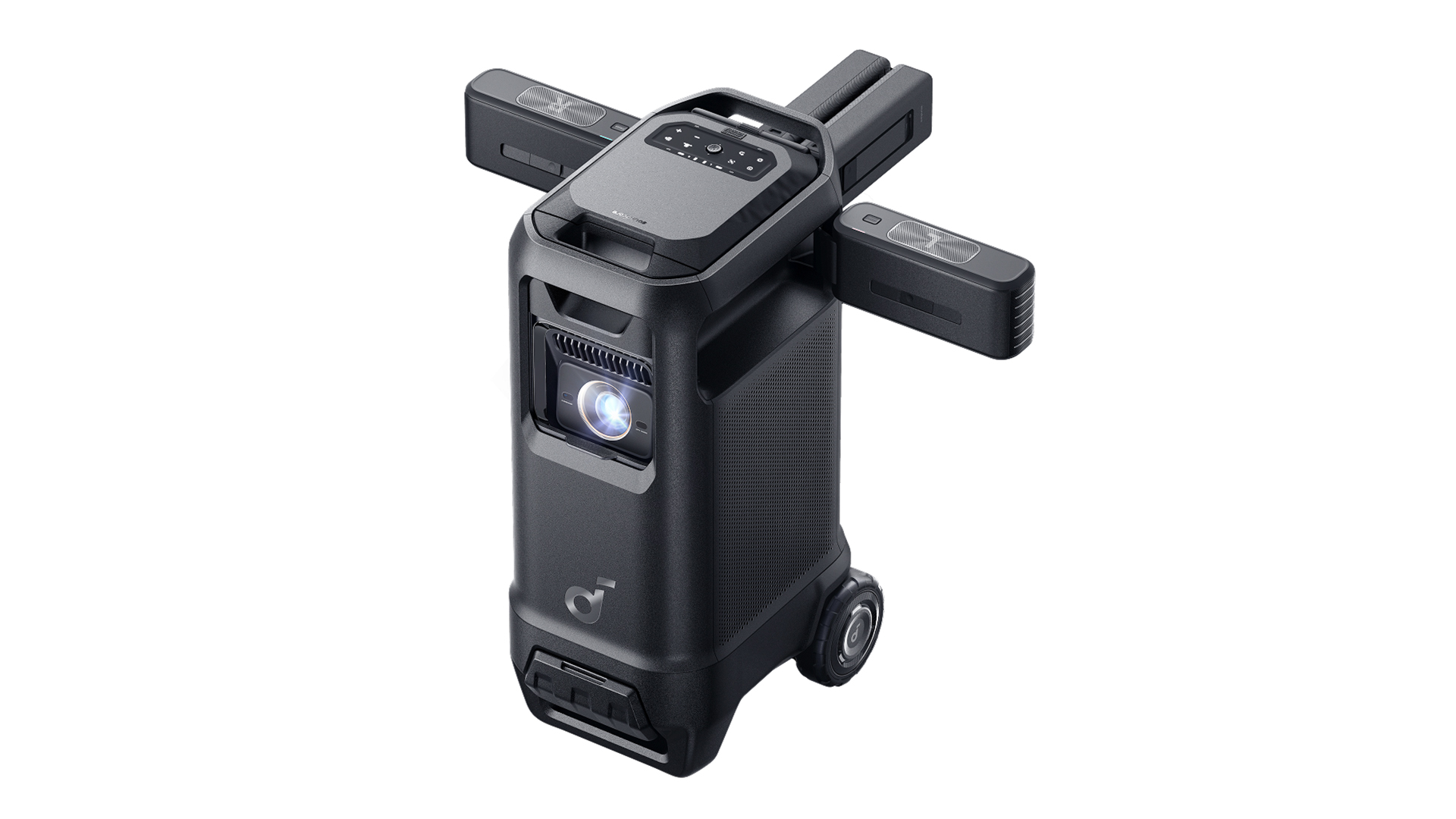
- Form Factor: The front satellites measure 8cm in width, while the rears are slightly more compact at 6cm. This small footprint makes them easy to place on side tables, windowsills, or shelves.
- Stability: Each speaker features a clever, fold-out stand with a rubber foot, ensuring they remain stable on various surfaces.
- Power Management: The satellites charge automatically when docked inside the projector’s main body. For extended use away from the dock, they feature individual USB-C ports, allowing users to power them via standard external chargers.
4. Performance Evaluation: Testing the X1 Pro
Our comprehensive testing of the Soundcore Nebula X1 Pro revealed a system of stark contrasts. While its physical design and brightness are highly impressive, its real-world performance in image nuance and audio depth exposed several key engineering limitations.
Visual Performance: Punchy, but Lacking Nuance
The Strengths
The triple-laser optical engine delivers on its promise of high brightness and crispness. During our test screening of Marvel’s Thunderbolts, the X1 Pro rendered an incredibly engaging image.
- Sharpness: Character outlines and background objects are clean, sharp, and free of distracting digital noise. Details like the weave of clothing fabrics and individual strands of hair are clearly visible.
- Ambient Light Handling: Thanks to the 3,500 ISO lumens light source, the image remains watchable even in a moderately lit room or outdoors before twilight has fully set in. While dark scenes suffer under ambient light, bright, colorful content retains enough pop to remain entertaining.
The Weaknesses
Despite its strengths, the X1 Pro lacks the color accuracy and contrast control expected of a projector in the £4,500+ price bracket.
- Color Saturation: Colors tend to be over-emphasized to the point of looking unnatural. During a viewing of Alex Garland’s Civil War, a scene featuring a helicopter landing on a grassy field revealed foliage that appeared overly vivid and neon, detracting from the film’s gritty, realistic aesthetic.
- Black Levels & Shadow Detail: The projector struggles with deep blacks. In dark scenes—such as the low-lit barn sequence in Sinners starring Michael B. Jordan—the dark backgrounds suffer from noticeable color banding and resolve as a dark grey rather than a true, deep black. Furthermore, shadow detail in darker skin tones is lacking, making it difficult to discern subtle textures in low-light environments.
Visual Performance Summary:
┌─────────────────────────────────────────┐
│ [Pros]                                  │
│  - Exceptional 3,500 ISO Lumens pop     │
│  - Crisp 4K edge definition             │
│  - Excellent daylight watchability      │
├─────────────────────────────────────────┤
│ [Cons]                                  │
│  - Oversaturated, unnatural color space │
│  - Poor black levels (greyness/banding) │
│  - Limited shadow detail in dark scenes │
└─────────────────────────────────────────┘
Audio Performance: Great Convenience, Disappointing Execution
While the physical design of the detachable 7.1.4-channel speaker system is brilliant, the acoustic output does not match the expectations raised by its Dolby Atmos branding.
- Lack of Spatial Immersion: Despite having four physical satellite speakers positioned around the room, the audio field feels fragmented. The system struggles to project convincing height and width effects. Instead of a seamless, 360-degree dome of sound, there are noticeable "gaps" in the soundstage where audio transitions feel abrupt.
- Underwhelming Bass: Given the inclusion of two 13cm subwoofer drivers within the heavy 33kg chassis, we expected a powerful, tactile low-end response. Instead, the bass lacks punch and impact. During our test of Shang-Chi and the Legend of the Ten Rings, the kinetic impact of martial arts strikes felt soft and flat, lacking the dynamic drive required to make action sequences feel visceral.
5. Market Implications and Consumer Advice
The Soundcore Nebula X1 Pro is a fascinating proof-of-concept, but its premium price point places it in direct competition with high-end, dedicated home cinema equipment.
The Financial Equation
At £4,499 / $4,999 / AU$8,999, a consumer must weigh the convenience of this all-in-one system against the performance of a traditional component setup. For the same budget, an enthusiast could purchase:
- A high-quality, color-accurate 4K home cinema projector (such as those from Epson or BenQ) for approximately £1,500 – £2,000.
- A dedicated 5.1.2 or 7.1.2 AV Receiver and speaker package (from brands like Denon, Q Acoustics, or KEF) for £2,000 – £2,500.
While the component setup requires routing speaker wires and permanent installation, it will invariably deliver vastly superior color accuracy, deeper black levels, and a truly immersive, high-impact Dolby Atmos audio experience.
Target Audience: Who is the X1 Pro For?
The Nebula X1 Pro is not designed for the dedicated home theater purist. Instead, it serves a highly specific niche market:
- Luxury Outdoor Entertainers: Users who want a premium outdoor movie night experience without permanent outdoor installations.
- Premium Multi-Room Households: Affluent buyers who want to move a large, high-quality screen between a living room, a playroom, and a covered patio without buying multiple displays.
- Event Organizers & Hospitality: Businesses that require a high-quality, easily transportable projection and sound package for corporate presentations, boutique screenings, or luxury events.
Final Verdict
Soundcore deserves immense credit for the engineering innovation behind the Nebula X1 Pro. The dockable, wireless satellite speakers and the wheeled chassis design are genuine breakthroughs in the lifestyle projector category. However, because both its color calibration and its acoustic impact fall short of premium standards, the X1 Pro remains a luxury novelty rather than a true replacement for a dedicated home theater. For those who prioritize performance over portability, investing in separate, dedicated components remains the wiser path.