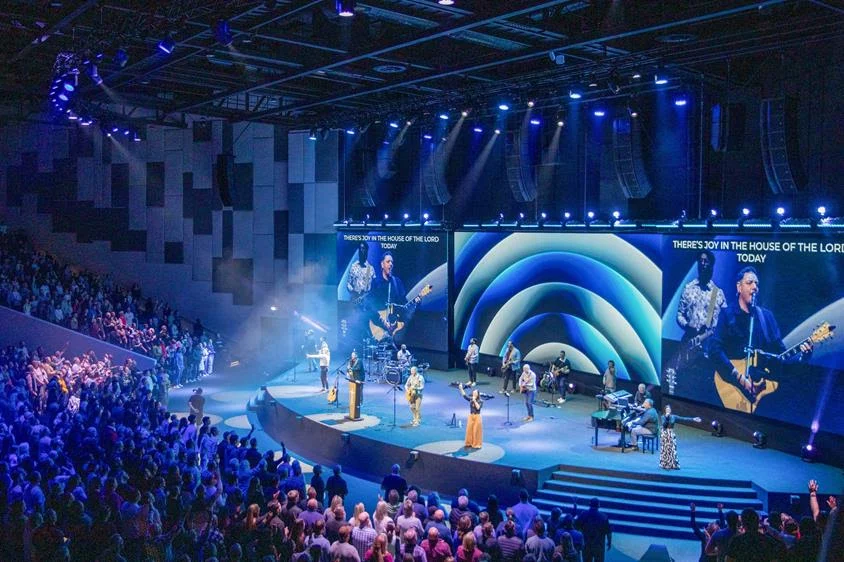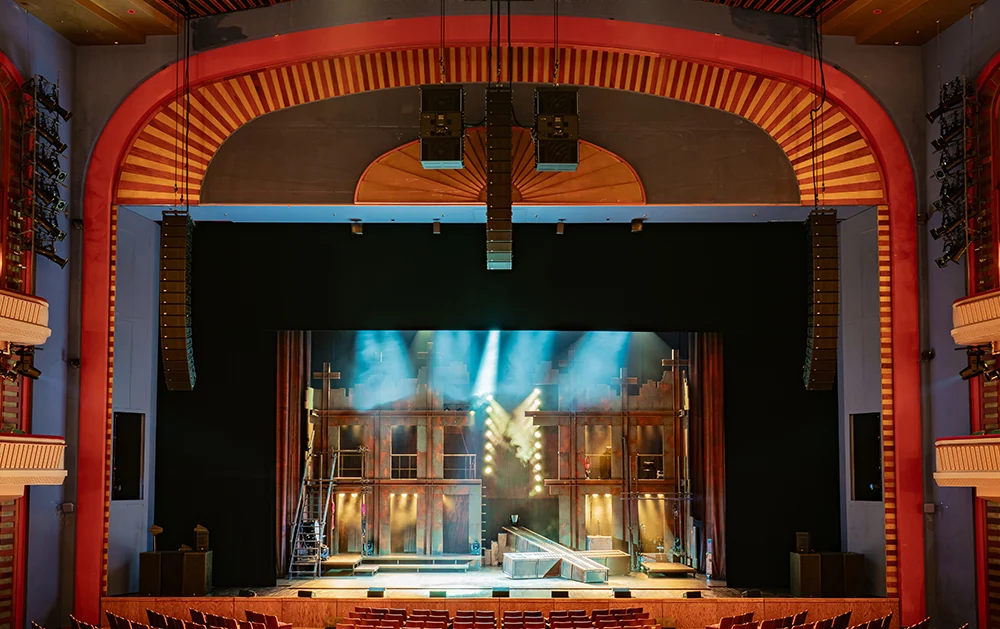
The Ordway Center for the Performing Arts, a crown jewel of St. Paul’s cultural district, has taken a decisive step toward the future of live performance. In a significant infrastructure upgrade, the 1,900-seat Music Theater has completed the installation of a sophisticated new main audio system anchored by Meyer Sound’s LEOPARD line array technology. This transition, executed by the audio integration experts at Lake Forest, Illinois-based TC Furlong Inc., marks a pivotal evolution for a venue that hosts everything from Broadway-caliber theatrical runs to intimate community dance recitals.
By integrating a state-of-the-art left-center-right (LCR) array configuration, the Ordway has effectively eliminated the sonic inconsistencies that have historically plagued large, multi-purpose performance spaces. This project follows closely on the heels of a 2024 audio overhaul in the center’s 1,100-seat Concert Hall, which utilized Meyer Sound’s LINA loudspeaker system, signaling a long-term commitment to high-fidelity acoustic standards across the entire Ordway campus.
The Technical Backbone: Precision Engineering for a Diverse Stage
The logistical complexity of the Ordway’s programming requires a sound system that is as versatile as it is powerful. To meet this demand, the new system features a robust deployment of 48 LEOPARD line array elements. These are configured in a sophisticated LCR arrangement designed to provide high-definition coverage that reaches every corner of the 1,900-seat auditorium without compromising clarity.
Low-frequency management—often the most difficult aspect of theater acoustics—is handled by a combination of six flown 2100-LFC low-frequency control elements, which ensure deep, punchy, and controlled bass response. For productions demanding additional theatrical impact, such as contemporary concerts or large-scale musicals, the system includes six 700-HP subwoofers that can be deployed as three-per-side cardioid deck arrays.
The coverage is rounded out by an extensive network of specialized fills:
- ULTRA-X40: Deployed for wide-angle fill coverage.
- ULTRA-X22: Utilized as box fills to maintain acoustic pressure in challenging sightline areas.
- UPM-1P: Strategically placed as front fills and underbalcony fills, ensuring that audience members in the furthest or most obscured seats receive the same sonic fidelity as those in the center of the orchestra section.
At the heart of the system, Galileo GALAXY 816 Network Platforms provide the processing and management capabilities necessary to calibrate the system for different house modes, ensuring that the transition from a spoken-word lecture to a full-scale orchestral performance is seamless.
Chronology of an Acoustic Transformation
The journey to this installation began with a rigorous audit of the venue’s existing acoustic limitations. For years, while the Ordway maintained a reputation for excellence, the production team faced the "seat-to-seat discrepancy" common in older theaters.
Early 2024: The successful installation of Meyer Sound LINA loudspeakers in the venue’s smaller Concert Hall served as a pilot program. The success of that deployment proved that the Meyer Sound ecosystem could integrate with the Ordway’s existing infrastructure while significantly reducing maintenance overhead and improving output consistency.
Mid-2024: Following the Concert Hall upgrade, planning for the larger Music Theater commenced. The Ordway’s production department, led by James Gralian, worked in tandem with TC Furlong to map the room using MAPP 3D, Meyer Sound’s system design and prediction tool. This allowed the team to simulate acoustic performance before a single bolt was tightened.
Late 2024: Installation began. The project was not merely a hardware swap; it required the recalibration of the venue’s entire signal flow. TC Furlong, known for its rigorous testing, spent weeks on-site post-installation to "tune" the room, walking every row and seat to ensure the phase coherence and frequency response were uniform.
Present Day: The system is fully operational, with current Broadway touring productions and local performances reporting a significant "plug-and-play" advantage, as the house system now meets or exceeds the requirements of even the most demanding technical riders.
Supporting Data: Why Consistency Matters
The technical challenge cited by Head of Sound James Gralian was not a lack of power, but a lack of uniformity. In the world of theater sound, the "sweet spot" is the enemy of professional design. A system that sounds perfect in the sound booth but muddy or thin in the mezzanine is a failing system.
By moving to a line array format, the Ordway has effectively addressed the physics of sound propagation. Line arrays are designed to create a more consistent sound pressure level (SPL) throughout the length of the room. In the Music Theater, the 48 LEOPARD units allow Gralian to steer the sound more precisely, preventing excess energy from hitting reflective surfaces—like walls and balconies—that cause unwanted reverb.
The use of MAPP 3D has also provided a unique advantage in visitor relations. When incoming production teams arrive with their own sound engineers, Gralian can provide them with the MAPP 3D files. This transparency allows touring engineers to see exactly how the room will behave, often leading them to abandon their own portable gear in favor of the house’s optimized Meyer Sound system.
Official Perspectives: The Philosophy of Sound
The project reflects a deep philosophical shift in how the Ordway views the audience experience.
"Sound is part of what makes a performance feel immediate and shared," said Chris Harrington, President and CEO of the Ordway. "This investment helps ensure the Music Theater can meet the needs of artists while giving audiences the exceptional Ordway experience they expect and deserve."
For TC Furlong, the project was about balancing technical power with the acoustic constraints of the architecture. "LEOPARD was absolutely the right decision for this room," Furlong noted. "It gives the Music Theater the scale and consistency it needs while keeping the system appropriate for the space."
Andy Luft, the Ordway’s Vice President of Building Operations and Production, emphasized the psychological impact of the equipment. "When people walk in and see that we have a full line array system, they understand that we’re not fooling around. They understand they’re going to be okay." This statement highlights a hidden benefit of the upgrade: the reduction of pre-show stress for touring artists who no longer have to worry about the limitations of the venue.
Implications for the Twin Cities Arts Scene
The installation of the Meyer Sound system positions the Ordway as a premiere destination for high-end touring productions. In the competitive market of regional performing arts centers, technology is a key differentiator.
- Reduced Load-in Times: Because touring shows can now rely on the house system rather than installing their own, the "load-in" and "load-out" processes are significantly faster, reducing labor costs and allowing for tighter scheduling of performances.
- Sustainability and Efficiency: The LEOPARD system is self-powered, reducing the need for heavy amplifier racks in the wings, which frees up valuable stage space and reduces the venue’s overall power consumption.
- Future-Proofing: By adopting a network-based audio backbone, the Ordway has ensured that it can integrate future software updates or modular hardware additions without needing to undergo another major infrastructure overhaul.
The upgrade is more than just an engineering feat; it is a signal to the community. In an era where digital streaming and home entertainment are ubiquitous, the live experience must offer something that cannot be replicated in a living room. By ensuring that the audio experience is as clean, consistent, and powerful as the performances on stage, the Ordway is reinforcing the value of the "shared experience."
As the curtain rises on the upcoming season, the audience in the Music Theater will experience a subtle but profound change. They will hear the nuance of a whisper from the back row and the full, resonant force of a musical climax without harshness or distortion. With this upgrade, the Ordway has secured its place as a venue where the technology finally does justice to the artistry on display.