The evolution of hardcore punk from basement shows to global festival mainstages is a journey marked by both cultural shifts and technological advancements. At the forefront of this metamorphosis is the Baltimore-based, Grammy Award-winning powerhouse Turnstile. Known for their high-octane energy and genre-blurring arrangements, the band has transitioned from underground favorites to one of the most sought-after live acts in the world. As their production requirements have grown in complexity, the band’s technical team has turned to the pinnacle of live sound engineering: DiGiCo Quantum consoles.
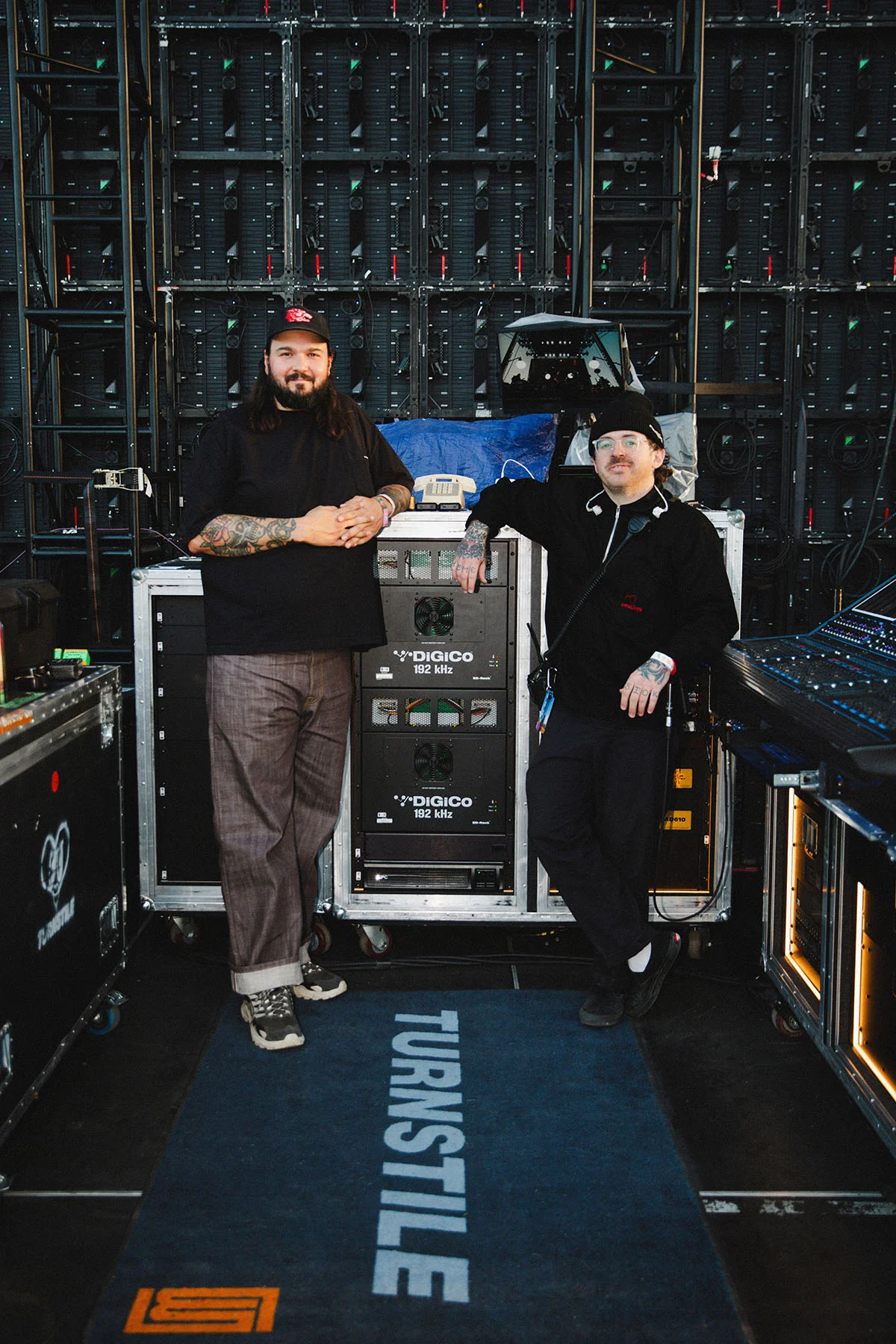
Currently traversing a heavy summer schedule that includes marquee stops at Lollapalooza, Outside Lands, and Bumbershoot, Turnstile is proving that the raw, unbridled energy of punk can coexist—and thrive—within a sophisticated digital audio ecosystem. With a bespoke setup provided by Nashville-based Worley Sound, featuring a DiGiCo Quantum326 at Front of House (FOH) and a Quantum338 at the monitor position, the band is setting a new standard for audio fidelity in the hardcore genre.
Main Facts: A High-Performance Audio Infrastructure
The technical backbone of Turnstile’s current tour is built on the DiGiCo Quantum platform, a choice driven by the need for transparency, reliability, and ergonomic efficiency. The tour’s audio architecture is a study in modern touring efficiency, utilizing an Optocore loop to connect the FOH and monitor positions, ensuring seamless signal distribution with near-zero latency.
The Front of House Setup
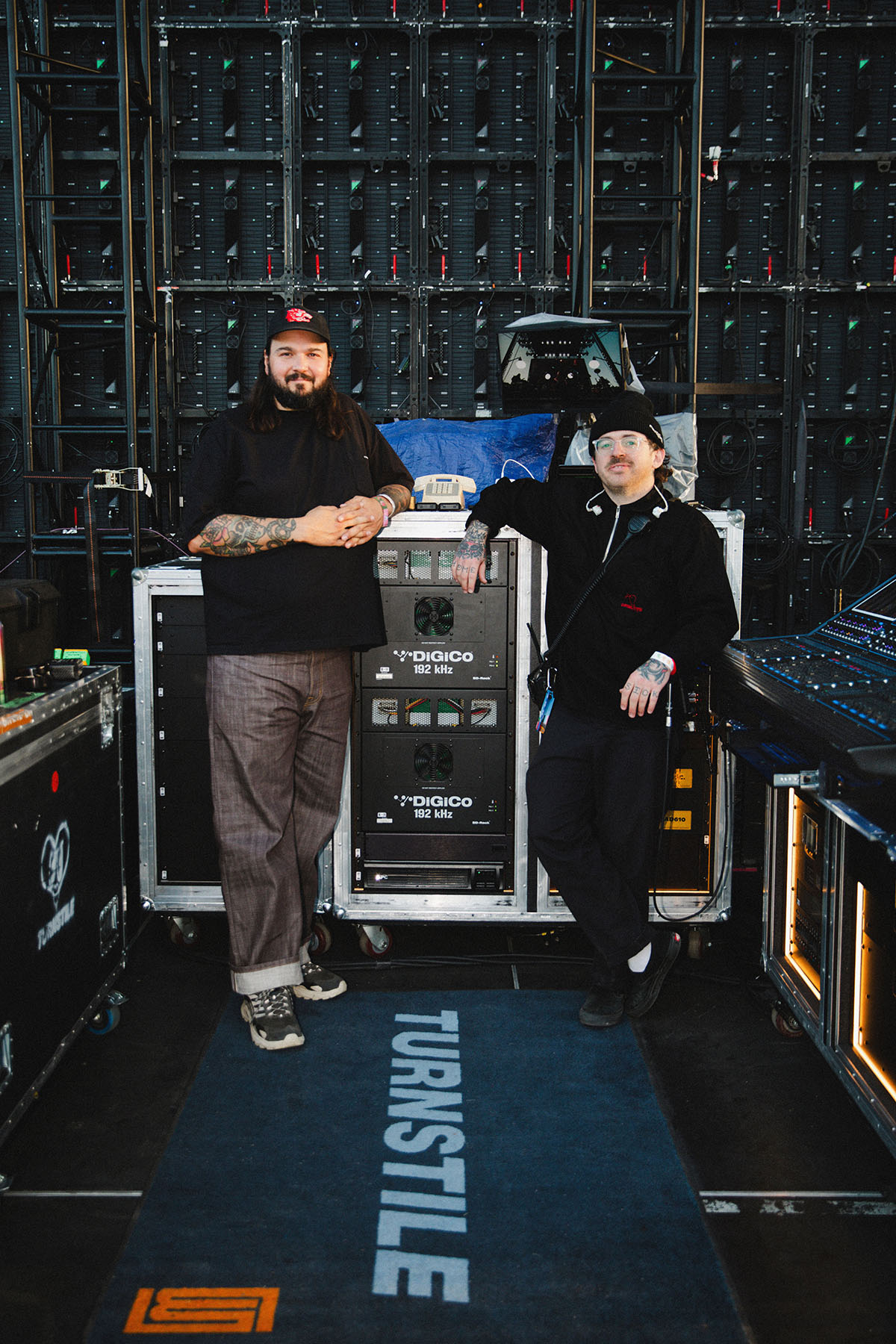
Jake Lang, who has served as a cornerstone of Turnstile’s touring crew for five years, handles the mix on a DiGiCo Quantum326. The Quantum326, which offers the same processing power as its larger counterparts but in a more compact frame, is the ideal tool for a band like Turnstile. Despite the band’s massive sound, their input list remains relatively lean, allowing Lang to leverage the console’s advanced Mustard processing and Spice Rack without the need for a massive physical footprint.
The Monitor Environment
At the other end of the Optocore loop, monitor engineer Chris “Chop” Mateer manages a complex array of mixes on a DiGiCo Quantum338. While Lang prioritizes a compact setup at FOH, Mateer utilizes the larger worksurface of the Q338 to manage 12 separate Shure Axient Digital PSM in-ear monitor (IEM) mixes. This includes five mixes for the band members, seven for the crew and guests, and specialized "thumper" tactile feedback for drummer Dan Fang.
Vendor Partnership
The equipment for the tour is supplied by Worley Sound. Based in Nashville, Worley Sound has built a reputation for providing boutique, high-end audio solutions for artists who require both ruggedness for the road and studio-grade sonic performance.
Chronology: From DIY Roots to Production Excellence
The trajectory of Turnstile’s live production mirrors the band’s meteoric rise in the music industry. Understanding the current technical setup requires looking back at how the team has evolved alongside the music.
The Early Years (2019–2022)
When Jake Lang first joined the Turnstile camp five years ago, the operation was a "lean and mean" DIY machine. In the tradition of hardcore punk, Lang wore multiple hats, serving simultaneously as the FOH engineer, production manager, and tour manager. During this era, the band was moving from clubs to larger theaters, and the audio setup was often dictated by whatever house gear was available.
The "Glow On" Explosion (2022–2024)
Following the release of their critically acclaimed album Glow On, Turnstile’s audience expanded exponentially. The band began appearing on late-night television and securing high-profile festival slots. This growth necessitated a separation of roles. Lang transitioned out of tour and production management to focus exclusively on the FOH mix, a move that allowed the band to refine their "sonic brand." It was during this period that the team began experimenting with higher-end digital consoles to maintain consistency across varying venues.
The Quantum Era (2025–Present)
By the summer of 2026, Turnstile had solidified its place as a festival headliner. The decision to move to DiGiCo Quantum consoles represented the final step in their professionalization. With a dedicated monitor engineer in Chris Mateer and a specialized vendor in Worley Sound, the band now operates with the same level of technical sophistication as major pop or rock acts, while maintaining their "no playback, no click" punk ethos.
Supporting Data: The Technical Specifications
The move to the Quantum series is not merely about prestige; it is about the specific data-driven advantages the platform provides for a high-energy live environment.
Quantum326 vs. Quantum338
The Quantum326 at FOH features 64 channels with 24 redundant faders, powered by Seventh Generation FPGAs. For Lang, the smaller footprint is a logistical advantage during festival season, where FOH space is often limited. Conversely, the Quantum338 at monitors provides three 17-inch high-brightness multitouch screens. This visual real-face is critical for Mateer, who must monitor 12 wireless IEM streams and manage multiple talkback channels simultaneously.
The IEM and Wireless Ecosystem
The tour relies heavily on the Shure Axient Digital PSM system. The data management of these frequencies is handled with precision to avoid interference in RF-heavy festival environments like Lollapalooza. The 12 mixes are categorized as follows:
- Band Mixes (5): Tailored to each member’s specific needs, balancing the "live cab" stage volume with direct signals.
- Crew Mixes (4): Essential for the lighting, video, and stage techs to hear cues and monitor the show’s progress.
- Guest/VIP Mixes (3): Used for "friends and family" fills on stage, ensuring that those standing side-stage experience the same high-fidelity mix as the audience.
Processing and Workflow
Lang’s workflow on the Q326 is built around "Control Groups" and "Groups." By mixing into groups rather than individual channels, he can maintain a "single-layer" workflow. This efficiency is supported by the Quantum’s Mustard Processing, which provides emulations of classic compressors and EQs directly on the channel strip, reducing the need for external plug-ins that could introduce latency.
Official Responses: Insights from the Engineers
The engineers behind the boards provide the best perspective on why this specific setup works for Turnstile’s unique sound.
Jake Lang, FOH Engineer:
"I love the Q326 for its transparency," Lang explains. "I dig being able to mix a variety of bands—including Alkaline Trio, Movements, and others—and get consistent results but with vastly different tones and vibes. I’ve previously carried a Q338, but with Turnstile, that’s a lot of console for a five-piece band that has a fairly low channel count, so the Q326 has been exactly what I’ve needed."
Lang also emphasizes the simplicity of the band’s performance: "We really keep it simple: no playback, no click. We occasionally have someone pop in with a guest vocal or instrument, but we’re pretty straightforward. I mostly mix into groups, and between that and using control groups, I don’t really have to bounce around between layers. I appreciate being able to tip the board with just one other person."
Chris “Chop” Mateer, Monitor Engineer:
Mateer, who joined the team in late 2025, focuses on the communication and immersion aspects of the show. "Our stage gets pretty crowded with guests and we want them to have the same experience as the crowd," Mateer says.
He details the intricate routing enabled by the DiGiCo ecosystem: "We’re doing a fair bit of con sends and receives with the DiGiCos for things like IEM mixes for our lighting and video crew at FOH, talkbacks from FOH to me, and for Jake sending his mix back to the stage so I can share it to friends-and-family fills onstage."
Implications: The Future of Live Hardcore
The adoption of DiGiCo Quantum technology by a band like Turnstile has broader implications for the live music industry, particularly within the alternative and punk genres.
The Professionalization of "Raw" Sound
Historically, punk and hardcore were associated with a "lo-fi" aesthetic. However, as these bands move into 20,000-capacity venues, the "raw" sound must be carefully engineered to ensure it doesn’t become a muddy mess. Turnstile’s use of Quantum consoles proves that high-end digital processing can preserve the "honesty" of a performance while providing the clarity needed for modern sound systems.
The "No Playback" Standard
In an era where many touring acts rely heavily on backing tracks and click tracks, Turnstile’s commitment to a "straightforward" live performance is a statement of intent. The use of high-end consoles to support a purely live band places the emphasis back on musicianship and the "human" element of the performance. This may encourage other bands in the genre to invest in high-quality audio engineering rather than relying on digital crutches.
Versatility and Portability
The choice of the Quantum326 highlights a growing trend in touring: the demand for "compact power." As touring costs rise, the ability to fit a world-class mixing engine into a smaller footprint—allowing for easier transport and quicker festival changeovers—is becoming a primary consideration for production managers worldwide.
As Turnstile continues their summer sweep across the world’s biggest stages, the synergy between Jake Lang, Chris Mateer, Worley Sound, and DiGiCo ensures that every snare hit, bass groove, and vocal shout is delivered with the precision and impact that the band’s Grammy-winning reputation demands. In the world of modern hardcore, the message is clear: the energy may be chaotic, but the sound is perfectly controlled.