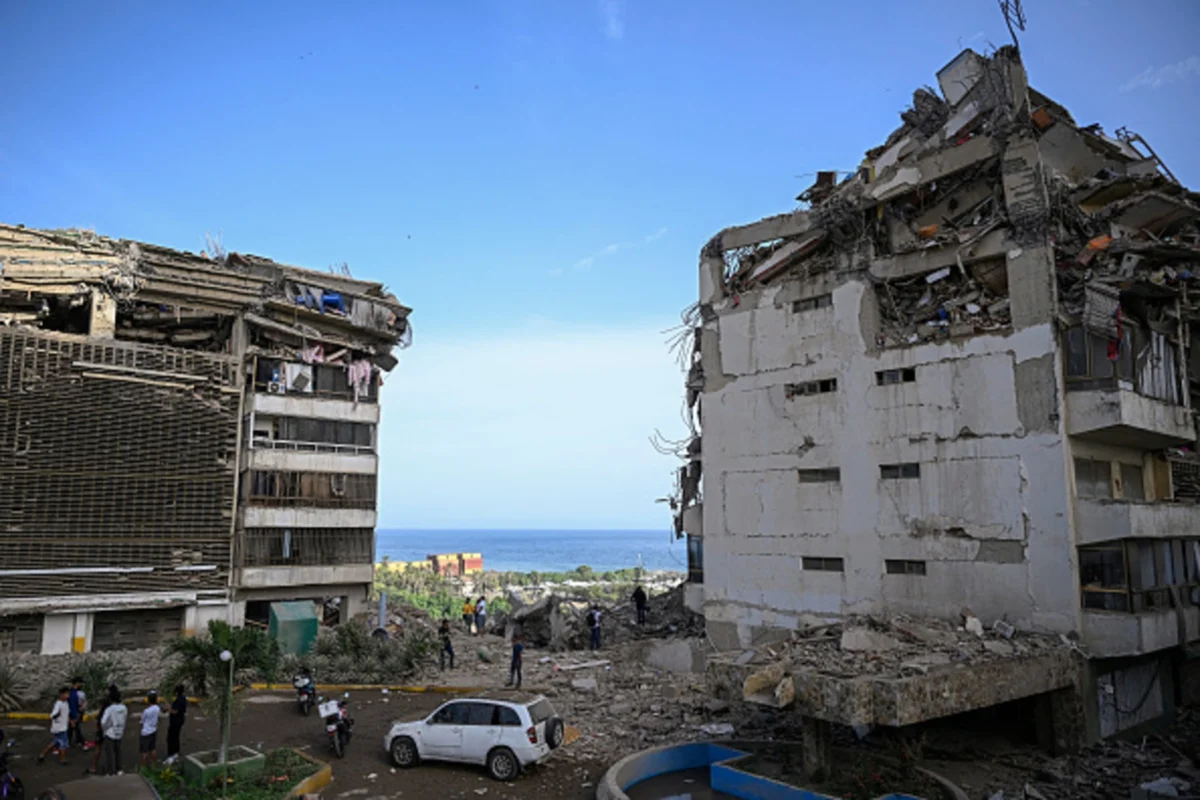
June 27, 2026 — In an unprecedented humanitarian disaster, Venezuela is grappling with the aftermath of a seismic event that has left the country in a state of profound shock and mourning. On the night of Wednesday, June 24, a devastating twin earthquake struck the nation’s Caribbean coastline, triggering widespread structural collapses and claiming hundreds of lives. As of Saturday, June 26, official reports indicate that at least 164 people have been confirmed dead, with fears mounting that this figure will rise significantly as rescue operations continue in the debris of the capital and the coastal state of La Guaira.
The dual tremors, registering magnitudes of 7.2 and 7.5, represent the most powerful seismic activity recorded in Venezuela in over a century. The disaster has paralyzed the nation, overwhelming local infrastructure and prompting a massive, albeit fragile, international relief effort.
The Chronology of the Disaster
The seismic sequence began on the evening of Wednesday, June 24, at approximately 9:15 PM local time. According to the United States Geological Survey (USGS), the first earthquake, measured at magnitude 7.2, struck at a depth of 14 miles, with its epicenter located roughly 105 miles west of Caracas, near the town of Morón on the Caribbean coast.
The devastation was compounded just sixty seconds later when a second, more powerful tremor—a magnitude 7.5 earthquake—hit the same region. This second shock, occurring at a shallower depth of approximately 6 miles, caused widespread structural failure across the densely populated coastal regions and shook the high-rise buildings of Caracas violently.
By the early hours of Thursday, the focus of the government shifted from emergency containment to search-and-rescue operations. Videos circulating on social media captured the harrowing reality of the night: families fleeing shopping centers, residential apartment blocks crumbling into dust, and emergency responders navigating the precarious terrain of collapsed infrastructure. By noon on Saturday, the scale of the tragedy became clearer, with reports indicating that over 51,000 individuals remained missing, a figure that highlights the terrifying potential for a death toll far higher than current official counts.
Seismic Context and Geological Impact
Venezuela sits near the complex boundary of the Caribbean and South American tectonic plates, a region prone to seismic activity. However, an event of this magnitude is historically rare for the area. The twin nature of this earthquake—two high-magnitude events occurring within a minute—is a geological anomaly that experts are currently analyzing to determine the specific fault dynamics involved.
The shallow depth of the second earthquake (6 miles) exacerbated the surface intensity, leading to significant soil liquefaction and the failure of buildings that might have otherwise withstood a deeper tremor. The coastal region of La Guaira, which serves as a major gateway for the capital, has been particularly hard hit. The geography of the region, characterized by steep terrain and aging infrastructure, has complicated rescue efforts, as landslides caused by the tremors have blocked key transport arteries, isolating several coastal communities from immediate aid.
The Humanitarian Crisis: A Nation at a Crossroads
The tragedy unfolds against a backdrop of long-standing economic and social volatility. Even before the earth moved, Venezuela’s healthcare and emergency services were operating under significant strain. The collapse of residential buildings in Caracas and La Guaira has displaced thousands, creating a massive influx of survivors in need of shelter, medical care, and food.
Local hospitals, already struggling with limited resources, have been overwhelmed by a surge of trauma patients. Surgeons are working in makeshift environments as power outages, a recurring issue in the country, continue to hamper operations. The government has declared a national state of emergency, though the logistics of delivering aid to the most remote coastal villages remain a logistical nightmare.
The Missing and the Displaced
The figure of 51,000 missing persons, while currently unverified by independent international bodies, underscores the chaotic nature of the immediate aftermath. Many of those reported missing were residents of apartment complexes that flattened in seconds. In neighborhoods across Caracas, the sound of heavy machinery has been replaced by the desperate cries of families searching through the rubble for loved ones.

Official Responses and International Aid
In the hours following the earthquake, global powers have set aside political differences to address the humanitarian catastrophe. The United States, which has had a complex and often adversarial relationship with the Venezuelan leadership, was among the first to offer official condolences and technical assistance.
"The United States stands with the people of Venezuela in this moment of profound loss," a spokesperson for the State Department stated. "We are working with international partners to ensure that humanitarian aid—including medical supplies, search-and-rescue teams, and temporary housing—can reach those in the most severely affected areas."
Regional neighbors, including Colombia, Brazil, and Mexico, have pledged to send specialized search-and-rescue personnel and mobile field hospitals. However, the success of these aid efforts depends heavily on the internal cooperation of the Venezuelan government and its willingness to allow international NGOs and foreign personnel unrestricted access to the disaster zones.
The Role of Global Solidarity
As the dust settles, a growing number of international organizations, private businesses, and cultural figures have initiated fundraising campaigns. The objective is twofold: to provide immediate financial relief to survivors and to establish long-term support for those who have lost their homes and livelihoods.
How to Help
For those looking to provide aid, the following organizations are currently coordinating relief efforts:
- Global Red Cross & Red Crescent: These organizations are on the ground in La Guaira providing emergency medical care and distributing water and basic necessities.
- Doctors Without Borders (MSF): Currently mobilizing mobile clinics to treat the injured in areas where hospitals have collapsed or are inaccessible.
- The World Food Programme (WFP): Actively assessing food insecurity in the wake of the disaster to deploy emergency food rations to displaced populations.
- Local Community Foundations: Several grassroots organizations in Caracas are operating collection centers for clothes, non-perishable food, and medical equipment.
Donors are encouraged to verify the legitimacy of any charitable organization before sending funds, as disaster-related scams are common in the wake of major tragedies.
Long-Term Implications
The 2026 twin earthquakes will be studied for years to come, not only for their geological significance but for their impact on Venezuela’s socioeconomic fabric. The destruction of physical infrastructure in the capital and the coast will require years of reconstruction. Beyond the physical damage, the psychological toll on a population already weary from years of instability cannot be overstated.
Rebuilding in the wake of this disaster will require a level of national unity that has been elusive in Venezuela for decades. Whether this catastrophe serves as a catalyst for political cooperation or as a point of further fragmentation remains to be seen. For now, the priority remains the rescue of the missing and the stabilization of a country that has been brought to its knees by the sudden violence of nature.
The world watches in silence as Venezuela begins the arduous process of burying its dead and clearing the debris of a broken nation. The coming weeks will be critical; the speed of the humanitarian response will determine the survival of thousands who remain trapped in the limbo between life and the tragic uncertainty of the rubble.
This article is a developing report. Information regarding casualties and the status of rescue efforts will be updated as official data becomes available.