NEW YORK, NY — In the dusty archives of the Library of Congress, nestled among millions of documents that chart the course of American history, lay a musical manuscript that had not been heard by human ears in nearly nine decades. It was a work of immense ambition, commissioned by one of the greatest legends of the Big Band era, only to be discarded as "unplayable" and forgotten by the tides of time.
Now, through a monumental collaboration between two giants of the music industry—trombone virtuoso Jim Pugh and Grammy-winning engineer Jim Anderson—that lost work is finally being brought to life. The upcoming album, New American Symphonies, scheduled for release on August 14, 2026, represents more than just a recording; it is the reclamation of a "lost time capsule" of American musical heritage.
Main Facts: A Convergence of History and Technology
The centerpiece of New American Symphonies is the first-ever recording of Roy Harris’s long-lost trombone symphony. Originally composed in 1938, the piece was intended for Tommy Dorsey, the "Sentimental Gentleman of Swing." However, after a single, frustrated rehearsal, Dorsey abandoned the work, deeming its technical demands too steep for his orchestra. For eighty-eight years, the score remained a footnote in musical history until Jim Pugh’s exhaustive research brought it back to the fore.
The project is a high-fidelity marvel, captured in Digital eXtreme Definition (DXD) and immersive audio formats. Recorded at the legendary Power Station at BerkleeNYC, the album pairs the Harris composition with a contemporary multi-movement work titled "Night Suite," written specifically for Pugh by composer Scott Ninmer.
The production team reads like a "who’s who" of the recording industry. Jim Pugh, a trombonist with over 4,000 recording credits (including work with Steely Dan, Frank Sinatra, and Paul Simon), leads the performance. He is joined by Jim Anderson, a former president of the Audio Engineering Society (AES) and a multi-Grammy winner, and producer Ulrike Schwarz, a pioneer in immersive audio technology.
Chronology: From 1938 to the Digital Frontier
The story of this symphony begins in the late 1930s, a period when the lines between classical music and jazz were beginning to blur. Roy Harris, then one of America’s most prominent symphonic composers, sought to bridge the gap by writing for the era’s most famous soloists.
- 1938: The Commission. Roy Harris composes the trombone symphony specifically for Tommy Dorsey. At the time, Dorsey was at the height of his fame, known for his lyrical, smooth-as-silk trombone playing. Harris intended to push the boundaries of what a swing band could achieve in a symphonic context.
- The Failed Rehearsal. Dorsey’s orchestra attempted to read through the manuscript once. The complexity of Harris’s modernist language—shifting meters, dissonant counterpoint, and extreme ranges—clashed with the swing sensibilities of the band. Dorsey, fearing the work was too academic and difficult for his audience and his players, shelved the project indefinitely.
- Decades of Silence. The manuscript was eventually donated to the Library of Congress, where it remained unperformed and unrecorded for nearly a century.
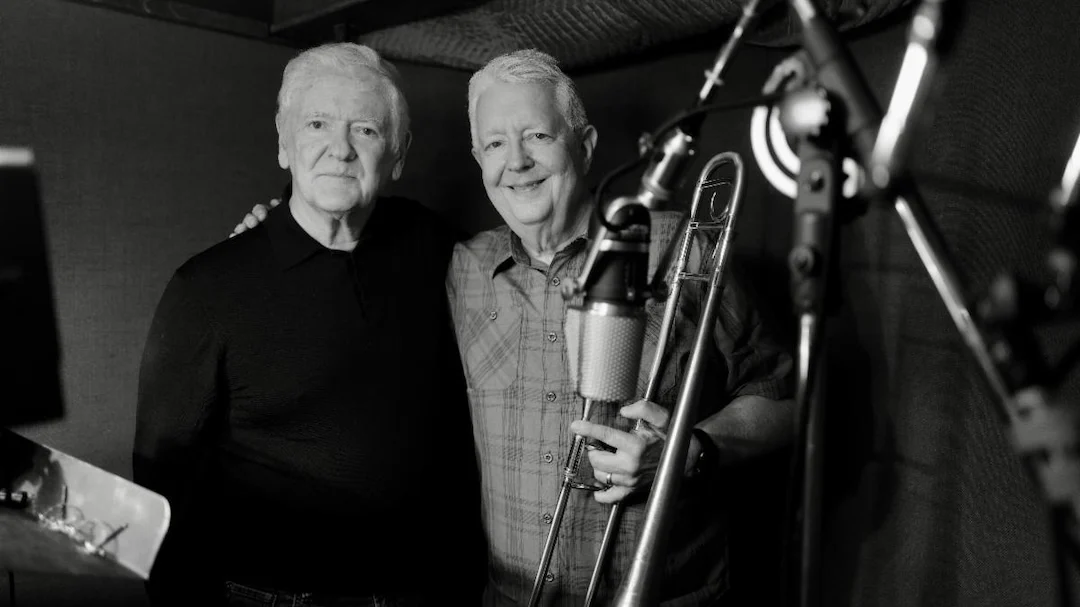
- The 1960s: A Lifelong Friendship Begins. In a small Pennsylvania school band, a young Jim Pugh met a young Jim Anderson. This friendship would span six decades, eventually leading them to this historic collaboration.
- The Research Phase. Several years ago, Jim Pugh began a deep dive into the archives of the Library of Congress. His goal was to find lost repertoire for the trombone. Upon discovering the Harris manuscripts, he realized he had found a missing link in American music history.
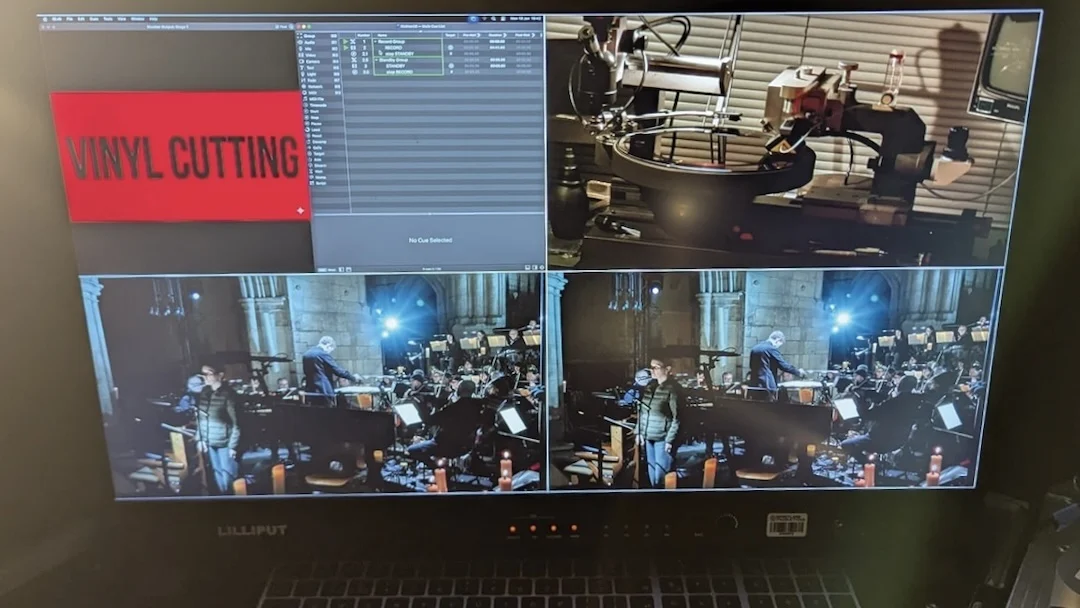
- June 2026: The Recording Sessions. The team convened at Power Station at BerkleeNYC. Utilizing the latest in immersive audio technology, they spent weeks capturing the nuances of the Harris work and Ninmer’s "Night Suite."
- August 14, 2026: The Scheduled Release. The album is set to debut on NativeDSD and other high-resolution platforms, offering the public its first chance to hear the "lost" Dorsey symphony.
Supporting Data: The Technical and Musical Architecture
The resurrection of a lost symphony requires more than just a talented soloist; it requires a technological framework capable of capturing the complexity of the composition.
The DXD Advantage
The album was recorded in Digital eXtreme Definition (DXD), a 352.8 kHz/24-bit audio format. This resolution is eight times that of a standard CD. By using DXD, Anderson and Schwarz ensured that every overtone of Pugh’s trombone and the rich textures of the supporting ensemble were preserved with lifelike accuracy. This was particularly crucial for the Harris piece, which features dense, overlapping harmonies that can become "muddy" in lower-resolution formats.
Immersive Audio Engineering
Ulrike Schwarz and Jim Anderson utilized an immersive audio setup (likely targeting Dolby Atmos and Auro-3D listeners). The goal was to place the listener in the "sweet spot" of the studio. This approach allows for a spatial separation of instruments that mirrors a live symphonic performance, providing a clarity that traditional stereo cannot match.
The Soloist’s Pedigree
Jim Pugh’s involvement is the linchpin of the project. His career is unparalleled in the world of brass:
- Session Work: Over 4,000 sessions.
- Collaborations: Steely Dan (notably the Aja and Gaucho eras), Frank Sinatra, Barbra Streisand, and Paul Simon.
- Academic Influence: Former Professor of Trombone and Jazz Studies at the University of Illinois.
His ability to navigate both the jazz world (Dorsey’s realm) and the classical world (Harris’s realm) made him the only choice to interpret a work that was originally abandoned for being too difficult.
Official Responses: The Visionaries Speak
The participants in this project view it not just as a recording, but as an act of cultural preservation.
Jim Pugh reflected on the profound nature of the discovery: "It’s really a magnificent piece of music. If you close your eyes and listen to the first movement, you can hear where jazz would eventually arrive some 35 or 40 years later, and if you pay attention to the back end, you can hear the roots of minimalism. It’s this remarkable little time capsule that slipped through the cracks of history."
For Jim Anderson, the technical challenges were secondary to the musical intent. "If we can make the technology disappear, if our presence can be totally transparent, then we’ve done our job," Anderson stated. "Sure, we’re always trying to push the envelope, but ultimately our goal is to make timeless recordings with nothing standing between the listener and the musical experience."
Producer Ulrike Schwarz emphasized the emotional impact of the immersive recording: "When you listen to this record, you’ll feel like you’re standing in the middle of the band, but also like they’re playing directly to you. It’s a completely immersive experience."
Implications: A New Chapter for American Music
The release of New American Symphonies carries several significant implications for the music industry and American cultural history.
1. The Redefinition of Roy Harris
Roy Harris is often remembered for his Symphony No. 3, a staple of the American "populist" classical style. The discovery and recording of his trombone symphony may force musicologists to re-evaluate his work. The presence of proto-jazz elements and early minimalist structures suggests that Harris was far more experimental and forward-thinking in 1938 than previously believed.
2. Bridging the "Third Stream"
The album serves as a bridge between the classical and jazz worlds—a concept later known as "Third Stream" music. By successfully performing a piece that Tommy Dorsey found impossible, Jim Pugh demonstrates the evolution of brass technique over the last century. What was "unplayable" in 1938 is now a masterclass in modern virtuosity.
3. The Future of High-Resolution Archives
This project highlights the importance of high-fidelity recording in the preservation of heritage. As more "lost" works are discovered in archives, the use of DXD and immersive audio ensures that these works are not just heard, but experienced in a way that rivals the original acoustic environment.
4. A Testament to Professional Longevity
The 60-year friendship between Pugh and Anderson is a rare narrative in a fast-paced industry. Their collaboration underscores the value of long-term professional relationships in executing complex, multi-year research and recording projects.
As the August 14 release date approaches, the music world waits to hear the sounds that Tommy Dorsey couldn’t master—a 90-year-old secret finally revealed through the marriage of historical scholarship and 21st-century technology. New American Symphonies is not just an album; it is a long-overdue standing ovation for a composer and a soloist who were nearly lost to time.