Introduction: The "Dodd’s Discoveries" Series
In the vast landscape of high-resolution audio, navigating the sheer volume of new releases and archival treasures can be a daunting task for even the most seasoned audiophile. To provide clarity and expert curation, NativeDSD Senior Music Reviewer Bill Dodd has launched "Dodd’s Discoveries," a recurring series dedicated to spotlighting exceptional recordings that deserve a place in every serious listener’s library.
Dodd, a lifelong devotee of classical music with a background in professional broadcasting and piano performance, brings a discerning ear and a deep historical perspective to his selections. The primary mission of this series is to peel back the layers of popular repertoire to find the hidden gems and definitive performances that define the current era of high-fidelity sound. As an added benefit for readers, NativeDSD offers the featured albums in each review at a special reduced price, providing an accessible entry point into these masterworks.
Main Facts: The Shift from "The Big Three"
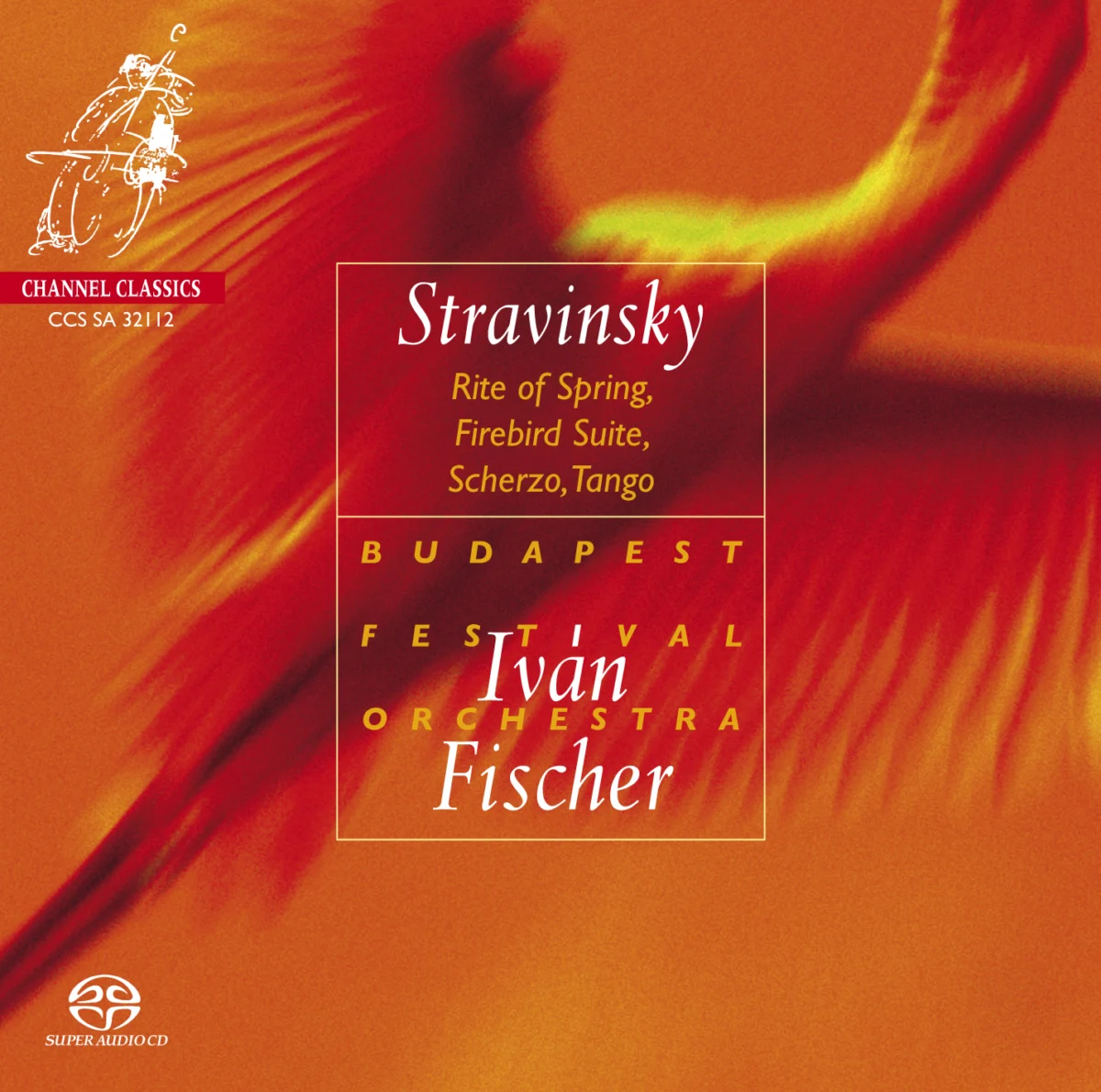
When the name Igor Stravinsky is mentioned, the collective consciousness of the classical music world almost immediately gravitates toward his "Big Three": The Rite of Spring, The Firebird, and Petrushka. These works are, without hyperbole, cultural icons. They revolutionized the early 20th-century orchestral landscape with their primitive power, rhythmic complexity, and massive, lush orchestrations. They have been recorded hundreds of times, dominating concert programs and record sales for over a century.
However, Bill Dodd argues that while these massive scores hold an undeniable historical gravity, they often overshadow the composer’s later, more refined output—specifically, his neoclassical period. This latest review focuses on three quintessential works from this era: Apollon Musagete, Dumbarton Oaks, and the Concerto in D. These pieces represent a pivot in Stravinsky’s creative journey, moving away from the gargantuan forces of the Russian ballet period toward a leaner, more precise, and intellectually sophisticated aesthetic.
Chronology: The Evolution of Stravinsky’s Neoclassicism
To understand the significance of the album under review, one must contextualize the period between 1920 and 1950 in Stravinsky’s life. Following the First World War, the composer sought a new path, rejecting the late-Romantic tendency toward bloated expressionism.
- 1920–1928: The transition begins. During this time, Stravinsky began looking back at the structures of the 18th century. Apollon Musagete (1928), a ballet in two scenes for string orchestra, serves as a pinnacle of this transition. It is an exploration of clarity and grace, drawing inspiration from the Greek myth of Apollo, the god of music.
- 1938: The composition of the Concerto in E-flat, popularly known as Dumbarton Oaks. Commissioned by Robert Woods Bliss for his estate in Washington, D.C., the piece is a direct homage to Bach’s Brandenburg Concertos. It solidified Stravinsky’s mastery of contrapuntal texture.
- 1946: The Concerto in D for string orchestra was completed. This work showcases the rhythmic vitality and "angular" wit that would become synonymous with the neoclassical style, proving that the composer could achieve profound emotional weight without relying on a full-scale symphony orchestra.
- 1960s: The "CBS Era." Stravinsky himself conducted his massive cycle of recordings for CBS Records. For many listeners and musicians, these LPs were the definitive introduction to his later works. They codified the performance practice of the era, establishing a rigid, almost metronomic standard that defined how these pieces were "supposed" to sound for decades.
Supporting Data: Debunking the "Cold" Myth
A significant barrier to the appreciation of Stravinsky’s neoclassical works is the reputation the genre has acquired over the years. To the uninitiated, the term "neoclassical" often conjures images of mechanical, cold, and overly cerebral music.
Dodd recounts his own initial hesitation during his youth, noting that it was not until his 20s that he unlocked the "richness" of these works. The misconception that Stravinsky’s 1920–1950 compositions are devoid of emotion is, according to the reviewer, a failure of performance rather than a failure of the music itself.
While these works are undeniably structured and emphasize rhythm over the lush, sweeping melodies of the Russian period, they are far from "cold." They possess a serene beauty and a sharp, intellectual wit that demands active engagement from the listener. The key to accessing this beauty lies in the quality of the recording and the nuance of the performance.
Official Performance Review: Camerata Salzburg and Giovanni Guzzo
The current feature highlights a release by the Camerata Salzburg, led by conductor Giovanni Guzzo. Dodd notes that this ensemble, through sheer technical prowess and musical sensitivity, successfully strips away the "cold" stigma associated with the repertoire.
Guzzo’s interpretation of Apollon Musagete is highlighted as the standout of the album, praised for its "serene beauty." The Camerata Salzburg treats the string writing not as a clinical exercise, but as a living, breathing tapestry of sound. By prioritizing transparency and tonal warmth, the ensemble allows the neoclassical structures to shine without sacrificing the human element.
Furthermore, the recording quality is a testament to the technical advancements in modern high-resolution audio. The review specifically calls out the work of Jared Sacks, whose engineering prowess has captured a soundstage so vivid and realistic that the listener is transported directly into the concert hall. This level of sonic fidelity is crucial for neoclassical music, where the interplay of individual instrumental lines requires extreme clarity to be fully appreciated.
Implications: The New Standard for Neoclassical Recordings
The release of this album marks a significant moment for the catalog of 20th-century music. For years, the shadow of the composer’s own recordings—while historically vital—had arguably constrained the imaginative range of subsequent interpretations.
By delivering a reading that is both faithful to the score and emotionally resonant, the Camerata Salzburg and Guzzo have effectively reset the standard for modern performances of these works. The implications for the classical music community are twofold:
- Re-evaluating the Canon: This recording encourages listeners to look beyond the "Big Three" and embrace the neoclassical catalog as a cornerstone of the repertoire. It argues that Stravinsky’s genius was not limited to the early 20th-century avant-garde, but continued to evolve into a refined, masterful craft.
- The Role of High-Fidelity Audio: The success of this release underscores the importance of high-resolution recording in the modern age. When music is as structurally dense as Stravinsky’s, the difference between a good recording and a great one is the difference between "hearing" the music and "experiencing" the acoustic environment. Jared Sacks’ engineering proves that when technical excellence meets artistic vision, the "cold" neoclassical style is revealed to be deeply expressive.
Conclusion: A Must-Listen Selection
Bill Dodd’s recommendation of the Camerata Salzburg’s Stravinsky album is a timely reminder of the power of the neoclassical aesthetic. For those who have previously found Stravinsky’s later works to be intimidating or overly technical, this recording offers a refreshing, vibrant, and deeply human perspective.
As "Dodd’s Discoveries" continues to curate the best of the NativeDSD catalog, this particular selection stands out as a triumph of both performance and engineering. It invites the listener to move past the iconic shadows of The Rite of Spring and explore the serene, rhythmic, and brilliantly constructed world of Stravinsky’s middle and later years. Through this, we do not just hear the music; we hear the evolution of a master composer who refused to stand still.
To explore the full range of Bill Dodd’s recommendations, and to take advantage of the current promotional pricing on this Stravinsky collection, please visit the NativeDSD store.
About the Reviewer
Bill Dodd serves as the Senior Music Reviewer at NativeDSD. Based in the Portland, Oregon area, Dodd is a multifaceted professional with deep roots in the music industry. His career began in broadcasting, where he achieved success as a morning personality in San Francisco at the age of 22. A pianist since the age of nine, his musical foundation spans from the structured works of Bach to the jazz sensibilities of Miles Davis and Dave Brubeck, and the rock energy of The Who and Led Zeppelin. This eclectic background informs his unique perspective on classical music, allowing him to bridge the gap between technical audiophile requirements and the visceral, emotional impact of the music itself.