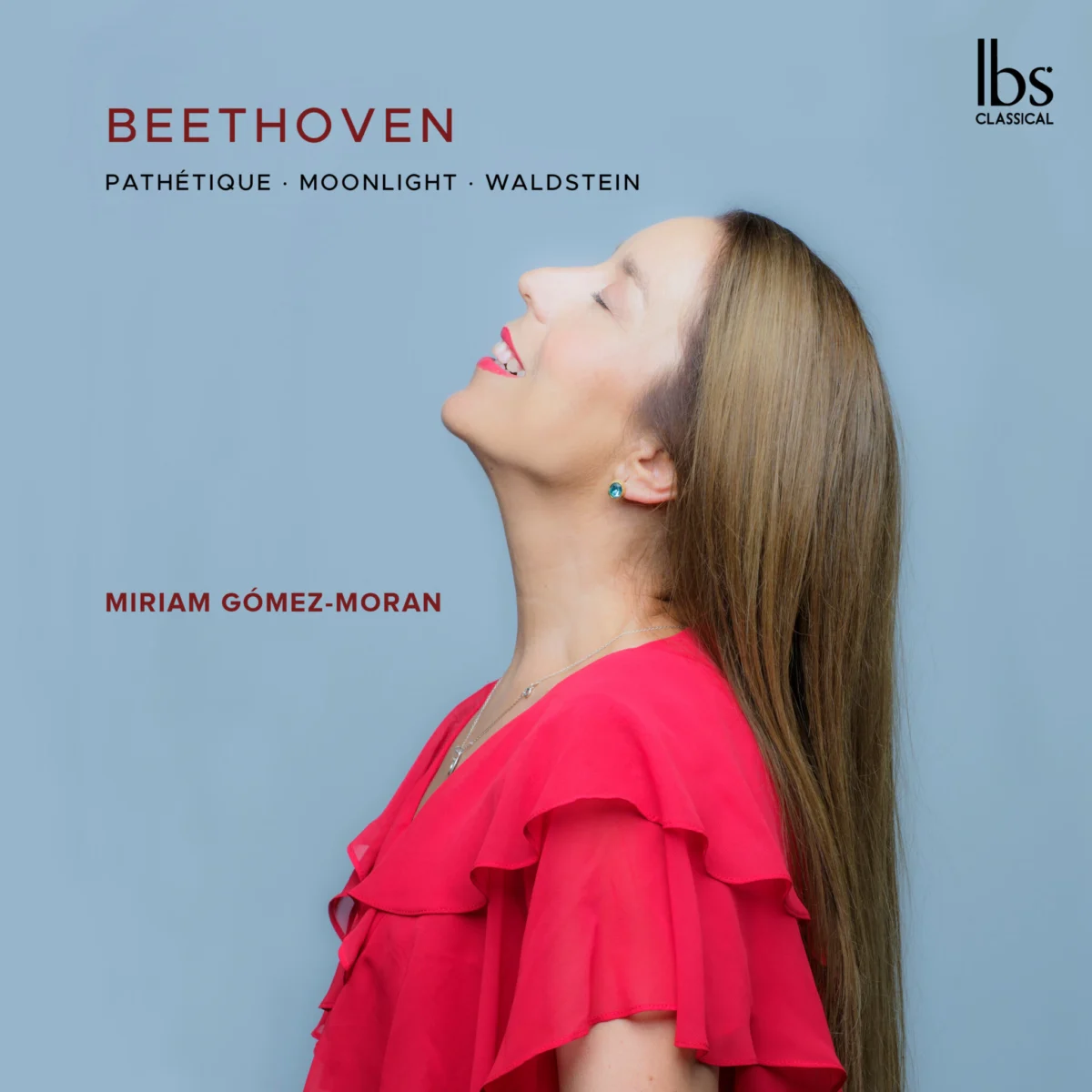
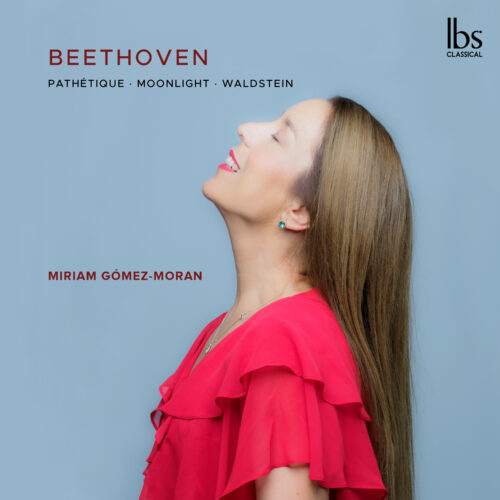
While the landscape of classical music is saturated with recordings of Ludwig van Beethoven’s thirty-two piano sonatas, the true test of a performer lies not in their ability to replicate tradition, but in their capacity to illuminate the familiar with a newfound clarity. In a recently released album from IBS Classical, pianist and scholar Miriam Gómez-Morán offers a compelling argument for the vitality of these masterworks, presenting a trio of the most iconic sonatas—the Pathétique, the Moonlight, and the Waldstein—with an aesthetic that prioritizes intellectual rigor and structural transparency over the romanticized sentimentality often found in modern interpretations.
Main Facts: A New Benchmark in Interpretation
Miriam Gómez-Morán’s latest recording is not merely a collection of hits; it is a meticulously crafted dialogue between the performer and the composer. Currently a professor at one of Spain’s premier music conservatories and possessing a PhD in Piano, Gómez-Morán brings a pedagogical depth to her performance that is immediately apparent to the listener.
The album features three pillars of the Beethoven canon:
- Piano Sonata No. 8 in C Minor, Op. 13 ("Pathétique"): Known for its dramatic tension and revolutionary emotional scope.
- Piano Sonata No. 14 in C-sharp Minor, Op. 27, No. 2 ("Moonlight"): Often burdened by its own popularity, it is here rendered with a refreshing lack of cliché.
- Piano Sonata No. 21 in C Major, Op. 53 ("Waldstein"): A technical tour de force that demands absolute clarity and rhythmic drive.
What sets this recording apart is the pianist’s rejection of excessive pathos. Where many performers lean into the "tragic" aspects of the Pathétique to the point of melodrama, Gómez-Morán maintains a crystalline purity. Her approach is characterized by high contrast, moving seamlessly between the lyrical and the fiery without losing the thread of the music’s inherent logic. The result is a transparent, bright, and deeply intelligent reading that invites the listener to rediscover the mechanics behind Beethoven’s genius.
Chronology: The Evolution of the Beethoven Canon
To understand the weight of this new release, one must look back at the historical arc of Beethoven’s sonatas. Composed between 1798 and 1804, the three sonatas presented on this disc represent the transition from the late Classical period into the height of the Heroic style.
- 1798–1799 (Pathétique): This was the era where Beethoven began to challenge the formal constraints of the Sonata-Allegro form, infusing his writing with a new sense of psychological depth.
- 1801 (Moonlight): Beethoven’s experiment with structure, specifically the quasi una fantasia designation, marked a departure from the traditional fast-slow-fast movement structure.
- 1803–1804 (Waldstein): Written during the same period as the Eroica Symphony, the Waldstein represents the expansion of the piano’s range and power, pushing the limits of the contemporary fortepiano.
In the contemporary context, listeners have been blessed with a wealth of recorded cycles. Most notably, the NativeDSD catalog has been anchored by Peter Takács’s complete set, which was awarded the "Solo Instrumental Album of the Year" in 2022. Takács’s eleven-volume set remains the gold standard for those seeking a comprehensive, unified approach to the complete cycle. However, Gómez-Morán’s release serves a different purpose: it is a distillation of the essence of these specific sonatas, offering a modern, high-fidelity lens that captures the nuance of touch and the decay of the piano strings with startling intimacy.
Supporting Data: The Technical Excellence of the IBS Recording
The success of a piano recording is as much about the engineering as it is about the playing. The IBS Classical production team has achieved a sonic environment that is, quite simply, reference-grade.
The recording captures the piano at what is widely considered the "perfect distance." Many modern piano recordings suffer from either too much room reverberation—which masks the articulation of the notes—or a "close-mic" effect that makes the instrument sound unnaturally aggressive and metallic. The IBS production strikes an equilibrium that preserves the natural resonance of the instrument while providing the listener with an immersive experience.
For audiophiles utilizing high-resolution playback systems, the DSD (Direct Stream Digital) format utilized here provides a seamless, analog-like reproduction of the piano’s dynamic range. This is essential for a performance as dynamic as Gómez-Morán’s; when she shifts from a whisper-soft pianissimo to the sudden, jarring chords of the Pathétique, the recording maintains the integrity of the soundstage, ensuring that the transparency of her touch is never lost in a muddle of digital compression.
Official Responses and Critical Reception
The reaction from the classical music community has been one of quiet admiration, particularly regarding the pianist’s refusal to indulge in the "cult of the personality." By avoiding the common trap of over-interpreting these works, Gómez-Morán allows the score to speak for itself.
Senior Music Reviewer Bill Dodd, in his assessment of the album, noted that he found her interpretation of the Waldstein to be perhaps the most satisfying he has encountered to date. "You will hear intelligence and articulation, and you will hear a fresh take on these familiar sonatas," Dodd stated. His endorsement carries weight, given his lifelong immersion in the classical tradition and his discerning ear for both historical performance practices and modern high-fidelity audio engineering.
The consensus is clear: while we have access to a vast archive of legendary performances, we are currently living in a "Golden Age" of access. The ability to compare a seasoned veteran’s complete cycle, such as that of Peter Takács, against the surgical, insightful brilliance of a specialist like Gómez-Morán, is a luxury that would have been unimaginable to music lovers even a few decades ago.
Implications: The Future of Classical Interpretation
The implications of this release are significant for both the performer and the listener. For the listener, it provides a masterclass in how to approach the most famous works in the repertoire without the burden of historical fatigue. It challenges the listener to set aside the "definitive" versions they grew up with and engage with the music as a living, breathing entity.
For the classical music industry, this release underscores the ongoing value of the "curated program." While streaming platforms often encourage the consumption of music in fragments or playlists, the deliberate pairing of these three sonatas by an artist of Gómez-Morán’s caliber reinforces the importance of the album as an artistic statement.
As we look toward the future, the integration of high-resolution audio with academic performance practice—as demonstrated in this IBS production—represents the most viable path forward for the genre. It validates the need for recordings that are not just technically perfect, but intellectually grounded.
Conclusion: A Highly Recommended Addition to the Library
Miriam Gómez-Morán’s Beethoven: Pathétique, Moonlight, Waldstein is more than just a recording; it is an invitation to listen closer. It strips away the varnish of centuries of performance habits, revealing the raw, muscular, and deeply human core of Beethoven’s writing.
Whether you are a seasoned collector of Beethoven cycles or a curious newcomer, this album provides an essential, refreshing perspective. It stands alongside the great interpretations of the past while firmly planting itself in the modern era of sonic excellence. For those seeking to complete their collection, the aforementioned eleven-volume set by Peter Takács remains an essential, authoritative foundation; however, as an individual volume, Gómez-Morán’s disc is a triumph of artistry and a must-listen for anyone who believes they have heard everything these sonatas have to offer.
In a world filled with noise, this recording offers a moment of profound, articulate, and beautifully rendered clarity. It is, by any metric, a highly recommended addition to any serious music library.