
In the early months of 2022, a minimalist browser-based game named "Wordle" ascended from relative obscurity to become a global cultural touchstone. Developed by software engineer Josh Wardle, the game challenged users to guess a five-letter word in six attempts, providing feedback through a simple color-coded tile system. While the game was praised for its simplicity, it simultaneously sparked a massive wave of nostalgia for "analog" era word games, prompting a vibrant community discourse—notably within specialized technical forums like DIYAudio—about the evolution of game theory, linguistics, and the intersection of human strategy and algorithmic design.
Main Facts: The Mechanics of Modern Obsession
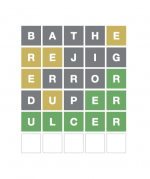
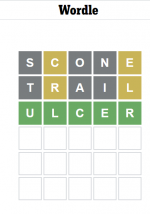
At its core, Wordle is a deterministic logic puzzle. Unlike the more complex, open-ended word games of the mid-20th century, Wordle provides granular feedback: green tiles indicate a correct letter in the correct position, yellow tiles denote a correct letter in the wrong position, and gray tiles signify letters that do not appear in the target word at all.

This feedback loop transformed the game into a daily ritual for millions. By restricting players to one puzzle per day, the game manufactured a "shared experience," where the entire world attempted to solve the same mystery simultaneously. This constraint, combined with the ease of sharing results on social media via cryptic emoji grids, turned a solitary intellectual exercise into a communal event.
A Chronology of Discovery and Community Adoption
The discourse within digital communities—specifically the DIYAudio forum—serves as a fascinating microcosm of the game’s rapid adoption. On February 11, 2022, members began discussing the game with a mix of surprise and competitive intrigue.
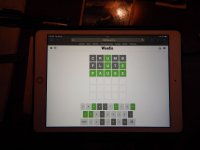
For many, the initial encounter was defined by "beginner’s luck." Users reported solving the puzzle in as few as three attempts, leading to an immediate fascination with the game’s difficulty curve. By midday, threads were filling with anecdotes of success, frustration, and the realization that the game’s mechanics were far more accessible than the word games of previous generations.
As the day progressed, the conversation evolved. Users who initially played the game as a casual morning distraction began to analyze the lexicon. The inclusion of less common vocabulary—such as the French-derived word "BIJOU"—caused a stir, highlighting the difference between regional English dialects and the game’s standardized dictionary. By the evening of February 11, the discussion had shifted from simple "how to play" queries to deeper technical analyses, including the software’s open-source origins and the mathematical probability of success.

Supporting Data: Frequency, Strategy, and Linguistics
The transition from casual play to strategic optimization was swift. In technical circles, the game was treated less as a game of chance and more as an optimization problem. Data enthusiasts began analyzing the game’s underlying structure, revealing that the game’s software repository contained a defined list of 2,315 solution words and 12,971 permissible guess words.
The Mathematics of the First Guess
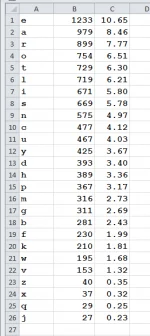
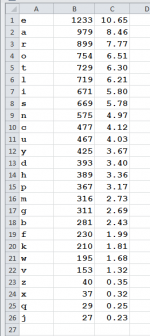
Forum participants quickly identified that the first guess is the most critical variable. By creating frequency tables based on the English language’s most commonly used letters—E, A, R, O, T, L, I, S, N, and C—players developed "opening gambits." For instance, starting with words like "CONES" or "TRAIL" became a common strategy to maximize the probability of identifying correct letters early.

Comparative Game Theory
The community frequently drew comparisons to older, more difficult games. Many participants recalled playing 4-letter word games in their youth that lacked the "positional feedback" of Wordle. In those traditional games, players were informed only of the count of correct letters, not their location, rendering the game significantly more challenging. Wordle’s innovation—providing both positional and existence data—was identified as the key factor behind its widespread appeal, effectively lowering the barrier to entry for the general public.
Official Responses and the "NYT" Transition
A significant portion of the discourse in February 2022 centered on the transition of Wordle from an independent project to its acquisition by The New York Times.
For many users, this marked a turning point. Concerns were raised regarding the potential for the game to be hidden behind a subscription paywall, leading to confusion about the game’s future availability. Users who had previously enjoyed the "unlimited" feel of the independent version expressed skepticism toward the corporate integration. However, the move also solidified the game’s status as a legitimate pillar of modern digital media, alongside the New York Times Crossword and Spelling Bee.
The acquisition brought with it a heightened level of scrutiny. Players began to notice subtle changes in the dictionary and the difficulty of the daily words, fueling long-standing debates about whether the "official" version of the game had become more obscure or linguistically elitist compared to the original, crowd-sourced version.

Implications: The Social and Psychological Impact
The rise of Wordle carries profound implications for how we interact with technology and each other in a post-pandemic world.
The Ritualization of Routine
Wordle succeeded because it filled a specific niche in the morning routine. By integrating itself into the "first cup of coffee" window, it became a stable point in a volatile world. For many, it replaced the doom-scrolling of social media feeds with a constructive, brain-engaging activity.
The Democratization of Language
The game acted as a linguistic equalizer. By forcing players to interact with a set dictionary, it encouraged users to expand their vocabulary. The "BIJOU" incident serves as a perfect case study: a word that seemed "foreign" or "obscure" to some was, to others, a standard part of their cultural lexicon. This sparked cross-cultural dialogues about the origins of English, the influence of French on the language, and the subjectivity of what constitutes a "common word."
The "Mastermind" Legacy
The comparison made by many users to the classic board game Mastermind highlights a deeper truth: humans are hardwired for deduction. We find immense satisfaction in the process of elimination. The success of Wordle proves that there is still a massive appetite for games that reward patience, logic, and methodical thinking.
Conclusion
What began as a simple browser-based experiment by Josh Wardle transformed into a global phenomenon that bridged the gap between generations. Whether it was the thrill of a three-guess win, the frustration of a "BIJOU" lockout, or the intellectual satisfaction of using letter-frequency tables to engineer a perfect opening, Wordle became more than just a game. It became a community.
As digital spaces continue to evolve, the Wordle experience reminds us that the most effective technologies are often the ones that respect the user’s intelligence while providing a simple, shared human experience. Even today, as the initial fervor has settled, the legacy of the game persists in our collective lexicon, proving that sometimes, all we need is five letters and a little bit of luck to start our day.


