
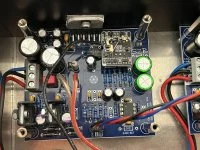
In the high-fidelity audio community, the debate between integrated circuit (IC) operational amplifiers and discrete, hand-assembled modules has persisted for decades. While integrated op-amps—such as the industry-standard LM4562 or the high-performance OPA828—have long dominated the market due to their compact size and predictable metrics, a growing segment of audiophiles is turning back to discrete architecture to bypass what they describe as the "OPA fog"—a perceived lack of transparency and dynamic realism in monolithic silicon.
A recent, highly technical investigation by forum member "zarandok" on the DIYAudio community has brought this debate into sharp focus. By integrating Chinese-manufactured discrete op-amp modules into a composite power amplifier’s negative feedback loop, the user has sparked a collaborative effort to reverse-engineer these mysterious components. The resulting discussion—a masterclass in collaborative engineering—highlights not only the potential performance gains of discrete designs but also the challenges of documentation, component authenticity, and circuit stability.

Main Facts: The Shift to Discrete Topology
The core of the investigation lies in the SA100 discrete operational amplifier. The user "zarandok" reported that replacing traditional ICs with these discrete modules resulted in a markedly more "open" soundstage. Specifically, the user noted that micro-details—the subtle decay of brass instruments, the sharp attack of transients, and the natural timbre of percussion—were rendered with a clarity that ICs consistently failed to achieve.
From a technical perspective, the user argued that while IC op-amps are constrained by the limitations of monolithic manufacturing (including thermal management issues and the inherent compromises of fitting a complex circuit onto a tiny silicon die), discrete designs allow for the use of high-quality, matched components and higher quiescent currents. This, he posits, is the "secret" that allows these modules to escape the limitations of standardized silicon, bringing a "discrete character" back into the signal chain.

Chronology of the Investigation
The project began on April 28, 2026, when "zarandok" posted his initial findings and requested assistance in decoding the schematic of the SA100 module.
- Initial Discovery: Following a listening test, the user committed to reverse-engineering the module to understand the "how" behind the subjective sonic improvement.
- Peer Review: Within hours, experienced engineers, including "MarcelvdG," identified critical errors in the user’s initial schematic draft, such as incorrect transistor polarity for Q10 and reversed collector/emitter connections for Q3.
- Refinement: The community quickly pivoted to discussing the role of compensation capacitors (labeled "???" in the original draft). Experts suggested that these components are vital for stability, recommending a trial-and-error approach to tune them against oscillations.
- Deep Dive: The conversation evolved from mere reverse engineering to a broader discussion on circuit topology, comparing the SA100 to classic designs like the SparkoS SS3602, and analyzing the impact of folded cascode stages.
- Validation: By mid-May, the discussion moved toward empirical verification, with user "Franz Shottky" contributing measurement data (FFT analysis) provided by a fellow enthusiast, "Sercan85," to correlate the subjective improvements with measurable performance metrics.
Supporting Data and Technical Analysis
The investigation into the SA100 has provided a wealth of technical insight into how discrete op-amps function at the component level.

The Role of Compensation and Stability
One of the most significant technical hurdles identified was the role of compensation capacitors. In a discrete design, these are not pre-integrated as they are in an IC. Users noted that the "???" components in the schematic are crucial for setting the open-loop bandwidth. The community consensus was to start with a value—such as 220pF—and incrementally decrease it until oscillation occurs, then double the value to ensure a robust safety margin.
The "OPA Fog" and Quiescent Current
The discussion touched upon why these modules sound different. The consensus among the contributors is that higher quiescent currents are a major factor. For example, maintaining 2mA in the input stage and 5mA in the voltage amplification stage (VAS) requires significant power dissipation. A standard DIP8 or SO8 package cannot dissipate the resulting ~360mW of heat effectively, leading to thermal compression. Discrete modules, being physically larger, allow for better thermal management and the use of discrete, high-grade resistors, which reduces noise and improves linearity.

Component Authenticity
A sub-plot of the investigation involved the identification of the transistors used in the module. A discrepancy arose regarding the labeling of "K398" SMD transistors. While the original Toshiba parts are legendary, they are obsolete. The community suspects that modern clones may be using newer, similar parts (such as the LSK389 series) with rebranded markings, illustrating the ongoing challenge of sourcing genuine, high-performance parts for boutique audio manufacturing.
Official Responses and Expert Input
The DIYAudio community, known for its rigorous gatekeeping and high technical standards, reacted with a mix of skepticism and helpfulness.

Veteran members provided essential guidance, such as recommending Bob Cordell’s Designing Audio Power Amplifiers as the definitive reference for understanding the circuit’s underlying principles. However, the thread also saw a stern reprimand from "jan.didden," who challenged the distribution of copyrighted technical literature. This serves as a reminder that even in open-source DIY communities, intellectual property rights remain a contentious issue.
Regarding the topology itself, "EdGr" clarified that the circuits discussed are essentially folded cascodes—a classic design known for having no Miller capacitance, though it lacks the high current gain of other topologies. This analytical approach provided the user with the necessary vocabulary to continue his research and further refine his own PCB layouts.

Implications for Future Audio Design
The findings of this project carry significant implications for the future of high-end audio hardware:
- The Renaissance of Discrete Modules: As the performance limits of monolithic silicon are reached, the "discrete revolution" offers a pathway for audiophiles to squeeze additional performance out of their systems. The SA100 project proves that with enough community support, complex discrete circuits can be decoded and improved upon.
- The Shift from Subjective to Objective: While the project began with subjective listening tests, it moved toward technical validation. The inclusion of FFT measurements demonstrates that the community is not merely chasing "golden ears" myths but is actively seeking to correlate perceived sound quality with quantifiable distortion profiles and frequency response metrics.
- The Necessity of "Base Resistors": A critical engineering takeaway was the necessity of base resistors for transistors (Q6, Q7, Q17, Q18) to prevent high-frequency oscillations. The contribution from "bkercso" regarding the work of Nathalie Beimler highlights that for DIY enthusiasts, "preventing is much easier than detecting" oscillations in high-impedance lines. This technical knowledge is invaluable for anyone attempting to build their own discrete modules.
Conclusion
The story of the SA100 is more than just a repair or an upgrade; it is a testament to the power of distributed, collaborative engineering. By taking a commercial Chinese module and subjecting it to the scrutiny of experts, "zarandok" and the DIYAudio community have managed to turn a "black box" product into a well-understood, modifiable, and tunable piece of audio equipment.

Whether or not the "discrete sound" is inherently superior to the "IC sound" will likely remain a topic of debate for years to come. However, the technical rigor displayed during this investigation suggests that there is still much to learn—and much to improve—in the way we construct the building blocks of our sound systems. As hobbyists continue to push these discrete designs, we may see a shift in the market where modular, discrete, and thermally-optimized components become the standard for high-end audio, rather than the niche exception.
For those interested in following the development of this project, the ongoing thread remains a living repository of experimental data, schematic revisions, and the collective wisdom of some of the most dedicated engineers in the audio world. The project serves as a perfect case study in how modern communication platforms can facilitate a "second-tier" of research and development that sits outside the walls of corporate R&D laboratories.


