Home cinema, when executed to its fullest potential, is an experience that transcends simple media consumption. The magic of witnessing a cinematic masterpiece on a sprawling screen, wrapped in a physical envelope of multi-dimensional sound, represents the pinnacle of modern domestic entertainment.
However, achieving this auditory and visual nirvana is far more complex than simply purchasing a collection of highly rated components and connecting them with premium cabling. In the high-end audio-visual (AV) landscape, a fundamental truth remains: individual excellence does not guarantee collective harmony. The recent evaluation of the KEF R Meta speaker package alongside two flagship AV receivers—the Marantz Cinema 30 and the Denon AVC-A1H—proves that system synergy is the most critical variable in building a truly spectacular home theater.
Main Facts
The core of any high-performance home cinema system lies in the relationship between the source, the amplification, and the loudspeakers. During comprehensive evaluations conducted by the editorial team at What Hi-Fi?, several key insights emerged regarding how sonic signatures interact:
- The Component Paradox: Assembling a home cinema system solely from individually awarded "five-star" components can yield an unbalanced soundstage if the sonic personalities of the equipment overlap too heavily.
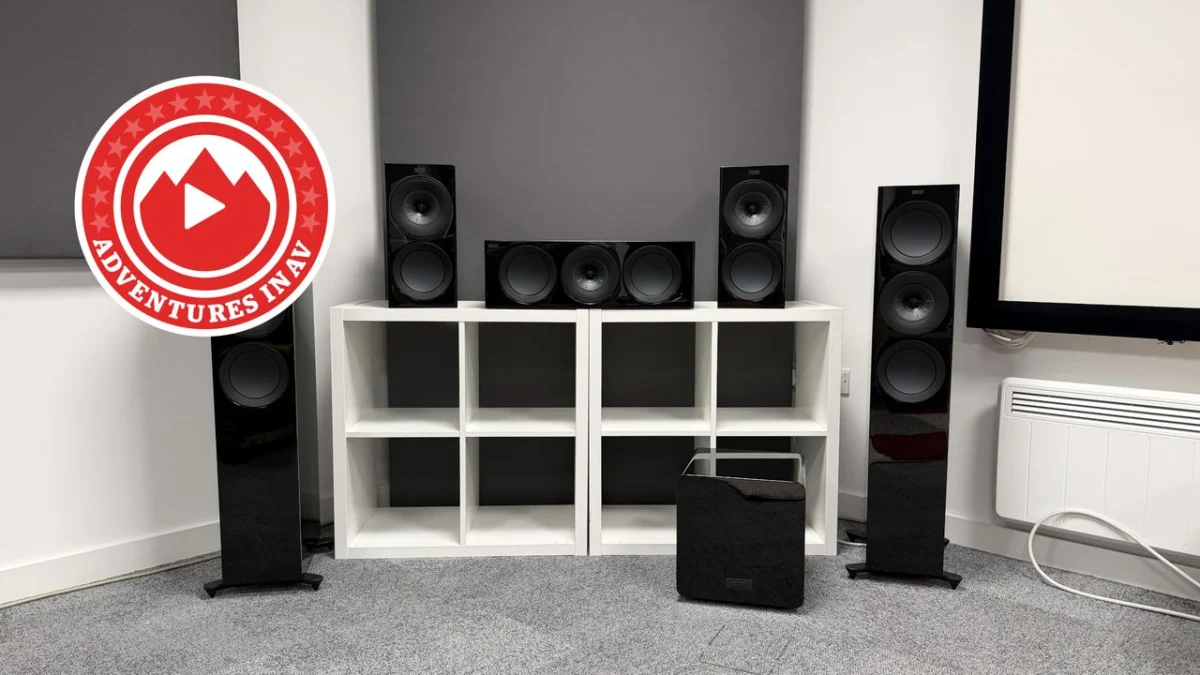
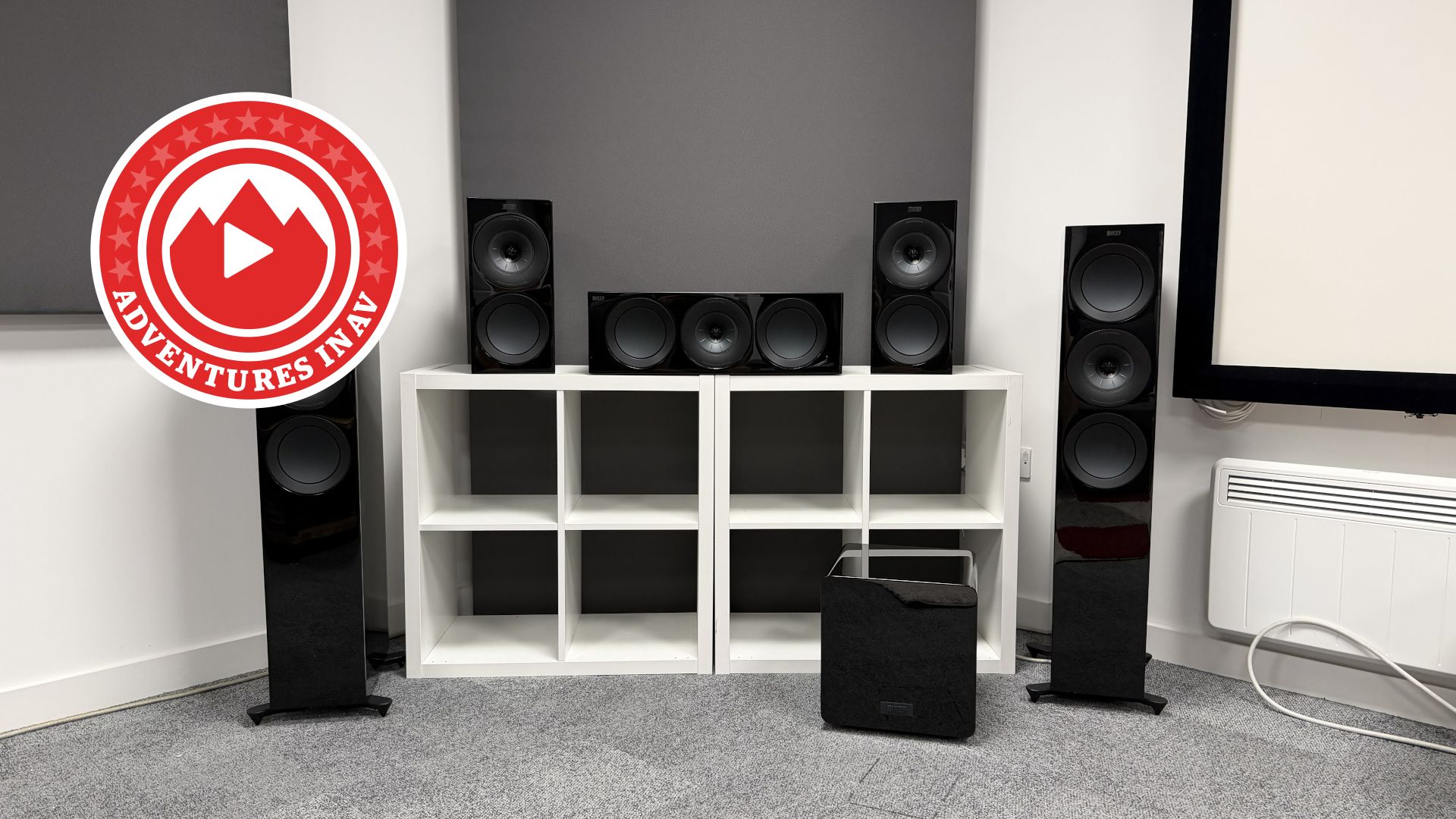
- The Hardware in Question: The testing centered on the newly released KEF R Meta speaker package (anchored by the KEF R7 Meta floorstanders) paired with two distinct top-tier AV receivers: the Marantz Cinema 30 and the flagship Denon AVC-A1H.
- The Marantz Pairing: When connected to the Marantz Cinema 30, the KEF R Meta package produced an incredibly cohesive, spacious, and refined sound. However, because both the Marantz receiver and the KEF speakers lean toward a smooth, controlled presentation, the combination ultimately lacked the visceral bite and dynamic urgency required for high-impact cinematic sequences.
- The Denon Transformation: Swapping the Marantz for the Denon AVC-A1H introduced a more assertive, dynamic, and muscular character. This pairing preserved the natural refinement of the KEF speakers while injecting the system with the energy, attack, and physical impact necessary for both action-heavy movie scenes and driving musical tracks.
- The Synergy Lesson: System matching is not just a concern for two-channel hi-fi enthusiasts; it is an absolute necessity for multi-channel home cinema configurations.
Chronology of the Testing Process
The discovery of this critical matching issue unfolded over several days of rigorous, hands-on testing in standardized listening rooms. The editorial team—including Editor-in-Chief Alastair Stevenson, TV and AV Editor Tom Parsons, Senior Staff Writer Lewis Empson, and Technical Editor Ketan Bharadia—subjected the hardware to a structured sequence of acoustic challenges.
[Phase 1: Initial Setup]
   │── KEF R Meta Speaker Package connected to Marantz Cinema 30 AVR
   └── Calibration and room equalization completed

[Phase 2: Cinematic Testing]
   │── Playback of "Dune: Part One" (4K Blu-ray)
   └── Result: Superb spatial steering, controlled low-end, highly immersive

[Phase 3: Music & High-Octane Stereo Testing]
   │── Playback of F1 test disc and Led Zeppelin's "Whole Lotta Love"
   └── Discovery: The team identifies an overly smooth, relaxed sonic signature lacking "bite"

[Phase 4: Diagnostic Review]
   └── Cross-referencing product profiles; both units share "smooth and refined" tuning

[Phase 5: Component Swap & Re-testing]
   │── Marantz Cinema 30 replaced with Denon AVC-A1H
   └── Result: Instantaneous increase in dynamic contrast, transient speed, and physical impact
Phase 1: Unboxing and Initial Configuration
The evaluation began by unboxing the KEF R Meta speaker package, a system utilizing KEF’s proprietary Metamaterial Absorption Technology (MAT). The speakers were positioned in a standard 5.1 surround configuration, with the KEF R7 Meta floorstanders serving as the front left and right channels. The system was initially paired with the Marantz Cinema 30, a reference-grade AV receiver celebrated for its musicality and effortless control.
Phase 2: The Cinematic Trial (Dune: Part One)
The first listening test utilized the reference 4K Blu-ray of Denis Villeneuve’s Dune: Part One. The team focused on the complex, demanding ornithopter flight scenes.
The initial impressions were highly positive. The Marantz Cinema 30 drove the KEF package with absolute authority. The soundstage was expansive, and the steering of audio effects—such as the mechanical thrum of the ornithopter wings moving from the front channels to the surrounds—was seamless. The subtle micro-dynamics of the desert wind whispering beneath Hans Zimmer’s pounding, tribal score were rendered with delicate precision.
Phase 3: The Turning Point (Stereo and Music Testing)
The testing transitioned from cinematic blockbusters to high-energy stereo music and specialized sports audio, utilizing an Formula 1 test disc and Led Zeppelin’s classic track, "Whole Lotta Love."
During this phase, the editorial team noticed a distinct shift in engagement. While the sound remained impeccably refined and free of distortion, it felt emotionally detached. Senior Staff Writer Lewis Empson was the first to voice the collective concern, noting that the presentation had become "too smooth." The aggressive guitar riffs of Jimmy Page and the raw, acoustic power of John Bonham’s drumming felt polite rather than revolutionary. The system had prioritized composure over excitement.
Phase 4: Diagnosing the Synergy Clash
The team paused the listening sessions to analyze the individual review profiles of the hardware. They discovered a textbook case of additive sonic characteristics.
The KEF R7 Meta speakers are engineered to be incredibly smooth, low-distortion transducers. Concurrently, the Marantz Cinema 30 is tuned to deliver a warm, smooth, and highly refined soundstage. By combining two components that share the exact same sonic philosophy, the team had inadvertently doubled down on refinement, pushing the overall system balance too far into a relaxed, overly polite territory.
Phase 5: The Denon Intervention
To test this hypothesis, the Marantz receiver was disconnected and replaced with the flagship Denon AVC-A1H. After recalibrating the system, the same test tracks were replayed.
The transformation was immediate. When Led Zeppelin’s "Whole Lotta Love" began, the guitar track regained its gritty, electric edge. When Bonham’s legendary drum kit entered, the impact was physical and immediate, delivering a punch-in-the-chest sensation that had been entirely absent during the Marantz pairing. The system had found its balance, marrying KEF’s inherent refinement with Denon’s raw dynamic power.
Supporting Data: Technical Profiles and Specifications
To understand why these components interacted in this manner, it is necessary to examine the underlying engineering and design philosophies of the hardware involved.
1. KEF R Meta Speaker Package (Featuring KEF R7 Meta)
The defining feature of the KEF R Meta series is the integration of Metamaterial Absorption Technology (MAT). This acoustic innovation consists of a complex, maze-like synthetic structure positioned behind the Uni-Q driver array.
- Acoustic Function of MAT: MAT acts as an acoustic black hole, absorbing 99% of the unwanted high-frequency sound radiating from the rear of the tweeter dome.
- Resulting Sonic Profile: By eliminating this back-wave distortion, the KEF R Meta speakers deliver an exceptionally clean, transparent, and ultra-smooth high-frequency response. Distortion is minimized to such an extent that the speakers never sound harsh or fatiguing, even at high volumes.
| Specification | KEF R7 Meta Floorstander |
|---|---|
| Driver Configuration | Three-way bass reflex |
| High-Frequency Driver | 25mm (1 in.) vented aluminum dome with MAT |
| Mid-Frequency Driver | 125mm (5 in.) aluminum cone (Uni-Q) |
| Low-Frequency Drivers | 2 x 165mm (6.5 in.) hybrid aluminum cones |
| Frequency Range (-6dB) | 33Hz – 50kHz |
| Sensitivity (2.83V/1m) | 88dB |
2. Marantz Cinema 30 AV Receiver
The Cinema 30 represents Marantz’s statement of luxury and high-fidelity amplification. It is tuned by the proprietary Marantz "Sound Master" team in Japan.
- Amplification Philosophy: Marantz utilizes Hyper Dynamic Amplifier Modules (HDAM) and current feedback circuitry. This architecture prioritizes a warm, musical, analog-like presentation with deep, enveloping spatial imaging.
- The Sonic Signature: The Cinema 30 is designed to make poor recordings sound acceptable and good recordings sound sublime. It rounds off harsh digital transients, resulting in a velvety, sophisticated sound that excels in long listening sessions.
3. Denon AVC-A1H AV Receiver
The AVC-A1H is Denon’s flagship "A1" series amplifier, designed without compromise to deliver theater-grade performance.
- Amplification Philosophy: The Denon utilizes a massive, centrally mounted power transformer weighing over 11.5 kg, flanked by a monolithic amplifier construction. Each of its 15 channels of amplification is built on a separate PCB, minimizing crosstalk and maximizing transient response.
- The Sonic Signature: Denon’s flagship tuning prioritizes speed, dynamic authority, and pinpoint transient attack. It is engineered to deliver instantaneous bursts of current, allowing the amplifier to react to sudden cinematic explosions or musical drum hits with explosive energy.
Official Responses and Expert Perspectives
The phenomenon of system matching is a widely recognized reality among audio engineers, product designers, and industry experts.
The Sound United Dual-Brand Strategy
Both Denon and Marantz operate under the parent company Masimo Consumer (formerly Sound United). This corporate relationship is highly relevant to this testing, as the parent company intentionally differentiates the two brands to target different consumer profiles:
"While Denon and Marantz share some underlying digital processing platforms, their analog output stages, power supplies, and acoustic tuning are kept entirely separate. Marantz is intentionally voiced for warmth, depth, and musical refinement—aimed at the audiophile who values texture and space. Denon is voiced for speed, power, and cinematic impact. They are designed to complement different speakers and different listener preferences."
The Editorial Consensus
Technical Editor Ketan Bharadia emphasized that building a "proper home cinema" requires looking beyond the spec sheet or a simple list of five-star reviews:
"There is a persistent myth that home cinema sound is somehow less sophisticated than two-channel hi-fi, and that as long as you have enough power and channels, any high-end components will work together. This test proves the opposite.
Because a home cinema system has to manage up to a dozen speakers simultaneously, any sonic imbalance in the amplification or the transducers is multiplied across the entire room. If your speakers are smooth and your amplifier is smooth, you lose the essential dramatic tension of the movie."
Lewis Empson summarized the issue through a culinary lens, stating:
"It is very much like cooking a complex dish. You might love salt, and you might have five premium, high-quality salty ingredients. But if you put them all into the pot together without balancing them with acidity or sweetness, the final meal is going to be unpalatable. In audio, you must balance your ingredients to get a harmonious result."
Implications for Consumers and the AV Industry
The findings of this evaluation have significant practical implications for consumers planning to invest in mid-to-high-end home theater systems, as well as for the retail sector that supports them.
                  [CONSUMER PURCHASING DECISION]
                                 │
                   Do the components share the
                     same sonic personality?
                                 │
                ┌────────────────┴────────────────┐
               YES                                NO
                │                                 │
     [Over-Saturated Profile]            [Balanced Synergy]
  (e.g., Too Smooth / Too Bright)      (Refined + Dynamic)
                │                                 │
     [Sub-Optimal Performance]           [Peak Audio Nirvana]
1. The Danger of "Blind" Buying Based on Star Ratings
For consumers, the most important takeaway is that purchasing decisions should never be based solely on isolated product reviews or star ratings. A product can easily earn a five-star rating because it performs flawlessly within its designed parameters. However, if that product is paired with partnering equipment that duplicates its sonic flaws or strengths to an extreme degree, the overall system performance will degrade.
2. Practical Rules for System Matching
When building a home cinema, enthusiasts should aim for a relationship of complementary contrast rather than identical mirroring:
- Pairing Smooth/Refined Speakers (e.g., KEF, Wharfedale): These speakers benefit from fast, punchy, and highly dynamic amplification (such as Denon, Yamaha, or Anthem) to inject energy and excitement into the presentation.
- Pairing Forward/Energetic Speakers (e.g., Klipsch, Monitor Audio): These speakers often pair beautifully with warmer, more refined amplification (such as Marantz or Arcam) to temper potential harshness and create a more balanced, fatigue-free listening experience.
3. The Role of Room Correction Software
Modern AV receivers feature advanced room correction suites, such as Audyssey MultEQ XT32 or Dirac Live. While these software tools are incredibly powerful for correcting room acoustics, frequency response anomalies, and phase issues, they cannot entirely rewrite the fundamental hardware DNA of an amplifier or loudspeaker. Software calibration should be used to fine-tune a system, but the physical synergy of the hardware must remain the foundation of the build.
4. The Value of Specialist Retailers
This evaluation highlights the indispensable role of physical audio-visual dealerships. In an era dominated by online shopping, the ability to visit a specialist dealer, sit in a treated listening room, and audition specific speaker-amplifier combinations is critical. Only through direct comparative listening can a consumer truly understand how different components interact, ensuring that their final home cinema system is a cohesive, high-performance team.