Main Facts: The Launch of ‘Talk to Spotify’
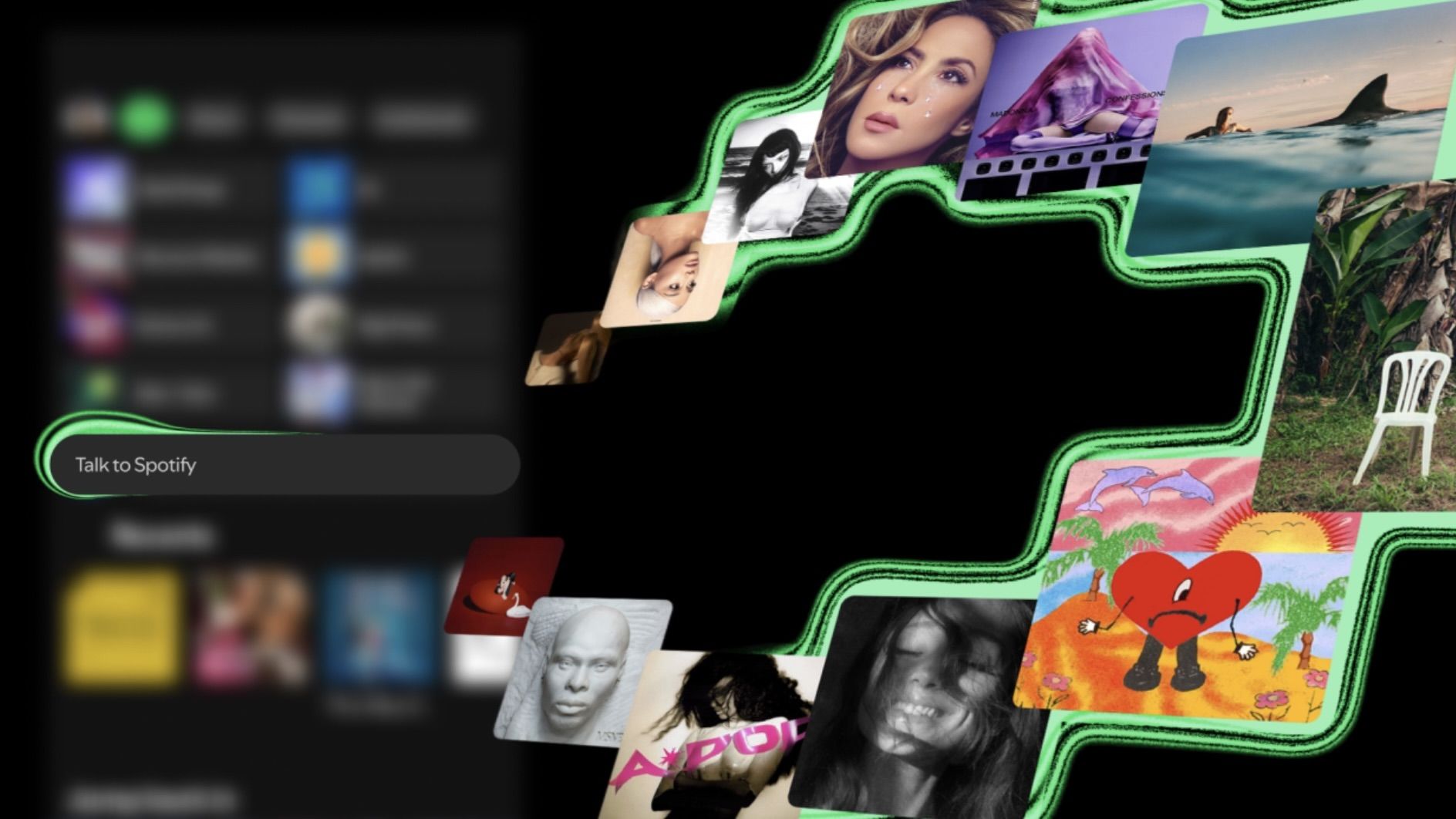
In a bid to deepen user engagement and redefine how listeners interact with their music libraries, streaming giant Spotify has launched a new beta feature dubbed "Talk to Spotify." This artificial intelligence-driven tool allows paying subscribers to control the mobile application using natural language voice commands and text inputs.
The feature, currently in a public testing phase, is designed to act as an interactive companion. Rather than relying on traditional keyword searches and manual navigation, users can converse with the app to build custom playlists, inquire about song histories, discover new artists, and retrieve deep cuts from their personal listening histories.
How the Feature Works
The "Talk to Spotify" interface is integrated directly into the primary mobile user experience:
- Access Points: The tool is accessible within the "Home" and "Now Playing" screens of the Spotify mobile application.
- Activation: Users tap a dedicated microphone icon located in the search field to initiate the interface.
- Input Methods: Once activated, users can either speak directly into their device’s microphone or type conversational prompts into a text field.
- Functional Capabilities: The AI can process complex, contextual commands. For example, instead of searching for a specific artist, a user can instruct the app to "create a playlist of upbeat synth-pop from the late 1980s" or ask, "When was this track recorded, and who produced it?"
Availability and Regional Rollout
To manage system load and gather initial user feedback, Spotify is executing a highly targeted phase-one rollout:
- Target Audience: The feature is restricted to Spotify Premium subscribers aged 18 and older. Free-tier users do not currently have access.
- Geographic Scope: The beta is initially available to users in the United States, Ireland, and Sweden.
- Platform Compatibility: The tool is supported on both iOS and Android mobile operating systems.
- Language Support: At launch, the feature exclusively processes commands in English.
Chronology: Spotify’s Algorithmic Evolution and the AI Music Debate
The introduction of "Talk to Spotify" is not an isolated experiment but the latest milestone in a decade-long transition from manual music curation to highly sophisticated, AI-driven personalization.
[2015] Launch of "Discover Weekly" (Collaborative filtering)
   │
[2021] Debut of the "Hey Spotify" wake-word voice utility
   │
[2023] Launch of "AI DJ" (Generative voice & predictive curation)
   │
[2024] Rollout of "AI Playlist" (Prompt-based text curation)
   │
[Present] Launch of "Talk to Spotify" (Conversational voice & text beta)
The Path to Conversational AI (2015–2024)
- 2015 – The Algorithmic Breakthrough: Spotify launched "Discover Weekly," utilizing collaborative filtering and acoustic analysis. This cemented the platform’s reputation as the industry leader in automated personalization.
- 2021 – Initial Voice Experiments: The company introduced a basic "Hey Spotify" wake-word feature. However, this utility was largely limited to simple playback commands (e.g., "skip song" or "play artist") and lacked true conversational intelligence.
- February 2023 – The Generative AI DJ: Spotify debuted its "AI DJ" feature, powered by OpenAI technology and a synthetic voice modeled on Xavier "X" Jernigan. The feature simulated a real-time radio host, explaining why certain tracks were chosen based on the user’s historical listening habits.
- April 2024 – Prompt-Based Playlists: The company introduced "AI Playlist" in select markets, allowing users to generate highly specific playlists using text prompts (e.g., "songs to read classic literature to on a rainy day").
- Present – "Talk to Spotify": The latest release merges the conversational capabilities of generative text models with direct app control, turning the entire interface into a voice-activated assistant.
The Parallel Backlash: The Battle Over Generative Music
While Spotify has aggressively integrated AI into its user interface, the broader music streaming industry has spent the last 18 months grappling with a severe backlash against generative AI content.
In early 2023, the industry was upended by the viral spread of "Heart on My Sleeve," an AI-generated track that convincingly mimicked the voices of Drake and The Weeknd. This triggered swift legal threats from Universal Music Group (UMG) and forced streaming platforms to re-evaluate their content ingestion pipelines.
Throughout late 2023 and 2024, competitors took decisive action:
- Deezer developed an AI music detector designed to flag and isolate tracks that use synthetic voices or fully automated generation.
- Tidal and Qobuz aligned with major record labels to implement strict policies against hosting AI-generated "slop"—low-quality, algorithmically generated ambient tracks designed to siphon royalty pools via bot farms.
- Spotify’s Dual Approach: Spotify has found itself in a delicate balancing act. While the platform purged tens of thousands of tracks from AI music startup Boomy due to suspected "artificial streaming" (bot manipulation), Spotify’s leadership has resisted a blanket ban on all AI-assisted music, arguing that the technology remains a valid creative tool for human artists.
Supporting Data: The Economics of Voice and Curation
The decision to invest heavily in conversational AI is backed by clear consumer trends and market realities. As the streaming market matures, user retention is increasingly dictated by the quality of a platform’s discovery mechanisms.
The Rise of Voice-Assisted Tech
According to industry data from Juniper Research, global consumer spend on smart home and voice assistant-enabled devices is projected to grow consistently, with over 8 billion voice assistants in active use globally. Crucially, playing music remains the single most common utility for smart speakers:
| Primary Smart Speaker Activity | Percentage of Active Users |
|---|---|
| Streaming Music/Audio | 74% |
| Asking General Questions | 66% |
| Checking Weather/News | 58% |
| Setting Alarms/Timers | 52% |
| Controlling Smart Home Devices | 41% |
By embedding an advanced, proprietary voice assistant directly within its app, Spotify bypasses the need for users to rely on OS-level assistants like Apple’s Siri or Google Assistant, keeping users locked inside its own ecosystem.
Market Share and Engagement Metrics
Spotify remains the dominant force in global music streaming, holding an estimated 31.7% of the global market share as of late 2023, according to MIDiA Research. This is more than double the share of its nearest competitor, Tencent Music (14.4%), and comfortably ahead of Amazon Music (13.4%) and Apple Music (12.6%).
However, maintaining this lead requires continuous engagement. Internal Spotify data has historically shown that users who interact with personalized features—such as Discover Weekly, Daylist, or the AI DJ—exhibit significantly lower churn rates and higher average session lengths than those who curate their libraries manually.
Official Responses: Industry Voices and Corporate Caution
In launching "Talk to Spotify," the company has adopted a measured tone, acknowledging both the technical limitations of early-stage conversational AI and the sensitive nature of the broader AI debate.
Spotify’s Official Position
In a statement accompanying the beta rollout, a Spotify spokesperson emphasized the iterative nature of the release:
"Like any beta, it’s a work in progress: responses won’t always be perfect, and your feedback directly shapes what comes next. We are committed to exploring how conversational AI can make music discovery more intuitive, but we are doing so thoughtfully and in close collaboration with our user community."
This cautious phrasing reflects the unpredictable nature of Large Language Models (LLMs), which can occasionally suffer from "hallucinations"—such as misidentifying artists, generating broken playlists, or misinterpreting complex vocal commands.
The Philosophical Divide: Spotify vs. Competitors
The contrast between Spotify’s enthusiastic embrace of user-facing AI and its competitors’ caution is stark. While Spotify views AI as an essential layer of the modern listening experience, other platforms position themselves as guardians of human curation.
Speaking on the industry’s rush toward AI, a spokesperson for high-resolution streaming service Qobuz noted:
"Our focus remains resolutely on human curation. Algorithms have their place, but the emotional connection of music is best served by expert curators, liner notes, and preserving the artist’s original intent without synthetic intermediaries."
Similarly, Tidal’s leadership has repeatedly stressed that while technological innovation is welcome, it must not come at the expense of artist compensation or the dilution of human-created art.
Implications: How Conversational AI Alters the Streaming Landscape
The rollout of "Talk to Spotify" has far-reaching implications that extend beyond simple user convenience. It represents a fundamental shift in how digital media is indexed, queried, and valued.
1. Bypassing the Mobile Operating System Gatekeepers
For years, Spotify has been locked in a bitter regulatory and legal feud with Apple over App Store fees and platform access. One of Spotify’s historical disadvantages on iOS has been Siri’s native integration with Apple Music.
By building a highly capable, in-app voice assistant that handles complex, semantic queries better than standard OS-level voice tools, Spotify effectively neutralizes Apple’s native platform advantage. Users no longer need to rely on Siri to control their music hands-free; they can open Spotify and use a far more specialized audio assistant directly.
2. The Transition from Keyword Search to Intent-Based Discovery
Traditional search bars are rigid. They require users to know exactly what they are looking for—a specific artist name, song title, or genre. Conversational AI introduces "intent-based" discovery.
This shift lowers the barrier to music exploration. A user who cannot remember the name of a song but remembers a vague detail—such as "that indie rock song from 2012 with a whistling intro"—can now use "Talk to Spotify" to locate it. This level of semantic search has the potential to revive forgotten tracks and diversify user listening habits away from mainstream hits.
3. Privacy and Data Harvesting Concerns
The implementation of voice-controlled features inevitably raises privacy questions. To use "Talk to Spotify," users must grant the app permission to access their device’s microphone.
While Spotify states that the microphone is only active when the user taps the button, privacy advocates remain wary of how voice data is stored, processed, and utilized. Will voice recordings be used to train proprietary LLMs? Will the emotional tone of a user’s voice be analyzed to target advertisements? As the feature moves out of beta, Spotify will face intense scrutiny regarding its data retention and privacy policies.
4. The Threat of Algorithmic Monoculture
While personalized curation is highly convenient, some musicologists and independent artists fear it could worsen the "superstar effect." If users rely on an AI assistant to select their music, the AI’s recommendations will naturally lean toward tracks that are well-indexed and popular within the algorithm’s training data.
For independent, avant-garde, or local artists who do not easily fit into broad conversational prompts (like "chill study beats" or "energetic workout music"), breaking through the algorithmic noise may become even more difficult. The future of music discovery may depend heavily on how Spotify programs its AI to balance familiar favorites with obscure, human-created art.