In the high-octane world of rock and roll, the image of the drummer is often synonymous with excess, aggression, and a disregard for convention. Travis Barker, the legendary Blink-182 percussionist, certainly embodies the energy—his frantic, precise, and high-impact style behind the kit has defined a generation of pop-punk. However, at 50, Barker is proving that his most profound impact isn’t just in the arena, but in the choices he makes off-stage. In a new, high-energy Public Service Announcement (PSA) for "Humane World For Animals" (formerly the Humane Society of the United States), Barker is stepping into a new role: that of a compassionate activist, urging fans to embrace a cruelty-free lifestyle.
The Core of the Campaign: Small Steps for Good
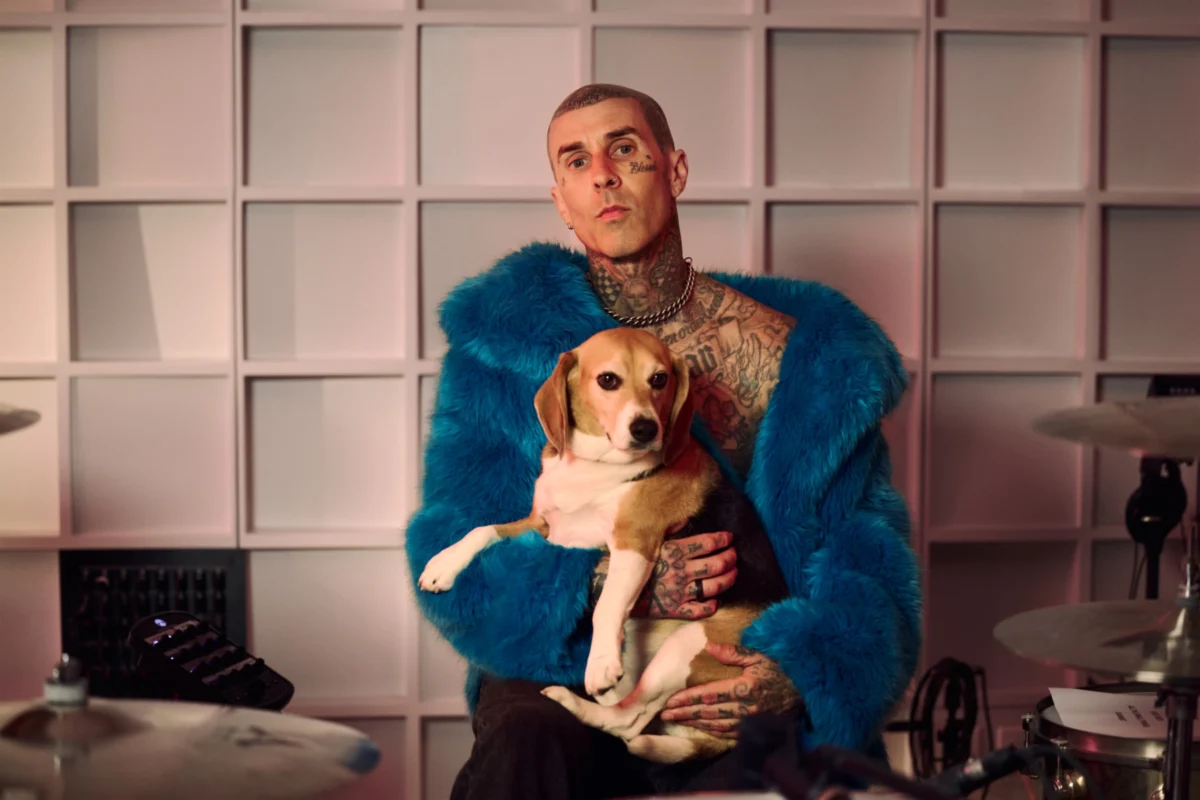
The centerpiece of this collaboration is the "Small Steps for Good" campaign. The 30-second spot is a masterclass in breaking stereotypes. It opens with a domestic, soft-focus shot of Barker in a cream-colored turtleneck, looking every bit the suburban dad. He poses a rhetorical question to the camera: "Being good? I always thought that was boring."
The tone shifts instantly. With a sudden, cinematic rip of his shirt, revealing his iconic, intricate tattoos, he punctuates the sentiment with a grin: "But f— that. Good is never boring!" As the audio shifts from a soft, jazzy aesthetic to a driving, high-tempo punk rock beat, Barker delivers his manifesto: ditch real fur, embrace faux alternatives, and consider the systemic impact of our daily habits.
"Creating a better world for animals takes bold systemic change, and it starts with the small choices people make every day," says Kitty Block, President and CEO of Humane World For Animals. The partnership with Barker is strategic; he brings an authenticity that transcends typical celebrity endorsements, rooted in a life lived consistently by his own moral compass.
A Chronology of Conviction: From Childhood to Conscious Consumerism
Barker’s journey into vegetarianism began long before he became a global superstar. His commitment isn’t a recent trend or a marketing pivot; it is a fundamental aspect of his identity that traces back to his early teenage years.
- The Early Years (Age 13): Barker recounts his first decision to stop eating meat at age 13. It wasn’t just a matter of taste; it was a realization of the process behind the product. Upon learning the origins of ham, steak, and hot dogs, he made a definitive choice. "I didn’t like the taste at the time and then I figured out where hot dogs and ham and steak came from, and there’s not a chance… nope, can’t do that!"
- The 2008 Turning Point: While his diet was established early, his transition to a fully vegan lifestyle was crystallized by a life-altering tragedy. Following the harrowing 2008 plane crash that claimed the lives of his close friends and the flight crew, Barker underwent a period of profound personal reflection. This period reinforced his commitment to health and ethical living, leading him to deepen his advocacy for animal welfare.
- Business Integration: Barker didn’t just change his diet; he changed his industry involvement. From investing in plant-based culinary mainstays like Crossroads Kitchen in Los Angeles to founding his own wellness brand, Barker Wellness, he has actively sought to remove the barrier to entry for fans interested in veganism.
Supporting Data and the "Identity Crisis" Myth
One of the most persistent barriers to widespread adoption of plant-based living is the perception that it requires a sacrifice of identity—that "vegan" or "vegetarian" labels are incompatible with traditional notions of masculinity or rock-and-roll culture. Barker’s life serves as a direct rebuttal to this.
"Be nice to animals. It’s not that hard and it won’t cause too much of an identity crisis for anyone," he notes.
Barker’s influence is tangible. He works closely with fashion designers to ensure his performance wardrobe—including his signature Vans sneakers—is entirely vegan. He is not merely a passive consumer; he is an active force in the supply chain, pushing for vegan versions of mainstream fashion staples. His influence extends to his family as well. While he maintains a philosophy of non-judgment—citing his friendship with outspoken meat-eaters like Joe Rogan—the impact on his household is evident. His daughter, Alabama, has been a vegetarian her entire life, and his younger children, including two-year-old Rocky Thirteen, are raised on a plant-based diet when dining with him.

Official Responses and Strategic Vision
The leadership at Humane World For Animals views Barker as the ideal bridge between mainstream pop culture and ethical advocacy. By utilizing a platform as vast as his, the organization hopes to demystify "small steps" like shopping for cruelty-free cosmetics, choosing faux fur, and supporting local plant-based businesses.
"Travis has inspired people for years by using his voice and platform to advocate for animals in a way that is authentic to who he is," says Kitty Block. The campaign is designed to be accessible. It moves away from the "preachy" tone often associated with animal rights advocacy and replaces it with an invitation to participate in a "cool" and "meaningful" movement.
Economic and Cultural Implications
The implications of Barker’s advocacy are twofold: cultural and economic.
Cultural Shift: By framing "doing good" as a punk-rock ethos, Barker is successfully rebranding animal welfare. He is challenging the narrative that compassion is a sign of weakness or an abandonment of one’s roots. When he takes his 84-year-old father to a local vegan restaurant and explains that they are eating there specifically to support a struggling, independent business, he is teaching a lesson in conscious consumerism that resonates with fans who are increasingly looking for ways to align their spending with their values.
Economic Impact: The rise of plant-based alternatives is a direct response to consumer demand. When a high-profile artist like Barker demands vegan versions of his signature footwear or invests in plant-based kitchens, he accelerates the normalization of these industries. The growth of companies like Barker Wellness and the continued success of upscale, plant-based establishments like Crossroads Kitchen demonstrate that there is a robust market for ethically sourced products.
Conclusion: The Power of the Smallest Beat
Travis Barker’s participation in the "Small Steps for Good" campaign is more than just a promotional spot; it is a testament to the longevity of his influence. By integrating his professional brand with his personal ethics, he has created a roadmap for his followers that suggests that massive change—whether in the music industry or the global food system—starts with individual decisions.
As Barker digs into a bowl of beans during his PSA, looking as comfortable as he does behind a drum kit, he underscores a simple, powerful reality: you don’t have to change who you are to change the world. You just have to be willing to take the first step. For a man who has spent his life keeping time for millions, Barker is now setting the tempo for a more compassionate future.