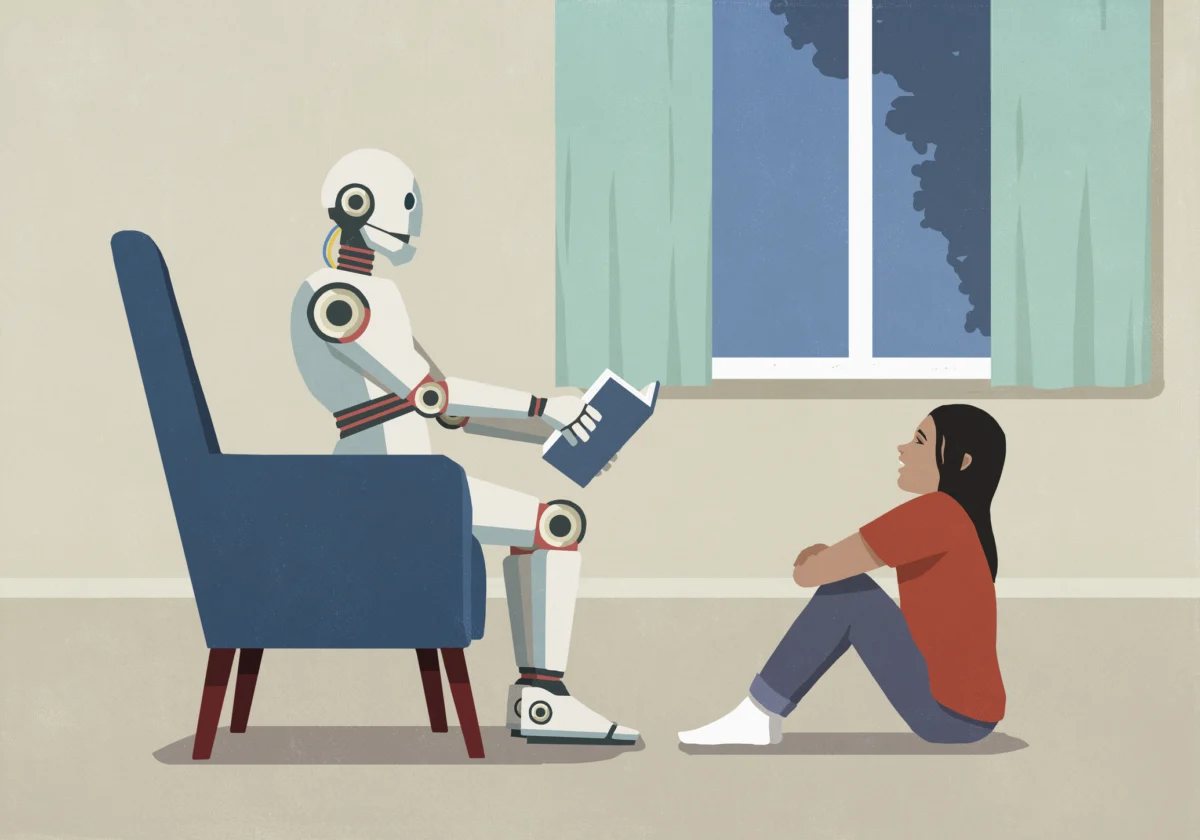
In an era where artificial intelligence is rapidly encroaching on the most intimate corners of human experience, Meta has unveiled its latest foray into the domestic sphere: StoryKit. This new, AI-powered application promises to revolutionize the nightly ritual of bedtime stories by automating the creative process entirely. With the simple tap of a screen, parents can now generate bespoke children’s tales, complete with custom characters, immersive settings, moral lessons, and synthesized musical scores.
As the App Store listing for the tool boldly declares to harried parents: “You don’t need to write a single word.” While the convenience is undeniable, the emergence of StoryKit has ignited a broader debate about the necessity of human artifice in the parent-child bond and whether we are effectively outsourcing one of the oldest forms of human connection to an opaque, predictable neural network.
The Genesis of StoryKit: A Technological Pivot
The existence of StoryKit was first brought to public attention by 9to5Mac, which identified the app’s listing in the Apple App Store. Meta has since confirmed to TechCrunch that the application is currently in a pilot phase, being tested in select international markets to gauge user reception.
The mechanism behind the app is designed to be frictionless. According to the developer documentation, the process begins with the user "snapping" a photo of a child’s favorite toy, a beloved pet, or even a family member. Through computer vision, the app renders this image into a story-ready character. From there, the parent selects a narrative theme and a specific "lesson"—such as courage, empathy, or kindness—which the AI then weaves into a cohesive, illustrated, and narrated storybook.
Meta’s official stance emphasizes safety and creative utility. A spokesperson for the company noted that the platform is restricted to users over the age of 18 and incorporates rigorous AI safety filters to ensure the content remains age-appropriate. Crucially, the app currently lacks any social networking features, positioning it as a private, closed-loop creative tool rather than a public-facing content engine.
Chronology of AI in Domestic Tech
Meta’s move into "parenting-as-a-service" follows a long line of experimental—and sometimes controversial—product launches. To understand why StoryKit is being met with both curiosity and skepticism, one must look at the trajectory of Meta’s recent output:
- The Metaverse Push (2021-2023): Meta’s massive investment in virtual reality, particularly work-focused VR meetings, largely failed to gain traction, highlighting a disconnect between the company’s vision and the human desire for organic, non-mediated interaction.
- The AI Integration Phase (2024-2025): As the generative AI boom took hold, Meta pivoted toward large language models (LLMs). This period saw the release of experimental features on Instagram, including controversial deepfake-style AI image generators that faced significant backlash over privacy and authenticity concerns.
- The "Smart" Hardware Era (2026): The introduction of AI-integrated wearables—colloquially dubbed "pervert glasses" by critics due to their privacy implications—solidified the public’s wariness toward Meta’s hardware ecosystem.
- StoryKit (Current): Meta is now moving into the "micro-moments" of life, targeting the time parents spend with their children, a segment previously considered sacred and immune to corporate disruption.
The Implications of Outsourcing the Imagination
The core of the criticism surrounding StoryKit is not necessarily that the technology fails, but that it succeeds too well at replacing a human function. Storytelling is not merely the transmission of information; it is an improvisational dance between narrator and listener. When a child asks for a story about a turtle in space, they are inviting the parent into a collaborative, often messy, and whimsical creative space.
The Erosion of "Good Enough" Parenting
Psychologists have long argued that the value of the bedtime story lies in the "good enough" parent—the one who stumbles over words, forgets the character’s name, or improvises a plot hole. These imperfections are where the relationship thrives. By contrast, an AI model is designed to provide the most statistically probable—and therefore the most predictable—response to a prompt.

The Commodification of Values
Meta’s marketing highlights the ability to "weave in values" like kindness or courage. However, this raises a philosophical question: can a set of moral values be generated by an algorithm that has no understanding of mortality, emotion, or consequence? By "automating" the lesson, parents may inadvertently turn a moment of character-building into a transactional product, where the child learns that stories are consumer goods rather than cultural artifacts.
Industry Perspective: The Trojan Horse of Efficiency
Christopher Nolan and other cultural luminaries have recently expressed concerns regarding the "Trojan Horse" nature of AI in creative fields. If we normalize the use of AI to generate stories for our children, we are effectively training the next generation to perceive narrative as a static, pre-packaged output rather than a dynamic human skill.
Meta’s product is a response to a genuine pain point: parents are exhausted. The "hustle culture" of the modern era leaves little room for the mental bandwidth required to dream up a bedtime tale after a ten-hour workday. In this context, StoryKit is not a luxury; it is presented as a life-hack. Yet, critics argue that the solution to exhaustion should be systemic support for families, not the replacement of the parent’s creative identity with a software subscription.
A Societal Choice: Authenticity or Optimization?
As Meta continues to refine StoryKit, the app serves as a litmus test for our technological trajectory. We are increasingly presented with a choice: do we want to live in a world where every minute of our lives is optimized for maximum efficiency, or do we prioritize the "inefficient" human interactions that define our humanity?
The risk is not that StoryKit will "ruin" children, but that it will slowly atrophy the creative muscle of the adults who use it. If we stop telling our own stories, we lose the ability to interpret the world through our own unique lens. When the AI becomes the primary architect of our family narratives, the boundary between our lived reality and the simulated output of a language model begins to blur.
Meta’s vision is admittedly bleak, characterized by a utilitarian view of human connection. However, the company is merely responding to a market demand for ease. The true power remains with the user. Parents can choose to ignore the allure of the "perfect" AI story and instead embrace the flawed, chaotic, and infinitely more meaningful experience of telling their own tales.
In the final analysis, the "moral of the story" shouldn’t be generated by a server farm in a data center. It should be whispered in the quiet, analog darkness of a child’s bedroom, spoken by a voice they know, imperfections and all. Whether society will prioritize that connection over the seamless efficiency of a smartphone app remains the definitive question of the decade.
Disclaimer: This article contains analytical commentary on current technological trends. The author holds no affiliation with Meta Platforms, Inc. Some links included in this article may lead to affiliate-monetized content.