Nashville, TN (September 14, 2026) — In an era defined by the splintering of the creative process—where bedroom producers work in isolation and collaborative sessions are often replaced by digital file transfers—David Kalmusky is orchestrating a rebellion. A veteran of the industry who has spent decades traversing the blurred lines between producer, engineer, musician, and studio architect, Kalmusky has officially declared a return to the "old-new" way of making music.
The catalyst for this creative shift is the relocation of his renowned facility, Addiction Sound Studio, from the suburban enclave of Berry Hill to the hallowed, beating heart of Nashville’s music industry: the legendary Masterfonics building, now known as Curb 28, at the top of Music Row.
The Multi-Hyphenate Philosophy
Since leaving his home in Stratford, Ontario, at the age of 16 to pursue a life on the road, David Kalmusky has refused to be boxed in. His resume is a sprawling map of the music business: producer, tracking and mix engineer, songwriter, session guitarist, studio designer, and educator. Yet, when asked to define his role in the modern ecosystem, he eschews the industry’s penchant for rigid job titles.
"I’m a record maker," he says, with a simplicity that belies his massive body of work. "A music maker."
This rejection of the "silo" mentality is not merely philosophical; it is the cornerstone of his operational model. At his new Curb 28 location, Kalmusky has built a studio that functions as a holistic creative ecosystem, where the technical, artistic, and logistical barriers that often plague studio sessions have been dismantled.
A Chronology of a Career in Sound
To understand the significance of Kalmusky’s recent move, one must trace the evolution of his professional life. His career began in the trenches of touring, providing him with a visceral understanding of what a musician needs from a room to deliver their best performance.
- Early Years (The Touring Era): Cutting his teeth as a session guitarist and touring musician, Kalmusky learned the importance of "the room." He realized that the magic of a record often relied on the intangible chemistry between players—a quality he feared was being lost in the age of DAW-heavy, over-edited productions.
- The Berry Hill Expansion (2012–2023): Kalmusky established the original Addiction Sound Studio in Berry Hill. It was a state-of-the-art facility, characterized by multiple tracking spaces and mix rooms separated by glass. While it was a masterpiece of design, it reflected the industry trends of the time: separated, clinical, and highly compartmentalized.
- The Isolation Crisis (2020): The onset of the COVID-19 pandemic accelerated a trend Kalmusky had already begun to notice. Production workflows were becoming increasingly remote, mobile, and individualized. As session bookings grew shorter and 90% of his mix sessions became "unattended," the joy of collaboration began to wane.
- The Return to Community (2023–Present): In late 2023, Kalmusky made the decisive move to Music Row. By situating himself within the Curb 28 complex, he effectively abandoned the "isolated studio" model in favor of a "campus" model, where proximity to other legends and rising stars facilitates a spontaneous exchange of ideas.
The Anatomy of the New Addiction Sound
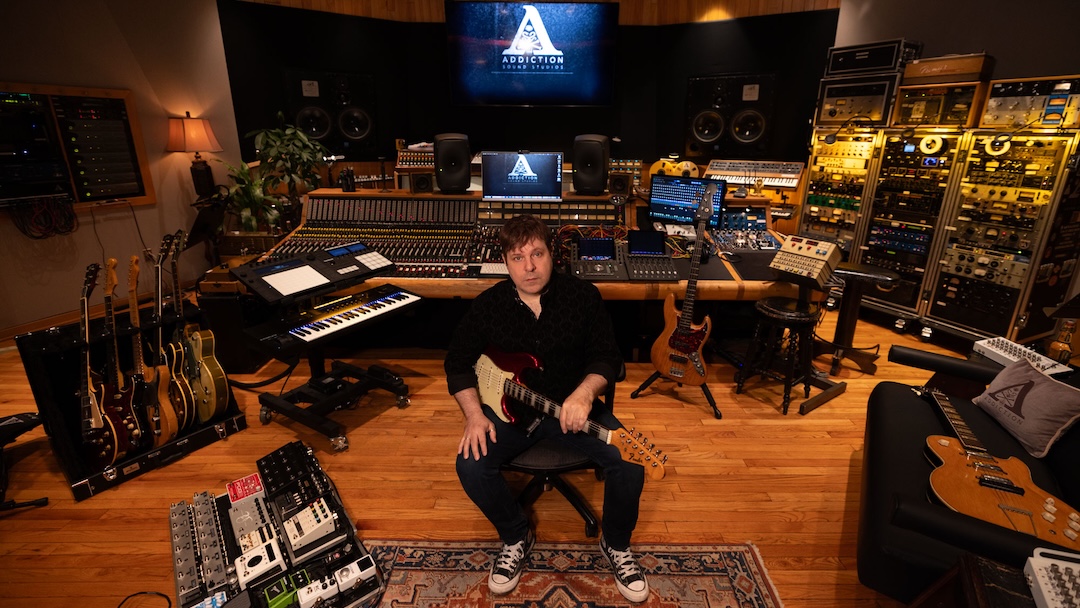
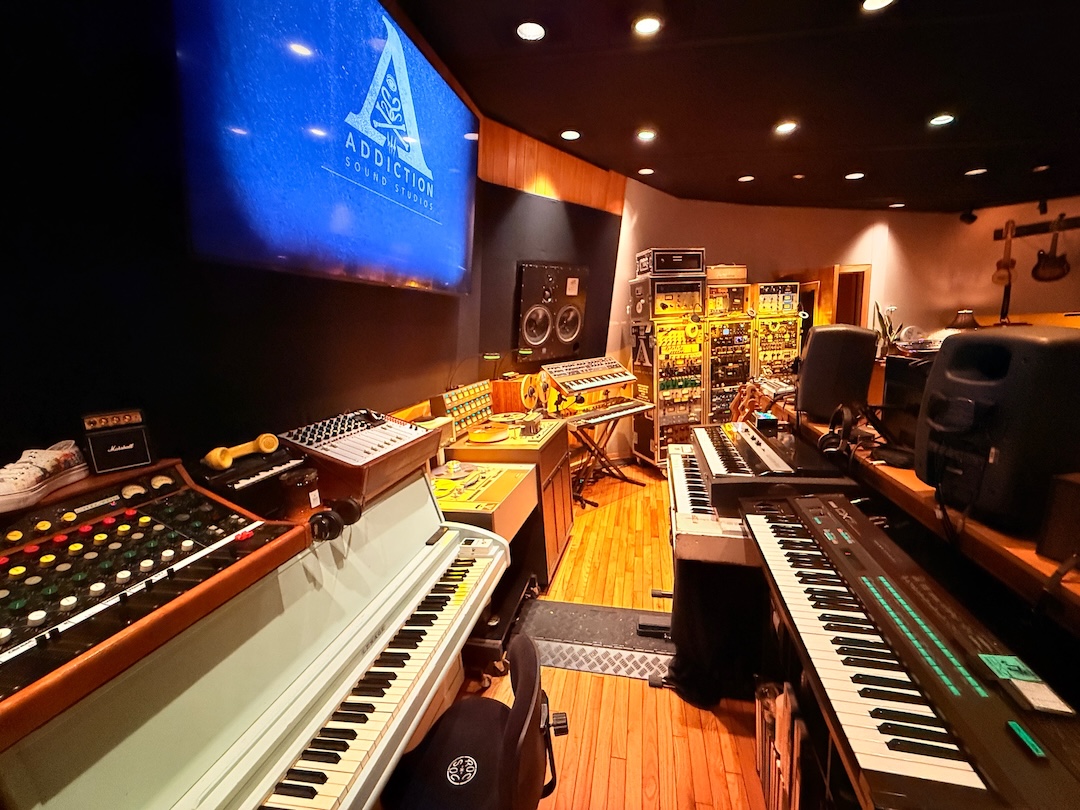
The new facility at Curb 28 is designed for speed, intuition, and inspiration. Central to the studio is what Kalmusky affectionately calls "Analog Alley." This space houses a collection of gear that reads like a history book of modern music, including Jonathan Cain’s original Jupiter-8 and Prophet-5 synthesizers—the very instruments responsible for the iconic sound of Journey’s greatest hits.
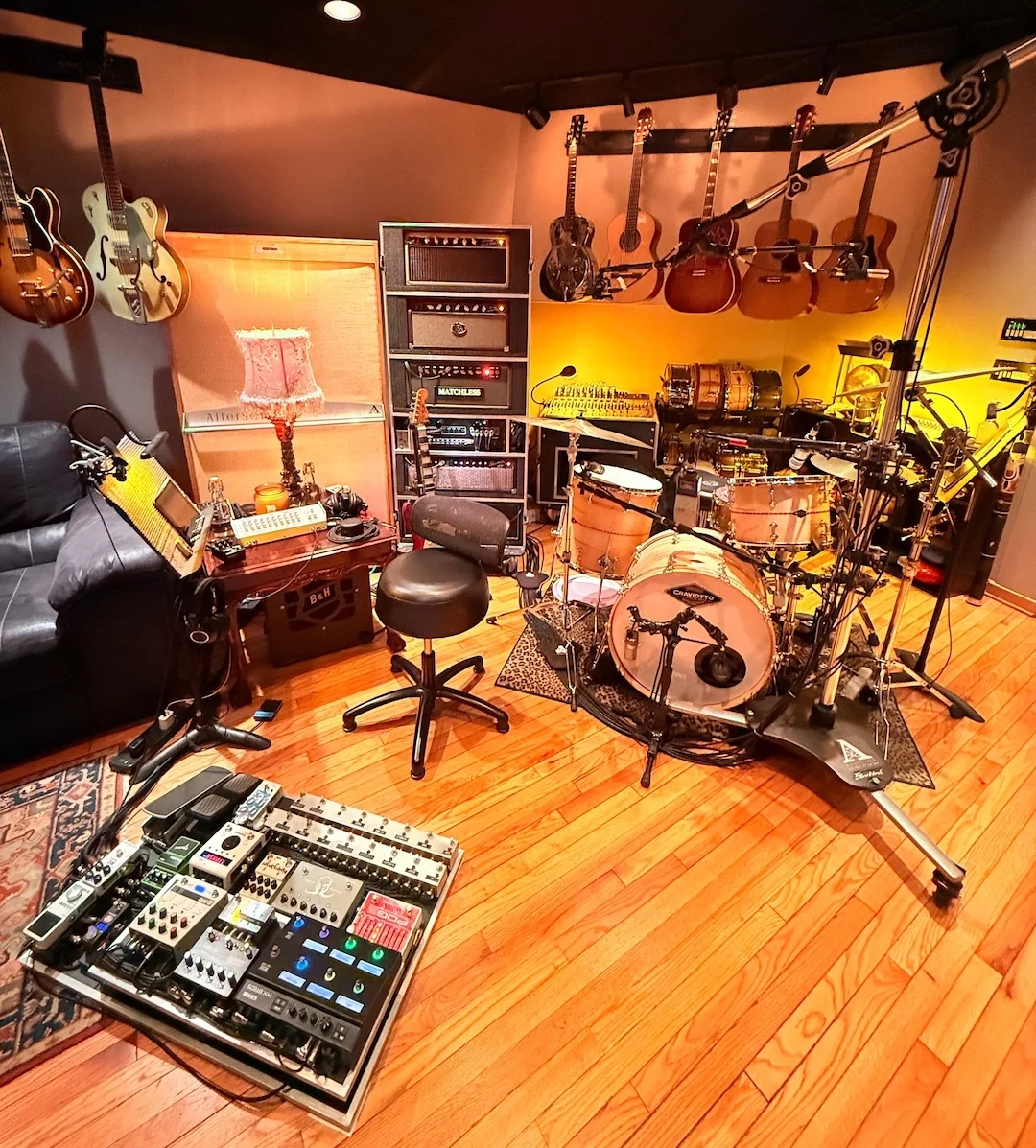
Surrounding the vintage Trident TSM console are shelves overflowing with percussion and a house private reserve Craviotto drum kit, always mic’d and ready. The environment is purposefully designed to accommodate the "multi-hyphenate" workflow: whether he is tracking a guitar, mixing a vocal, or songwriting, every instrument is instantly available. There is no downtime for setup, no hunting for cables, and no loss of the "spark" that happens when a creative idea hits.
The Community Effect: Why Music Row Matters
Kalmusky’s move to Curb 28 is not an isolated event; it is part of a broader, industry-wide trend of professionals migrating back to the geographic center of Nashville’s musical heritage.
"There’s so much happening down here right now," Kalmusky notes, gesturing to the vibrant ecosystem surrounding his studio. "Next door, we have Sound Stage [Black River Entertainment], Dave Cobb took over RCA and revitalized it, Keith Urban just renovated The Tracking Room, and Dan Auerbach is down the street. It feels like a community again."
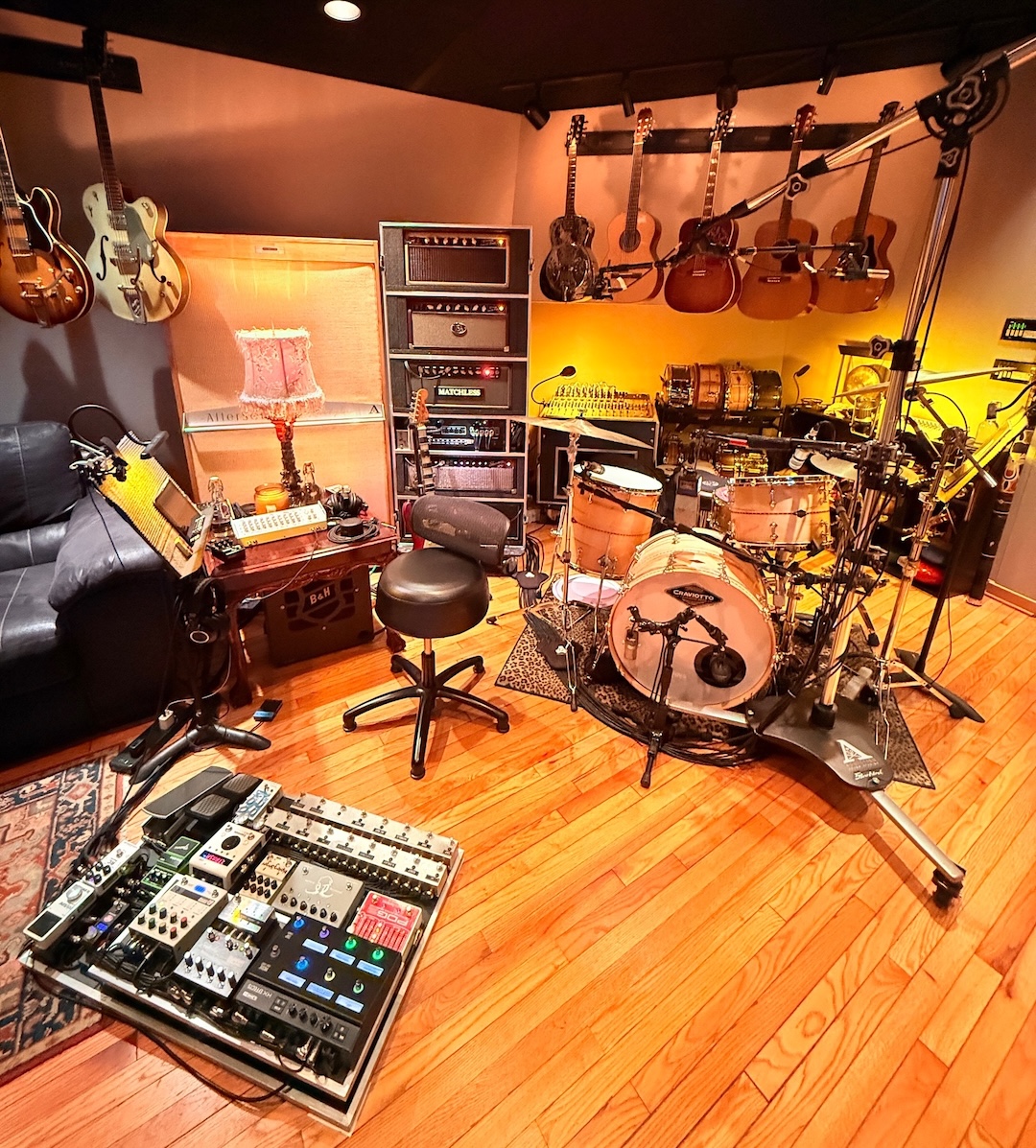
This density of talent has profound implications for the creative process. When publishers, songwriters, and engineers are within walking distance, the studio ceases to be a fortress and becomes a hub. People drop by before and after sessions, fostering the kind of informal collaboration that defined the golden age of Music Row. When Ron Fair is working on a mix in the newly renovated Studio 6 just down the hall, or Electric Feel is buzzing with activity nearby, the energy is infectious.
Implications for the Industry
The move signifies a departure from the "bedroom studio" isolation that has dominated the last decade. As Kalmusky demonstrates, there is a tangible difference in the final product when the "record maker" is surrounded by a community of peers.
1. The Death of the "Unattended" Session
Kalmusky’s experience highlights a growing fatigue with remote, unattended mixing. By creating a space that invites collaboration, he is proving that producers and artists are hungry for a return to the room. The human element—the ability to look a musician in the eye or discuss a mix with a songwriter over coffee—is proving to be the ultimate premium service in a world of automated plugins.
2. The Efficiency of "Always Ready"
The technical design of the new studio proves that modern workflows can still be professional and highly efficient. By keeping gear "hot" and ready to record, Kalmusky has eliminated the technical friction that often kills the spontaneity of a session.
3. The Re-Centralization of Music Business
Music Row is undergoing a transformation. No longer just a historic site, it is becoming a functional workspace again. The investment by labels and high-profile artists into these legacy spaces (like Curb 28 and RCA) suggests that the industry is recognizing the value of shared infrastructure.
Official Perspective: The Human Factor
In the final analysis, David Kalmusky’s shift is about the sanctity of the creative moment. While he possesses the technical prowess to master any digital tool, he finds the greatest fulfillment in the old-school ethos: getting everyone in a room, capturing a performance, and walking out with a record.
"Music Row is starting to feel a little bit like it once did," Kalmusky says.
As he continues to push the boundaries of what a producer can be, Kalmusky remains a standard-bearer for a craft that refuses to be digitized away. His facility at Curb 28 is more than just a studio; it is a laboratory for the future of music-making, proving that while technology changes, the necessity of the "room" and the "community" remains the heartbeat of the industry.
Part two of our exclusive feature on David Kalmusky’s studio design and production techniques will appear in tomorrow’s edition.