AMSTERDAM, HOLLAND – In an industry where the margin for error during a live production is razor-thin, the ability to act as a "first responder" to audio anomalies is the difference between a seamless performance and a public technical failure. Recognizing this, Shure has officially launched Wavetool 4, the latest iteration of its flagship professional audio monitoring and listening software. Announced on September 9, 2026, the update represents a significant leap forward in how theater, broadcast, house of worship, and live sound engineers manage the complex web of wired and wireless audio sources.
By centralizing monitoring, instant replay, and team communication into a single, cohesive environment, Wavetool 4 addresses the growing complexity of modern sound stages, where hundreds of channels must be managed simultaneously.
Main Facts: The Core of Wavetool 4
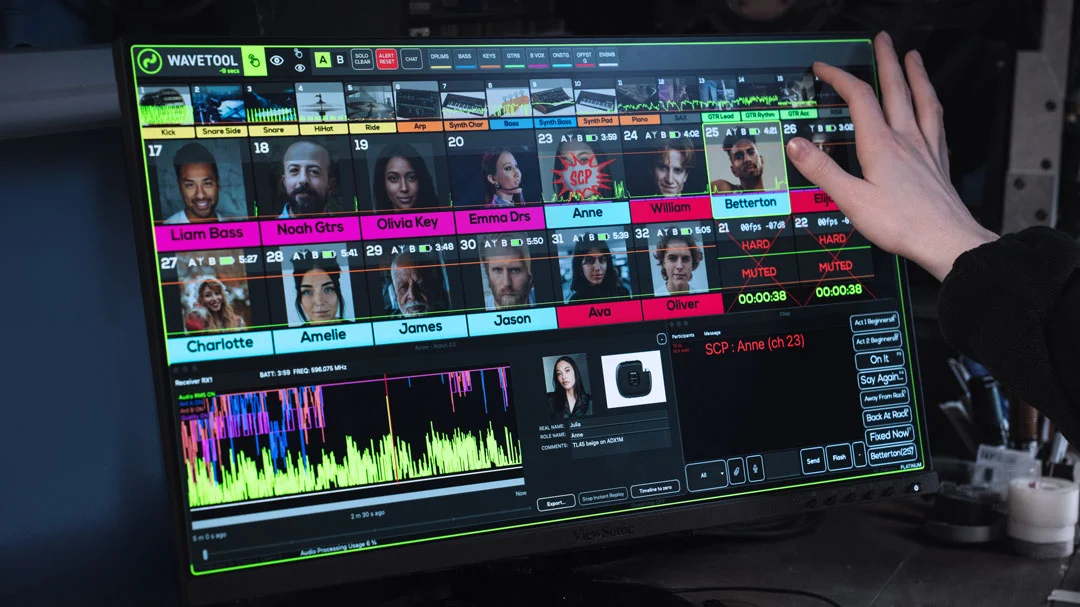
At its heart, Wavetool 4 acts as the "command center" for the sound engineer. It allows for the real-time auditing of audio signals, enabling technicians to verify the health of wireless transmitters, monitor signal-to-noise ratios, and identify dropouts before they reach the main mix.
The most critical enhancements in the version 4 update include:
- Global Instant Replay: Perhaps the most requested feature, this allows engineers to rewind the entire system history by up to 30 minutes. This is an invaluable tool for "post-mortem" analysis during a show, allowing teams to isolate and replay intermittent issues that might have occurred moments prior.
- Massive Scalability: The software now supports up to 192 channels and allows for eight concurrent users. This shift acknowledges the trend toward larger, more complex touring productions and high-end broadcast events that require multi-operator oversight.
- Intelligent Mic Issue Detection: Utilizing advanced algorithms, the software now distinguishes between critical hardware failures (such as battery death or RF interference) and expected production sounds (like stage noise or performer movement). This reduction in "alert fatigue" ensures that when an alarm sounds, it is worth the engineer’s attention.
- Enhanced Communication Suite: Wavetool 4 moves beyond mere monitoring to become a communication platform. It features integrated chat, image sharing, voice notes, and emoji-based reactions, keeping the entire audio crew on the same page without requiring third-party messaging apps.
Chronology: The Evolution of Wavetool
To understand the significance of Wavetool 4, one must look at the evolution of the software within the professional audio landscape.
The Early Days (The "Listening" Phase): Originally designed to solve the problem of monitoring hundreds of wireless channels individually, the early versions of Wavetool focused on direct listening. It gave engineers the ability to "solo" any transmitter in their RF rack via a computer interface, bypassing the physical constraints of a console.
The Integration Phase: As the software matured, it began to integrate with major wireless hardware manufacturers (most notably Shure, but also maintaining compatibility with other major brands). This shifted the software from a "listening" tool to a "diagnostic" tool, providing battery life and RF signal strength telemetry.
The Collaboration Phase (Current): With the release of version 4, Shure has shifted the paradigm toward collaboration. The recognition that sound engineering is a team sport—often involving A1s, A2s, RF coordinators, and system techs—has driven the inclusion of the new communication and multi-user features. The transition to ShureCloud management also reflects a broader industry movement toward flexible, software-as-a-service (SaaS) business models, allowing for greater elasticity in how audio houses license their gear.
Supporting Data: Why Scale Matters
The decision to move to a 192-channel capacity is not arbitrary; it is a direct response to the "channel inflation" seen in professional theater and live performance.
In a modern Broadway-style production, it is not uncommon to have 60+ actors, each wearing dual-redundant bodypacks, plus an orchestra, room microphones, and effects feeds. When managing 120+ wireless channels, the visual density of the data becomes a challenge. Wavetool 4 addresses this with a fully scalable, customizable interface. Engineers can now "pin" critical channels, zoom into specific frequency bands, or re-organize the display based on the performer’s location on stage.
Furthermore, the data regarding "alert fatigue" highlights the necessity of the new intelligent detection features. In legacy systems, a high number of false-positive alerts—triggered by a performer dropping a mic or bumping a transmitter—often led to engineers silencing alerts entirely. By using sophisticated signal processing to filter out common "production noise," Wavetool 4 restores trust in the monitoring system, ensuring that when the software reports a problem, it is a genuine technical failure.
Official Perspectives and Industry Implications
While Shure has kept the technical implementation details proprietary, the release notes suggest a focus on the "human element" of production.
"Wavetool 4 isn’t just about hearing the audio; it’s about understanding the context of the production," says one industry consultant familiar with the rollout. "By allowing teams to share images of a faulty cable or a misaligned mic directly within the monitoring window, they are reducing the ‘telephone game’ that usually happens over intercom systems. When an A2 knows exactly what the A1 is seeing on their screen, the time-to-fix is slashed from minutes to seconds."
The implications for the industry are significant:
- Reduced Downtime: The ability to instantly replay the last 30 minutes means that sound engineers no longer have to guess what caused a dropout. They can hear it, diagnose the frequency interference or hardware failure, and implement a fix before the next cue.
- Increased Safety for Touring: With the new multi-user support, a roaming RF technician can now monitor the system from backstage while the FOH (Front of House) engineer monitors the mix, both sharing the same data set.
- Standardization: As more production houses adopt the ShureCloud-managed licensing, we are likely to see a standard "Wavetool workflow" emerge, where freelance audio professionals move from production to production with a pre-configured, familiar software environment.
Implications for the Future of Live Sound
The launch of Wavetool 4 arrives at a pivotal moment. With live events becoming increasingly reliant on complex wireless infrastructures, the "RF environment" in major cities and stadiums has become crowded and unpredictable. The integration of high-fidelity monitoring with robust communication tools suggests that the future of audio engineering lies in data-driven production.
For houses of worship, which often operate with volunteer-heavy or mixed-expertise teams, the intuitive nature of the new interface is a boon. It allows a lead engineer to set up the system and provide a simplified view to assistants, ensuring that the most critical audio signals are always being watched by someone, even if that person isn’t an expert in RF coordination.
Licensing and Accessibility
Shure has opted for a tiered licensing model to support the diverse needs of its user base. By offering both subscription-based models (via ShureCloud) and traditional perpetual licenses, they are catering to both the high-turnover touring market and the permanent, fixed-installation market.
For those skeptical of the shift, the 30-day free trial serves as a sandbox. Shure is clearly confident that once an engineer integrates the "Global Instant Replay" and "Intelligent Mic Detection" into their workflow, the software becomes as essential as the mixing console itself.
Conclusion
Wavetool 4 is more than a software update; it is a fundamental re-imagining of the production monitoring experience. By turning the monitoring software into a collaborative hub, Shure has successfully addressed the primary pain points of the modern sound engineer: complexity, team communication, and the pressure of real-time troubleshooting. As production scales continue to grow, the tools that provide visibility and clarity will remain the most valuable assets in the audio professional’s toolkit.
The update is available for immediate download, with Shure encouraging teams to integrate the software into their upcoming production cycles to experience the shift in workflow efficiency firsthand.