Main Facts: The Vanguard Enters the Arena
In the hyper-competitive landscape of personal audio, establishing a firm foothold in the entry-to-mid-tier market is essential for any high-end brand seeking long-term growth. Noble Audio, a company globally recognized for its uncompromising luxury flagships and bespoke custom-molded in-ear monitors (IEMs), has increasingly turned its engineering focus toward more accessible price points. Following the runaway commercial success of the budget-friendly Knight, Noble Audio has returned with its latest offering: the Noble Audio Vanguard.
Priced at $325.00, the Vanguard is a three-driver hybrid IEM that combines dynamic driver authority with the speed and micro-detail resolution of balanced armatures. Featuring a 10mm polyetherketone (PEK) polymer diaphragm dynamic driver paired with dual custom balanced armatures—one dedicated to mid-to-high frequencies and another strictly for ultra-high reproduction—the Vanguard attempts to bridge the gap between studio-grade precision and consumer accessibility.

Early evaluations from audio critics place the Vanguard in an impressive light, highlighting its wide soundstage, controlled low-end response, and robust aluminum build quality. However, as with many hybrid designs attempting a delicate balancing act between technical separation and musical engagement, the Vanguard’s acoustic profile introduces minor trade-offs, particularly regarding high-frequency coherence.
Chronology: Expanding the Affordable Lineup
The trajectory of Noble Audio’s market strategy over the past several cycles reveals a deliberate pivot toward democratization. For years, the brand built its reputation on luxury releases commanding four-figure price tags, cultivating a dedicated following among elite audiophiles. However, the introduction of the Knight marked a turning point, proving that the brand could deliver its signature aesthetic and sonic tuning at a fraction of the cost.

- Early Phase (The Flagship Era): Noble Audio established itself as an artisan powerhouse, focusing heavily on intricate resin faceplates, multi-driver configurations, and premium flagships like the Van Gogh.
- The Budget Pivot (The Knight): Recognizing a massive demand for entry-to-mid-tier solutions, Noble launched the Knight, which quickly climbed the ranks to become one of the brand’s best-selling products.
- The Current Release (The Vanguard): Priced at $325, the Vanguard arrives as the natural evolution of this philosophy, serving as an explicit gateway for newer enthusiasts to experience Noble’s house sound without a prohibitive financial barrier.
Supporting Data: Specifications and Ergonomics
To fully understand where the Vanguard sits in the contemporary IEM ecosystem, an examination of its technical specifications, physical design, and accessories is required.
Acoustic Architecture & Specifications
- Driver Configuration: 3-driver hybrid (1x 10mm PEK dynamic driver, 2x custom balanced armatures).
- Impedance: 23 Ohms.
- Sensitivity: 112 dB SPL/mW.
- Driveability: Highly efficient and easy to drive from standard portable sources, smartphones, or dedicated dongle DACs.
Build, Design, and Aesthetics
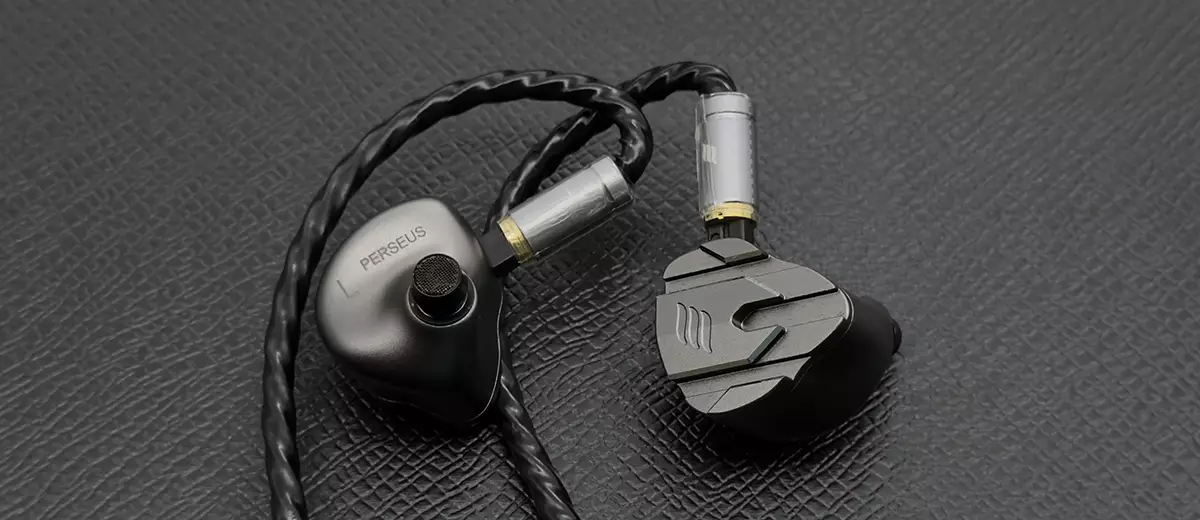
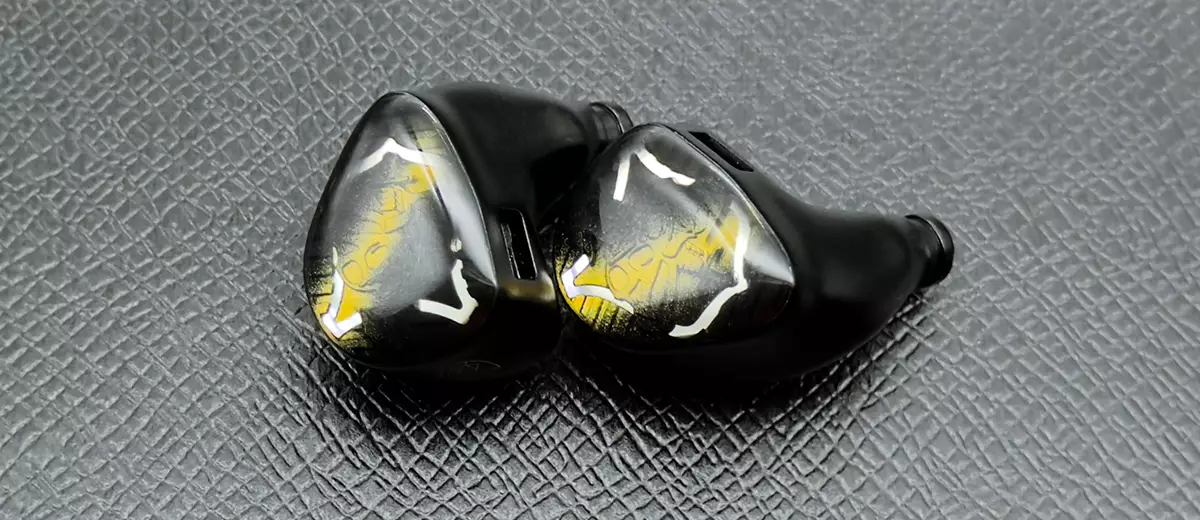
Noble Audio rarely falters when it comes to visual presentation, and the Vanguard continues this tradition. The shells are crafted from precision-milled aluminum finished in a sleek, matte-black coating. The standout feature remains the faceplate design: a striking black-and-gold artwork underscored by contrasting silver accents. A 3D-depth effect gives the faceplates an organic yet modern identity that avoids looking gaudy.

The shells feature an ergonomically contoured shape with slightly elongated nozzles—a signature trait of Noble designs. While this ensures a secure, deep insertion and decent passive noise isolation, users with smaller outer ears may find the physical footprint slightly demanding.
Packaging, Cable, and Accessories
Unboxing a Noble Audio product carries a distinct sense of occasion. The packaging features a medieval sword motif set against a bronze-and-gold weathered background, tying thematically into the earlier Knight release.

Inside, buyers receive:
- The Vanguard IEMs secured in foam cutouts.
- An 8-core silver-plated Oxygen-Free Copper (OFC) cable with a soft, flexible PU-coated jacket. Notably, Noble includes a 4.4mm-to-USB-C OCC adapter cable rather than a modular connector system, maximizing compatibility with modern smartphones and laptops.
- A modest selection of ear tips (including foam and double-flange options).
- A soft velvet storage pouch (though critics note that a hard-shelled carrying case would offer superior protection at this price point).
- A cleaning tool and warranty documentation.
Sound Impressions: Performance Analysis
Evaluated primarily using high-resolution sources such as the Lotoo PAW Gold Touch and the Campfire Audio Relay dongle DAC, the Vanguard reveals a tuning philosophy anchored in clarity, precision, and technical space.

1. Low-End (Bass)
The Vanguard delivers a generous, clean, and controlled bass foundation. Utilizing the 10mm PEK dynamic driver, the sub-bass reaches deep while maintaining a tight grip on mid-bass bloat. It does not bleed into the midrange, ensuring a sterile-free, transparent presentation. While it may not satisfy extreme bass-heads looking for skull-rattling slams—a profile better served by Noble’s own Van Gogh—the Vanguard’s low-end offers plenty of texture, speed, and rhythmic engagement for genres ranging from acoustic jazz to modern hip-hop.
2. Midrange
Thanks to a wide soundstage and well-controlled bass, the midrange enjoys an uncompressed, highly visible space in the mix. Instruments and male vocals sound lifelike, possessing adequate weight and structural body. The upper midrange introduces a touch of sweetness and coloration, particularly on female vocals. While highly detailed, some listeners may notice that vocal extensions feel slightly restrained, cutting short just before fully blooming. The transition point where the upper midrange hands off to the lower treble could also benefit from a smoother, more cohesive gradient.

3. Treble
The high-frequency region is the most divisive aspect of the Vanguard’s tuning. Out of the box, the lower treble exhibits an aggressive sparkle and pronounced emphasis. While this translates to high perceived micro-detail, excellent air, and crisp note definition, it occasionally compromises long-term listening smoothness. On complex tracks or poorly mastered recordings, this region can sound slightly sharp or prone to peaks. Pairing the Vanguard with smoother, warmer sources is recommended to tame any potential listening fatigue.
4. Soundstage and Technicalities
Where the Vanguard truly justifies its $325 price tag is its technical performance. The soundstage is expansively wide with commendable depth, granting individual instruments plenty of breathing room. Imaging is precise, allowing complex musical arrangements to be easily dissected without falling into congestion. Dynamic range is strong, enabling the IEM to deliver impactful macro-slams while effortlessly rendering micro-details.

Official Responses and Market Context
While official corporate commentary from audio manufacturers typically emphasizes innovation and value, independent reviews provide a clearer picture of consumer reception. The Vanguard has currently garnered a solid 8.5/10 reader and reviewer score, signaling broad approval from the audiophile community.
Industry analysts point out that the sub-$400 hybrid sector is currently one of the most fiercely contested battlegrounds in personal audio. Competitors such as the Campfire Audio Iris, THIEAUDIO Hype 4 MKII, and Softears Volume S all vie for dominance in this exact price bracket. By leaning heavily into high-end aluminum craftsmanship, a wide soundstage, and a balanced, analytical signature, Noble Audio has positioned the Vanguard as a serious contender against established multi-driver rivals.

Implications: What the Vanguard Means for Audiophiles
The launch of the Noble Audio Vanguard carries several broader implications for the portable audio market:
- Democratization of Luxury Engineering: By bringing proprietary driver integrations, custom balanced armatures, and premium PEK dynamic diaphragms down to a $325 price point, Noble Audio is successfully capturing a wider audience of budget-conscious audiophiles.
- The Hybrid Compromise: The Vanguard highlights the ongoing tuning challenges inherent in hybrid IEM design. While combining dynamic drivers and balanced armatures yields incredible speed and soundstage dimensions, maintaining absolute coherence across the crossover regions remains a delicate art.
- Value-Added Accessories: The inclusion of a 4.4mm-to-USB-C adapter cable signals a shift in how manufacturers address modern listening habits, prioritizing direct smartphone and laptop connectivity over traditional modular plug systems.
Ultimately, the Noble Audio Vanguard proves that entry-level products from elite brands no longer need to feel like stripped-down compromises. For listeners seeking a wide soundstage, clean bass, and striking aluminum aesthetics under $400, the Vanguard demands serious consideration.