KETCHIKAN, Alaska (October 26, 2026) — In the world of high-end live sound, few names carry the weight of Rick Camp. With a career spanning four decades, Camp has occupied the front-of-house mix position for legendary acts like Earth, Wind & Fire, Beyoncé, and Destiny’s Child. Yet, his most daunting technical challenge didn’t take place in a sold-out stadium or a premier recording studio; it took place in a historic, 50-year-old movie house in the remote coastal town of Ketchikan, Alaska.
What began as a modest request for a musical score for a short adventure film blossomed into a full-scale architectural and acoustic overhaul. The result is "SEAMAX Alaska," a 4D immersive theater experience that has redefined the standards of location-based entertainment in the Pacific Northwest.
The Genesis: A Chance Encounter Leads to a "Full-Body Adventure"
The project’s origins trace back to Las Vegas, where Camp operates Master Mix Live, a cutting-edge Dolby Atmos 9.1.4 music facility. Beyond his mixing prowess, Camp heads Next Gen A/V Designs, a consultancy firm specializing in the integration of high-fidelity studios and worship spaces.
Earlier this year, Camp was working on a multisensory project featuring motion-control seats. When a prospective client visited his Vegas facility, Camp decided to pull out all the stops. He treated the client to a custom "dog-and-pony show" utilizing wrap-around LED screens and a punishingly precise 9.1.4 Dolby Atmos soundscape. The impact was instantaneous. The client was not only sold on the hardware but also requested that Camp handle the musical score for a new film project designed to showcase the Alaskan wilderness.
Marketed with the promise, "This isn’t just a film—it’s a full-body adventure," SEAMAX was conceptualized to serve the massive influx of cruise ship tourism in Ketchikan. Despite the town having a permanent population of just over 8,000, it remains a primary cruise hub, expecting nearly 1.6 million passengers in a single season. The theater needed to be more than a screening room; it had to be a destination.
Chronology of an Immersive Build
Phase I: The Creative Blueprint
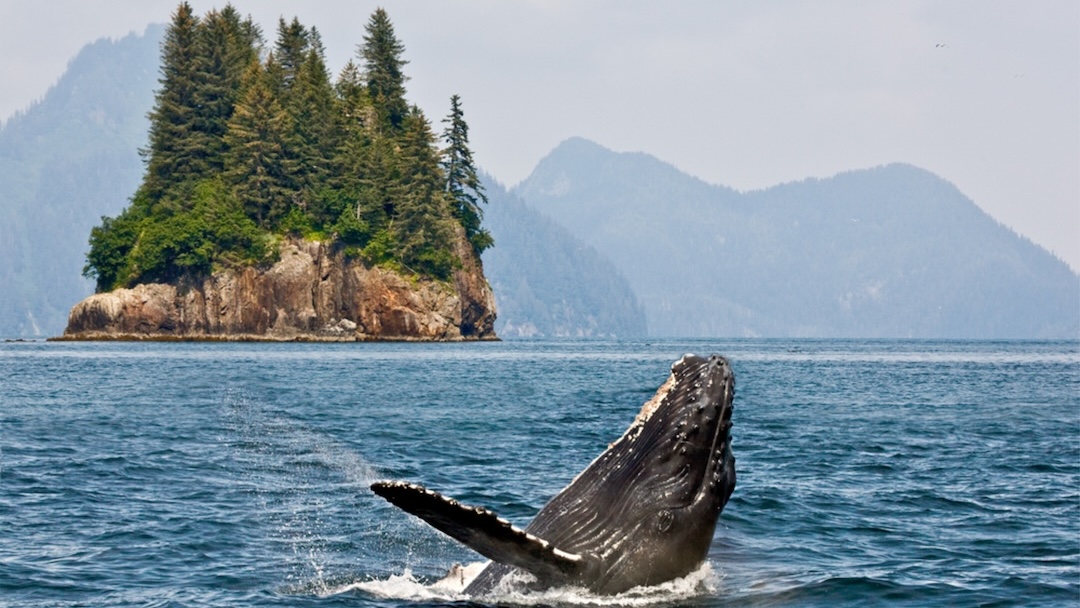
Camp tapped his long-time collaborator, Thomas Dawson, Jr.—the musical director for The Commodores for the past 30 years—to co-compose the score. Working from his home studio in Colorado Springs, Dawson and Camp expanded their scope beyond music to include comprehensive Foley and sound design. Their goal was to sonically transport the audience into the heart of Denali, capturing the ethereal silence of ice caves, the raw power of whitewater rafting, and the rhythmic intensity of dog sledding.
Phase II: The Alaskan Reality Check
Upon arriving in Ketchikan, Camp was immediately confronted by the environmental and logistical realities of the project. The existing JBL sound system, inherited with the 50-year-old building, was, in Camp’s words, "just tired."
"I went up there to see the theater and the old JBL system," Camp recalls. "I tested the speakers, and they had simply reached the end of their lifecycle."
Phase III: The Augspurger Pivot
With the tourist season looming just weeks away, the supply chain proved to be an insurmountable hurdle. None of the industry-standard manufacturers could guarantee delivery of a custom cinema rig in time for the grand opening. Facing a critical deadline, Camp turned to the legendary George Augspurger.
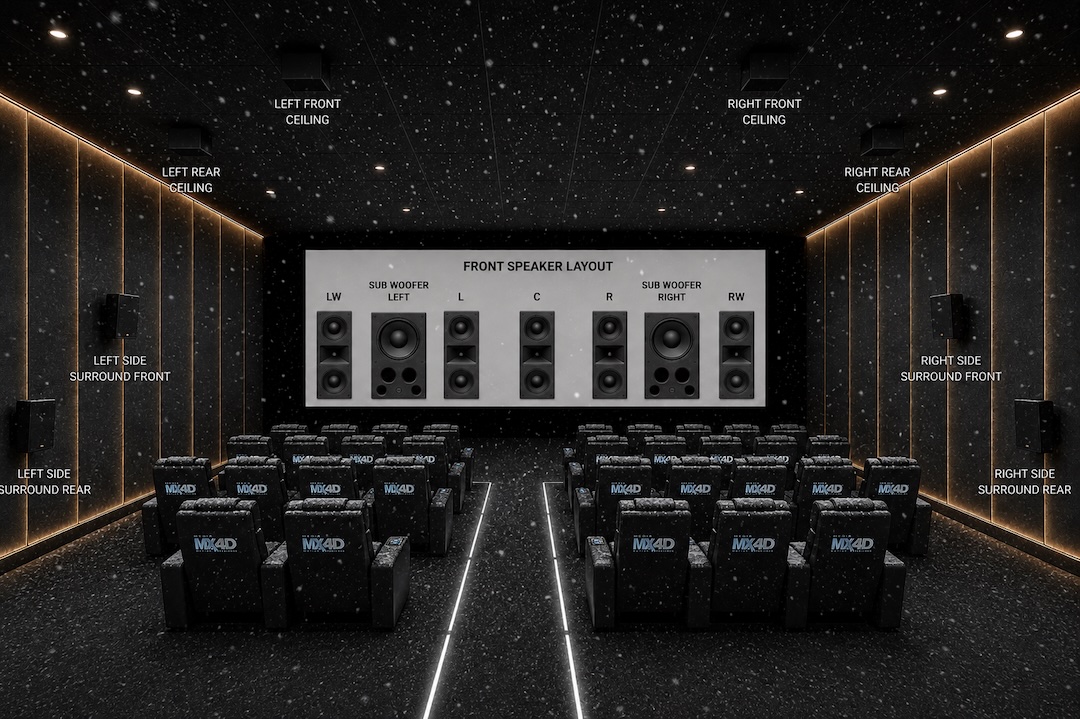
Augspurger, known for his precision-engineered monitor systems, accepted the challenge. He designed a bespoke 9.1.4 cinema configuration tailored specifically for the geometry of the Ketchikan venue. This pivot would define the sonic signature of the entire project.
Phase IV: Installation and Integration
The assembly process was a logistical marathon. Sonny Maupin of New World Audio in Las Vegas provided the final piece of the puzzle, managing the fabrication of the custom speaker enclosures. Because of the extreme time pressure, the components—music, Foley, and the hand-built cabinets—were shipped to Seattle and then by barge to Alaska without a full "dry run" in the shop. Camp spent two intense weeks on-site, balancing the physical installation with the final mix, which he had pre-prepared on his SSL System T S300 console in Las Vegas.
Supporting Data: The Anatomy of a 24,000-Watt System
The technical specifications of the SEAMAX theater represent a masterclass in modern cinema acoustics. By moving away from off-the-shelf solutions, the team achieved a level of clarity and headroom typically reserved for high-end mastering environments.
- The Front Wall Array: Behind the massive 40-by-20-foot screen sit five custom-designed speakers, each utilizing dual 15-inch Beyma woofers paired with 2-inch TAD compression drivers mounted on Augspurger’s iconic horn lenses. This array is powered by ten 1,000-watt Powersoft Unica 8K8 amp channels in a bi-amplified setup.
- Low-End Foundation: A pair of double-18-inch subwoofers anchor the low end, driven by an additional four 1,000-watt Powersoft channels.
- Surround and Ceiling: The side, rear, and ceiling units utilize a Beyma single 12-inch driver with a 1-inch concentric compression driver, powered by an additional ten 1,000-watt channels.
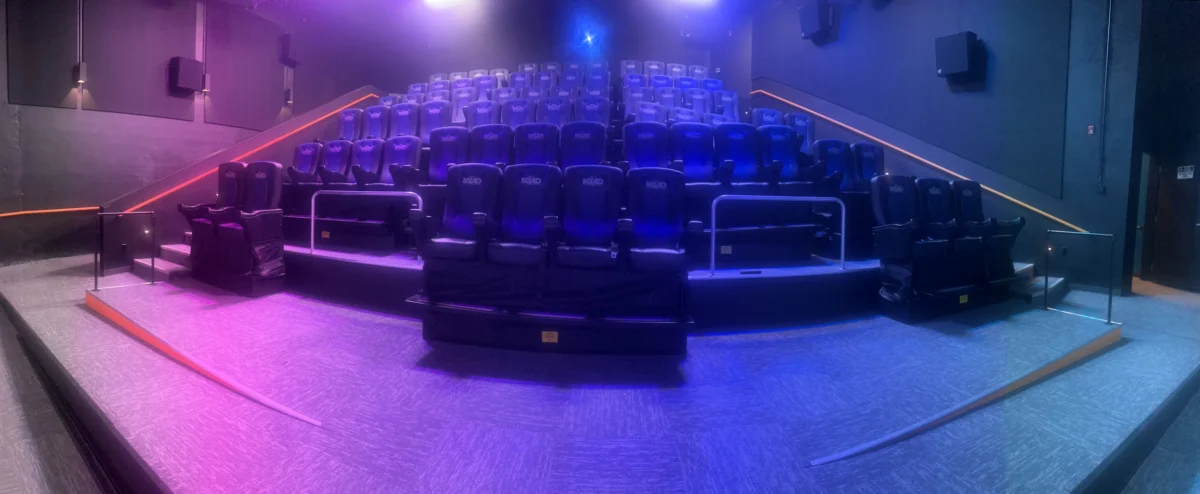
- Performance Metrics: The system delivers a total of 24,000 watts of power, maintaining a frequency response of 30 Hz to 20 kHz, capable of hitting an SPL of 140 dB within the 80-seat theater.
To ensure seamless audio routing, Camp collaborated with Sebastian Pallisso-Poux (formerly of Dolby, now with Spatial Sound Works in Paris). They implemented a DirectOut Prodigy MP speaker processor, which allows the two theaters and the pre-show lobby to share and route audio sources dynamically.
Official Responses and Client Satisfaction
The success of the theater is not measured merely in technical specs but in the audience experience. Narrated by local Alaskan fisherman Russell Cockrum, the film has become a staple for tourists seeking a deeper connection to the landscape.
"All the owners love it," Camp notes. "They were initially concerned about the scope of the upgrade, but they are incredibly glad they spent the extra money to go with the Augspurger system. The sound is a major part of why people are talking about the experience."
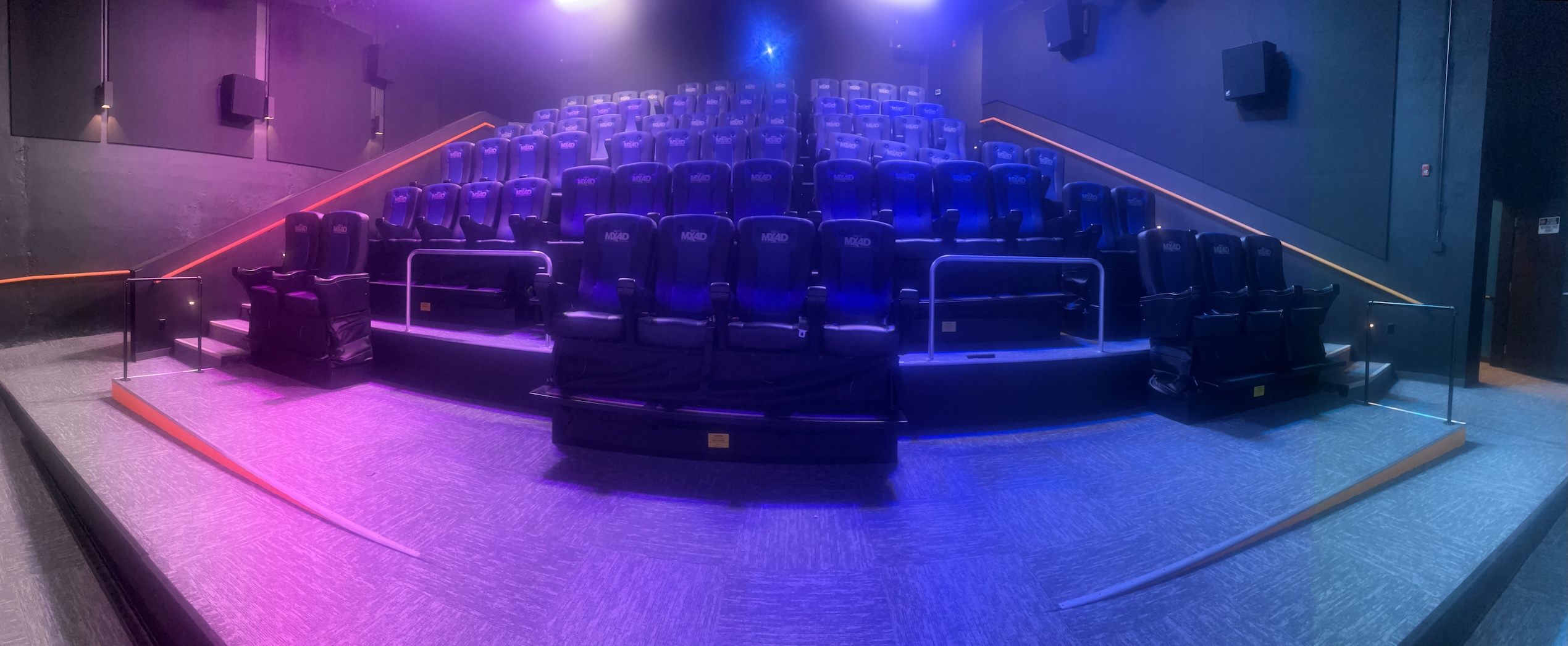
The feedback from the cruise ship demographic has been overwhelmingly positive. Online reviews frequently cite the "physicality" of the sound, noting that the combination of motion-control seats and the 9.1.4 immersive audio makes the experience feel genuinely dangerous and exhilarating.
Implications: The Future of Remote Immersive Entertainment
The SEAMAX Alaska project signals a significant shift in the location-based entertainment (LBE) market. For decades, remote tourist hubs have relied on aging, lower-tier AV technology. Rick Camp’s work demonstrates that world-class, "Vegas-quality" immersive audio is no longer confined to major metropolitan theaters or high-end recording facilities.
By leveraging decentralized design—using experts from Las Vegas, Colorado, and Paris—and executing a rapid-response custom build, the project proved that geographic isolation is no longer a barrier to technical excellence. The implications for the cruise industry are clear: travelers, even in the remote reaches of the Alaskan wilderness, are increasingly expecting, and willing to pay for, a premium, high-fidelity experience.
For Camp, the project was a lesson in adaptability. Having successfully upgraded the secondary theater to a 7.1.4 system and refurbished the original JBL components, he has effectively future-proofed a piece of Ketchikan history. As he looks toward his next ventures in Las Vegas, the success of SEAMAX serves as a case study for what happens when top-tier professional audio expertise meets the raw, untamed beauty of the Last Frontier.
Whether it is the haunting resonance of an ice cave or the thunderous movement of a glacier, the sound of Ketchikan has been permanently elevated, ensuring that the "full-body adventure" of SEAMAX remains a benchmark for immersive cinema for years to come.