May 12, 2026
By Staff Music Critic & Audiophile Equipment Reviewer
Main Facts
More than four decades after it first rolled off the pressing plants and onto record store shelves, Van Halen’s quirky, controversial, yet enduring fifth studio album, Diver Down, remains a fascinating study in contrast. Released on April 14, 1982, the album arrived at a breakneck speed for a band at the absolute zenith of its creative powers. It was an unorthodox collection featuring a heavy reliance on cover songs—including playful, left-field nods to Roy Orbison (“(Oh) Pretty Woman”) and the traditional cowboy standard “Happy Trails”—interspersed with blistering original compositions and instrumental workouts like “Little Guitars” and “Cathedral.”
Today, Diver Down occupies a unique space in the pantheon of hard rock history. While contemporary critics initially viewed the record as a rushed stopgap designed to capitalize on the band’s massive touring momentum, modern retrospective analysis views it as a daring, if eccentric, detour for a group operating with absolute artistic freedom.
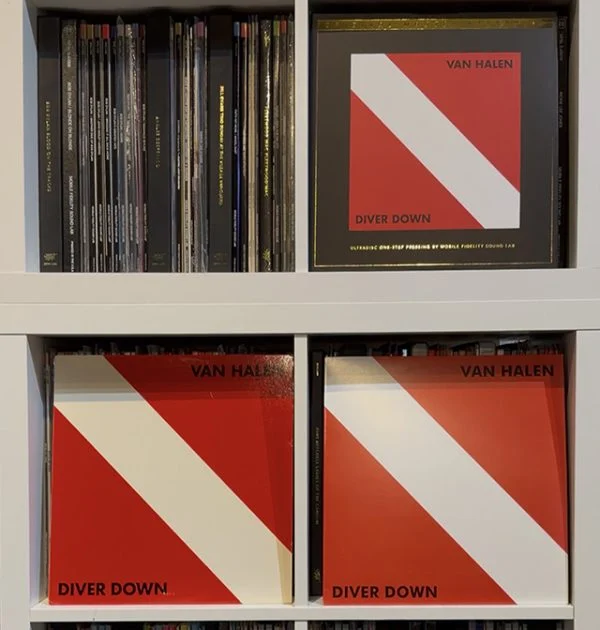
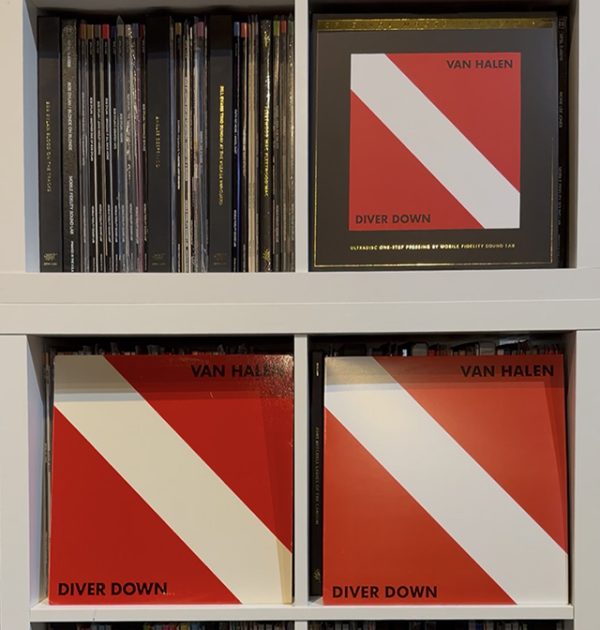
The conversation surrounding Diver Down in 2026, however, extends far beyond its musical merits. Thanks to recent high-end audiophile reissues—specifically contrasting the original 1982 vinyl pressings against later remastering efforts by industry legend Chris Bellman and the ultra-premium Mobile Fidelity (MoFi) UltraDisc One-Step release—the album has become a focal point for master tape fidelity analysis. This technical deep-dive exposes long-standing mixing choices, structural eccentricities, and the unending quest to extract every ounce of analog magic buried in Warner Bros. studio vaults.
Chronology: The Making and Re-Making of a Hard Rock Outlier
1982: The Rush to Tape
To understand Diver Down, one must understand the relentless pressure cooker of the early 1980s music industry. Fresh off the massive commercial success of 1981’s Fair Warning—a dark, guitar-driven masterwork that strained internal band relationships—Van Halen found themselves trapped in a grueling cycle of recording, releasing, and touring.
Warner Bros. Records and their management team clamored for a steady stream of new material. Instead of entering a prolonged writing retreat, Eddie Van Halen, David Lee Roth, Alex Van Halen, and Michael Anthony opted for a hybrid approach. They utilized studio downtime between legs of their massive 1982 world tour to throw together a record that mixed swift studio originals with eccentric covers.
The lead single, a cover of Roy Orbison’s “(Oh) Pretty Woman,” was recorded and released as a standalone single in early 1982, rocketing up the charts and necessitating a full album to match its commercial footprint. Rushed into completion, Diver Down hit shelves in mid-April 1982, going multi-platinum despite its thrown-together aesthetic and unconventional tracklist.
The Evolution of the Pressings: From Original Wax to Modern Audiophile Gold
For decades, the sonic history of Diver Down was defined by its original commercial pressing. Bought by passionate fans on release day in 1982, those early vinyl copies presented a specific sonic signature: high energy, mid-range punch, but noticeable compression and a noticeably truncated bottom end.
Decades later, vinyl enthusiasts and mastering engineers began to re-evaluate what was locked away in the original master tapes. The first major turning point arrived with the audiophile reissues overseen by acclaimed mastering engineer Chris Bellman. Bellman’s work peeled back layers of historical compression, offering listeners a clearer window into the raw instrumentation of the quartet.
The definitive chapter in this chronological evolution, however, arrived with the modern Mobile Fidelity Sound Lab (MoFi) UltraDisc One-Step pressing. Utilizing ultra-high-grade proprietary vinyl formulations and a meticulous mastering chain bypassing traditional safety copy stages, the MoFi release brought a startling revelation: the master tapes possessed a massive, rich acoustic landscape that had remained largely obscured for over 44 years.
Supporting Data: Comparative Audiophile Analysis
To truly appreciate the transformation of Diver Down, music critics and audio engineers rely on direct, A/B comparative listening sessions across three distinct eras of the album’s physical media lifecycle.
1. The Original 1982 Pressing
- Dynamic Range: Heavily compressed, optimized for early-1980s FM radio broadcast standards and consumer-grade turntable cartridges.
- Low-End Response: Truncated and restrained. Bass guitar frequencies (historically attributed to Michael Anthony’s underrated playing) are pushed back into the mix, lacking physical weight and visceral impact.
- Mid/High Range: Bright, forward-leaning guitar leads from Eddie Van Halen, though occasionally plagued by upper-mid harshness and sibilance on David Lee Roth’s vocal tracks.
2. The Chris Bellman Remaster
- Dynamic Range: Significantly opened up, restoring transient snap to Alex Van Halen’s drum kit.
- Low-End Response: Reintroduced structural integrity to the lower registers, allowing kick drums and bass lines to breathe without muddying the overall soundstage.
- Mid/High Range: Smoother high-frequency extension, reining in the harsh digital or analog-cutting artifacts of early-80s pressings while retaining the raw grit of the performances.
3. The MoFi UltraDisc One-Step Edition
- Dynamic Range: Expansive and uncompromised, capturing the genuine room acoustics and transient peaks of Sunset Sound Recorders.
- Low-End Response: Fully restored bottom end. The bass frequencies finally push the air expected from a high-end analog rock production.
- Timbral Accuracy: Highlights subtle instrumentation nuances—most notably demonstrated in the unexpected acoustic and wind arrangements, such as Jan Van Halen’s delicate clarinet performance on "Big Bad Bill (Is Sweet William Now)."
Official Perspectives and Industry Commentary
While major record labels rarely issue retrospective press releases for 44-year-old catalog titles, sound engineers, music historians, and surviving band associates have frequently weighed in on the legacy of Diver Down and its production values.
In archival interviews, Eddie Van Halen often spoke candidly about the spontaneous, unpretentious nature of the album’s creation. He viewed the record not as a grand artistic statement, but as a fun, zero-pressure exercise in musical experimentation. The inclusion of jazz standards and acoustic instrumentals like "Secret Agent Man" and "Little Guitars" showcased a fearless musician unwilling to be pigeonholed purely as a heavy metal guitar hero.
Meanwhile, contemporary audiophile community leaders and mastering engineers have pointed to Diver Down as a textbook example of how modern restoration technology can alter the historical perception of a record. Speaking on the challenges of unearthing the true potential of 1980s rock master tapes, senior mastering technicians note:
"When a record is rushed to meet tour deadlines in the golden era of analog, compromises are routinely made at the cutting lathe to ensure safe playback on cheap consumer stereos. Going back to the original analog masters with modern, zero-loss plating processes like the One-Step method doesn’t just improve the sound—it fundamentally corrects the historical record of how these artists sounded in the room."
Critics reviewing the MoFi SACD and vinyl editions have echoed these sentiments, noting that tracks previously dismissed as throwaway novelties—such as their jaunty cover of "Happy Trails"—suddenly reveal rich vocal harmonies and pristine acoustic guitar placement that were previously masked by tape generational loss and subpar vinyl mastering.
Implications: The Enduring Legacy of an Unconventional Masterpiece
The ongoing reassessment of Diver Down in 2026 carries several broad implications for the music industry, audiophile culture, and the preservation of classic rock history.
1. Challenging the "Filler" Narrative
For years, rock historians categorized Diver Down as the moment Van Halen began running out of original ideas, pointing to its five cover songs as evidence of creative fatigue. However, modern sonic rediscovery via high-end pressings forces a critical re-evaluation. When the audio fidelity is elevated to pristine audiophile standards, the musicianship shines through the structural quirks. The playful audacity of taking disparate genres—from blues and country to 1920s jazz and arena rock—and filtering them through the lens of Southern California party-rockers looks less like laziness and more like avant-garde fearlessness.
2. The Economics and Ethics of Audiophile Reissues
The market success of ultra-premium vinyl packages like Mobile Fidelity’s ONE-Step series proves that a dedicated consumer base values archival authenticity over convenience. In an era dominated by compressed streaming algorithms and lossy digital files, physical media enthusiasts are spending top dollar to experience historical recordings at their absolute maximum technical potential. Diver Down serves as a prime case study: a flawed historical artifact turned into a reference-grade audiophile showcase.
3. Preserving the Van Halen Canon
As time marches on and the foundational architects of classic hard rock pass away, preserving the sonic integrity of their recorded output becomes a cultural imperative. Master tape degradation, corporate mergers, and historical mix decisions have long threatened to distort how future generations perceive bands like Van Halen. Through meticulous remastering efforts, releases like the modern iterations of Diver Down ensure that Eddie Van Halen’s groundbreaking guitar tone, Alex’s thunderous percussion, Michael’s soaring harmony vocals, and David Lee Roth’s theatrical bravado are preserved with maximum fidelity for decades to come.
As music lovers continue to ask, “Where have all the good times gone?”—borrowing the title of the album’s opening Kinks cover—the answer for audiophiles in 2026 is simple: they are right there in the grooves, finally sounding better than ever.