NEW YORK, NY — The recording industry is mourning the loss of one of its most pivotal figures. Phil McDonald, a veteran recording engineer whose technical precision helped define the sound of the 20th century, has passed away at the age of 80. Abbey Road Studios, the legendary London facility where McDonald spent the formative years of his career, confirmed his passing on October 27, 2026. No cause of death was provided.
McDonald’s career was inextricably linked to the zenith of the rock era. As a tape operator, assistant, and eventually a lead balance engineer, he stood in the control room during the most experimental and creative outbursts of the Beatles, capturing the lightning in a bottle that would change music history forever.
A Lifetime of Sound: The Main Facts
To understand the history of modern recording is to understand the work of Phil McDonald. While front-of-house stars took the accolades, it was engineers like McDonald who managed the complex, analog-era logistics of multitrack recording. His work on Abbey Road—the 1969 masterpiece—earned him a Grammy Award for Best Engineered Recording, cementing his status as a titan of the craft.
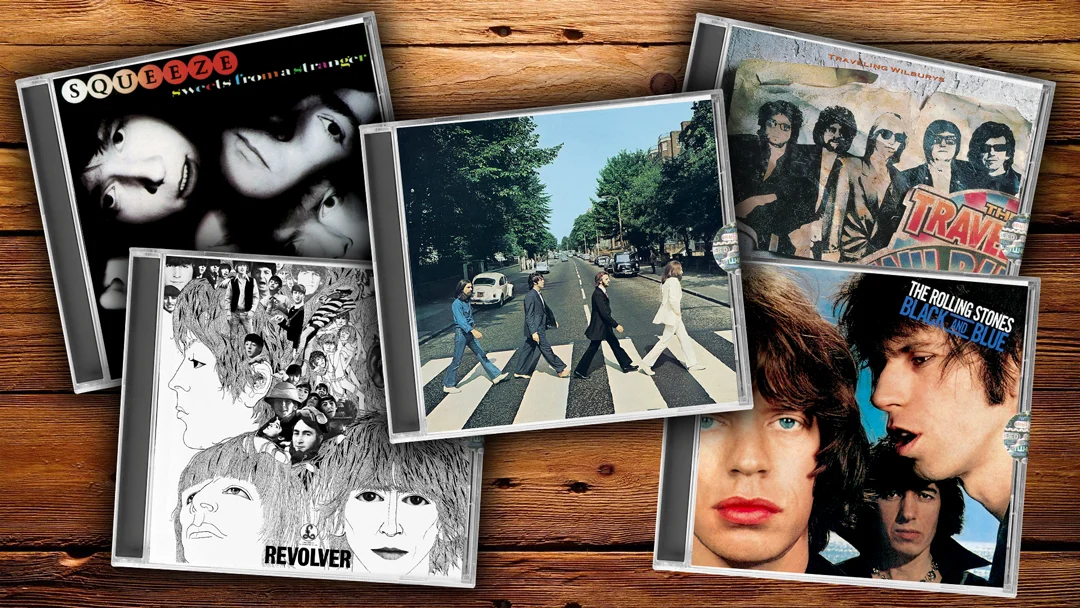
Beyond his association with the Fab Four, McDonald’s discography reads like a definitive guide to classic rock and pop, spanning collaborations with the Rolling Stones, Eric Clapton, and the Traveling Wilburys. His death marks the closing of a chapter for the "Abbey Road generation," a cohort of engineers who learned their trade under the rigorous, exacting standards of EMI in the 1960s.
Chronology: From Tape Library to Grammy Glory
The Early Years (1964–1965)
Born in 1946, McDonald joined the staff of EMI’s Abbey Road Studios at just 18 years old. In the mid-1960s, the studio was a strictly hierarchical environment. Newcomers were expected to spend months, if not years, in the tape library, cataloging and filing the master reels of the world’s most important artists.
McDonald’s talent was immediately apparent to his superiors. Within a year, he was promoted to the position of "tape op." In the parlance of the era, this role was often synonymous with the "tea boy"—a grunt position involving running errands, splicing tape, and ensuring the complex tube-based equipment stayed functional. His baptism by fire occurred on April 18, 1965, assisting producer George Martin and engineer Norman Smith on the mono remixes for the film Help!.
His initiation into the inner circle of the Beatles followed quickly. On June 14, 1965, he participated in the recording of "Yesterday," a session that would prove to be the start of a long-standing creative partnership.
The Peak of the Beatles Era (1966–1969)
As the Beatles moved away from live performance and toward the studio-bound experimentation of Revolver, Sgt. Pepper’s Lonely Hearts Club Band, and The White Album, McDonald became a fixture of their recording sessions. According to Recording The Beatles, a definitive account of the era’s technical logistics, McDonald was responsible for running the tape machines for approximately 20 percent of the band’s entire EMI output.
His role grew in tandem with the group’s ambition. By 1969, McDonald had ascended to the role of Balance Engineer. During the recording of Abbey Road, he acted as the primary technical pilot, often working in tandem with the legendary Geoff Emerick. It was this collaboration that yielded the sonic richness of tracks like "Something" and "Here Comes the Sun," ultimately resulting in his Grammy recognition.
Post-Beatles and Solo Careers (1970–1990s)
When the Beatles dissolved in 1970, McDonald did not retreat. Instead, he transitioned to Apple Records in 1971 as a Senior Balance Engineer. His expertise was so vital to the individual members that he became a linchpin for their early solo efforts. He was the common thread across George Harrison’s All Things Must Pass, John Lennon’s Imagine, Paul McCartney’s self-titled debut, and Ringo Starr’s Sentimental Journey.
His later career saw him bridging the gap between the psychedelic 60s and the high-fidelity production values of the 80s, working with acts as diverse as Deep Purple, Squeeze, and the supergroup Traveling Wilburys.
Supporting Data: A Legacy in Numbers and Notes
McDonald’s technical contribution was not merely "pushing buttons." In an era before digital automation, the work of an engineer involved manual cross-fades, physical tape manipulation, and the constant calibration of valve-based pre-amps.
- Session Impact: McDonald worked on approximately one-fifth of the Beatles’ total EMI recording sessions, a staggering statistic given the breadth of the band’s catalog.
- Genre Versatility: His work spanned classical Indian music (Ravi Shankar), hard rock (Deep Purple), singer-songwriter folk (Nilsson), and pop-rock (Squeeze), showcasing an ability to adapt to any sonic landscape.
- Grammy Recognition: His award for Abbey Road remains one of the highest honors in the industry, reflecting the standard of excellence he maintained throughout the late 60s.
Official Responses and Tributes
The industry response has been swift and somber. Abbey Road Studios issued a formal statement, noting:
"The world has lost a true master of the desk. Phil McDonald wasn’t just a witness to history; he was the hands that captured it. His dedication to the craft and his gentle nature in the studio made him one of the most respected figures in the history of sound engineering. He will be deeply missed by all who had the privilege of working with him."
Colleagues and former collaborators have taken to professional forums to remember him as a "calm in the storm." In the high-pressure environment of 1960s recording—where sessions often lasted into the early hours of the morning—McDonald was known for his steady temperament and his ability to interpret the abstract creative requests of musicians into tangible, high-quality audio.
The Broader Implications: What We Lost
The death of Phil McDonald represents the passing of an era defined by tactile, analog mastery. Today’s music production is dominated by software-based workflows and "in-the-box" processing. McDonald’s generation, however, viewed the studio as an instrument in itself.
His passing invites a reflection on the role of the "unseen" talent in music history. While the Beatles were the face of the revolution, McDonald provided the technical foundation that allowed that revolution to be heard clearly by millions. His career serves as a reminder that the brilliance of a song is only as durable as the engineering that captures it.
As the industry moves further into an age of artificial intelligence and automated mastering, the "human factor"—the precise ear, the steady hand, and the intuitive decision-making that characterized McDonald’s career—becomes even more precious. He leaves behind not just a catalog of classic albums, but a blueprint for how to listen, how to capture, and how to serve the music above all else.
He is survived by his wife, Sandra, who was by his side until the end. As the music world spins on, the echoes of the tracks Phil McDonald helped build—the crisp guitars of Abbey Road, the delicate piano of Imagine, and the raw power of the Traveling Wilburys—will continue to resonate, serving as a permanent monument to a quiet life spent in the pursuit of sonic perfection.