The high-fidelity personal audio market has witnessed a remarkable evolution over the last decade. Once dominated by traditional dynamic drivers, the premium headphone sector has increasingly embraced planar magnetic technology for its superior transient response, low distortion, and exceptional detail retrieval. However, high-end planar magnetic headphones have historically been held back by two persistent challenges: high power requirements that demand bulky desktop amplification, and the acoustic compromises inherent in closed-back designs.
With its latest release, the Aeon Core, San Diego-based specialist Dan Clark Audio claims to have solved both puzzles. Positioned as the brand’s new "entry-level" offering, the wired, closed-back Aeon Core aims to set a new benchmark for headphones priced under the £1,000 threshold. By combining a completely redesigned planar magnetic driver stack, a revised acoustic tuning methodology developed in tandem with the industry’s leading psychoacousticians, and highly efficient electrical characteristics, the Aeon Core represents a significant step forward for portable and desktop audiophiles alike.
Main Facts: An Overview of the Aeon Core Launch
The Dan Clark Audio Aeon Core is scheduled to go on sale in early July, carrying a retail price of £920 in the United Kingdom (approximately $1,200 USD or AU$1,700). In the UK, distribution is managed by the specialist audio distributor Electromod.
Despite its classification as the brand’s entry-level model—following in the footsteps of previous Aeon-series iterations—the Aeon Core is built with the premium materials and manufacturing tolerances typical of Dan Clark Audio’s multi-thousand-pound flagship designs.
Key Product Features and Specifications:
- Driver Type: Proprietary planar magnetic transducer.
- Acoustic Design: Closed-back, designed to isolate the listener from environmental noise while minimizing sound leakage.
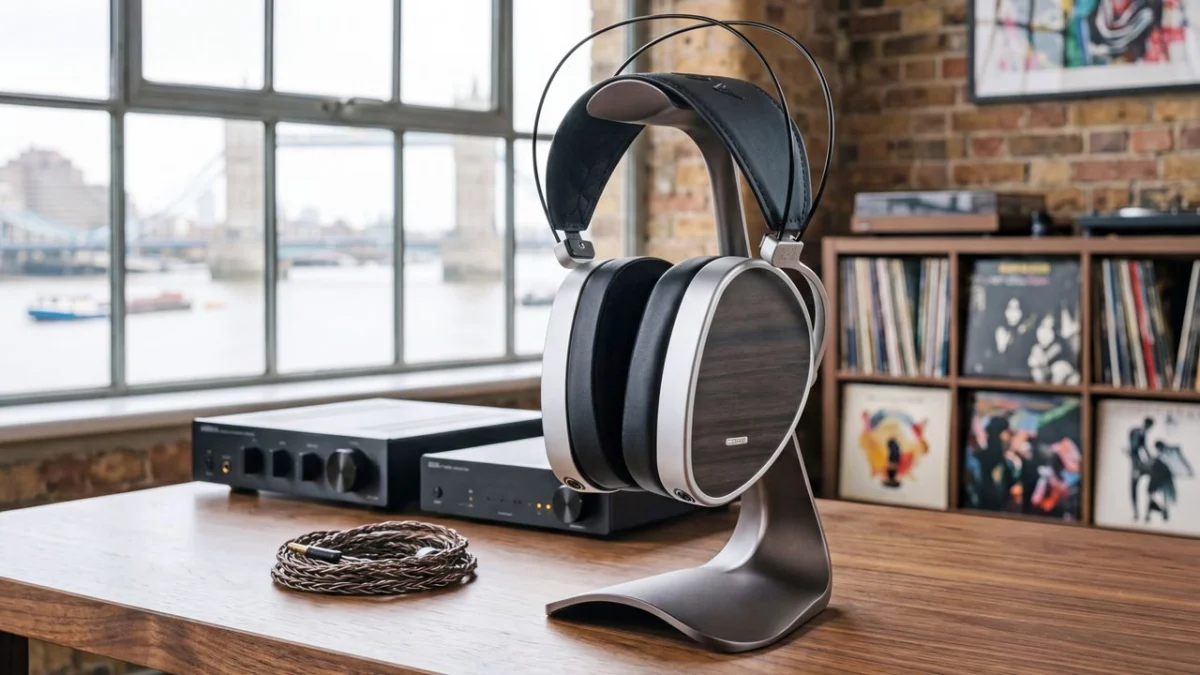
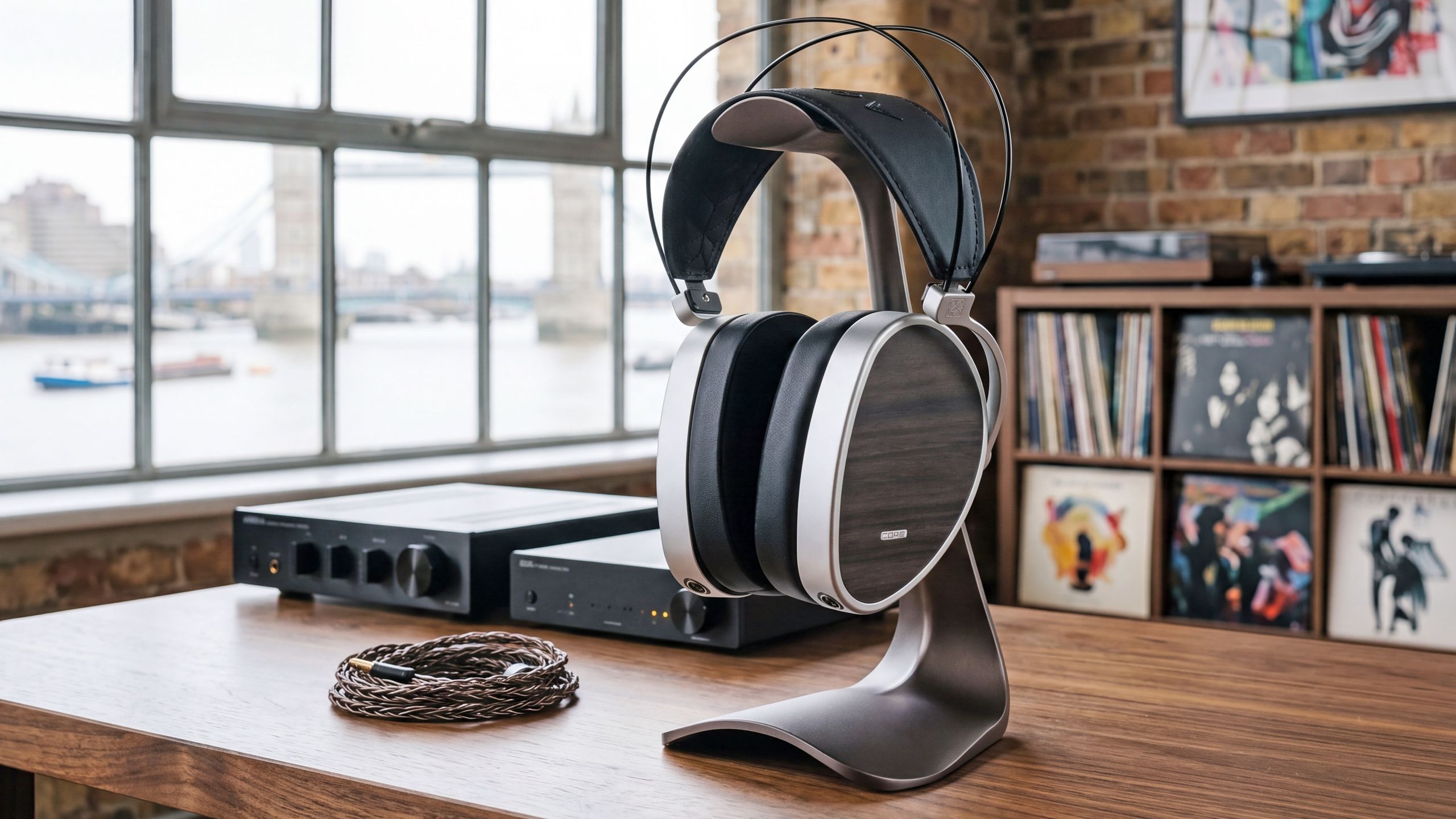
- Aesthetic & Build: Machined aluminum and dark wood ear-cup inserts, coupled with a lightweight nitinol (nickel-titanium alloy) memory metal headband and a self-adjusting suspension strap.
- Weight: 440 grams.
- Sensitivity: 97dB/mW, making it exceptionally easy to drive for a planar magnetic headphone.
- Power Requirements: A minimum of 125mW into 16 ohms is required to achieve optimal performance.
- Cable Options: Equipped with a detachable cable system. Buyers can choose their preferred termination at the time of purchase: a balanced 4.4mm connector, a balanced 4-pin XLR connector, or a single-ended 6.35mm/3.5mm termination.
According to the manufacturer, the Aeon Core is engineered to deliver a presentation that is "unusually open" for a closed-back headphone, promising a spacious, detailed, articulate, and highly expressive soundstage that defies the physical limitations of sealed ear cups.
Chronology: The Evolution of the Aeon Line and the Revision of the Harman Curve
To understand the development of the Aeon Core, one must look at the history of Dan Clark Audio. Founded by engineer Dan Clark, the company originally operated under the name MrSpeakers, gaining notoriety in the audiophile community by modifying Fostex T50RP dynamic/planar hybrid headphones. Over the years, Clark transitioned the company to in-house driver design, rebranding as Dan Clark Audio (DCA) to reflect its status as an independent developer of world-class planar magnetic and electrostatic headphones.
[2012-2015: MrSpeakers Era] ➔ [2017: Original Aeon Flow Launched] ➔ [2019: Aeon 2 & Rebrand to DCA] ➔ [2021: Aeon 2 Noire] ➔ [Present: Aeon Core Launch]
                                                                                                                          │
                                                                                    [Collaboration with Dr. Sean Olive to revise Harman Curve]
The original Aeon Flow, launched in 2017, was designed to bring the company’s high-end planar sound to a more accessible price point. It featured a distinct, ergonomic teardrop-shaped ear cup that mirrored the natural shape of the human ear—a design language that remains a signature of the brand. This was followed by the Aeon 2, the Aeon RT (Re-Tuned), and the critically acclaimed Aeon 2 Noire, each iterating on portability, folding mechanisms, and acoustic refinements.
The development of the Aeon Core marks a fundamental shift in how Dan Clark Audio approaches frequency response and acoustic targets. Historically, premium headphone manufacturers have targeted the Harman Target Curve—a frequency response target developed by Dr. Sean Olive and his research team at Harman International (a subsidiary of Samsung). The Harman Curve was designed to replicate the sound of high-quality flat-frequency-response loudspeakers inside a professionally treated listening room, adjusted for preferred bass and treble boosts based on extensive blind listener testing.
However, as acoustic measurement technology has advanced, both Dan Clark and Dr. Sean Olive recognized that the original Harman Curve required modernization. Older measurement fixtures and couplers introduced artificial peaks and dips in the high frequencies, leading to target curves that did not perfectly align with human perception when measured on state-of-the-art, high-resolution ear simulators (such as the Brüel & Kjær Type 5128).
To address this, Dan Clark collaborated directly with Dr. Sean Olive to develop an updated, revised variation of the Harman Curve. The Aeon Core is the first commercial headphone designed from the ground up using this new measurement standard. This collaborative effort resulted in a meticulously re-engineered frequency response profile. Compared to previous Aeon models, the Aeon Core features:
- A slightly leaner upper bass region to prevent muddiness and improve transient clarity.
- A gently lifted lower midrange to enhance the warmth, presence, and realism of vocal performances.
- A softer, more natural upper midrange and treble response to eliminate sibilance and listener fatigue without sacrificing detail.
Supporting Data: Technical Specifications and Engineering Breakthroughs
The technical achievements of the Aeon Core are centered around its completely redesigned planar magnetic driver stack. Unlike traditional dynamic drivers, which use a voice coil attached to a cone, planar magnetic drivers utilize a micro-thin diaphragm suspended between two arrays of magnets. When an electrical signal passes through trace elements printed directly onto the diaphragm, electromagnetic forces cause the entire surface to move uniformly.
V-Planar Technology and Diaphragm Innovation
To maximize the performance of this driver, Dan Clark Audio has implemented its patented V-Planar technology on the surface of the Aeon Core’s diaphragm.
Standard Flat Diaphragm:     [  Stretches at edges, limited excursion, higher distortion  ]
                                                     VS.
V-Planar folded Diaphragm:   [ ///////////////////////////// ]
                             (Folds allow uniform piston-like movement, lower distortion)
Standard flat diaphragms are held under tension at their edges, meaning the center of the diaphragm moves more than the perimeter, akin to a drumhead. This uneven movement can introduce modal breakups and distortion.
V-Planar technology addresses this by deeply folding (knurling) the diaphragm material. The folds allow the diaphragm to expand and contract like an accordion. When an electrical signal is applied, the entire surface of the diaphragm moves in a linear, piston-like fashion. This engineering breakthrough yields several quantifiable benefits:
- Reduced Harmonic Distortion: Significantly lower distortion across the entire frequency spectrum, particularly in the low frequencies.
- Improved Dynamics: Faster transient response, allowing the headphone to handle rapid transitions from quiet passages to explosive crescendos.
- Optimized Frequency Response: More predictable and consistent acoustic behavior across different volume levels.
Furthermore, the Aeon Core utilizes an entirely new diaphragm material. This composite material is designed to resist environmental changes (such as humidity and temperature fluctuations) while offering exceptional structural rigidity at an incredibly low mass. This ensures unit-to-unit consistency, meaning every pair of Aeon Core headphones leaving the factory matches the reference response within strict tolerances.
Electrical Efficiency and Driveability
Historically, planar magnetic headphones have been notoriously difficult to drive, often requiring powerful desktop amplifiers delivering several watts of power to sound their best. The Aeon Core defies this trend:
| Metric | Aeon Core Specification | Industry Standard Planar Magnetic |
|---|---|---|
| Sensitivity | 97 dB/mW | 90 – 93 dB/mW |
| Power Target | 125mW into 16 ohms | 500mW – 1W+ into 32/50 ohms |
| Source Compatibility | Mobile Dongles, Portable DAC/Amps, Desktops | High-Output Desktop Amplifiers Only |
With a sensitivity of 97dB/mW, the Aeon Core is remarkably efficient. It can be fully driven to safe, dynamic listening levels using modest portable equipment, such as USB-C dongle DACs, portable amplifiers, or desktop systems. Listeners no longer need to be tethered to a massive mains-powered amplifier to experience true high-fidelity planar sound.
Physical Design and Ergonomics
While the Aeon Core is exceptionally light for a planar magnetic design, it does carry some physical heft due to its robust metal and wood construction. Weighing in at 440 grams, it is heavier than some mainstream consumer wireless headphones, such as the Apple AirPods Max (385g) or the Sony WH-1000XM5 (250g). However, Dan Clark Audio mitigates this weight through advanced ergonomic design.
The nitinol headband provides a constant, gentle clamping force, while the self-adjusting leather suspension strap distributes the weight evenly across the top of the listener’s head, preventing localized pressure points. Combined with the signature teardrop-shaped ear cups and plush ear pads, the Aeon Core is engineered for long-term comfort during extended listening sessions.
Official Responses and Manufacturer Philosophy
Dan Clark Audio’s design philosophy has always centered on challenging industry dogmas. In announcing the Aeon Core, founder Dan Clark emphasized the company’s desire to push the boundaries of what a closed-back headphone can achieve.
In official statements, the company highlights that closed-back headphones are often viewed as a compromise by audiophiles. While they offer necessary isolation in shared spaces, offices, or transit environments, they frequently suffer from "cup reflections"—internal acoustic reflections where sound waves bounce off the back wall of the ear cup and return to the ear, causing phase cancellation, a congested soundstage, and a unnatural "boxy" midrange.
To combat this, the Aeon Core’s internal chamber features advanced acoustic damping materials and diffusion structures designed to dissipate rear-firing sound waves. According to Dan Clark:
"With the Aeon Core, we wanted to deliver an experience that makes you forget you are wearing a closed-back headphone. By optimizing the airflow and utilizing our new driver stack, we have created an unusually open soundstage. The music has room to breathe, delivering a spacious, detailed, articulate, and expressive performance that we believe sets a new standard for closed-back designs under the £1,000 mark."
Furthermore, the brand’s collaboration with Dr. Sean Olive underscores a commitment to scientific rigor. Rather than tuning by ear alone or relying on outdated standards, Dan Clark Audio seeks to align its products with the latest empirical research in human hearing and psychoacoustics. The resulting updated target curve represents a pivot toward a more natural, lifelike presentation that aligns with how the human brain processes sound in real-world environments.
Implications for the Audiophile Market and Consumer Landscape
The release of the Dan Clark Audio Aeon Core has several profound implications for the personal audio industry, affecting competitors, consumers, and acoustic standards alike.
Disrupting the Mid-Fi to Hi-Fi Transition
The £800 to £1,200 price bracket is a critical battleground in personal audio. It serves as the gateway where casual listeners transition into serious audiophiles. Historically, this segment has been dominated by open-back designs (such as the Sennheiser HD 600 series, Focal Clear, or Hifiman Edition XS/Ananda), which naturally offer wider soundstages but zero isolation.
For consumers who require a closed-back design—either due to a noisy environment or to avoid disturbing a partner—the options have been limited and often compromised. Competitors like the Focal Celestee or the Audeze LCD-2 Closed-Back have held strong positions in this segment. The Aeon Core, with its advanced V-Planar driver, lightweight titanium build, and highly optimized "open" soundstage, represents a direct challenge to these established players, raising the bar for what consumers can expect at this price point.
The Democratization of Planar Magnetic Portability
By designing a planar magnetic headphone that can be easily driven with just 125mW of power, Dan Clark Audio is capitalizing on the massive popularity of portable USB-C DAC/amps (such as the AudioQuest DragonFly, iFi Go Link, or Chord Mojo 2).
Traditional Planar Setup:    [Wall Outlet] ➔ [Heavy Desktop Amp] ➔ [Thick Cable] ➔ [Planar Headphone]

Modern Aeon Core Setup:      [Smartphone]  ➔ [Ultra-portable USB Dongle] ➔ [Aeon Core]
This ease of driveability democratizes high-end audio, allowing users to experience desktop-tier planar resolution while working at a coffee shop, traveling, or moving around the home, without needing to invest in costly, desktop-bound amplification chains.
Accelerating the Evolution of Target Curves
The collaborative revision of the Harman Curve by Dan Clark and Dr. Sean Olive is bound to reverberate through the acoustic engineering community. As measurement rigs continue to evolve, other headphone manufacturers will likely be forced to re-evaluate their tuning targets. The Aeon Core acts as a real-world proof of concept for this new measurement methodology. If the market warmly receives its leaner upper bass and softer upper midrange, it could signal a broader shift in how premium headphones are voiced globally over the next decade.
In conclusion, the Dan Clark Audio Aeon Core is more than just a new entry-level product for a prestigious brand. It is a carefully engineered convergence of material science, psychoacoustic research, and ergonomic refinement. By bringing flagship-level technologies like V-Planar diaphragms and custom-tuned target curves down to a more accessible price point, the Aeon Core is poised to reshape expectations for closed-back personal audio.