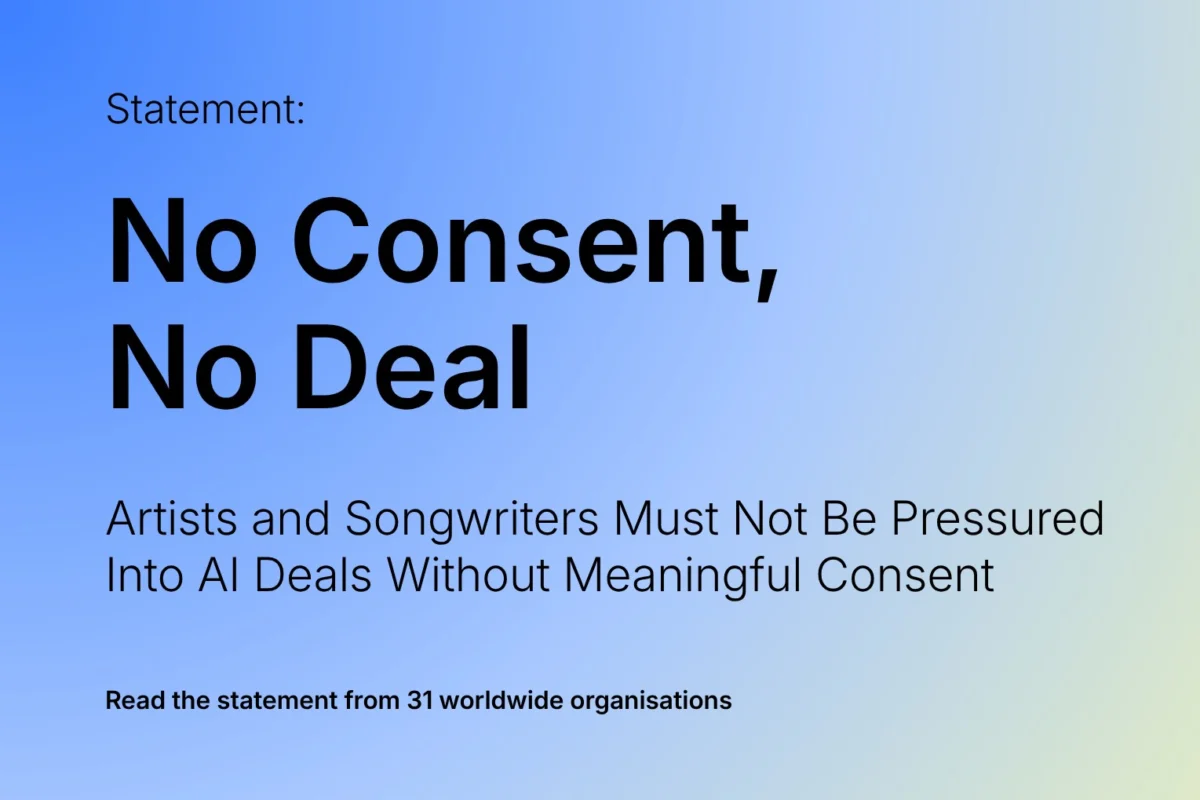
In a landmark moment for the music industry, a worldwide coalition of artists, songwriters, and management organizations has launched a coordinated offensive against the growing practice of "default" artificial intelligence licensing. On Monday, June 22, the group—representing thousands of creators across North America, Europe, and Oceania—issued a blistering open letter condemning what they describe as "hypocrisy" and "injustice" within the record label and publishing sectors.
The coalition, which includes heavyweight organizations such as the Music Artists Coalition (MAC), the Artists Rights Alliance (ARA), and the Black Music Action Coalition (BMAC), argues that while major labels and publishers are aggressive in protecting their own catalogues from unauthorized AI training, they are simultaneously leveraging obscure contract language to opt their artists into those same AI systems without meaningful consent.
The Chronology of a Growing Divide
The friction between creators and rights holders has been brewing for over a year as the generative AI boom transformed from a technological curiosity into a multi-billion-dollar industry.
Throughout the past twelve months, the music industry has witnessed a flurry of high-profile licensing agreements. Major labels—Warner Music Group, Universal Music Group, and Sony Music—have inked significant, often opaque, deals with AI-driven platforms like Suno, Udio, ElevenLabs, and Klay. These deals were ostensibly designed to monetize the vast libraries of intellectual property owned by these corporations.
However, as these deals moved from the boardroom to the fine print of artist contracts, a pattern emerged. In April, investigations by Billboard revealed that legal teams were utilizing broad, "blanket" licensing clauses in U.S. recording agreements to bypass the need for individual artist approval. By classifying AI training as a form of "data analysis" or "pattern recognition," labels have begun to assert that they do not require specific, project-by-project consent from the very artists who created the music being used to train these models.
The tension reached a breaking point this week when the coalition formally challenged this interpretation, demanding an immediate cessation of practices they deem predatory.
The Mechanics of the "Default Opt-In"
To understand the scope of this dispute, one must look at the legal architecture of the modern recording contract. The coalition’s letter highlights two primary methods through which labels are integrating AI:

- Retroactive Inclusion: Artists currently under contract are receiving notifications that their past works are being automatically "opted in" to AI training models. This process effectively converts the artist’s creative legacy into a training dataset without their explicit participation or negotiation.
- Forced Clauses in New Agreements: For artists signing new deals, AI rights are no longer a negotiable "extra"—they are a standard condition of employment. The letter explicitly cites clauses from major entities like BMG, Sony, and Believe, which demand "unlimited, exclusive rights" to analyze recordings for the purpose of "extracting information on patterns, trends and correlations."
Jason Boyarski, a founding partner at Boyarski Fritz, noted earlier this year that labels have largely adopted the position that they already possess the technical rights required to train AI models under existing blanket exploitation language. This has created a "serious imbalance," according to the coalition, where artists are expected to sacrifice their creative identity for the benefit of tech-partnered conglomerates, often without any defined remuneration.
The Three Pillars of Reform
The coalition’s letter is not merely a statement of protest; it is a manifesto for a new, equitable framework. They have proposed three core principles that must govern any future interaction between human creativity and synthetic intelligence:
1. Consent and Control
The coalition asserts that consent cannot be "buried" in 50-page legal contracts. They demand that artists have the right to actively and specifically approve how their voice, likeness, and creative output are used. This includes the right to refuse AI participation entirely without facing professional or financial retaliation.
2. Fair Compensation
Innovation is not a zero-sum game, but the current model treats the artist as a raw material rather than a partner. The group insists that if a label decides to monetize an artist’s work through AI, the artist must receive a clear, transparent, and fair percentage of the resulting revenue. They argue that AI-derived income should not be treated as a general "label asset" but as a royalty-bearing creative endeavor.
3. Clarity and Transparency
The "black box" nature of current AI deals is a primary source of frustration. The coalition demands that artists, songwriters, and managers be provided with plain-language disclosures regarding which rights are included, what the AI is permitted to do, how long the permission lasts, and—crucially—how consent can be withdrawn.
Official Responses and Industry Implications
The industry’s response to this coalition has been fractured. While the music companies argue that they are fighting for the copyright protections of the entire industry—by suing unauthorized AI companies for scraping their catalogues—the artists argue that those same companies are now acting as the "unauthorized" party in their relationship with their own roster.
Audrey Benoualid, a partner at Myman Greenspan Fox Rosenberg Mobasser Younger & Light, points to a crucial "differentiation" in how the industry is currently behaving: "We’re seeing a differentiation between the way training—or inputs—and outputs are treated." Labels are happy to be the gatekeepers of inputs, but they are increasingly reluctant to share the power of those inputs with the artists themselves.

The implications of this standoff are profound. If the labels succeed in maintaining "default opt-ins," they will effectively own the "style" and "identity" of their artists in perpetuity, even after those artists leave the label or their contracts expire. This would fundamentally alter the value of an artist’s brand, as their own likeness could be used to generate competing content.
The Future of the Music Ecosystem
The coalition concludes their letter with a stark warning: "The future of music must be built with artists, songwriters and their representatives, not imposed on them."
At a time when global policymakers—from the EU to the U.S. Congress—are scrambling to draft copyright legislation in the age of AI, the timing of this protest is strategic. By forcing the issue into the public sphere, the coalition is attempting to influence the regulatory environment before "default" becomes "industry standard."
The organizations backing this move, which include the European Music Managers Alliance, the Featured Artists’ Coalition, and the Ivors Academy, represent a significant portion of the global music market. Their collective weight suggests that this is not a niche concern, but a foundational conflict about the definition of authorship in the 21st century.
As the industry moves forward, the question remains: Can the music business sustain a model where the creators are treated as mere data points? The artists say no. By demanding "no default opt-ins" and "no forced AI clauses," they are drawing a line in the digital sand, insisting that the music industry—and the technology that powers it—must remain human-centric at its core.
The path ahead will likely involve a flurry of litigation, renegotiations, and intense lobbying. But for the thousands of creators who signed this letter, the fight is about more than just royalties—it is about retaining the right to decide how, and whether, their creative soul is fed into the machines of the future.