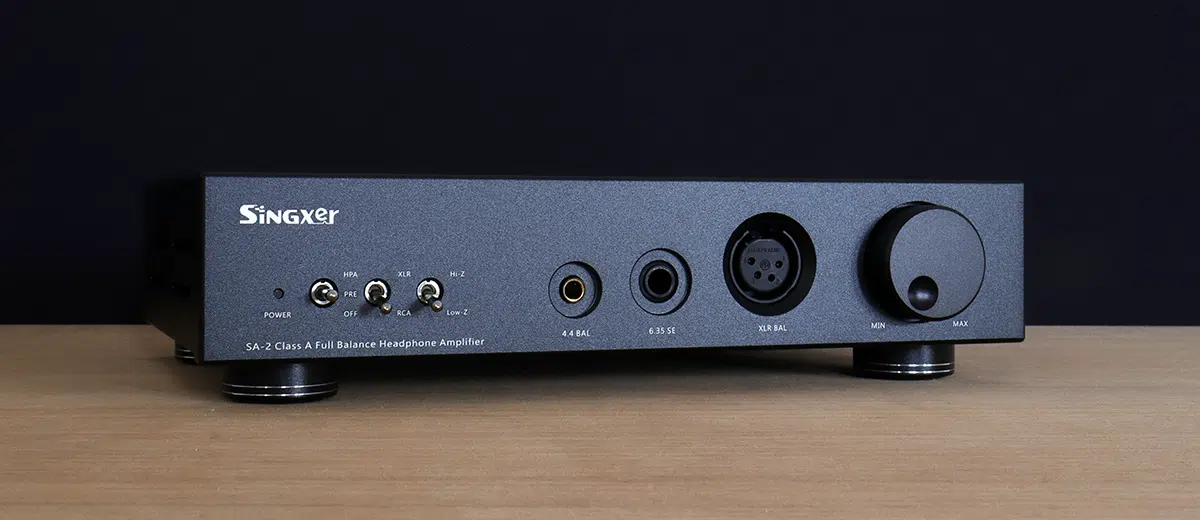
The landscape of high-fidelity desktop audio is currently experiencing a renaissance, driven largely by innovation originating from Guangzhou, China. Among the manufacturers carving out a reputation for uncompromising performance is Singxer. Founded in 2011, the company has spent over a decade refining its "bridge between silence and sound" philosophy. Their latest offering, the Singxer SA-2, serves as the spiritual and technical successor to the lauded SA-1 and SA-1 V2. Priced at approximately €495 (excluding VAT), the SA-2 is positioned as a powerful, transparent, and versatile desktop hub for the modern audiophile.
Main Facts: The Evolution of the SA-2
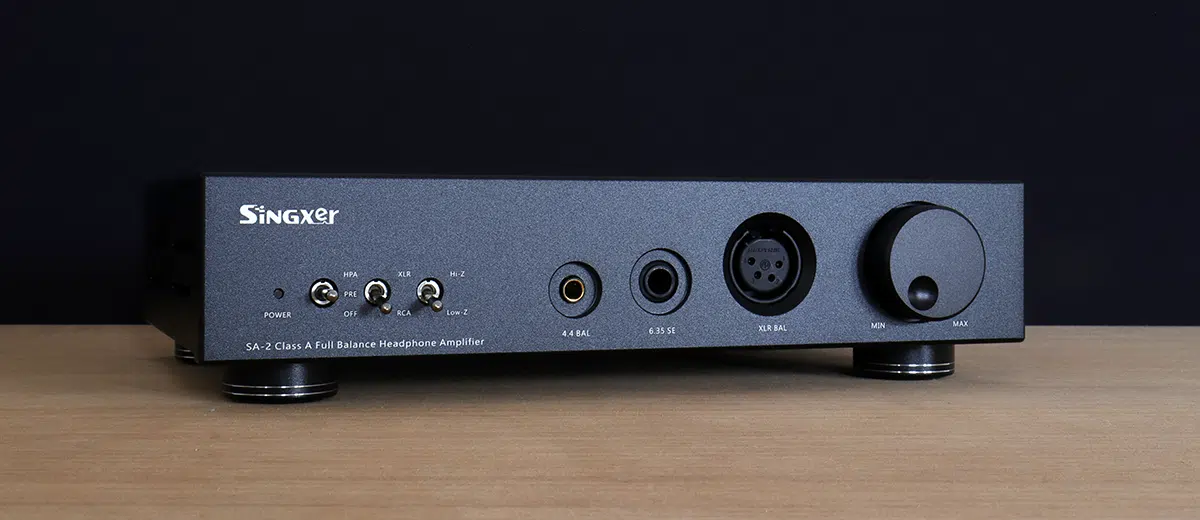
The Singxer SA-2 is a fully balanced Class A desktop headphone amplifier that prioritizes a vanishingly low noise floor and high-current output. Designed for those who demand transparency, the unit functions as a "neutral observer," aiming to provide an uncolored window into the audio chain.
Key Specifications:
- Topology: Fully balanced Class A design.
- Output Power: Up to 10W at 32Ω; up to 15W at 20Ω (non-Class A mode).
- Cooling: Integrated copper block heat dissipation.
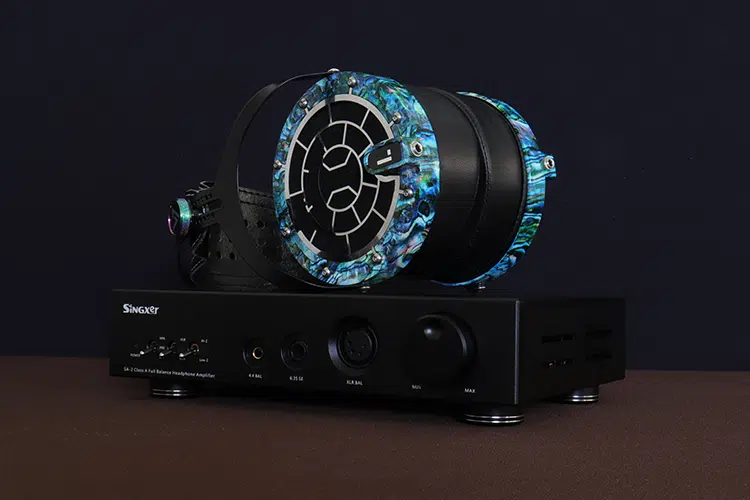
- Connectivity: 4-pin XLR, 4.4mm Pentaconn, and 6.35mm single-ended outputs.
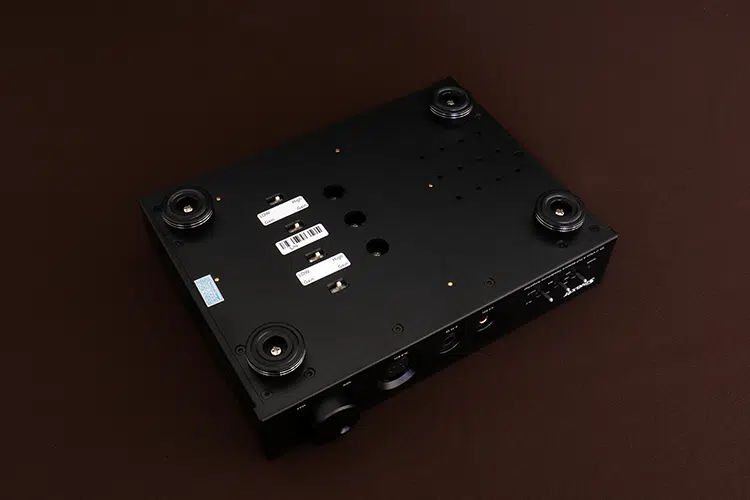
- Chassis: Heavy-duty, high-quality CNC-machined metal.
Unlike many contemporary amplifiers that lean into digital processing, the SA-2 remains an analog purist’s device, utilizing high-performance ROHM input transistors and a high-precision Alps volume potentiometer.
Chronology: From SA-1 to SA-2
Singxer’s journey to the SA-2 is a story of iterative refinement. When the SA-1 was first introduced, it set a high bar for price-to-performance in the balanced amplifier market. The transition to the V2 and now the SA-2 reflects user feedback and advancements in component efficiency.
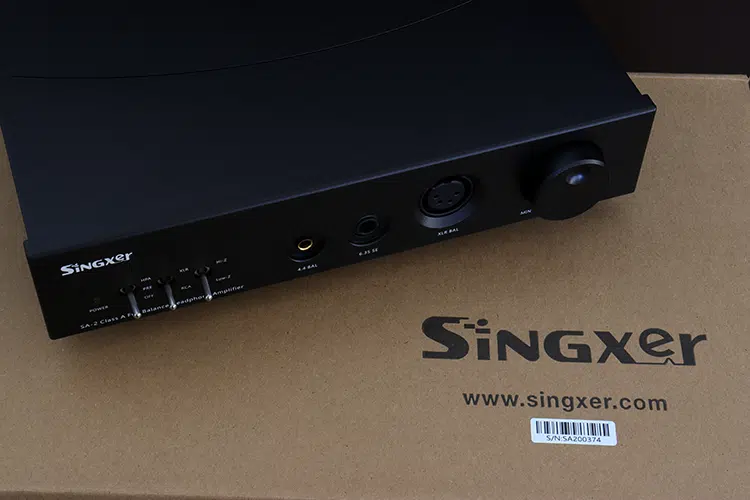
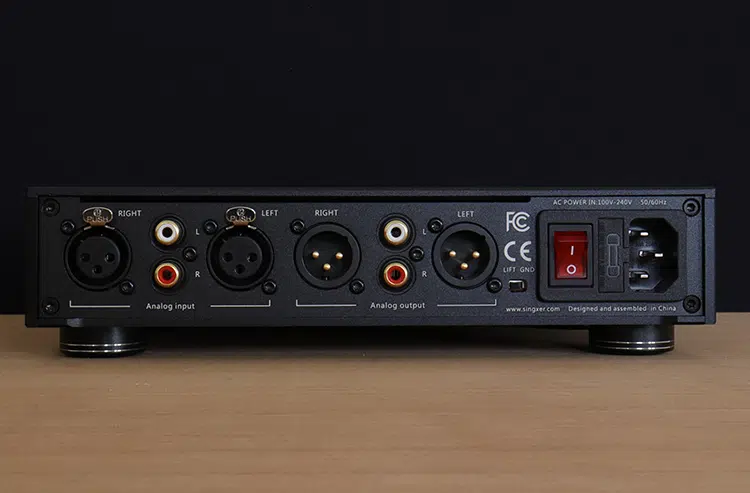
While the exterior silhouette remains largely identical to its predecessors—maintaining the same industrial, "old-school" aesthetic—the internal architecture has undergone significant surgery. The inclusion of a new DC servo design and optimized circuitry has allowed the SA-2 to achieve roughly twice the output power of the original SA-1, all while maintaining the thermal efficiency required for long-term reliability. The addition of a rear-panel ground-lift switch marks the most significant functional change, addressing the persistent issue of ground-loop hum that occasionally plagued users of the older generation.
Supporting Data: Performance and Technical Analysis
Power and Thermal Management
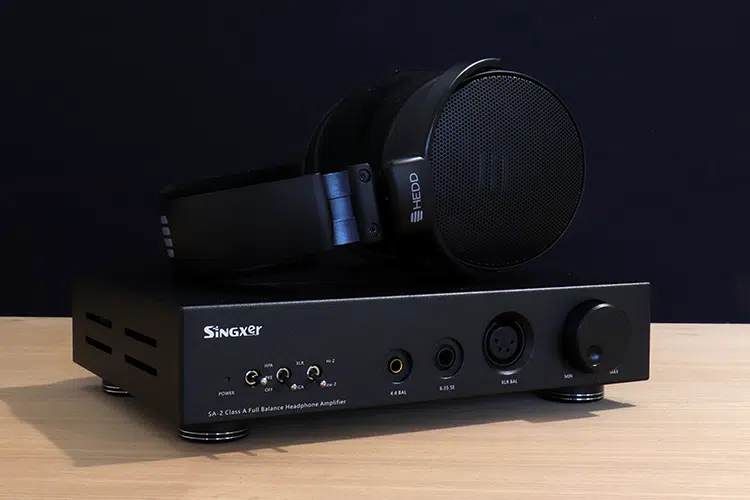
The SA-2’s performance figures are impressive for its footprint. While the unit can operate in pure Class A mode, it intelligently adjusts its bias. Singxer specifies that the unit remains in Class A operation for loads above 64Ω. The use of high-current ON output transistors, paired with a custom copper block heat sink, ensures that the unit remains cool under pressure. During testing with power-hungry planar magnetic headphones like the HIFIMAN HE1000 Unveiled and the HEDD Audio HEDDphone D1, the chassis never exceeded a "lukewarm" temperature, a testament to the efficiency of the design.
Sonic Signature: Transparency as a Standard
The SA-2 is, by design, a "vanilla" experience—and that is its greatest strength. It does not seek to add warmth or coloration; it seeks to reveal the source.
- High Frequencies: The top end is airy and well-defined, providing a level of resolution that borders on the clinical.
- Midrange: The midrange is remarkably smooth, avoiding the "shouty" or "thin" characteristics often found in cheaper, high-power amplifiers.
- Bass: The low end is strictly neutral. It is articulate and fast, though it lacks the artificial bloom that some users prefer. For those seeking extra "thump," pairing the SA-2 with a DAC that offers DSP or XBass features is highly recommended.
Staging and Dynamics
The spatial reproduction of the SA-2 is entirely dependent on the input signal. It does not impose its own soundstage; rather, it acts as a transparent medium for the DAC. When fed a holographic, high-resolution signal, the SA-2 maintains that depth and width with minimal smear, providing a precise image that is highly beneficial for both critical listening and professional monitoring.
Design and Ergonomics: A Study in Utility
The chassis construction is robust, featuring thick metal panels that reject electromagnetic interference (EMI). However, the design is not without its controversies.
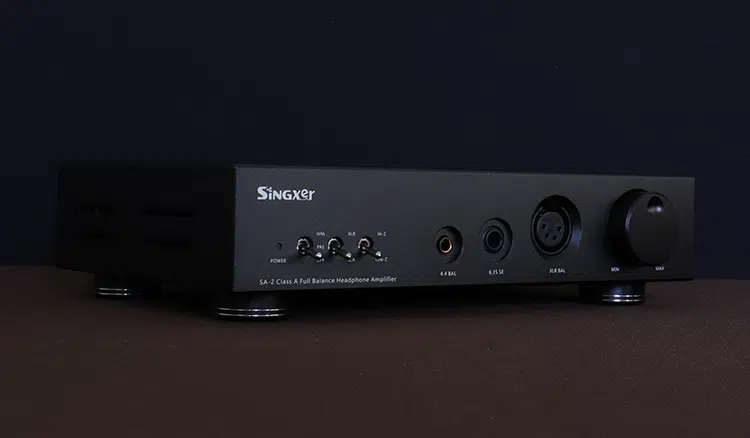
The "old-school" approach—relying on toggle switches rather than push-buttons or touch interfaces—will appeal to traditionalists, but the ergonomics require some getting used to. The volume knob is notably stiff, reflecting high-quality tolerances but requiring a firm hand to adjust.
The Power Button Dilemma:
A recurring point of frustration is the placement of the rear-mounted power switch, which is obstructed by the power cord and the fuse housing. While one could argue that the front-mounted standby switch renders the rear switch redundant for daily use, it remains an oversight that hinders accessibility for those who prefer a full power-cycle when the unit is not in use.
Implications for the Market
The release of the Singxer SA-2 highlights a shifting trend in the desktop audio market. Consumers are moving away from "all-in-one" devices that compromise performance in favor of features, and back toward specialized, high-power discrete amplifiers.
Competitive Positioning
When compared to rivals such as the Topping A90 or the SMSL SH-X, the Singxer SA-2 holds its own by prioritizing a "musical" neutrality. While Topping and SMSL are often associated with a clinical, ultra-low-THD profile, the SA-2 offers a slightly more natural decay and a more organic, albeit still neutral, presentation.
For the reference enthusiast, the SA-2 is a dream; it provides a clean canvas that allows the characteristics of different DACs and headphones to shine through. For the casual listener, however, the lack of built-in "flavor" or coloration means the user must be intentional about the rest of their signal chain.
Official Response and Conclusion
While Singxer has not issued a formal "response" to the critique regarding switch placement, their focus remains firmly on the "bridging silence and sound" motto. By prioritizing internal components—such as the high-performance ROHM input transistors and the refined DC servo design—over aesthetic flair, Singxer has succeeded in creating an amplifier that is, above all else, a tool for accurate sound reproduction.
Pros:
- Exceptional Power: Capable of driving demanding loads without breaking a sweat.
- Silent Background: The noise floor is effectively non-existent, making it perfect for sensitive IEMs.
- Build Quality: A tank-like, durable construction that suggests longevity.
Cons:
- Ergonomics: The rear power button is inconveniently placed.
- Volume Knob: The physical resistance is high, making fine-grained adjustments slightly tedious.
- Neutrality: Its "no-flavor" approach may require external EQ or coloration for those who prefer a warmer sound.
In summary, the Singxer SA-2 is a formidable contender in the €500 price bracket. It is a mature, refined piece of engineering that favors substance over style. For those who own a collection of headphones and seek a singular, reliable, and transparent amplifier to bring out the best in each of them, the SA-2 is an investment that respects the integrity of the original recording. It is a testament to how far Chi-Fi has come, proving that top-tier audio performance no longer requires a top-tier price tag.