Welcome back to TechCrunch Mobility, your definitive hub for the future of transportation and the increasingly complex role artificial intelligence plays in our daily commute. From the boardrooms of Silicon Valley to the legislative halls of Washington, D.C., the mobility sector is undergoing a tectonic shift.
The Main Event: Uber and Waymo’s Regulatory Collision Course
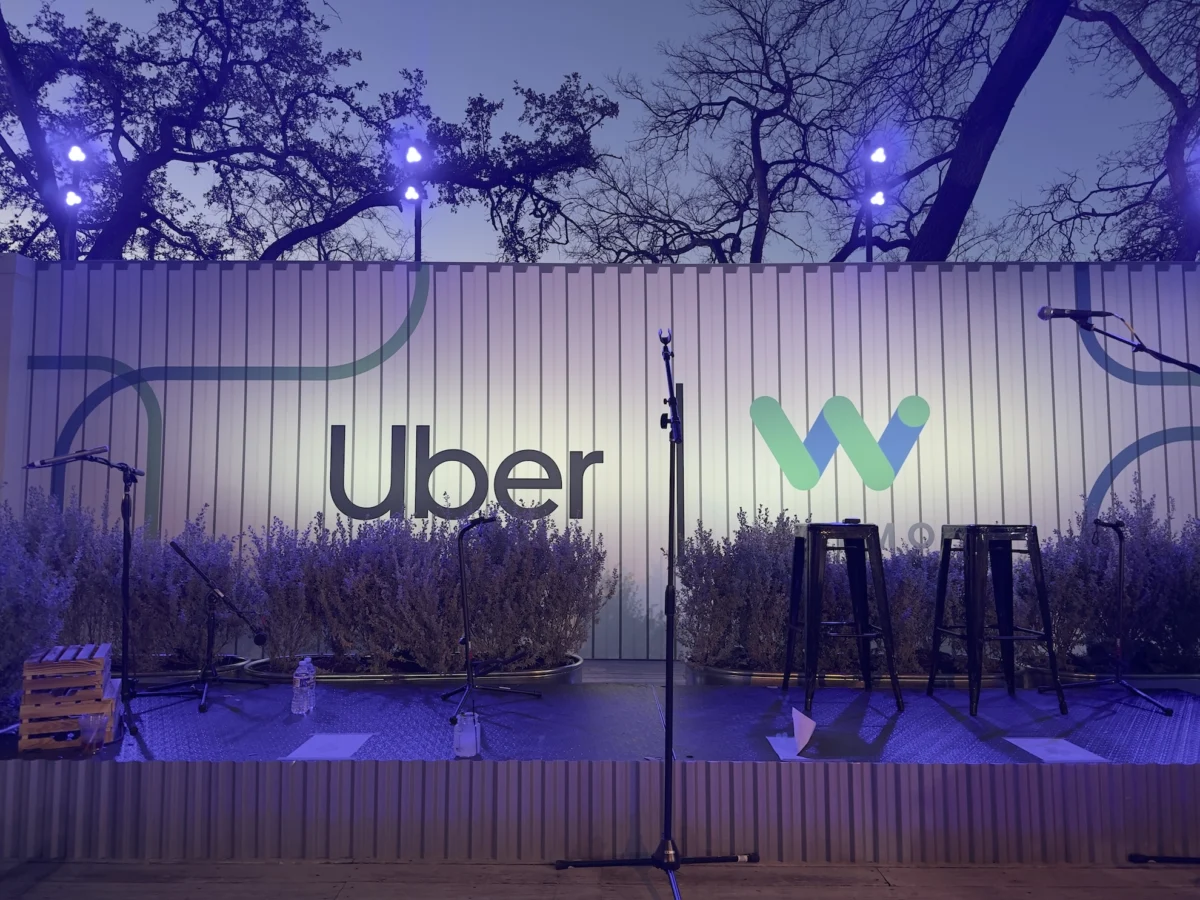
The long-standing partnership between Uber and Waymo—once hailed as a collaborative bridge between ride-hailing software and autonomous hardware—is effectively fracturing. What began as a strategic integration has devolved into a high-stakes legislative battle, with both companies now occupying opposing sides of the autonomous vehicle (AV) policy debate.
This is not mere conjecture. Through a deep dive into correspondence directed at the D.C. Council, it has become clear that Uber is actively lobbying against proposed legislation that would open the capital’s streets to autonomous fleets. The crux of the dispute lies in the potential for market dominance and the protection of the traditional ride-hailing labor force.
The Hybrid Argument vs. The Monopoly Concern
Uber’s opposition to the D.C. bill is rooted in a "hybrid" model. The company argues that an unchecked influx of robotaxis would not only displace thousands of human drivers but also grant Waymo a de facto monopoly on autonomous operations in the district.
Uber’s proposed alternative is a regulatory framework that mandates robotaxis to function exclusively within existing ride-hailing networks alongside human-operated vehicles. However, industry insiders suggest this proposal is likely a tactical maneuver rather than a viable policy path. If such a mandate were enacted, it would force AV developers like Waymo into a corner: they would either have to list their proprietary technology on third-party apps like Uber—surrendering control of their ecosystem—or be forced to employ human drivers as a stopgap, effectively negating the economic advantages they spent hundreds of millions of dollars to develop.
Chronology of the D.C. Council Hearing
The tension reached a boiling point during Monday’s D.C. Council hearing. The event served as a microcosm of the current industry divide, drawing a wide range of stakeholders, including:
- Industry Heavyweights: Lyft, Tesla, Uber, and Waymo.
- Advocacy Groups: Representatives for disability rights and accessibility.
- Institutional Voices: Labor unions, think tanks, and local government officials.
The prevailing sentiment emerging from the hearing suggests that Waymo remains one of the few entities supportive of the current legislative draft. Conversely, much of the wider industry, including Tesla, expressed significant reservations. Tesla’s senior policy adviser, India Herdman, voiced concerns regarding the bill’s stringent requirements: a 180-day, 250,000-mile mandatory testing phase, coupled with a $1 million application fee and a $5 million permit fee.

Crucially, the bill also levies a $0.15-per-mile tax on AV operators. Tesla and other manufacturers are pushing for reciprocity, arguing that testing data accumulated in other jurisdictions should count toward the mileage threshold. Waymo, having already conducted extensive testing in D.C. with human safety operators, has effectively cleared these hurdles. If the bill passes in its current form, Waymo stands to secure a six-month competitive advantage, leaving its rivals playing catch-up.
Supporting Data and Financial Maneuvers
While the D.C. fight rages, the broader mobility market continues to experience significant financial consolidation.
The Uber-Delivery Hero Acquisition
Uber is moving to solidify its status as a global logistics behemoth with its proposed $14.8 billion acquisition of the German firm Delivery Hero. This deal, if it clears the inevitable regulatory gauntlets, will double Uber’s global delivery footprint, granting it immediate access to nearly 100 markets across Asia, Latin America, the Middle East, and Europe. In a related move to appease competition regulators, Delivery Hero has entered a separate agreement to sell its business in 14 markets where Uber Eats is already established to the New York-based investment firm SSW Partners for $1.6 billion.
Venture Capital Pulse
Innovation in the supply chain and hardware sectors remains robust despite the volatility in software-heavy AV markets:
- Self Inspection: The San Diego startup, which is applying AI to automate vehicle inspections, has secured $10 million in a funding round led by the family office of Sheryl Sandberg. Strategic investors, including U.S. AutoForce and Westlake Financial, suggest a growing institutional appetite for digitized maintenance.
- Senra: The wire harness manufacturer raised $65 million in a Series B round, backed by heavyweights like Sequoia Capital, Andreessen Horowitz, and Founders Fund. The investment signals a shift toward modernizing the "cold war era" technology currently found in vehicle electrical architectures.
- Zepto: The Indian quick-commerce giant is currently navigating a cooling market, with Bloomberg reporting that the company is aiming for an IPO valuation significantly lower than its $7 billion peak.
Official Responses and Industry Implications
The industry is currently grappling with a series of high-profile PR and safety challenges that are forcing regulators to take a harder line.
Regulatory Pushback
In San Francisco, Mayor Daniel Lurie has formally requested that state regulators tighten oversight following a July 4th incident where Waymo vehicles became immobilized in heavy traffic, blocking critical thoroughfares and exacerbating gridlock. Lurie’s proposed requirements focus on "operational reliability" during emergency events—a direct response to the vulnerability of AI-driven systems.
Meanwhile, the Los Angeles Police Department has opted to let its contract with surveillance firm Flock Safety expire, citing "serious concerns over civil liberties and privacy." This reflects a growing nationwide hesitation regarding the normalization of automated license plate tracking.

Safety and Software Recalls
The National Transportation Safety Board (NTSB) confirmed a sobering detail regarding a recent Tesla crash: the driver had overridden the vehicle’s "Full Self-Driving (Supervised)" software by pressing the accelerator to 100%. This serves as a stark reminder of the limitations of current driver-assistance systems. Similarly, Zoox recently issued a software recall after one of its autonomous vehicles became confused by smoke from a fire scene, highlighting the persistent challenges AI faces in edge-case environmental scenarios.
Notable Reads and Market Tidbits
- Lucid Motors: After a false report triggered a massive sell-off, knocking the stock down over 50% on Tuesday, the company has successfully pushed back. CEO Peter Rawlinson and official SEC filings have clarified that bankruptcy rumors were entirely baseless. The stock has since rebounded, trading 28% higher than its pre-drop levels.
- The Stick Shift: Preliminary government data confirms that the manual transmission is officially a relic, with only 0.6% of new vehicles in the U.S. featuring a manual gearbox in 2025.
- Lyft’s Positioning: CEO David Risher is leaning into a "Good Uber" narrative, attempting to differentiate the company by focusing on rider experience and brand identity as the alternative to the more aggressive expansionist tactics of its primary rival.
- SpaceX: The aerospace giant faced a setback on Thursday when it abruptly aborted the second launch attempt of its upgraded Starship rocket system just moments after ignition.
Conclusion: A Future in Flux
The convergence of AI, legislative lobbying, and global consolidation has created an environment where the "winner-takes-all" mentality is no longer just a business strategy—it is a regulatory battleground.
As we look toward the remainder of 2026, the question is not just who has the best algorithm, but who has the most influence in the halls of government. Whether it is Uber’s push to protect its labor network or Waymo’s drive to capture municipal markets, the fight over the future of mobility is far from over.
For a deeper dive into the intersection of AI agents and the future of the robotaxi race, I recommend listening to the latest Strictly VC podcast episode featuring Uber’s Chief Product Officer, Sachin Kansal, in conversation with TechCrunch EIC Connie Loizos. It is a revealing look at why the industry’s biggest players are struggling to define their roles in a rapidly changing world.
Disclaimer: When you purchase through links in our articles, we may earn a small commission. This does not affect our editorial independence.