
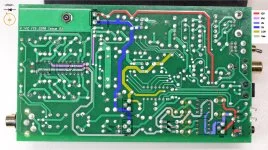
In the world of high-end audio, the restoration of vintage and legacy equipment is often viewed as a ritual of preservation. Enthusiasts spend countless hours meticulously sourcing components, recapping aging boards, and ensuring that iconic circuits remain operational for future generations. However, not every restoration project goes according to plan. A recent case involving a Musical Fidelity VDAC (Version 1) has highlighted the perils of modifying complex, proprietary power supply architectures without a full understanding of the original design intent.
What began as a routine effort by a DIY enthusiast to restore a pre-owned Musical Fidelity VDAC—a component notoriously sold without its original power supply—quickly spiraled into a cautionary tale regarding modern modifications, thermal runaway, and the often-misunderstood nature of charge-pump power supplies.
Main Facts: The Anatomy of a Power Failure
The project, spearheaded by forum member "andrew_whitham," centered on a Musical Fidelity VDAC v1. The objective was straightforward: adapt the unit to function with a custom power supply setup and upgrade the operational amplifiers (op-amps) to improve performance. The user replaced the original MC33079 quad op-amp with a BrownDog adapter supporting a quad configuration, alongside an NE5532 for the dual stage.
However, the modification resulted in immediate instability. Upon power-up, the unit exhibited erratic voltage behavior, characterized by severe thermal runaway in the 7809 voltage regulator, which reached temperatures exceeding 120°C. Further diagnosis revealed that the negative rail, which should have been stable, fluctuated wildly depending on the load and the duration of power application.

The core of the issue lies in the Musical Fidelity VDAC’s unique power design. Unlike standard high-fidelity audio equipment that utilizes a straightforward transformer-based split rail supply, the VDAC employs a more intricate architecture involving a 12V DC input, which is then manipulated through secondary stages, including ICL7660S switched-capacitor voltage converters, to generate the necessary negative rails for the op-amps.
Chronology of the Restoration Attempt
Phase 1: The Initial Modification
The restoration started with the removal of original components, including electrolytic capacitors and the stock op-amps. The user intended to "backfill" the unit with a modern, regulated 12V DC supply, utilizing an LM317 regulator. The user admitted in retrospect that the initial testing was insufficient, relying on a brief period of operation before assuming the unit was stable.
Phase 2: The Thermal Crisis
Within seconds of activation, the power supply rails collapsed. The 7809 regulator became dangerously hot, and voltage measurements showed significant deviations from expected levels. Removing the op-amps provided a temporary reprieve, but the rails remained inconsistent, suggesting a deeper issue within the charge-pump stage.
Phase 3: Diagnostic Troubleshooting
The user attempted to isolate the fault by testing the ICL7660S chips on a breadboard. The testing revealed that the chips were either damaged during the desoldering process or were operating outside of their design parameters due to improper decoupling capacitance. The user noted, "I managed to create a 7-pin version [of the component]—the life of the component comes second."

Phase 4: Solder and Component Analysis
As the discussion moved to the broader community, concerns were raised regarding the quality of the solder joints. The user noted the use of "audiophile-grade" lead-free, silver-loaded solder, which was criticized by other experts for its tendency to form "cold" or matte joints, often masking potential connection issues that might otherwise be visible with traditional leaded solder.
Supporting Data: The Complexity of the VDAC Power Stage
The Musical Fidelity VDAC’s reliance on the ICL7660S represents a classic case of engineering a "small solution to a big problem." The ICL7660S is a CMOS switched-capacitor voltage converter. Its primary function is to perform a voltage inversion (e.g., turning +V into -V) or a voltage doubling.
Technical Challenges
- Parallel vs. Series Configuration: The VDAC appears to utilize these chips in parallel to increase current capacity. However, if the chips are not properly matched or if the decoupling capacitors are incorrect (as the user discovered when switching from 10µF to 100µF), the charge pump becomes unstable.
- Voltage Sensitivity: The ICL7660S is sensitive to the input voltage. If the input is not perfectly regulated or if the charge pump is pushed beyond its frequency limit, it can result in the "escaping magic smoke" scenario experienced by the restorer.
- The "Audiophile" Solder Myth: The discussion veered into the debate surrounding solder composition. While some enthusiasts swear by silver-loaded solder for its purported sonic benefits, technical experts maintain that the primary requirement for solder is mechanical and electrical integrity. Lead-free solder, while environmentally regulated, has a higher melting point and a different wetting profile, which can lead to brittle or incomplete joints if the operator is not experienced with the specific thermal requirements of the alloy.
Official Perspectives and Community Consensus
The community feedback on the diyaudio forums provided a reality check for the restorer. Several key points emerged:
- "If it ain’t broke, don’t fix it": Expert users emphasized that recapping is a necessity for 50-year-old tube equipment but is often unnecessary and risky for relatively modern, low-power solid-state gear. Musical Fidelity’s original capacitors are generally high-quality and unlikely to fail in a way that warrants wholesale replacement without specific evidence of leakage or ESR degradation.
- Breadboarding First: The recommendation to test complex ICs—especially those involving charge pumps—on a separate breadboard before committing them to a custom PCB was highlighted as a best practice.
- The "Audiophile" Trap: There was a consensus that the obsession with "audiophile" components—including special solder and exotic capacitors—can often distract from basic engineering fundamentals. As one user noted, "There’s audiophile solder? Oh boy…" highlighting the skepticism toward marketing-driven component choices in the DIY community.
Implications for Future Restoration Projects
This case study offers three major lessons for those looking to restore vintage high-end audio equipment.

1. The Danger of Proprietary Designs
Musical Fidelity, like many high-end manufacturers, often employs unconventional circuit topologies to meet specific space or noise-floor constraints. When a restorer assumes these circuits are "standard" and applies generic upgrades (like standard linear regulation where a switched-capacitor supply is required), failure is almost guaranteed.
2. Documentation and Testing
Before removing a single capacitor, the restorer should perform a "baseline" test. Even if the unit is missing its power supply, an external bench supply should be used to verify the health of the existing circuitry. Blindly upgrading parts is not a substitute for diagnostics.
3. The Shift to Lead-Free Soldering
The shift to lead-free solder has fundamentally changed the DIY landscape. The higher temperatures required can damage delicate PCB traces, and the aesthetic appearance of the joints is different from traditional leaded solder. Restorers must adjust their iron temperatures and techniques to ensure that they are not creating "cold" joints that appear solid but lack true electrical conductivity.
Conclusion: A Path Forward
As of the most recent updates, the restorer is still in the process of debugging the VDAC. The lesson learned is clear: modernizing high-end audio is as much an exercise in forensic engineering as it is in soldering. By respecting the original design—no matter how "odd" it may seem—and focusing on verified component behavior rather than the subjective allure of "audiophile-grade" parts, the restorer is far more likely to restore the device to its former glory. The VDAC remains a testament to the idea that in audio engineering, elegance is often found in the simplest solution, and complexity, when poorly understood, is a precursor to failure.


