Behind the Panasonic TV Renaissance: Inside the Strategic Overhaul and European Rebirth
013 mins
By Lewis Empson Senior Staff Writer
Executive Summary: The 2026 TV Landscape and Panasonic’s Silence
The year 2026 has arguably gone down as one of the most volatile, transformative, and frankly exhausting periods in television manufacturing history. From the rapid mainstream adoption of RGB Mini LED technology to the introduction of budget-conscious OLED SE panels designed to undercut rivals, the market has shifted dramatically. Industry consolidations have also made headlines, notably TCL acquiring a dominant stake in Sony’s storied Bravia TV division.
Yet, amid this seismic industry restructuring, one major player remained conspicuously silent: Panasonic.
Following a turbulent period marked by fierce competition at both ends of the market—where low-cost 4K contenders like Hisense and TCL squeezed entry-level margins, and heavyweights like LG, Samsung, and Sony battled for supremacy at the high end—Panasonic’s European TV footprint began to shrink. Retail shelves grew bare, highly rated models vanished without warning, and newly announced sets like the Z86C failed to materialize.
However, behind closed doors at IFA 2026, Panasonic executives finally broke their silence. Through a newly formed strategic partnership with Shenzhen Skyworth (operating under parent company Chuángwéi RGB) and its European entity, SWMEU GmbH, Panasonic is charting a meticulous course back to prominence. This is the inside story of how the legendary brand is reorganizing, rebuilding, and preparing to reclaim its foothold in the European television market.
Chronology of a Shift: From Munich to IFA 2026
To understand Panasonic’s current trajectory, one must trace the timeline of its strategic retreat and subsequent reorganization over the past year.
February 2026 (The Panasonic Experience, Munich): Amid showcases spanning everything from air fryers, cameras, and Technics turntables to rice cookers and hair dryers, Panasonic dropped a monumental piece of news. It was revealed that the brand would offload its struggling European TV business to Chinese manufacturing powerhouses via a strategic partnership. The goal was simple: secure the long-term viability of Panasonic’s OLED, Mini LED, and QLED portfolios in Europe.
April 1, 2026: The partnership was officially scheduled to take effect. However, the date came and went with an unsettling lack of communication. Retail inventory dwindled across Europe, leaving five-star OLED models perpetually out of stock, and anticipated product rollouts stalled.
September 2026 (IFA Berlin): Following months of speculation and consumer concern, Panasonic hosted key media representatives at its IFA booth. Here, top executives from both Panasonic Corporation Japan and the newly established SWMEU GmbH provided comprehensive reassurance, clarifying that the months of radio silence were deliberately spent laying a robust operational foundation rather than rushing sub-par products to market.
Supporting Data & Market Dynamics
Panasonic’s structural pivot was not born out of a desire for expansion, but out of necessity. The consumer electronics market has experienced aggressive disruption:
Lower-Tier Erosion: Budget-friendly manufacturers armed with efficient supply chains have captured massive market share in the sub-£1,000 category, rendering traditional Japanese manufacturing models unsustainable at scale without restructuring.
High-End OLED Competition: Panasonic’s prestigious OLED sets—historically praised by Hollywood colorists and studio editors—faced mounting pressure from aggressive pricing, panel innovations, and software integrations pushed by LG Display and Samsung Display.
The European Target: SWMEU GmbH has set its sights on capturing the coveted number five spot within the pan-European TV market. Achieving this requires scaling up distribution rapidly while preserving the stringent quality benchmarks that defined the brand’s legacy.
To manage this transition, the new business strategy has been anchored to four core pillars originally established in Munich: "The reference stays the reference," "Continuity you can trust," "Scaling Up," and "Innovation Pipeline."
Official Responses and Strategic Pillars
At the IFA 2026 press briefing, I sat down with a cross-functional delegation: Toshihiro Takagi (Product Planning, TV Business Division), Haruka Kono (TV Business Division), and Paul Williams (Press Relations) from Panasonic Corporation, alongside Paul Darch (CEO and Managing Director) and Sebastian Wegielski (General Manager Europe and Managing Director) of SWMEU GmbH.
Reassuring the Market: "The Reference Stays the Reference"
The primary concern voiced by critics and loyalists alike was simple: Will future Panasonic TVs actually be Panasonic TVs, or just generic sets bearing a storied badge?
Paul Darch addressed this head-on:
"What we mean by that is that what was once a Panasonic TV is still a Panasonic TV. The same guiding principles that govern picture, sound, design, and OS continue… One of the key pieces of feedback that we receive is: will these Panasonic TVs really be Panasonic TVs? The answer is yes."
By establishing the SWMEU GmbH head office in Wiesbaden, Germany—the exact city housing Panasonic’s long-standing European headquarters—the company has ensured immediate operational continuity.
The Japanese Engineering Oversight
From Panasonic Japan’s perspective, Toshihiro Takagi emphasized that the collaboration is designed to unify domestic and international product identities:
"The objective is to ensure that both the Japanese and the overseas lineup reflect a consistent Panasonic TV identity."
Crucially, Panasonic’s native engineers have not stepped away from the drawing board. For high-end models, Japanese engineering teams retain absolute authority over picture tuning, digital signal processing (DSP) algorithms, and calibration programs (such as the brand’s ongoing integration with Calman). Panasonic Japan also conducted exhaustive audits of manufacturing facilities to ensure Skyworth’s production lines met strict internal quality assurance thresholds.
Furthermore, acoustic calibration features—such as microphone-assisted audio tuning and signature speaker configurations—remain central to the brand’s value proposition. Takagi confirmed that new DSP algorithms and speaker architectures are already in active development for the upcoming 2027 hardware generation.
Industry Implications and What Lies Ahead
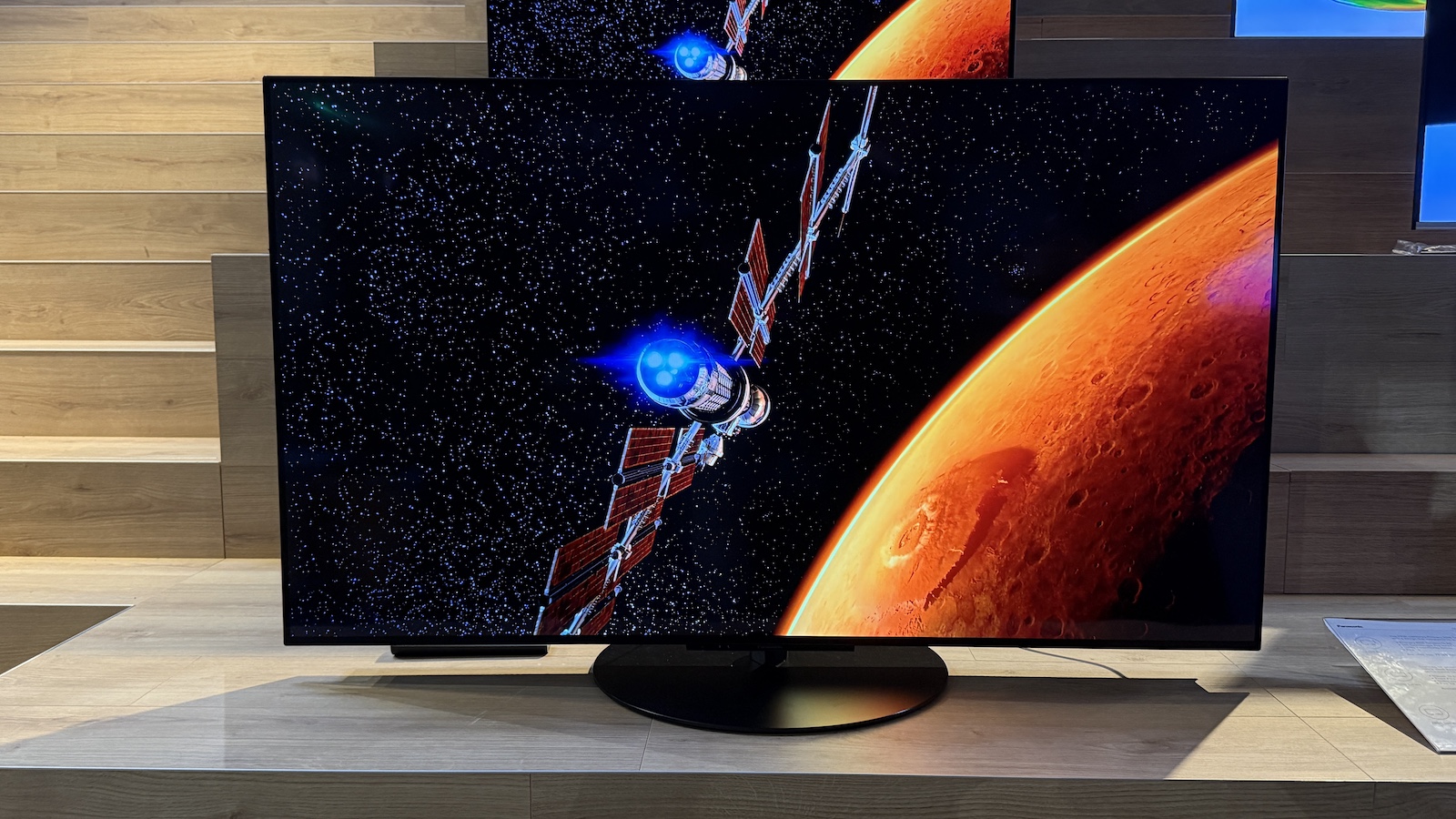
While Panasonic chose to maintain a measured silence regarding its immediate product cycle—deliberately allowing its critically acclaimed, five-star Z95B and Z90B OLED models to carry the torch through the end of the year—the implications of this partnership reach far beyond a simple licensing deal.
The Role of OLED vs. QD Mini LED
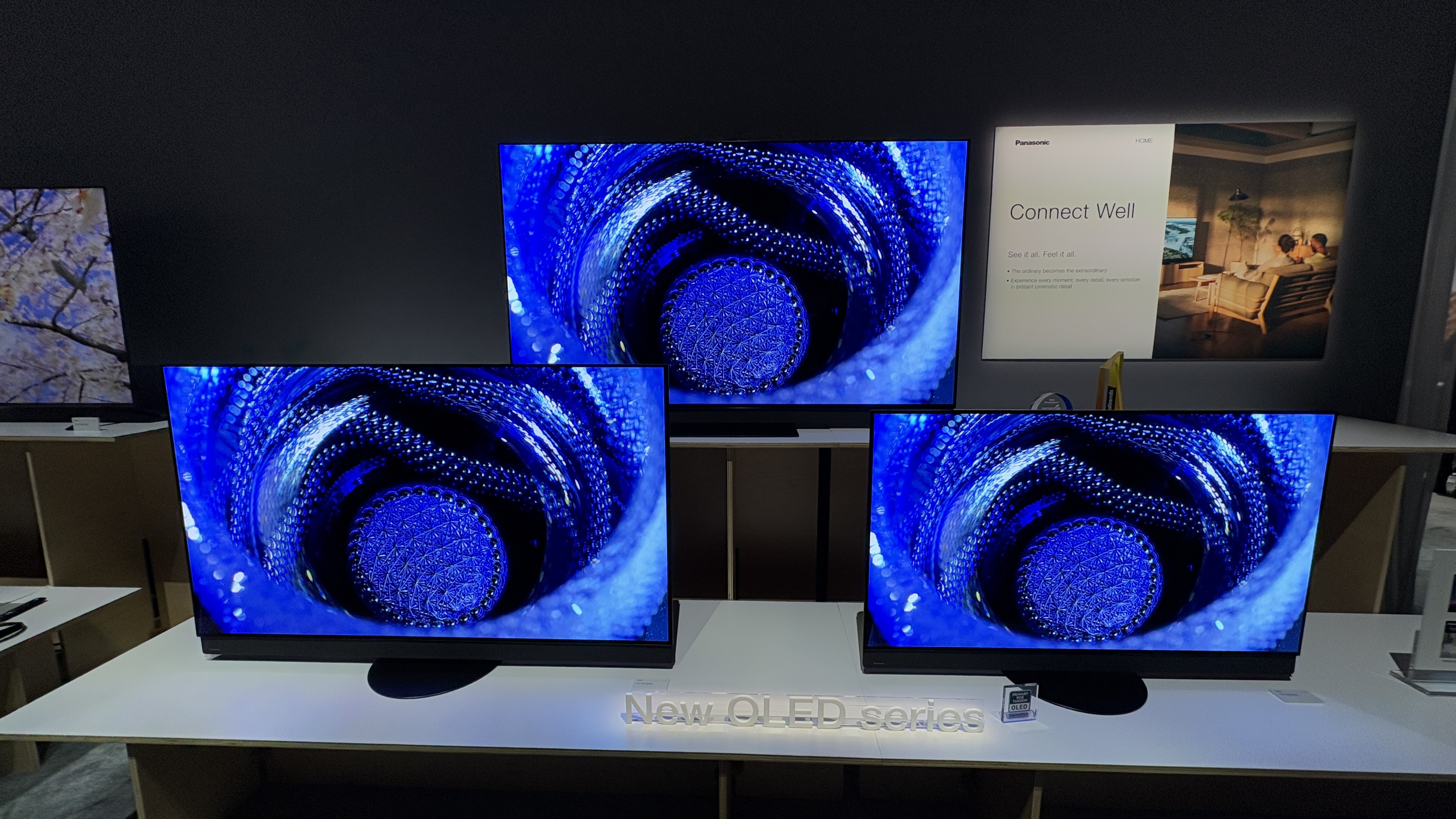
Panasonic remains steadfast in its belief that OLED represents the gold standard for cinematic accuracy. By consciously deciding not to rush out superficial replacements for the Z95B and Z90B, the company is doubling down on elite picture fidelity.
Simultaneously, the brand recognizes the commercial necessity of competing in the QD Mini LED space. However, Darch stressed that Panasonic refuses to enter that market "for the sake of bringing it." Instead, upcoming Mini LED iterations will rely heavily on Panasonic’s proprietary glare-free screen technologies and advanced video processing chips to differentiate themselves from mainstream competitors.
Looking Toward CES 2027
When pressed on specific hardware specifications and the exact timing of the next major product reveal, executives remained tight-lipped. However, a clearer picture is expected to emerge soon.
"Probably around CES time is when you’ll really see the strength and the power of this new organisation," Darch noted, hinting at a major showcase in early 2027.
Darch concluded the briefing with a defiant statement of intent:
"Panasonic TV is back. What does back mean? Back means a stronger product offering, stronger commercial and robust distribution strategy, a stronger team and backed with real resources for what really comes next."
Conclusion
The restructuring of Panasonic’s TV operations in Europe is more than a corporate maneuver; it is a vital lifeline for one of the most respected names in home cinema. While skepticism is natural given the six-month hiatus in product availability and retail silence, the integration of Shenzhen Skyworth’s manufacturing power with Panasonic’s uncompromising Japanese engineering oversight presents a viable blueprint for survival.
Ultimately, the proof will be in the pudding. Consumers and industry reviewers alike will closely scrutinize the upcoming 2027 lineup when it breaks cover. Until then, however, the message from Wiesbaden and Tokyo is unequivocal: Panasonic’s television legacy is far from over—it is simply being rebuilt for a new era.