Introduction: The Promise and Perils of Big-Screen Home Cinema
In theory, the ultra-short throw (UST) projector represents the holy grail of modern home cinema. By sitting mere inches away from a dedicated screen or a blank wall, an all-in-one UST unit can beam a vibrant, richly detailed cinematic image stretching past 200 inches—all without requiring complicated ceiling mounts, messy long-throw calculations, or unsightly cable clutter running down the middle of a living room.
Yet, as anyone who has ever attempted to set one up can attest, the reality of living with a UST projector has historically involved a frustrating disconnect from its sleek marketing promises. While initial placement is undeniably simpler than managing a traditional long-throw model, achieving a perfectly aligned image ready for a Friday night movie marathon always involves a fair bit of tedious fiddling. Brands rely on wildly disparate user interfaces—some demanding painstaking manual adjustments, others routing calibration through clunky companion apps—turning what should be a plug-and-play experience into an exercise in patience.
Compounding these setup frustrations are enduring hardware hurdles, most notably black-level reproduction. Because projectors beam light onto a reflective surface rather than controlling illumination at the pixel level, they have never been able to match the inked-in blackness of an OLED or Mini-LED television. Too often, manufacturers have attempted to mask this limitation by artificially juicing contrast levels, resulting in crushed shadow details and unnatural imagery.
However, a shift may finally be underway. At the recent IFA consumer electronics showcase, two heavyweights in the premium home entertainment space unveiled next-generation flagship 4K UST projectors that directly target these historical pain points. With ground-breaking refresh rates, streamlined optical alignment tools, and vastly improved black-level handling, the Xgimi Aura 3 Max and the AWOL LuxVision suggest that the UST category is entering a much more mature—and user-friendly—era.
Main Facts: The IFA Debuts That Are Changing the Conversation
The consumer technology landscape was put on notice during the recent showcase events, where Xgimi and AWOL introduced their latest flagship ultra-short throw models. Both machines aim to redefine what consumers should expect from high-end domestic projection, marrying massive screen potential with cutting-edge processing power.
Xgimi Aura 3 Max: Pushing Brightness and Refresh Rates
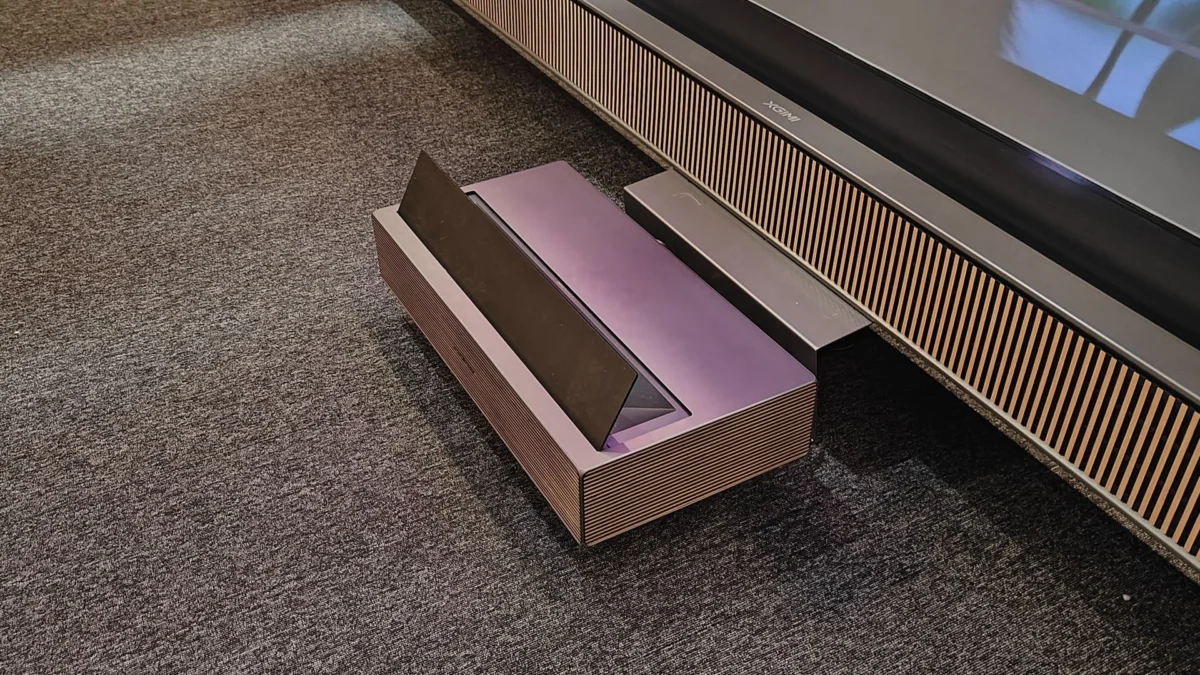
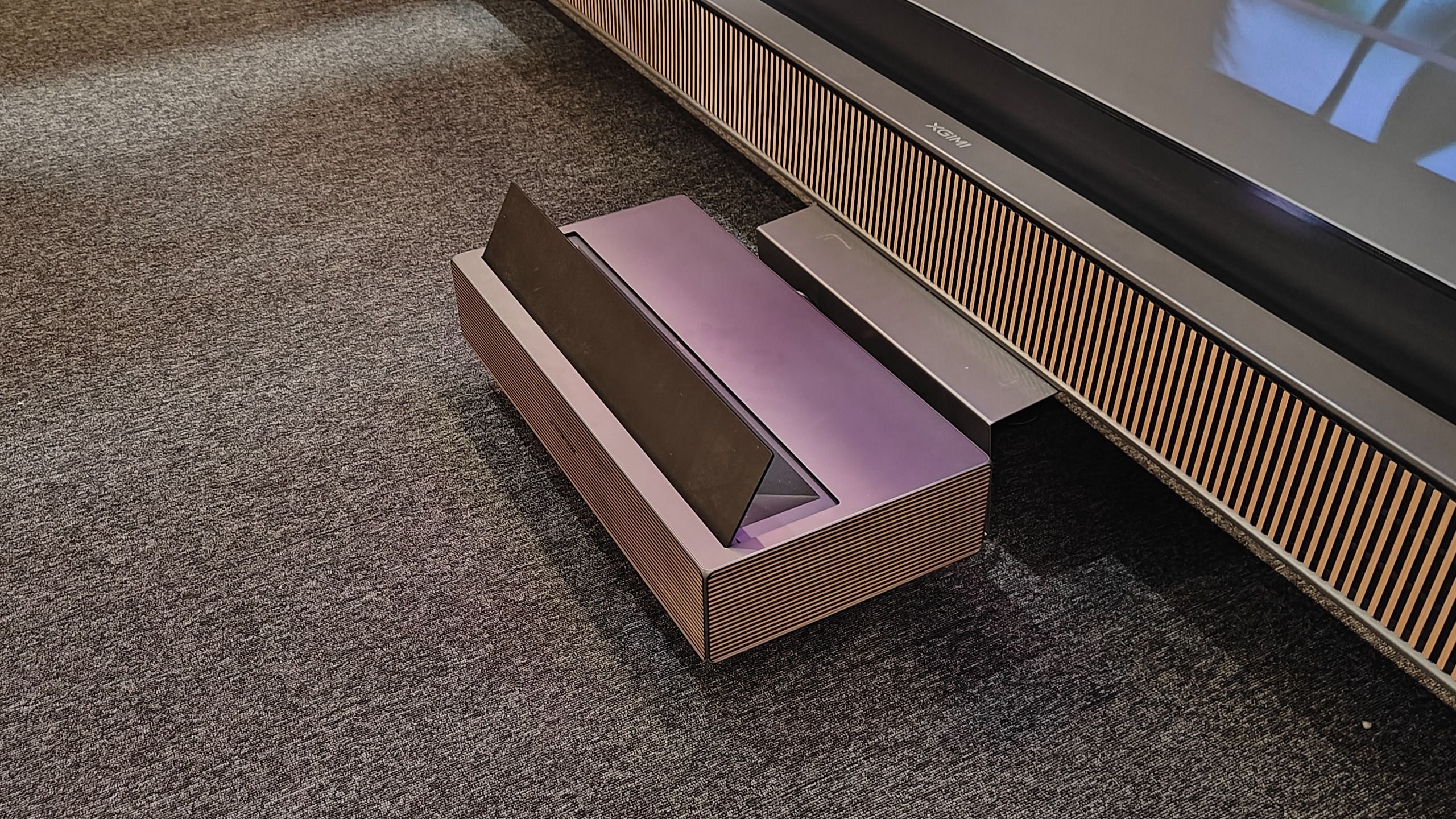
Positioned as a technological tour de force, the Xgimi Aura 3 Max claims a world-first status for the category: it is billed as the industry’s premier 4K UST projector capable of supporting a 120Hz refresh rate. Aimed squarely at high-end home theater enthusiasts and hardcore gamers alike, the unit boasts an impressive 5,700 ISO lumens of peak brightness paired with a native contrast ratio reaching up to 8,000:1.
AWOL LuxVision: The Optical Shift Pioneer
Not to be outdone, AWOL staked its own claim to industry history with the introduction of the LuxVision. Like its rival, it delivers crisp 4K visuals at 120Hz, but its defining hardware feature is an advanced optical shift mechanism. Designed to solve the maddening geometric alignment issues that have plagued projectors for decades, this one-touch system allows users to precisely calibrate image positioning on the screen without sacrificing valuable 4K resolution.
Both models share a robust feature set designed to turn them into complete entertainment hubs:
- Massive Scale: Capable of projecting crystal-clear images scaling up to 200 inches diagonally.
- Smart Ecosystems: Fully integrated Google TV platforms, offering seamless access to major streaming services.
- Immersive Audio: Built-in speaker systems featuring native Dolby Atmos support, reducing the immediate need for an external soundbar, though audio purists will likely still opt for dedicated setups.
Chronology: From Factory Floor to Showfloor Demonstration
To fully understand the significance of these new releases, it is helpful to trace the timeline of how UST projectors have evolved from niche, calibration-heavy novelties into mainstream home theater centerpieces.
The Evolution of UST Limitations
- Early Era: Initial iterations of UST projectors focused primarily on throwing an image from close range, but suffered from abysmal daytime viewability, poor color accuracy, and fixed-lens geometries that made physical placement an absolute nightmare.
- The Software Fixes: As the technology matured, manufacturers leaned heavily on digital keystone correction and smartphone-based app alignment. While these tools helped, digital keystone correction notoriously degrades image resolution and introduces unwanted artifacts—a compromise videophiles were loath to accept.
- The 2026 Award Shootouts: During recent evaluation sessions for industry accolades—such as the rigorous testing conducted for the What Hi-Fi? Awards—editors repeatedly noted that while light output had improved drastically over the years, manufacturers were still struggling to balance deep black levels without blowing out contrast settings. Setup times across various competing brands continued to test the limits of reviewer patience.
The IFA Reveal and Live Demonstrations
The narrative shifted dramatically on the exhibition floors of IFA, where working prototypes and production-ready units of both the Xgimi Aura 3 Max and AWOL LuxVision were demonstrated to press and trade visitors.
Despite operating under sub-optimal conditions—surrounded by ambient exhibition hall noise and harsh overhead lighting—both units managed to put on a compelling visual display. Xgimi utilized nature documentary footage to showcase the Aura 3 Max’s handling of fine textures and shadow depth, while AWOL opted for high-energy K-pop music videos to test peak brightness, color saturation, and motion handling at high refresh rates. These hands-on demonstrations proved that the hardware claims made by both brands were not merely marketing hyperbole.
Supporting Data: Specifications and Performance Metrics
A closer examination of the raw technical data reveals just how far the industry has leaped forward in terms of raw performance and user ergonomics.
| Feature / Metric | Xgimi Aura 3 Max | AWOL LuxVision | Industry Standard (Previous Gen) |
|---|---|---|---|
| Max Resolution | 4K Ultra HD | 4K Ultra HD | 4K Ultra HD |
| Refresh Rate | 120Hz (World First) | 120Hz | 60Hz |
| Peak Brightness | 5,700 ISO Lumens | 6,000 Lumens (Claimed) | 2,500 – 3,500 Lumens |
| Contrast Ratio | Up to 8,000:1 | Proprietary High-Contrast Engine | 3,000:1 – 5,000:1 |
| Alignment Technology | Digital/App Calibration | One-Touch Optical Shift | Manual Movement / Digital Keystone |
| Smart Platform | Google TV | Google TV | Android TV / Proprietary OS |
| Audio Support | Built-in Dolby Atmos | Built-in Dolby Atmos | Basic Stereo / Dolby Audio |
Performance in Practice: What the Demos Revealed
When evaluating the Xgimi Aura 3 Max using jungle-habitat footage, the projector managed a difficult balancing act. As a red panda clung to a tree, the projector rendered individual strands of fur with remarkable sharpness, avoiding the artificial, over-processed look that plagues lesser models. More importantly, shadow details within the animal’s dark facial features were preserved with surprising clarity, hinting at a genuine leap forward in black-level handling for projection technology.
Meanwhile, the AWOL LuxVision tackled Blackpink’s Pink Venom music video. Benefiting from a staggering 6,000 lumens of peak brightness, the projector punched through the ambient IFA lighting to deliver hyper-vivid colors and an engaging, high-contrast image. Fine fabric details—such as the intricate crinkles and textures of the performers’ stage jackets—remained impeccably crisp, demonstrating that high brightness does not automatically necessitate a sacrifice in fine detail reproduction.
Official Responses and Industry Perspectives
Industry experts and brand representatives have been vocal about what these new releases signify for the future of domestic entertainment. Alastair Stevenson, Editor-in-Chief during recent award testing cycles, noted that while his initial run-ins with UST setups often left him frustrated by complicated calibration routines, the introduction of hardware-based solutions like optical shift points toward a much brighter horizon.
"We have to get both projectors into our dedicated test rooms to properly evaluate how they perform under controlled, cinematic conditions," noted the editorial team following the IFA reveals. "However, this first look has made us genuinely excited about the future of the category, specifically praising Xgimi’s promising dark-detail retention and AWOL’s commitment to a fuss-free setup."
Manufacturers are acutely aware that user friction has been the single biggest barrier preventing UST projectors from replacing traditional flat-panel televisions in living rooms. By investing heavily in high refresh rates (appealing directly to the massive global gaming demographic) and eliminating the resolution loss associated with traditional digital alignment tools, brands are attempting to position these projectors as total lifestyle replacements.
Implications: What This Means for Consumers and the Market
The arrival of the Xgimi Aura 3 Max and AWOL LuxVision carries significant implications for the broader home entertainment market.
1. A Smoother Bridge Between Gaming and Cinema
Historically, projectors were terrible options for gamers due to input lag and sluggish refresh rates capped at 60Hz. By introducing true 4K/120Hz capabilities into the UST space, manufacturers are effectively opening up massive, immersive screens to PlayStation 5 and Xbox Series X owners. Fast-paced shooters and racing simulators rendered across a 150-inch display at 120 frames per second will fundamentally alter what living room gaming looks like.
2. The Death of Setup Frustration
The inclusion of optical shift technology on models like the LuxVision could very well set a new industry standard. If consumers can finally align a massive projected image to a fixed screen with a single touch—without suffering the resolution degradation inherent to digital keystone adjustments—the learning curve for home projectors will flatten dramatically. This ease of use is vital for mainstream adoption.
3. Closing the Gap on Televisions
While projectors will likely never completely supplant OLED panels in completely pitch-black environments where absolute pixel-level blackness is mandatory, the sheer lumen output (pushing past 5,000 and 6,000 lumens) combined with sophisticated contrast management means USTs are increasingly viable for daytime viewing in moderately lit living rooms.
The Road Ahead
Before these units can claim undisputed victory, they must survive the rigorous, unsparing conditions of professional review testing rooms, where color accuracy, fan noise, motion handling, and true black-level depths will be scrutinized frame by frame. Yet, even before those final verdicts are cast, the Xgimi Aura 3 Max and AWOL LuxVision have successfully proven one vital truth: the era of clumsy, compromise-laden ultra-short throw projection is rapidly coming to an end.