Introduction: The Modern Home Cinema Paradox
It is one of the most persistent frustrations of the modern home entertainment era: you purchase a state-of-the-art, ultra-thin OLED or QLED television boasting breathtaking 4K resolution, high dynamic range (HDR), and vibrant color gamuts, only to find yourself constantly reaching for the remote to turn the volume up during dialogue-heavy scenes and down during action sequences. The question, "Why can’t I hear the dialogue on my TV speakers?" has become a universal grievance among consumers.
While television manufacturers have made monumental leaps in display technology, audio quality has conversely retrogressed. As bezels have shrunk and chassis have thinned to mere millimeters, the physical space required to house high-quality, front-firing speakers has vanished. In their place, manufacturers are forced to rely on miniature, down-firing or rear-firing transducers that bounce sound off walls and entertainment units, resulting in a muddy, indistinct sonic presentation.
To address this acoustic shortfall, an external sound system is no longer a luxury—it is an essential upgrade. With major shopping events like Amazon Prime Day underway, consumers have a prime opportunity to remedy their audio woes. This comprehensive report analyzes the core mechanics of the television audio crisis, traces the evolution of the soundbar market, and evaluates three highly recommended soundbars across budget, mid-range, and premium tiers that are currently seeing significant price reductions.
Main Facts: Curated Soundbar Solutions and Current Market Offers
To resolve the issue of muffled dialogue and substandard dynamic range, the editorial testing team at What Hi-Fi? has selected three standout soundbars. These units span three distinct price brackets, ensuring that every consumer—regardless of budget or living space limitations—can find a suitable solution.
+------------------------+-------------------+-----------------+----------------+-------------------+
| Soundbar Model         | Market Tier       | Launch Price    | Current Deal   | Key Feature       |
+------------------------+-------------------+-----------------+----------------+-------------------+
| Creative Stage Pro     | Affordable/Budget | £130            | £95            | Crisp Dialogue,   |
|                        |                   |                 | (Overclockers) | Compact Design    |
+------------------------+-------------------+-----------------+----------------+-------------------+
| Sony HT-S2000          | Mid-Range         | £349            | £299           | Dolby Atmos,      |
|                        |                   |                 | (Amazon UK)    | Textured Vocals   |
+------------------------+-------------------+-----------------+----------------+-------------------+
| Samsung HW-Q990F       | Premium Surround  | £1,699          | £749           | 11.1.4 Channel,   |
|                        |                   |                 | (Amazon UK)    | Active Voice Amp  |
+------------------------+-------------------+-----------------+----------------+-------------------+
1. The Budget Option: Creative Stage Pro
- Launch Price: £130
- Promotional Price: £95 (Available at Overclockers UK)
- Target Audience: Users with smaller televisions, desktop computer setups, or secondary bedrooms.
- Core Advantage: Exceptional vocal clarity and a dedicated subwoofer at a sub-£100 price point.
2. The Mid-Range Option: Sony HT-S2000
- Launch Price: £349
- Promotional Price: £299 (Available at Amazon UK)
- Target Audience: Living rooms requiring a single-unit, fuss-free setup without external surround speakers.
- Core Advantage: Virtual Dolby Atmos support, robust dynamics, and highly textured mid-range reproduction.
3. The Premium Option: Samsung HW-Q990F
- Launch Price: £1,699
- Promotional Price: £749 (Available at Amazon UK)
- Target Audience: Dedicated home cinema enthusiasts seeking a fully immersive, wireless surround sound experience.
- Core Advantage: A massive £950 discount on a multi-channel system featuring dedicated wireless rear speakers, an active subwoofer, and Samsung’s Active Voice Amplifier Pro technology.
Chronology: The Evolution of TV Design and the Rise of the Soundbar
Understanding how the consumer technology market arrived at this point requires looking back at the transition from cathode-ray tube (CRT) televisions to flat-panel displays.
  [1990s: CRT Era] ───► [2000s: Flat-Panel Transition] ───► [2010s: Ultra-Thin & Smart TVs] ───► [Present: Spatial Audio & Soundbars]
  - Bulky wooden/plastic cabinets   - LCD & Plasma screens emerge       - Edge-lit LED, OLED, Bezel-less     - Physical limits of thin cabinets realized
  - Large, front-firing speakers    - Speaker drivers move to bottom    - Speakers point down or backward     - Soundbars become a necessity, not an option
  - Natural midrange, clear dialogue - Bass response begins to decline   - DSP used to artificially boost dialogue - Dolby Atmos and wireless subwoofers dominate
The CRT Era (Pre-2000s)
During the era of bulky CRT televisions, aesthetic design dictated deep, heavy wooden or plastic cabinets. While these units took up significant physical space, they offered an acoustic advantage: ample internal cabinet volume. This allowed manufacturers to install relatively large, forward-firing paper-cone speakers. These speakers naturally reproduced the human vocal range (typically between 80 Hz and 4 kHz) with minimal distortion and excellent directivity. Dialogue was clear because the speakers fired directly at the listener.
The Flat-Panel Revolution (2000s–2010s)
With the introduction of LCD, Plasma, and subsequently LED-backlit displays, the primary design objective shifted to physical minimalism. Wall-mounting became highly desirable, requiring TVs to become as thin as possible.
As cabinet depth shrank from several inches to fractions of an inch, traditional speaker drivers could no longer be mounted facing forward. Manufacturers shifted to "down-firing" configurations, placing narrow, oval-shaped drivers along the bottom bezel, pointing toward the floor. Later, as bezels were eliminated entirely, speakers were moved to the rear of the chassis, firing directly at the wall behind the TV.
The Digital Signal Processing (DSP) Patchwork (2010s–Present)
To compensate for the poor physics of these miniature, misplaced drivers, TV brands began relying heavily on Digital Signal Processing (DSP). Features like "Clear Voice," "Dialogue Boost," or "Night Mode" were developed to artificially boost the frequencies associated with human speech. However, these software fixes often introduce phase distortion, harsh high frequencies, and a tinny, unnatural sound.
Recognizing these physical limitations, audio manufacturers identified a market gap, leading to the rapid rise of the soundbar category. Initially simple 2.0-channel stereo enclosures, soundbars have evolved into complex, multi-driver arrays capable of decoding object-based audio formats like Dolby Atmos and DTS:X.
Supporting Data: Technical Specifications and Performance Analysis
To justify these recommendations, we must look at the acoustic engineering and performance data of each selected model.
Creative Stage Pro: Pocket-Sized Powerhouse
+-------------------------+------------------------------------------+
| Specification           | Details                                  |
+-------------------------+------------------------------------------+
| Configuration           | 2.1 Channel (Soundbar + Wired Subwoofer) |
| Connectivity            | HDMI ARC, Optical, Bluetooth, USB        |
| Dialogue Performance    | Sharp high-midrange boost, crisp sibilance|
| Best Placement          | Under 32-43 inch TVs, Desktop Monitors   |
+-------------------------+------------------------------------------+
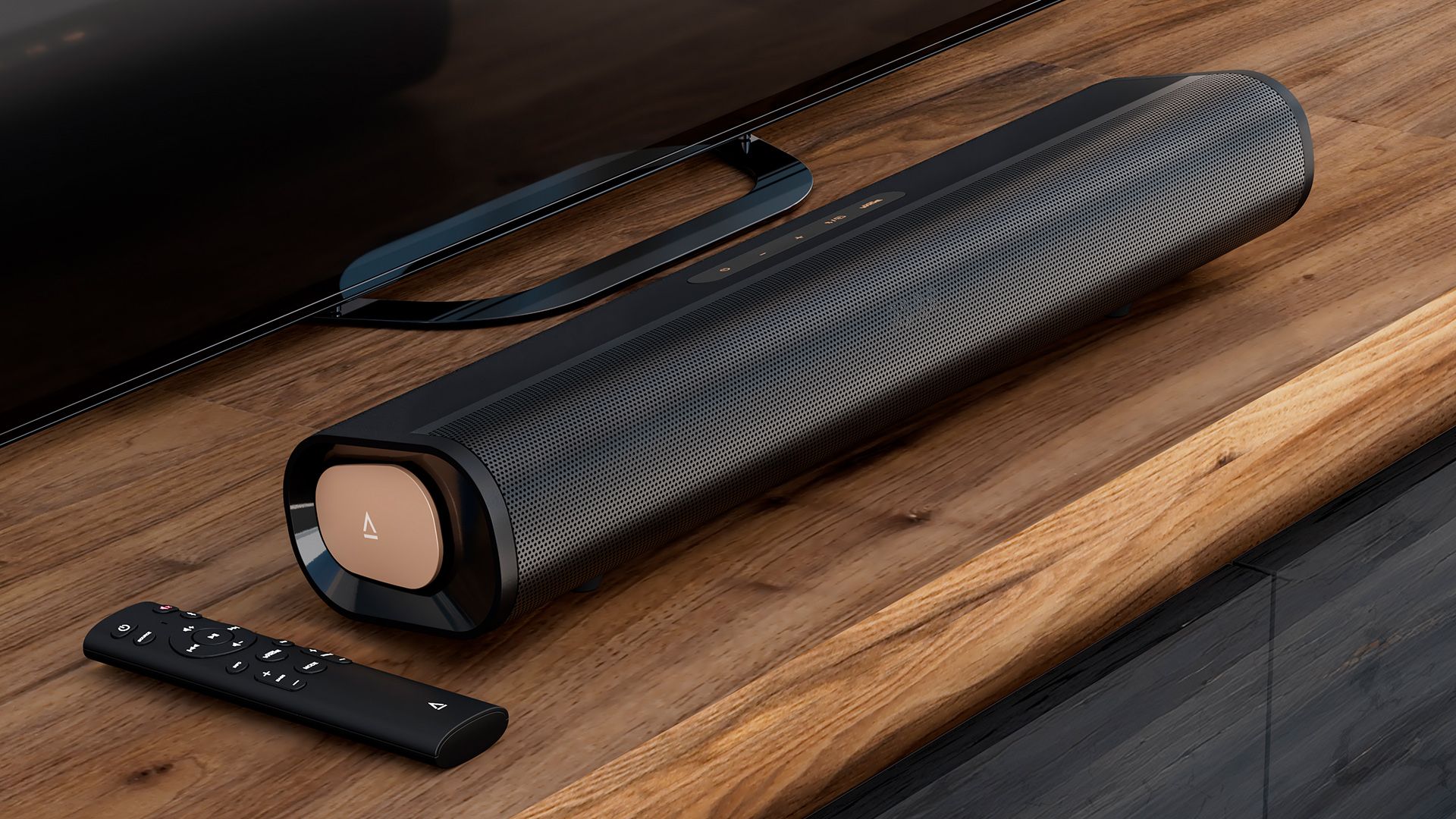
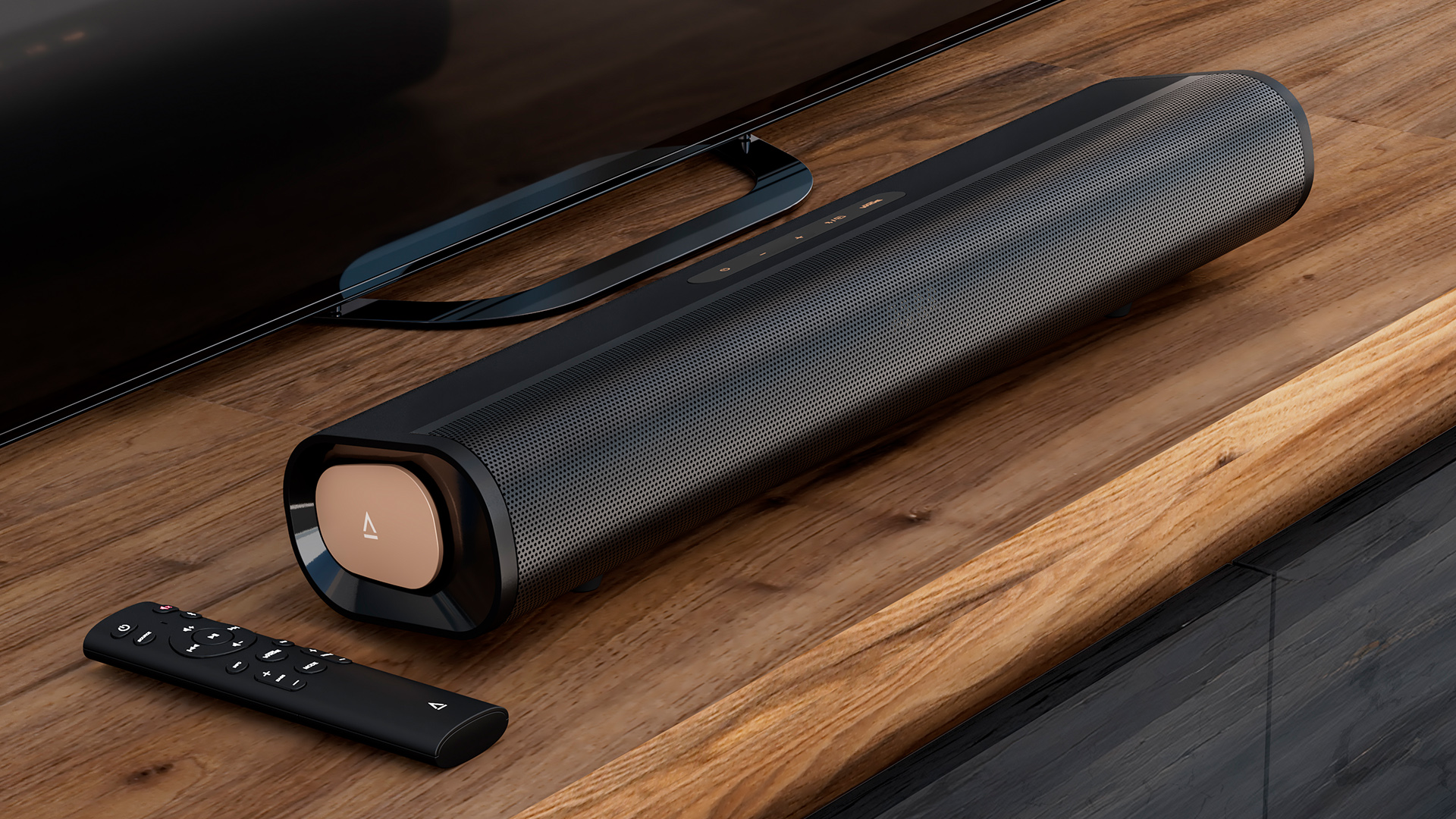
The Creative Stage Pro is designed as a compact, utilitarian audio solution. Measuring just under 22 inches in width, it fits easily under a desktop monitor or a compact bedroom television.
Despite its low price point, the inclusion of a dedicated external subwoofer is a major benefit. By offloading low-frequency duties (bass) to the subwoofer, the main soundbar’s dual mid-range drivers are freed from the physical strain of reproducing low-end frequencies. This separation reduces intermodulation distortion, allowing the mid-range drivers to focus on the 250 Hz to 4 kHz band where human speech resides.
During testing, the Stage Pro demonstrated an ability to render dialogue with crisp sibilance and clear projection, ensuring that whispers and fast-paced conversations remain legible even at lower volumes.
Sony HT-S2000: Virtualized Spatial Audio
+-------------------------+------------------------------------------+
| Specification           | Details                                  |
+-------------------------+------------------------------------------+
| Configuration           | 3.1 Channel Single-Unit (Built-in Subs)  |
| Audio Formats           | Dolby Atmos, DTS:X, LPCM                 |
| Proprietary Tech        | Vertical Surround Engine, S-Force Pro    |
| Dialogue Performance    | Rich, textured, highly intelligible      |
+-------------------------+------------------------------------------+
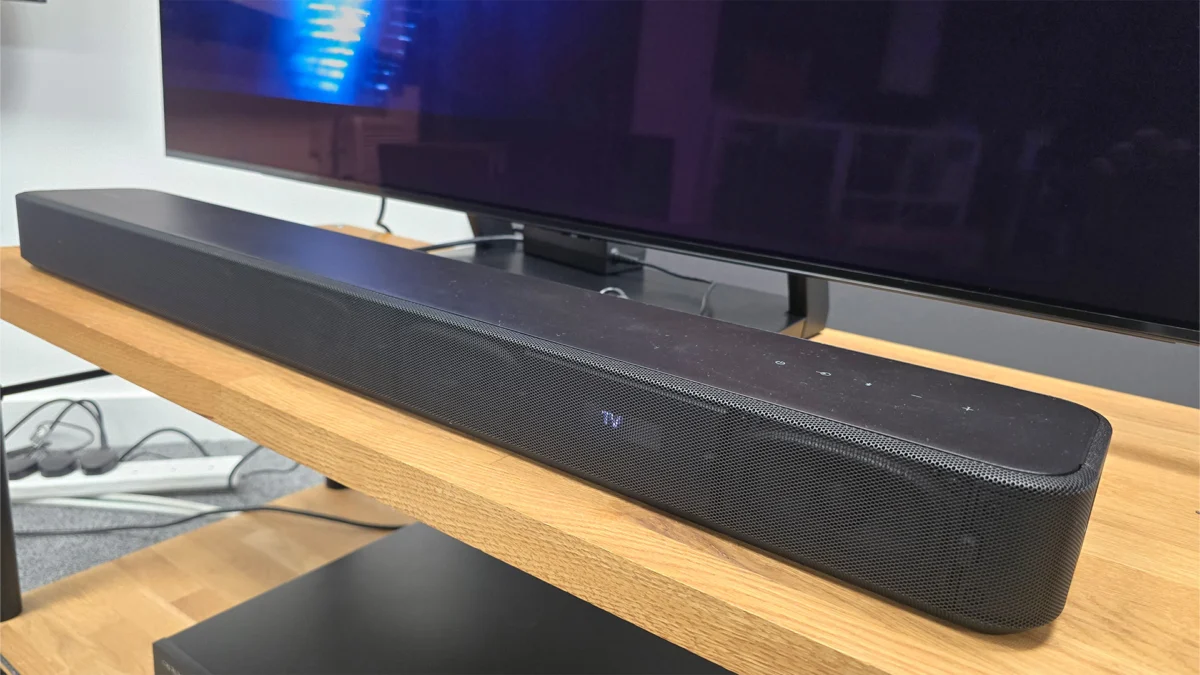
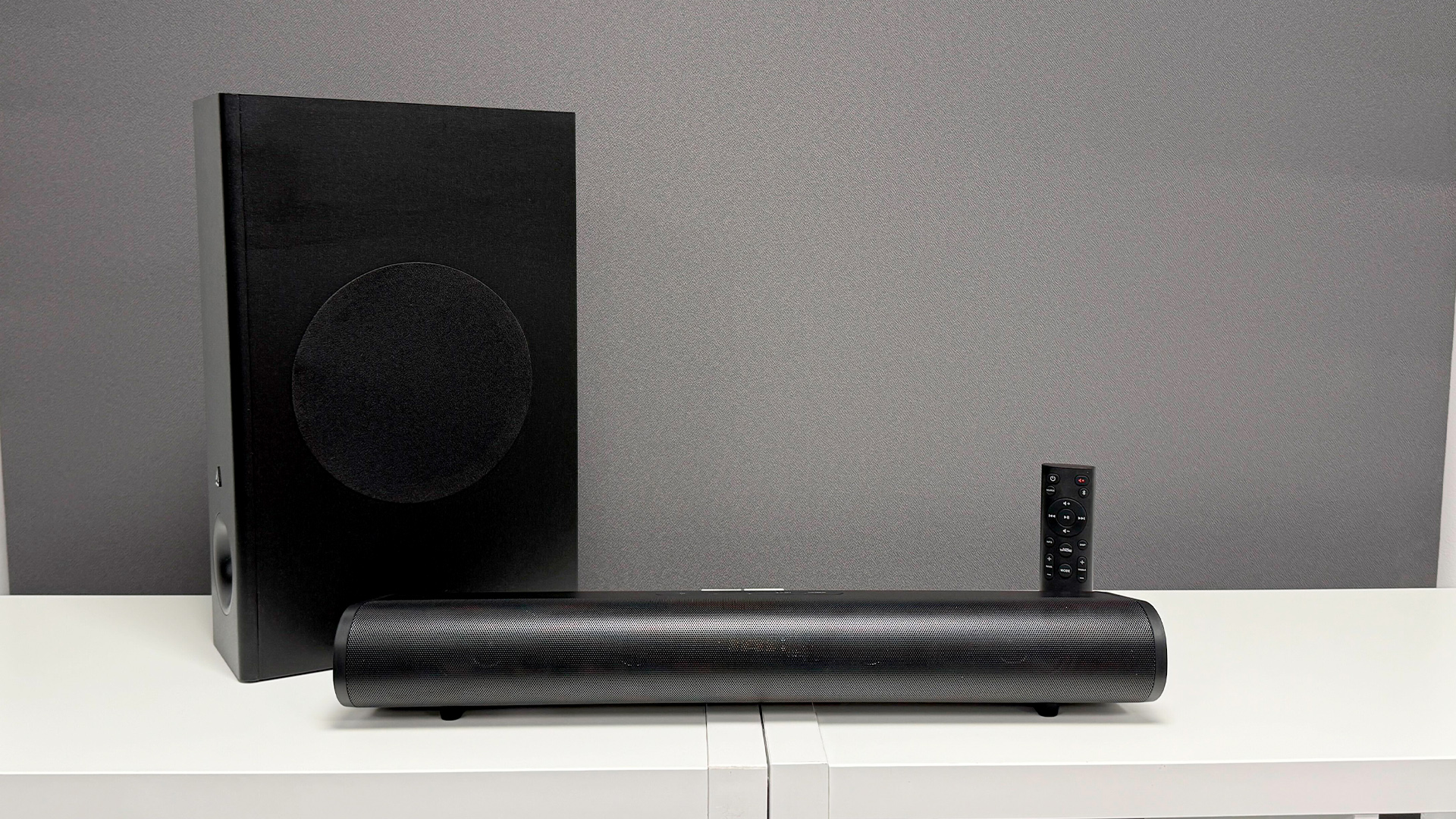
Sony’s HT-S2000 is a mid-range, single-unit soundbar that avoids the clutter of an external subwoofer by integrating dual built-in subwoofers alongside three front-facing drivers (Left, Center, Right). The dedicated center channel is key for dialogue clarity. In standard stereo tracks, dialogue is phantom-imaged between the left and right channels; with a dedicated physical center channel, speech is anchored directly to the center of the screen.
Sony employs two proprietary psychoacoustic technologies in the HT-S2000:
- Vertical Surround Engine: Simulates overhead sound effects without physical upward-firing drivers.
- S-Force Pro Front Surround: Widens the horizontal soundstage to mimic a multi-speaker setup.
Our testing revealed that the HT-S2000 handles speech with an impressive level of texture. Rather than simply boosting the upper-midrange frequencies to make voices audible, it preserves the natural chest resonance of deeper voices and the delicate nuances of higher pitches, resulting in a more realistic and engaging listening experience.
Samsung HW-Q990F: True Cinema Surround
+-------------------------+------------------------------------------+
| Specification           | Details                                  |
+-------------------------+------------------------------------------+
| Configuration           | 11.1.4 Channel (11 horizontal, 1 sub,    |
|                         | 4 upward-firing)                         |
| Connectivity            | Wireless Dolby Atmos, HDMI eARC, Wi-Fi   |
| Calibration             | SpaceFit Sound Pro                       |
| Dialogue Performance    | Active Voice Amplifier Pro (AVA Pro)     |
+-------------------------+------------------------------------------+
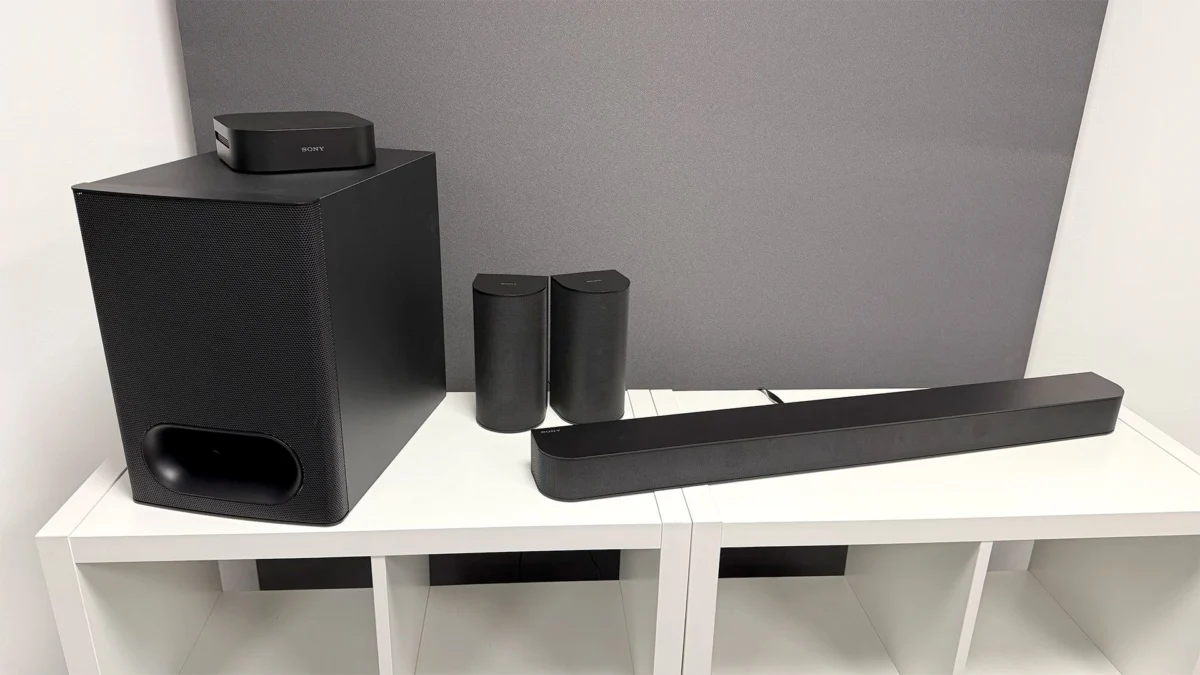
For those seeking an uncompromising home theater setup, the Samsung HW-Q990F is an exceptional option. It is a true physical surround system consisting of a main soundbar, a heavy-duty wireless active subwoofer, and two wireless rear satellite speakers. Crucially, both the soundbar and the rear satellites feature upward-firing drivers designed to bounce sound off the ceiling, creating a genuine dome of Dolby Atmos spatial audio.
With 11 discrete horizontal channels, the system allocates a significant portion of its processing power to isolating dialogue. When a multichannel audio track (such as a 5.1 or 7.1 mix) is decoded, the center-channel speech is kept separate from ambient surround noises and low-frequency bass notes.
The HW-Q990F also features Active Voice Amplifier Pro (AVA Pro), an intelligent system that uses an integrated microphone to monitor ambient room noise. If a household distraction occurs—such as a vacuum cleaner running or loud rain outside—the soundbar automatically boosts the vocal frequencies in real-time, ensuring dialogue remains clear without requiring the user to adjust the master volume.
Official Responses and Manufacturer Strategies
The persistent consumer complaints regarding dialogue intelligibility have not gone unnoticed by the engineering departments of major hardware brands. Each manufacturer has developed a distinct approach to address this issue.
The Television Manufacturers’ Perspective
Major television brands like Sony, Samsung, and LG admit that physical design constraints limit what can be achieved with internal speakers. Off the record, product managers often acknowledge that premium TVs are designed with the assumption that buyers will pair them with an external audio system.
To bridge the gap, companies have introduced integration features. For example, Samsung offers Q-Symphony, a technology that syncs the TV’s built-in speakers with a compatible Samsung soundbar. Instead of turning off the TV speakers, Q-Symphony uses them to add height and vocal clarity, while the soundbar handles the primary soundstage and low-frequency dynamics.
[Traditional Setup]
TV Speakers (OFF)  ◄───►  Soundbar (ON) - Soundbar does 100% of the work.

[Samsung Q-Symphony Setup]
TV Speakers (ON)   ◄───►  Soundbar (ON) - TV speakers handle high-frequency height cues;
                                          Soundbar handles main soundstage, dialogue, and bass.
Sony’s Acoustic Philosophy
Sony has taken a physical approach with its premium OLED televisions, developing Acoustic Surface Audio+. This technology uses actuators placed behind the OLED panel to vibrate the screen itself, turning the entire display into a speaker.
While this aligns the sound’s physical origin with the image on screen, Sony’s engineering team notes that for true cinematic range and deep bass, an external soundbar like the HT-S2000 remains highly recommended. By utilizing their Home Entertainment Connect app, Sony aims to make setting up and tuning external audio systems as straightforward as possible for average users.
Creative’s Focus on Value
Creative Labs has focused its engineering on digital processing efficiency. Because budget soundbars cannot afford expensive multi-driver arrays or advanced acoustic room-calibration microphones, Creative relies on fine-tuning the crossover frequencies between the soundbar and its subwoofer.
By setting a precise crossover point, they ensure that vocals do not bleed into the subwoofer, preventing the muddy, boomy sound common in cheap audio products.
Implications: The Future of Home Entertainment Audio
The ongoing popularity of soundbar upgrades has several long-term implications for the consumer technology landscape, shaping product development and buying habits alike.
                             ┌───► Decreased emphasis on TV internal speaker R&D
                             │
                             ├───► Acceleration of wireless audio standards (Wi-Fi/Bluetooth)
HOME CINEMA AUDIO TRENDS ────┤
                             ├───► Standardization of eARC (Enhanced Audio Return Channel)
                             │
                             └───► Audio-centric retail events (Prime Day, Black Friday)
1. The Decline of TV Internal Speaker R&D
As soundbars become standard accessories rather than niche add-ons, television manufacturers may reduce research and development spending on internal audio systems for mid-range and budget displays. This allows them to allocate more budget toward panel brightness, refresh rates, and processing chips, while assuming consumers will purchase a soundbar for audio.
2. The Standardization of HDMI eARC
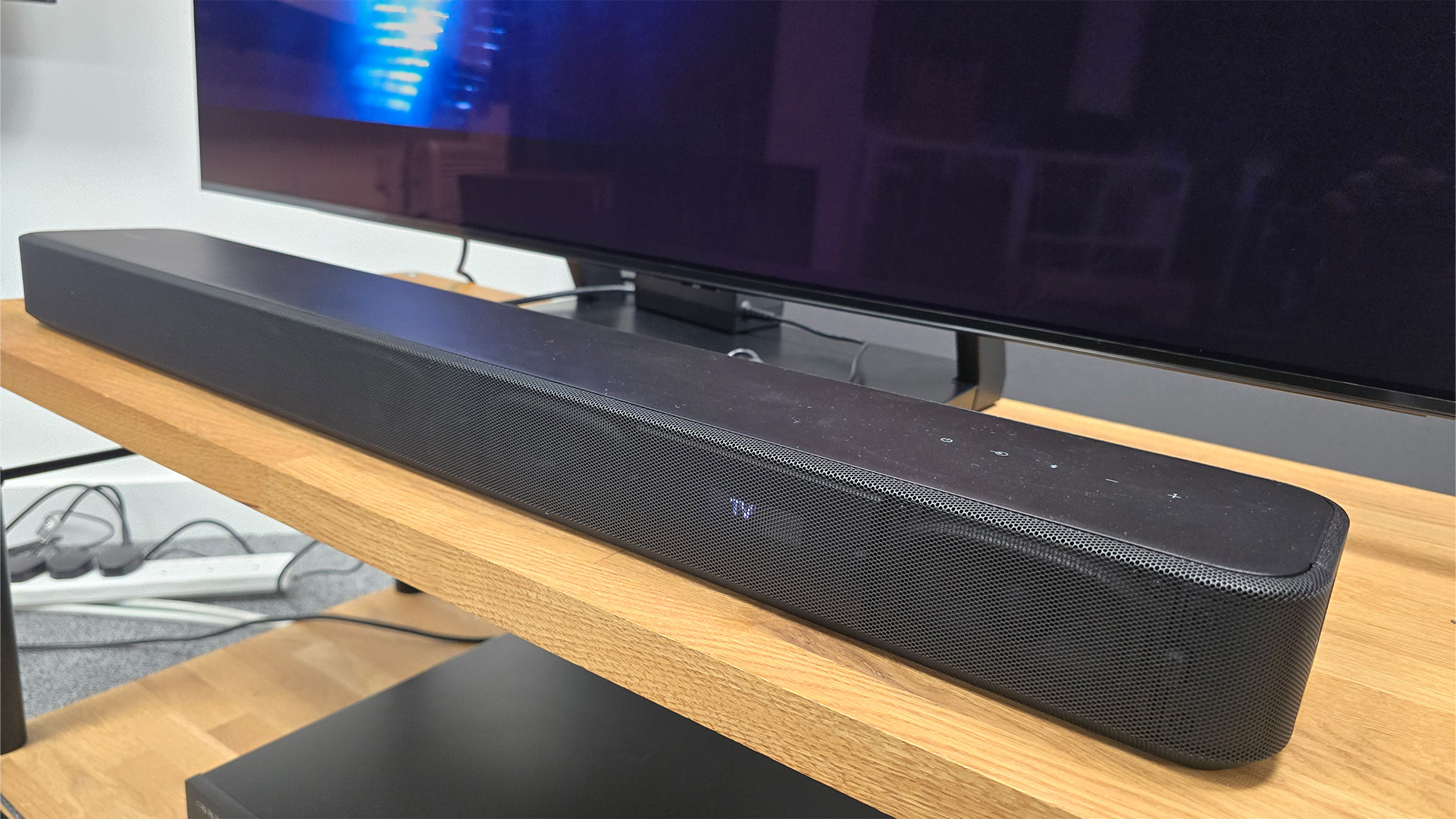
The adoption of HDMI eARC (Enhanced Audio Return Channel) has simplified home audio setups. Unlike older optical connections, eARC has the bandwidth to transmit uncompressed, high-resolution audio formats like Dolby TrueHD and Dolby Atmos directly from the TV to the soundbar.
This single-cable connection also allows the TV remote to control the soundbar’s volume and power, removing setup barriers for less tech-savvy users.
3. The Shift Toward Wireless Audio Ecosystems
As seen with the Samsung HW-Q990F, the industry is moving away from complex receiver-and-wire setups toward wireless multi-channel configurations. Modern wireless protocols allow high-fidelity, low-latency audio transmission to subwoofers and surround speakers without running speaker wire across the living room floor.
Future iterations of this technology may see completely wireless connections between the television and the soundbar, removing the HDMI cable entirely.
4. Consumer Purchasing Patterns
Retail events like Amazon Prime Day are key opportunities for consumers looking to upgrade their audio setups. Because audio technology does not iterate as rapidly as smartphone or display technology—a high-quality soundbar purchased today will easily remain relevant for five to ten years—discounts on premium systems represent excellent long-term value.
For many, spending a few hundred pounds on a dedicated soundbar provides a far more noticeable upgrade to their daily viewing experience than upgrading to a slightly newer television model.
Conclusion: Making the Right Choice
If you find yourself constantly adjusting the volume or struggling to follow movie plots due to muffled dialogue, the evidence points to a clear solution: your TV’s built-in speakers are not up to the task.
Fortunately, the current promotional landscape offers excellent options at every price point:
- The Creative Stage Pro (£95) is a simple, highly affordable way to rescue bedroom TVs and desktop setups from poor audio.
- The Sony HT-S2000 (£299) offers a streamlined, single-unit solution that brings clear, textured dialogue and immersive virtual Dolby Atmos to standard living rooms.
- The Samsung HW-Q990F (£749) delivers a premium, cinema-grade surround sound experience at a massive discount.
Investing in a quality soundbar does more than just make things louder—it restores the balance, clarity, and emotion of the original audio, ensuring you never miss a line of dialogue again.