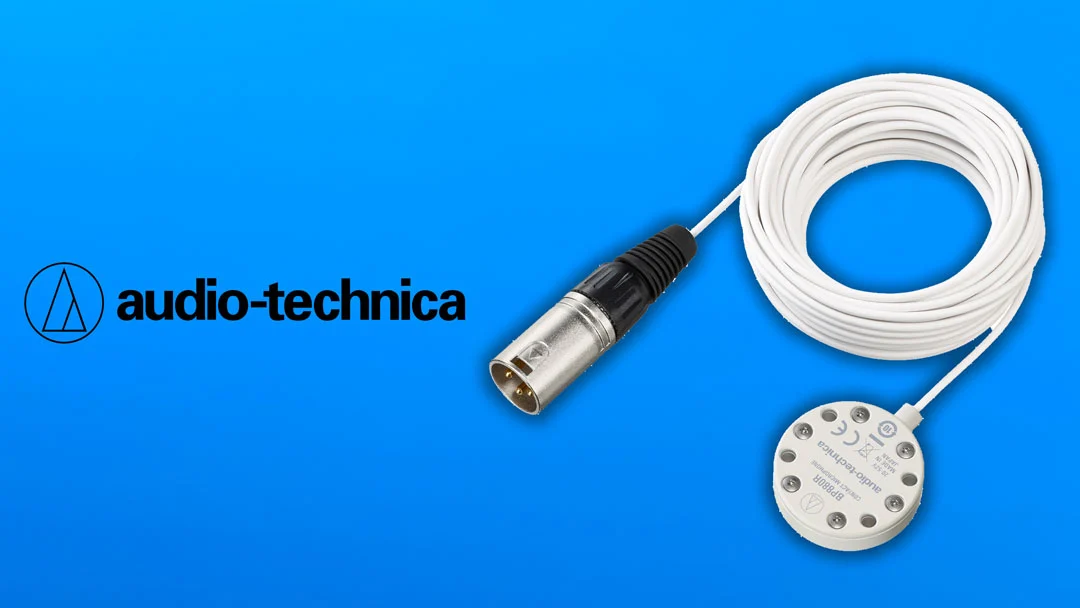
STOW, OH — September 9, 2026 — In an era where broadcast audiences demand increasingly visceral, "front-row" experiences, the sensory gap between high-definition visuals and immersive audio has often been a hurdle for sound engineers. Today, Audio-Technica, a titan in transducer technology, announced a significant leap forward in specialized audio capture with the launch of the BP880R Contact Transducer.
Moving beyond the traditional limitations of air-conducted microphone technology, the BP880R is engineered specifically to translate the kinetic energy of the physical world—vibrations, impacts, and structural resonances—into high-fidelity audio signals. Priced at $479.00 USD, this ruggedized, IPX7-rated device promises to transform how sound designers for film, television, sports, and live theater approach the "tactile" layer of their soundscapes.
The Genesis of Tactile Audio: Understanding the BP880R
At its core, the BP880R is not a microphone in the traditional sense; it is a precision-engineered vibration sensor. While standard microphones rely on diaphragms moving in response to fluctuations in air pressure, the BP880R utilizes a high-sensitivity piezoelectric sensor. When attached to a solid surface, this sensor detects the mechanical energy propagating through that material, converting those physical vibrations into an electrical signal.
This fundamental shift in capture methodology allows the BP880R to excel in environments where traditional microphones would fail due to ambient noise or interference. By ignoring airborne sound waves, the transducer isolates the "meat" of the action: the screech of a skate on ice, the dull thud of a hockey puck hitting a goal post, or the subtle resonance of a floorboard under a performer’s foot.
Chronology of Development: From Concept to Field-Ready Gear
The development of the BP880R was not a sudden pivot, but rather the culmination of years of feedback from Audio-Technica’s broadcast and production partners.
Phase 1: The Research & Development Gap (2022–2023)
Engineers at Audio-Technica identified a recurring challenge in sports and location sound: the "muddy" mix. In high-stakes environments like professional hockey arenas or aquatic centers, ambient noise—from crowds to PA systems—routinely masked the intimate, essential sounds of the game. Field recordists were often forced to rely on heavy post-production processing to extract impact sounds, often losing fidelity in the process.
Phase 2: Material Science and Waterproofing (2024)
The primary challenge was ensuring the transducer could survive the extreme environments it was intended to inhabit. Achieving an IPX7 waterproof rating meant developing a housing that could withstand prolonged submersion while remaining sensitive enough to detect minute vibrations. Engineers experimented with various composite materials to ensure the sensor’s housing remained rigid enough to transmit energy accurately without introducing its own coloration.
Phase 3: The Integration of Active Electronics (2025)
A critical innovation in the BP880R is the integration of an internal preamplifier. Traditionally, piezoelectric sensors suffer from high impedance, making them prone to interference and signal loss over long cable runs. By incorporating an active, phantom-powered preamp directly into the assembly, Audio-Technica has enabled the BP880R to be used with standard XLR cabling over distances of 20 meters (65.6 feet) without compromising the signal-to-noise ratio.
Phase 4: Field Testing and Launch (2026)
Following successful beta testing with major network broadcast teams during the 2025–2026 winter season, the BP880R was finalized. The result is a specialized, "plug-and-play" tool that fits seamlessly into existing professional audio workflows.
Technical Specifications and Operational Capabilities
The BP880R is designed to function as an invisible utility in the producer’s toolkit. Below are the key technical pillars that define its performance:
- Piezoelectric Precision: The high-sensitivity sensor captures frequencies typically lost by air-gap mics, particularly the low-end "thump" of physical impact.
- IPX7 Waterproof Rating: Designed for the harshest environments, the unit is fully sealed, allowing for deployment in swimming pools, snowy arenas, and outdoor rainy conditions.
- Phantom Power Reliability: Powered by standard 11V–52V DC phantom power, the unit requires no external batteries, simplifying the setup process for remote location kits.
- Integrated Connectivity: The 20-meter fixed cable is armored for durability and terminates in a standard 3-pin XLR-M connector, ensuring compatibility with virtually every broadcast console and field recorder on the market.
- Ambient Noise Rejection: Because the transducer is physically coupled to the source, it exhibits near-zero sensitivity to airborne noise, effectively rendering the surrounding crowd or environment "silent" in the final track.
Implications for Broadcast and Production
The introduction of the BP880R has immediate implications for several key industries:
Sports Broadcasting
The "experience" of sports is often visual. However, the BP880R allows for the "audification" of the physical effort. In hockey, the sound of a skate carving deep into the ice is often lost; with a contact transducer, that sound becomes a centerpiece of the mix, emphasizing the speed and violence of the sport. Similarly, in swimming, placing the transducer on the pool wall captures the underwater propulsion of the athlete—a sound that was previously nearly impossible to isolate from splashing.
Film and Television Foley
For foley artists and location sound teams, the BP880R offers a clean, surgical approach to recording. When recording footsteps or object interactions on complex surfaces, the transducer can be hidden underneath the material. This provides a "dry" signal that is perfectly suited for digital sound design, as it provides a clean slate without the colorations of room acoustics.
Live Theater and Sound Design
In theatrical productions, actors’ movements on stage often sound hollow or inconsistent. By integrating the BP880R into the stage floor or set pieces, sound designers can trigger localized effects or simply reinforce the natural sounds of the performance, ensuring the audience feels the weight and presence of the actors on stage.
Official Perspective: The Evolution of "Sonic Realism"
In a recent interview with Audio-Technica’s engineering lead, the motivation behind the BP880R was described as a quest for "Sonic Realism."
"We found that as visuals got sharper, the audio was lagging in terms of the physical connection to the image," the lead engineer noted. "If you see a swimmer hit the water, your brain expects a sound that matches the intensity of that physical displacement. Traditional mics just pick up the splash. The BP880R picks up the energy of the diver hitting the water from within the pool wall. It is the difference between hearing an event and feeling it."
The company believes that as streaming platforms continue to push for high-resolution, spatial audio formats (such as Dolby Atmos), the demand for "tactile" audio inputs will only grow. The BP880R is, in many ways, an entry point into a new sub-discipline of sound engineering: vibration-based capture.
Economic and Strategic Positioning
At $479.00, the BP880R is positioned as a professional-grade investment. While higher than entry-level hobbyist contact mics, it is significantly more affordable than the bespoke, custom-built vibration sensors often used by high-end scientific or industrial research firms. By bringing this technology to the broadcast market at a reachable price point, Audio-Technica is effectively democratizing the ability to capture high-fidelity, structure-borne audio.
For production houses, the device represents an opportunity to add value to their existing content. By capturing "clean" impact sounds, post-production teams can spend less time cleaning up noisy audio and more time layering soundscapes that draw the viewer deeper into the narrative.
Conclusion: A New Standard for Sensory Immersion
The launch of the Audio-Technica BP880R marks a shift in the landscape of sound capture. As the industry continues to prioritize immersion, the ability to record the physical, tactile world with the same precision as the acoustic one will become paramount.
By prioritizing ruggedness, signal clarity, and ease of use, Audio-Technica has ensured that the BP880R is not just a laboratory curiosity, but a workhorse for the modern production environment. Whether it is capturing the silent tension of a figure skater on ice or the heavy, rhythmic thuds of a stage production, the BP880R stands ready to reveal the hidden vibrations of our world, one impact at a time.
For those looking to expand their sonic palette and achieve a new level of realism in their productions, the BP880R is an essential, if unconventional, addition to the gear bag. As we look toward the future of immersive media, it is clear that the most compelling sounds are often the ones we feel, rather than just hear—and for the first time, we have the tools to capture them with absolute clarity.