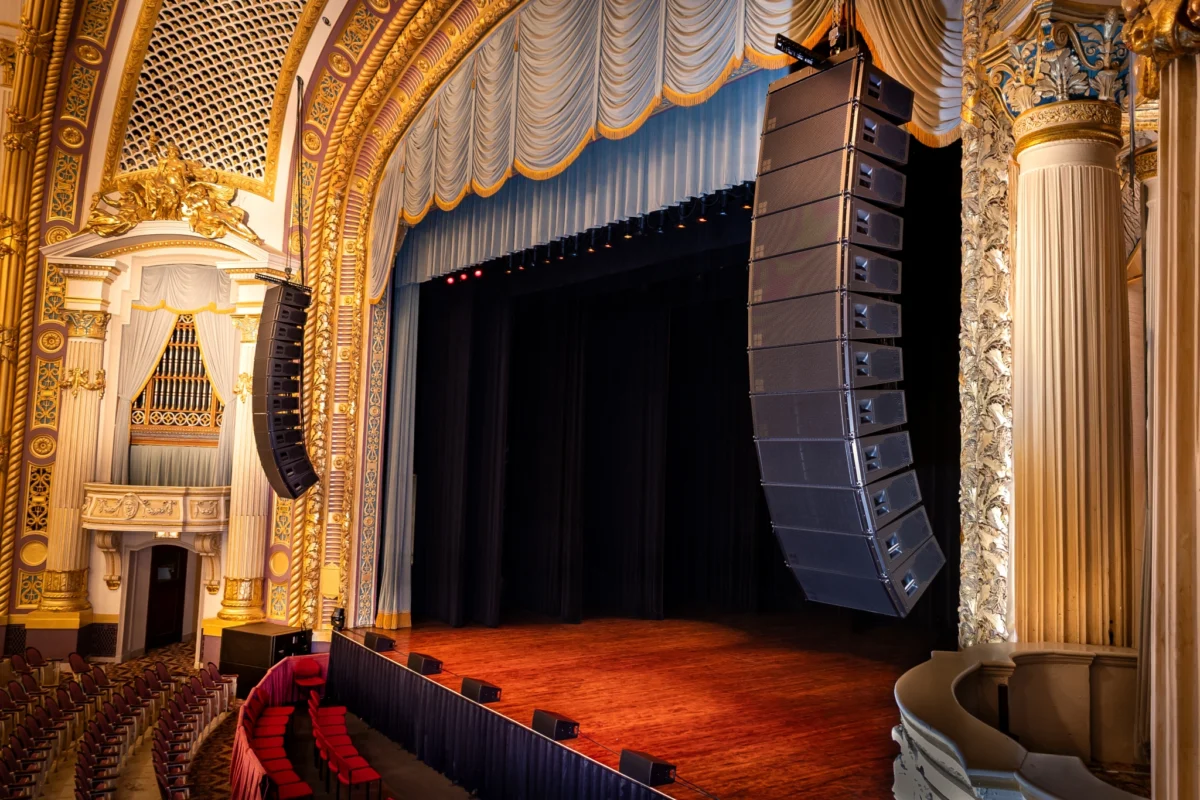
MINNEAPOLIS, MN — In an era where the intersection of historical preservation and cutting-edge technology defines the success of performance venues, the iconic State Theatre in downtown Minneapolis has announced the completion of a landmark audio overhaul. Hennepin Arts, the non-profit organization charged with the stewardship of the city’s most storied stages, has officially integrated a state-of-the-art d&b audiotechnik KSL-Series line array system into the century-old "pleasure palace."
The installation marks a pivotal moment for the 2,181-seat venue, which has long been a cornerstone of the Upper Midwest’s cultural landscape. By replacing a decades-old sound system that had reached the end of its functional life, Hennepin Arts is ensuring that the State Theatre remains a top-tier destination for Broadway touring productions, world-class musicians, and elite comedy acts.
Main Facts: A Technical Leap for a Century-Old Icon
The State Theatre, which first opened its doors in 1921, was designed during the golden age of American theater architecture. While its ornate plasterwork and cavernous ceilings provide a stunning visual backdrop, they have historically presented a "non-friendly" acoustic environment for modern, high-output amplified sound. The new installation, designed and implemented by Audio Logic Systems, seeks to harmonize these architectural challenges with the demands of 21st-century touring riders.
Key components of the upgrade include:
- The d&b audiotechnik KSL-Series: A "no-compromise" line array system known for its broadband directivity and cardioid performance.
- ArrayProcessing Technology: A software-driven optimization process that ensures tonal consistency across every seat in the house.
- ArrayCalc Modeling: Advanced simulation tools that allowed engineers to optimize the physical placement of the arrays to improve sightlines.
- Zonal Management: A strategic approach to addressing the three distinct acoustic environments within the theater: the main floor, the balcony, and the deep under-balcony area.
The upgrade is not merely a cosmetic or incremental improvement; it is a fundamental shift in how the venue handles sound, aiming to eliminate the "muddy" low-mid buildup that often plagues historic theaters.
Chronology: From Vaudeville to the Digital Age
To understand the significance of this upgrade, one must look at the State Theatre’s trajectory over the last century.
1921–1980: The Era of Natural Acoustics and Cinema
When the State Theatre opened in 1921, it was billed as the most technologically advanced and luxurious "pleasure palace" in the region. At the time, "state-of-the-art" meant a massive Wurlitzer pipe organ and architectural acoustics designed to carry the unamplified voices of vaudeville performers to the back of the house. As the decades progressed, the theater transitioned into a primary movie house, where audio needs were relatively static.
1989–1991: The Great Restoration
By the late 1980s, the theater had fallen into disrepair. A massive restoration project led by the Minneapolis Community Development Agency saved the venue from the wrecking ball. During this period, the theater was outfitted with sound systems capable of handling the burgeoning market of touring Broadway shows. However, the technology of the early 90s relied on "brute force" audio—large, heavy speakers that lacked the precision to navigate the theater’s complex geometry.
2010–2025: The Widening Gap
As digital audio technology advanced, the State Theatre’s aging PA system began to "age out." Touring acts—particularly high-fidelity musical productions and rock concerts—increasingly required "rider-friendly" systems. When a venue’s house system doesn’t meet a tour’s technical rider, the tour must bring in its own equipment, a process that increases costs, extends load-in times, and often results in subpar coverage for the local audience.
June 2026: The KSL Integration
Recognizing that the venue was "lagging behind" modern expectations, Hennepin Arts authorized the investment in d&b audiotechnik. The installation, completed in June 2026, represents the final step in bringing the State Theatre into the modern era of live entertainment.
Supporting Data: Overcoming the "Three-Zone" Challenge
The primary obstacle at the State Theatre was its architectural layout. According to John Simshauser, Director of Operations and Design at Audio Logic Systems, the venue functions as three distinct acoustic spaces:
- The Main Floor: An open area susceptible to reflections from the stage and side walls.
- The Balcony: A high-elevation area that requires precise vertical dispersion to avoid overshooting the audience.
- The Under-Balcony: A 50-foot deep "cave" where high-frequency energy is often swallowed, leaving patrons with a muffled, bass-heavy experience.
Broadband Directivity and the 90Hz–400Hz Problem
Historic theaters are notorious for "low-mid buildup." In the range of 90Hz to 400Hz, sound typically becomes omnidirectional, bouncing off the ornate plaster and creating a "wash" of noise that obscures vocal clarity. The d&b KSL-Series utilizes a cardioid technique across the entire frequency range. This means the sound is projected forward toward the audience, while energy radiating from the back of the speakers is canceled out.
By implementing this, the team cleared up the 250 Hz buildup that previously hit the performers’ microphones on stage. This "rear rejection" not only makes the house sound better but also provides a much cleaner environment for the artists on stage, reducing the risk of feedback and allowing for lower monitor volumes.
The Power of ArrayProcessing
A critical data-driven component of this installation is d&b’s ArrayProcessing. This technology applies a unique set of filters to every individual cabinet in the array. Rather than just aiming the speakers at the crowd, the software calculates how to distribute the sound pressure level (SPL) and frequency response evenly across the entire seating area. Whether a patron is in the front row of the orchestra or the last row of the balcony, the "tonal balance" remains identical.
Official Responses: A Vision for the Future
The decision to invest in a world-class system was driven by both technical necessity and a desire to maintain the venue’s competitive edge.
Merritt Benton, Head Sound Engineer for the State Theatre, emphasized the importance of meeting the "wish list" of touring professionals. "The main thing was to step into a modern era with our technology and deployment," Benton said. "Audiences are accustomed to the sound quality and experience at the bigger shows they attend, and we don’t want to lag behind. When management asked if the investment was necessary, I emphasized that the new system was rider-friendly. d&b sounds incredible, and in the touring music world, it’s what you see most often."
Benton’s focus on "rider-friendliness" is a crucial business metric for Hennepin Arts. If a venue provides the industry-standard P.A. (the "wish list" system), it becomes a more attractive stop for high-profile tours, potentially increasing the number of bookings per year.
John Simshauser of Audio Logic Systems highlighted the practical victories achieved through precise modeling. "The broadband directivity provided by KSL-Series really cleaned up the room," Simshauser noted. "We chose to implement d&b’s ArrayProcessing to ensure every seat in the house had the same tonal balance and sonic experience. This mitigated some of the tuning and carving we might otherwise need to do."
Beyond the audio, Simshauser pointed out a significant physical improvement: sightlines. By using the d&b ArrayCalc software, the installation team determined they could fly the new line arrays five feet higher than the previous system. This move drastically improved the view of the stage for patrons sitting on the outer sides of the theater, who previously had their sightlines partially obstructed by the bulky, older speakers.
Implications: Setting a New Standard for Historic Venues
The successful integration of the KSL-Series at the State Theatre has broader implications for the arts community in Minneapolis and the wider industry of historic venue management.
1. Competitive Positioning in the Twin Cities
Minneapolis is home to a dense concentration of historic theaters, including the Orpheum and the Pantages. By upgrading the State Theatre to a KSL-level system, Hennepin Arts has set a new benchmark for audio quality in the region. This ensures the State remains the preferred choice for specific types of high-fidelity acts, such as acoustic ensembles and "evening with" style tours where audio clarity is paramount.
2. The Marriage of Preservation and Progress
The project serves as a case study in how to modernize a historic space without compromising its aesthetic integrity. By raising the speaker stacks and utilizing more compact, high-output technology, the theater actually looks more "original" than it did with the previous, more intrusive sound system. This "invisible technology" approach is the future of heritage site management.
3. Enhancing the "Broadway Experience"
For Broadway touring productions, which often bring their own complex sound designs, having a house system that is compatible with modern digital protocols and offers such high levels of control is a game-changer. It reduces the "technical debt" of a tour, allowing sound designers to spend more time on artistic nuance and less on fighting the room’s acoustics.
4. Long-term Sustainability
By investing in a flagship system like the d&b KSL-Series, Hennepin Arts is making a 15-to-20-year investment. The software-driven nature of d&b systems means that as new processing algorithms are developed, the system can be updated via firmware, ensuring it remains at the cutting edge for years to come.
In conclusion, the State Theatre’s new audio system is more than just a collection of speakers; it is a bridge between the venue’s opulent past and its high-tech future. For the residents of Minneapolis and the touring artists who visit, the "pleasure palace" has never sounded better.