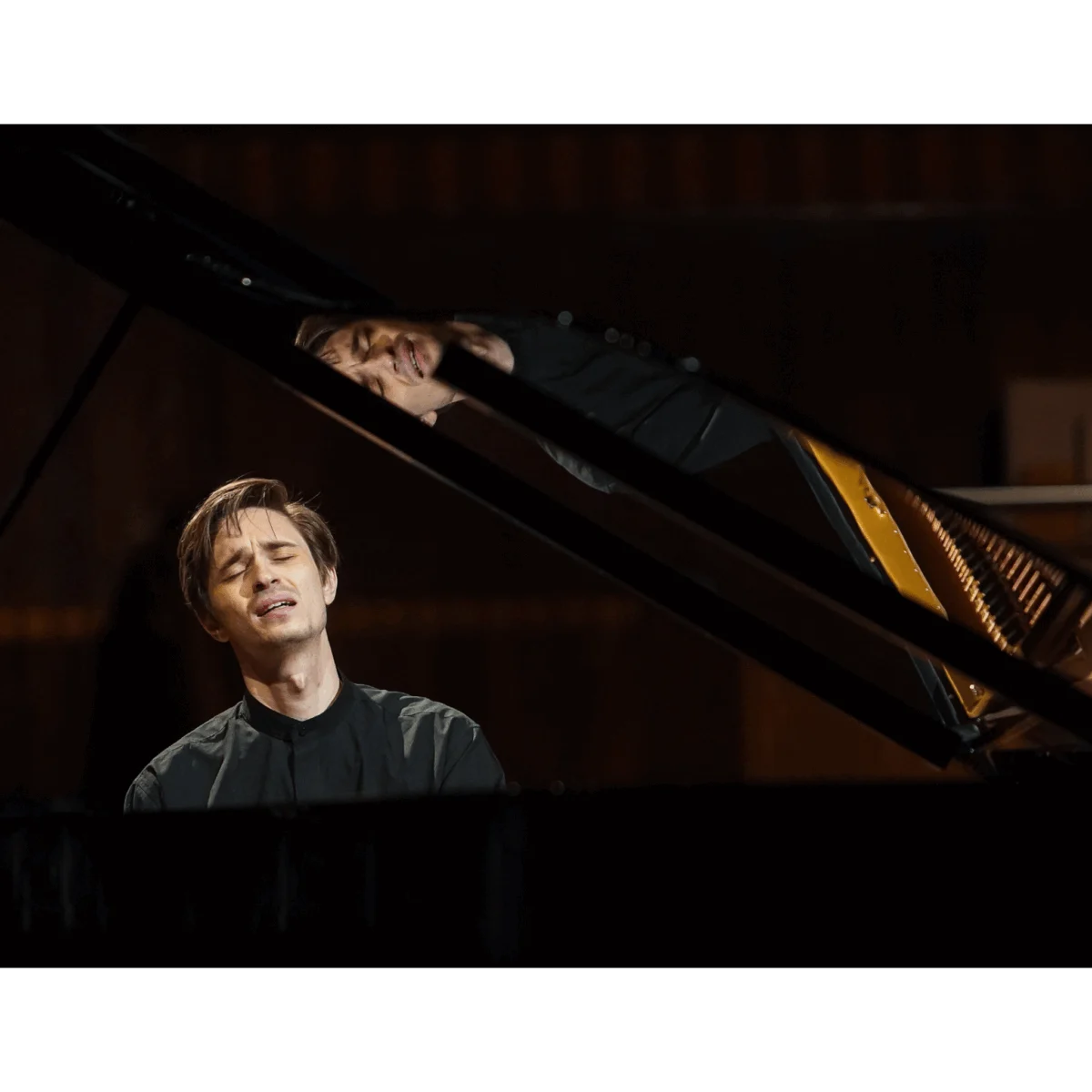
While the canon of Ludwig van Beethoven’s piano sonatas is perhaps the most heavily documented territory in the history of recorded music, the emergence of a new interpretation often invites a familiar question: does the world need another recording of the Pathétique, the Moonlight, and the Waldstein? According to acclaimed pianist and educator Miriam Gómez-Morán, the answer is a resounding yes. Her latest release, captured with crystalline precision, serves as a masterclass in how to strip away the calcified layers of tradition to reveal the visceral, intellectual, and emotional core of these seminal works.
Main Facts: A New Standard of Clarity
In this latest release, pianist Miriam Gómez-Morán—a scholar who holds a PhD in Piano and serves as a professor at one of Spain’s most prestigious music conservatories—tackles three of the most formidable pillars of the Beethoven repertoire. The album, released via IBS Classical, presents a sophisticated juxtaposition of the Sonata No. 8 in C minor, Op. 13 ("Pathétique"), the Sonata No. 14 in C-sharp minor, Op. 27, No. 2 ("Moonlight"), and the Sonata No. 21 in C major, Op. 53 ("Waldstein").
What distinguishes this performance from the myriad of competitors is not a radical departure in tempo or phrasing, but rather a profound commitment to transparency. Gómez-Morán eschews the overly Romantic, heavy-handed sentimentality that has plagued many interpretations of these works throughout the 20th century. Instead, she offers a reading characterized by high contrast, structural integrity, and an almost surgical articulation that breathes new life into themes so familiar they are often heard, but rarely listened to.
Chronology: From the Master’s Hand to the Modern Ear
To understand the significance of this recording, one must consider the trajectory of these sonatas within Beethoven’s own development. The Pathétique (1798) represents the transition from the Classical restraint of Haydn and Mozart into the bold, stormy interiority of early Beethoven. The Moonlight (1801) pushed the boundaries of form, beginning with an atmospheric Adagio sostenuto that challenged the conventions of the time. By the time he reached the Waldstein (1804), Beethoven had entered his "Heroic" period, demanding a level of technical facility and structural breadth that pushed the capabilities of the period’s pianos to their absolute limit.
For decades, these works have been recorded by legends from Schnabel and Kempff to Brendel and Pollini. However, the modern era has seen a shift toward the "historically informed" performance practice, where artists seek to bridge the gap between contemporary concert grands and the lighter, more percussive instruments of Beethoven’s day. Gómez-Morán’s approach fits squarely into this modern lineage: she respects the score’s architecture while imbuing the music with a contemporary urgency.
Her recent collaboration with IBS Classical—a label known for its high-fidelity audio engineering—positions this release as a definitive entry for the 21st-century collector. This is not merely an archival exercise; it is an active, living dialogue with the composer.
Supporting Data: Why This Recording Matters
The technical merits of this recording are twofold: the artistry of the performer and the brilliance of the engineering.
The Artistry
Gómez-Morán brings a distinctively academic yet passionate sensibility to the keys. Her doctoral training is evident in her phrasing; she approaches the Waldstein not as a display of bravura, but as a complex intellectual puzzle where every voice in the fugal textures is articulated with crystalline clarity. Where other pianists might blur the rapid-fire passages of the Waldstein’s finale in a wash of pedal, Gómez-Morán maintains a bright, transparent tone that allows the listener to hear the underlying harmonic shifts.
The Audio Fidelity
As reviewed by industry experts, the production quality is exemplary. The IBS recording team has managed to place the piano at the "perfect distance." In high-fidelity audio circles, particularly among the community at NativeDSD, the goal is to capture the "air" around the instrument without sacrificing the intimacy of the performance. This recording succeeds in capturing the full dynamic range of the piano—from the delicate, whispered pianissimos of the Moonlight’s opening to the thundering, percussive chords that characterize the Pathétique—without any unnatural compression.
Official Context: The Landscape of Beethoven Recordings
It is important to place this release within the broader context of the NativeDSD catalog. For those seeking a complete cycle, the 11-volume set by Peter Takács remains a gold standard. Having been honored as the "Solo Instrumental Album of the Year" for 2022, the Takács collection is a monumental achievement. NativeDSD continues to support this set as the primary reference point for listeners looking to explore the full, uninterrupted narrative of Beethoven’s sonata development.

However, the industry understands that no single artist can own the entirety of Beethoven’s vision. While Takács provides the panoramic view, Gómez-Morán provides the focused, high-intensity portrait. The availability of these volumes individually and as part of a wider ecosystem of high-resolution audio allows the listener to curate their own experience. We are, as noted by critics, "lucky beyond belief" to exist in an era where we can transition between these two philosophies of playing—the expansive, scholarly cycle and the pointed, high-contrast individual interpretation—at the click of a button.
Implications: The Future of Classical Interpretation
What does this recording imply for the future of classical music performance? Firstly, it highlights the importance of the conservatory-trained soloist who is also a researcher. By applying academic rigor to the interpretation, performers like Gómez-Morán are effectively "cleansing" the repertoire of the accretions of bad habits and romanticized excesses that have developed over the last century.
Secondly, the success of this recording underscores the enduring relevance of the high-resolution audio market. For a work as nuanced as the Waldstein, the difference between a standard streaming compression and a native DSD file is not merely a matter of technical specs; it is a matter of emotional access. When the listener can hear the exact moment the damper pedal is released or the subtle resonance of the piano’s soundboard, they are brought closer to the artist’s intent.
A Concluding Assessment
Miriam Gómez-Morán’s latest recording of these three sonatas is more than just a welcome addition to the catalog; it is an essential listen for anyone who believes they have "heard it all" when it comes to Beethoven.
- The Pathétique: Played with a tragic, lyrical intensity that avoids the trap of melodrama.
- The Moonlight: A study in controlled, transparent emotion.
- The Waldstein: A revelatory, fresh take that clarifies the work’s dense, heroic architecture.
As we continue to navigate a crowded marketplace of digital music, this recording stands out as a beacon of quality. It reminds us that the power of Beethoven lies not in the tradition surrounding him, but in the music itself—if only we are willing to hear it with fresh ears. For the audiophile, the scholar, and the casual listener alike, this album is highly recommended. It is a testament to the fact that, even after two centuries, the piano sonatas of Ludwig van Beethoven remain an inexhaustible well of human expression, constantly waiting to be rediscovered by those with the technical skill and the intellectual courage to look beneath the surface.