Welcome back to TechCrunch Mobility — your central hub for news and insights on the future of transportation. To get this in your inbox, sign up here for free — just click TechCrunch Mobility.
The Quest for Clarity: Can We Measure the Self-Driving Race?
For the better part of a decade, the technology sector has been locked in a high-stakes debate: Who is winning the self-driving car race? For years, this conversation was plagued by a lack of empirical data. The early era of autonomous vehicle (AV) development was defined by carefully curated demos, massive influxes of venture capital, and a noticeable lack of transparent substance. For the public and industry analysts alike, it was difficult to distinguish between genuine engineering breakthroughs and well-funded marketing theater.
Today, that fog is beginning to lift. Advisory and research startup Autnmy AI has launched a generative AI platform designed to create a rigorous, real-time benchmarking system that evaluates the global AV landscape. This week, the company unveiled its Road to Autonomy Index, a sophisticated tool that aggregates data from federal and state reports, SEC filings, public exchanges, and global databases.
The index doesn’t just scrape the web; it weights companies based on operational scale, revenue metrics, commercial partnerships, manufacturing capacity, and safety records. The system updates every 12 hours, providing a dynamic look at four distinct sectors: robotaxis, autonomous licensing, autonomous trucking, and delivery robotics. According to co-founder Rob Grant, the integrity of the data is paramount. "We agreed early on, we don’t scrape information," Grant stated. "If it’s publicly available or available under a Creative Commons license, we use it. We also utilize licensed data we have paid for under formal agreements."
Global Rankings and the Rise of the East
The most striking revelation from the Road to Autonomy Index is the shifting center of gravity in the autonomous space. When viewing the landscape through a global lens, the dominance of U.S.-based players is being challenged—and in some cases, surpassed—by Chinese competitors.
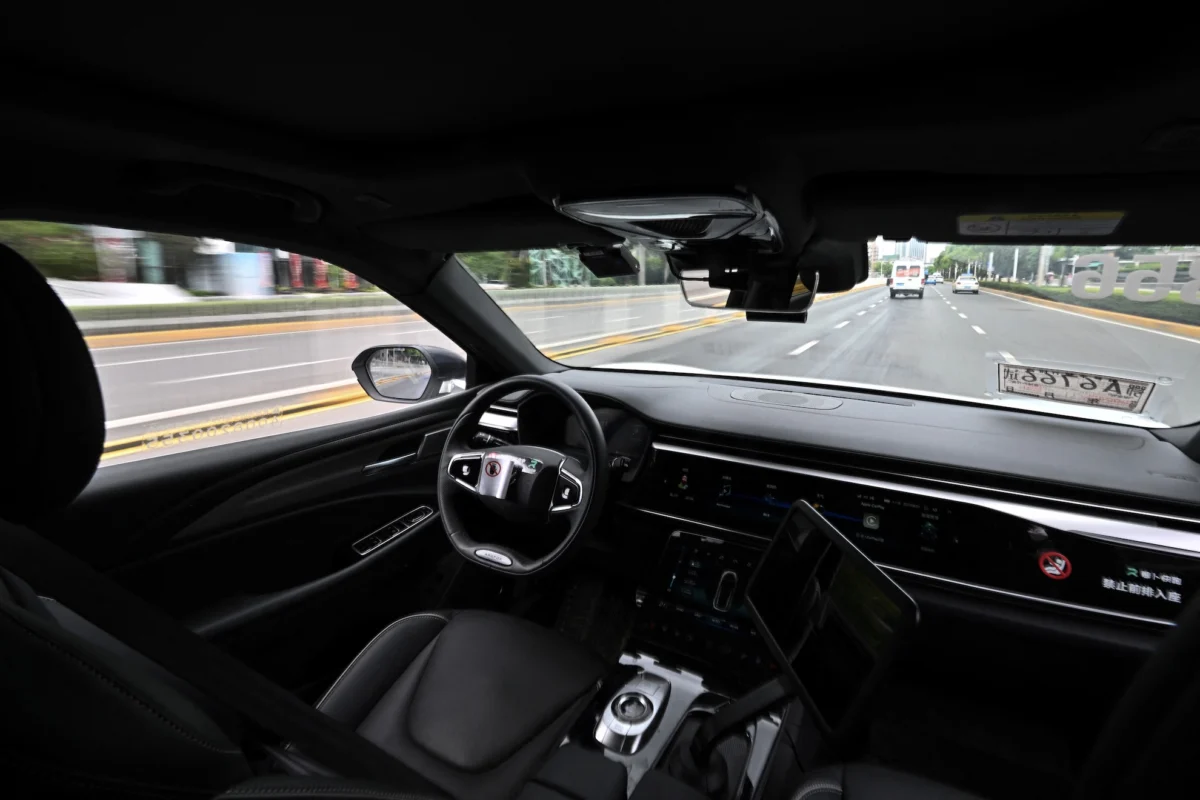
As of late June, the leader in the robotaxi category was not Alphabet’s Waymo, but China’s Baidu and its Apollo Go program. The lead is slim, but it represents a significant psychological and strategic milestone. Waymo currently occupies the second position, followed by Chinese firms Pony.ai and WeRide. Tesla currently holds the fifth position in these rankings. This data suggests that while American firms have dominated the media narrative, the operational maturity of Chinese programs has reached a level of scale that can no longer be ignored by Western investors or policymakers.

Chronology of an Expanding Fleet: Texas as a Microcosm
To understand how these rankings translate to the physical world, one need only look at the Lone Star State. Texas has become a critical battleground for autonomous deployment, and a recently launched state tracking tool offers a window into the fleet growth of major players.
Between late May and mid-June, the numbers have shown a clear trend of expansion. Waymo remains the heavyweight in the region, growing its registered fleet from 577 vehicles to 620 in less than a month—a 7.5% increase. Tesla, while starting from a smaller base, is scaling rapidly; its fleet of registered autonomous vehicles grew by 64%, jumping from 42 to 69 units. Zoox, which is currently working toward federal exemptions to operate commercially, increased its fleet from 35 to 43 vehicles.
However, not all players are in an expansion phase. Avride, Nuro, and the Volkswagen subsidiary MOIA are holding steady with 317, 47, and 12 registered vehicles, respectively. This data is vital because it distinguishes between companies actively deploying and those testing the waters, providing a granular view of who is truly betting on the Texas market.
Strategic Shifts: The "Robotaxi First" Philosophy
The industry is currently experiencing a flurry of deal-making that suggests a shift toward consolidation and specialized partnerships. Stellantis, the autonomous startup Wayve, and ride-hailing titan Uber have entered a tripartite agreement to develop and deploy driverless robotaxis, signaling that legacy automakers are increasingly looking to tech-native startups to bridge the gap in their software stacks.
This sentiment is echoed by Mobileye. Having long operated as an autonomous technology supplier, the company is now pivoting to become a direct robotaxi operator, with a planned launch in a U.S. city in 2027. This move validates a long-standing theory held by Mobileye founder and CEO Amnon Shashua, who argued as early as 2020 that to achieve the "holy grail" of passenger car autonomy, companies must first master the controlled, high-density environment of the robotaxi.
Simultaneously, Uber continues to expand its footprint, announcing plans to bring its premium robotaxi service to Houston by mid-2027, leaning on its partnerships with EV maker Lucid and the delivery specialist Nuro.

Safety and Scrutiny: The Challenges of Real-World Operation
The path to full autonomy is not without its perils. Recent events highlight the tension between rapid deployment and public safety.
A viral video recently captured an Avride robotaxi being struck by a human driver who ran a stop sign in Dallas. While Avride reported no injuries, the incident serves as a reminder that AVs must navigate the unpredictable behavior of human-driven vehicles. The company is currently reviewing the data to refine its systems, though they remain tight-lipped on the specific performance of the safety operator behind the wheel.
Meanwhile, Waymo has faced a significant hurdle, initiating a recall of nearly 4,000 robotaxis to address a software issue that resulted in vehicles driving into active highway construction zones. With at least 13 reported instances of such behavior, Waymo has pulled its fleet from freeways as it works on a software patch. Notably, the fix is still "under development," leaving the industry to wonder how long it will take to resolve such a fundamental navigation error.
Furthermore, the "cat and mouse" game of regulation continues. In China, Tesla owners have been documented using "tiny plastic heads" to circumvent distracted driving monitors, highlighting the difficulty of enforcing safety protocols via hardware-based monitoring. In San Francisco, confusion erupted over a Tesla displaying an authorized limousine permit. SFO officials were quick to clarify that while the vehicle is permitted for traditional, human-driven limousine services, it has no authorization for autonomous operations at the airport.
Capital and Innovation: The Deals Shaping the Future
Despite the regulatory and technical hurdles, the flow of capital remains robust:
- Logistics Automation: Cargofy raised $11 million in a Series A round led by u.ventures and Toloka to scale its AI-driven freight operations.
- Market Consolidation: Singapore’s Carro acquired the Australian platform CarPlace, marking its expansion into its eighth global market.
- Strategic Partnerships: Gatik secured a multi-year deal with PepsiCo to continue deploying driverless trucks for short-haul logistics in Arkansas, Arizona, and Texas.
- Battery Technology: QuantumScape and Honda have entered a joint research agreement to accelerate the commercialization of solid-state batteries.
- Data Acquisition: XDOF, a startup specializing in robot training data, secured a massive $70 million funding round from a cohort including a16z, Thrive Capital, and Lux.
Implications for the Road Ahead
The next three years will be decisive. As we approach 2027, the industry is transitioning from the "pilot phase" into a "scale phase." The data provided by the Autnmy AI index and state trackers confirms that we are no longer guessing who the players are—we are now measuring their velocity.

The rise of Chinese manufacturers like Baidu and the aggressive scaling of U.S. incumbents like Waymo and Tesla suggest that the market will not be won by a single entity, but rather by those who can best manage the intersection of government policy, hardware reliability, and public trust. The recalls, the partnerships, and the funding rounds of this week all point to one conclusion: the race to autonomy is no longer just a technological challenge; it is a global industrial competition of the highest order.
Got a tip for us? Email Kirsten Korosec at [email protected] or contact our Signal at kkorosec.07. For more updates on the future of transportation, stay tuned to TechCrunch Mobility.
(Disclaimer: When you purchase through links in our articles, we may earn a small commission. This does not affect our editorial independence.)