For modern sports fans, the transition from traditional broadcast television to internet-protocol (IP) streaming has introduced a frustrating modern paradox. While viewers can now enjoy pristine 4K High Dynamic Range (HDR) feeds, immersive Dolby Atmos audio, and on-demand stats at the touch of a button, they do so at the expense of immediacy.
The dreaded "spoiler effect"—where a neighbor’s cheers or a smartphone notification alerts a viewer to a goal twenty seconds before it appears on their screen—has become a pervasive issue. During major international tournaments, such as the UEFA European Championship and the FIFA World Cup, this latency gap is more than a minor annoyance; it fundamentally alters the communal experience of watching live sports.
To address this challenge, telecommunications giant Sky recently introduced its "Real Time" feature for Sky Glass and Sky Stream. Designed to drastically reduce latency on IP-delivered channels, the technology promises to bring streaming delivery times within striking distance of traditional satellite and terrestrial broadcasts.
To evaluate these claims, consumer technology publication What Hi-Fi? conducted a rigorous side-by-side test comparing various broadcast and streaming platforms. The results offer a revealing look at the current state of broadcast latency and the technological hurdles the industry must overcome as it transitions away from legacy infrastructure.
Main Facts: The Latency Hierarchy Revealed
The benchmark test, conducted by What Hi-Fi? TV and AV Editor Tom Parsons, established a definitive hierarchy of broadcast speeds. Using a highly controlled environment with identical hardware, the investigation compared the latency of traditional digital terrestrial television (DTT), satellite delivery, standard IP streaming, and Sky’s newly optimized low-latency stream.
The key findings from the investigation include:
- The Traditional Leader: Freeview via an over-the-air aerial remains the fastest consumer method for watching live television, exhibiting a baseline delay of approximately 8 seconds relative to the absolute live action.
- The Satellite Standard: Sky Q, delivered via satellite dish, remains highly competitive with a latency of approximately 10 seconds behind live play.
- The Low-Latency Breakthrough: When Sky’s "Real Time" mode is activated on Sky Glass or Sky Stream, latency drops to 13 seconds behind live play. This represents a massive 13-second improvement over standard streaming, leaving it just 5 seconds behind a traditional aerial and 3 seconds behind satellite.
- Standard Streaming Lag: Without optimization, Sky Glass and Sky Stream operate with a 26-second delay behind live action (18 seconds behind Freeview).
- The Streaming Laggard: BBC iPlayer recorded the highest delay at 31 seconds behind live play (23 seconds behind Freeview), regardless of whether the user streamed in High Definition (HD) or Ultra High Definition (UHD/4K).
Chronology: From Legacy Broadcasts to the Low-Latency Experiment
The Evolution of the Latency Problem
The broadcast latency issue is deeply rooted in the transition from analog to digital, and subsequently to IP-based distribution. In the era of analog television, signals traveled via radio frequency (RF) waves directly from the stadium to the broadcast tower and into living rooms with sub-second delays.
The transition to digital terrestrial television (DTT) in the late 1990s and 2000s introduced digital encoding and decoding processes, which established a baseline delay of 7 to 8 seconds. This latency was considered acceptable because it was uniform across almost all households.
The mass adoption of Over-The-Top (OTT) streaming platforms over the last decade fractured this uniformity. Unlike traditional broadcasts, which push a continuous stream of data to all viewers simultaneously, internet streaming relies on unicast delivery. Video feeds are sliced into temporary files or "chunks" (typically 2 to 6 seconds long), distributed across Content Delivery Networks (CDNs), and reconstructed by the viewer’s playback device. To prevent buffering caused by fluctuating internet speeds, streaming players maintain a buffer of several chunks, compounding the delay to 30 seconds or more.
The real-world consequences of this technological shift became highly apparent during the Euro 2020 tournament (played in 2021). Millions of viewers who chose to watch matches via high-quality streaming platforms like BBC iPlayer found their experience spoiled by immediate noise from local pubs and neighbors receiving faster terrestrial or satellite feeds.
Setting Up the Side-by-Side Test
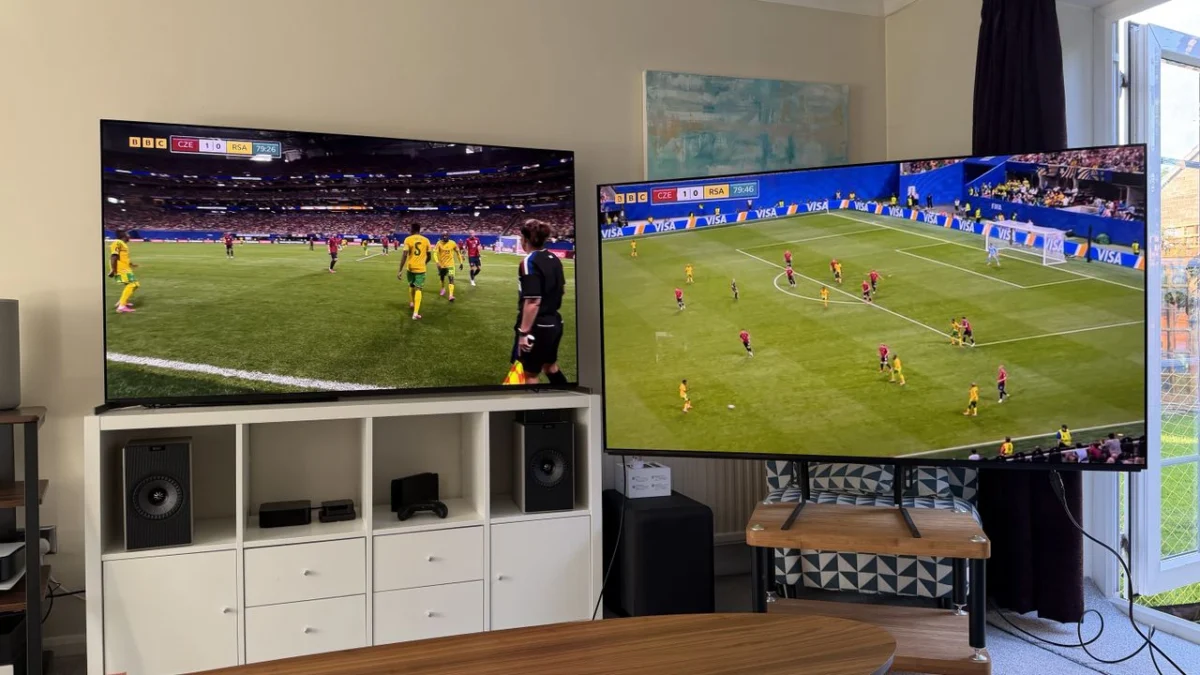
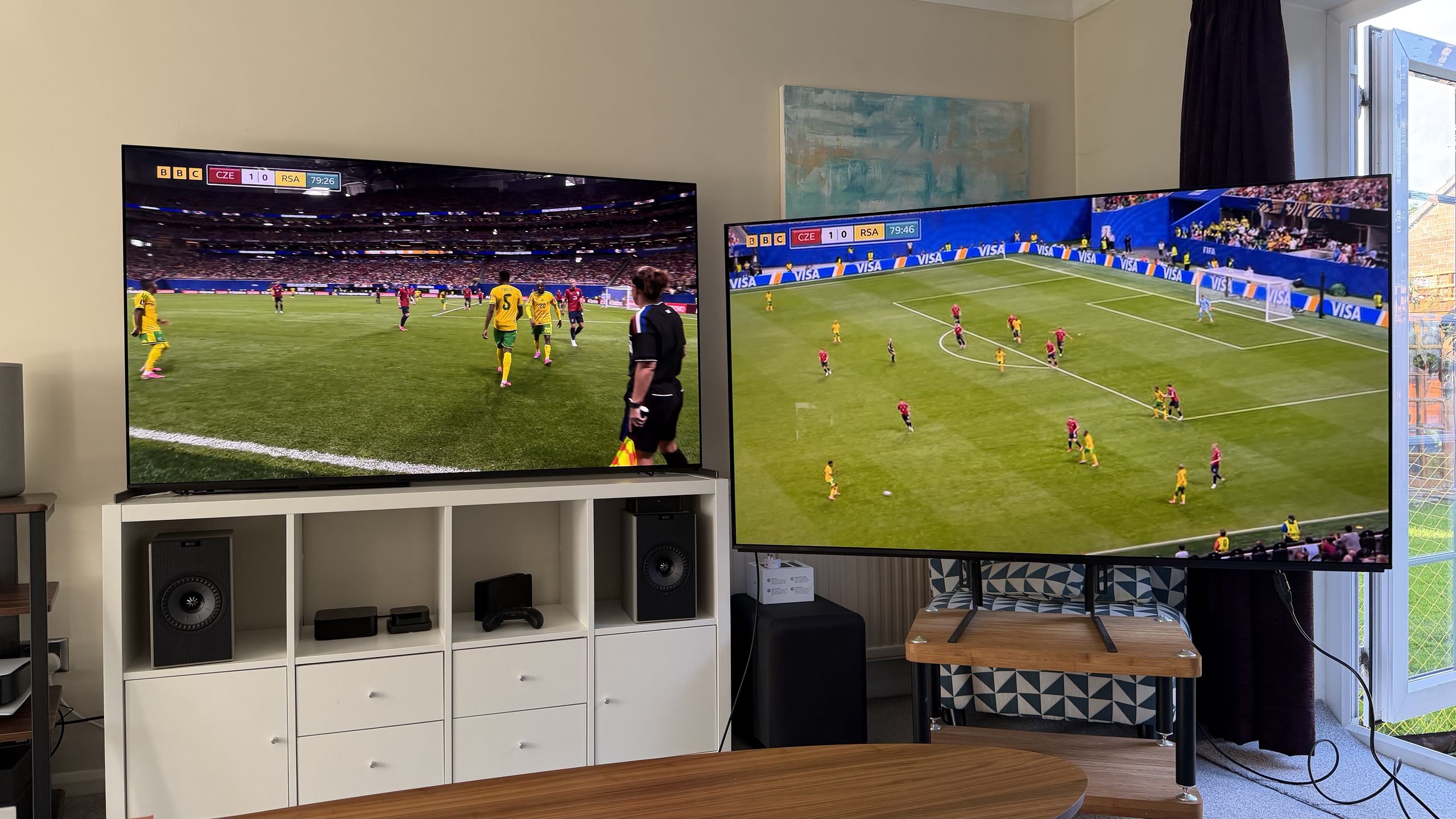
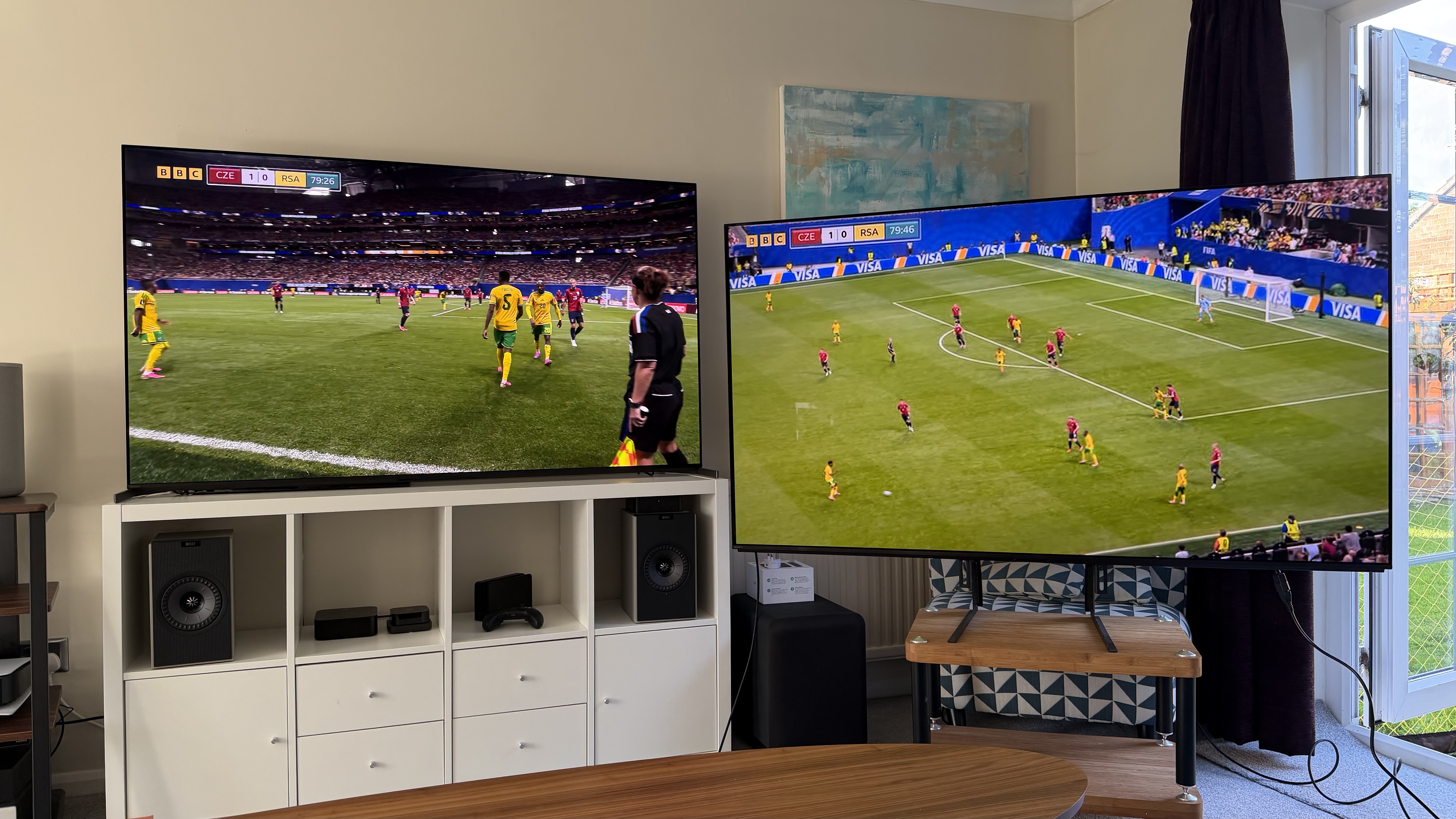
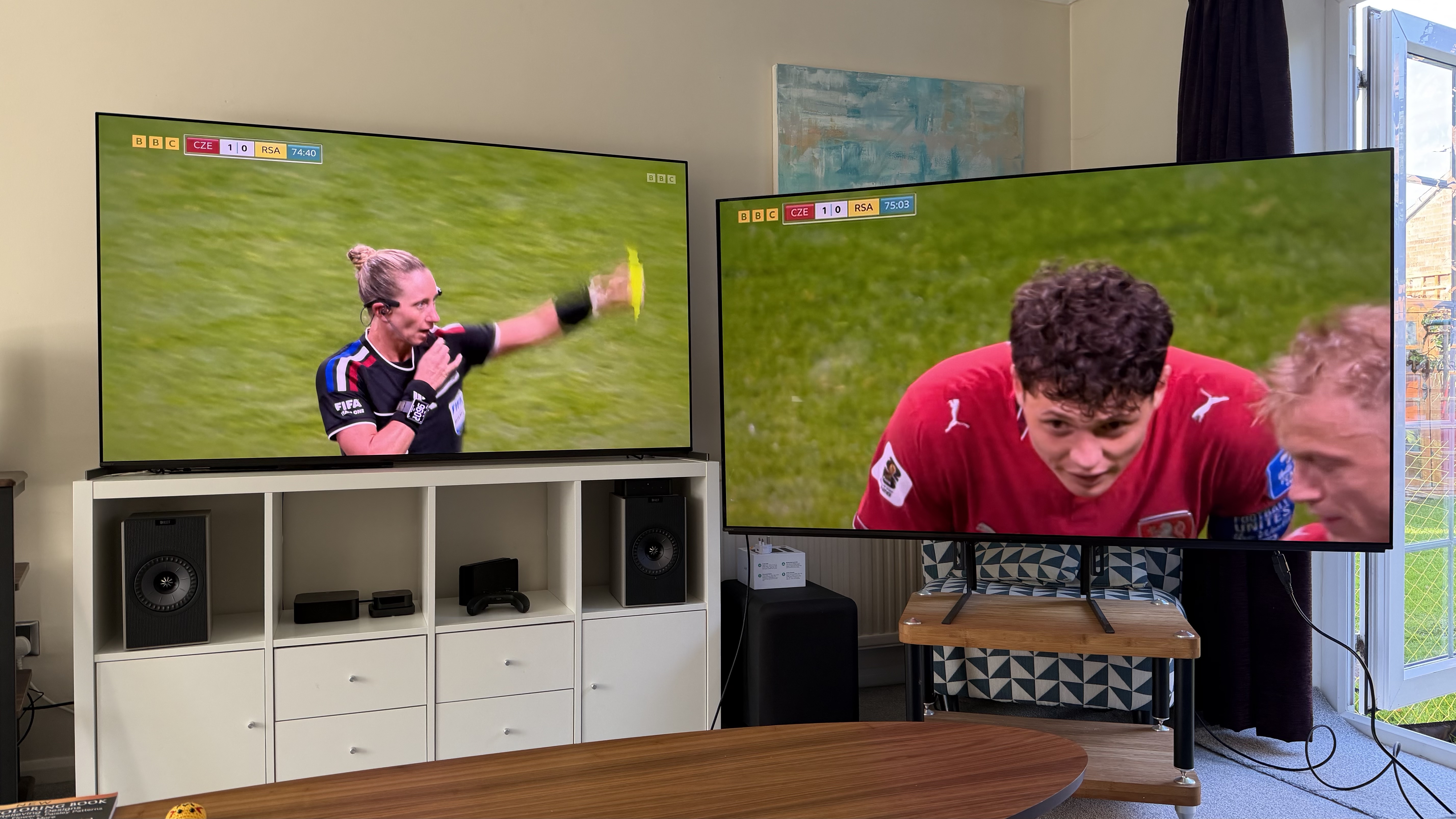
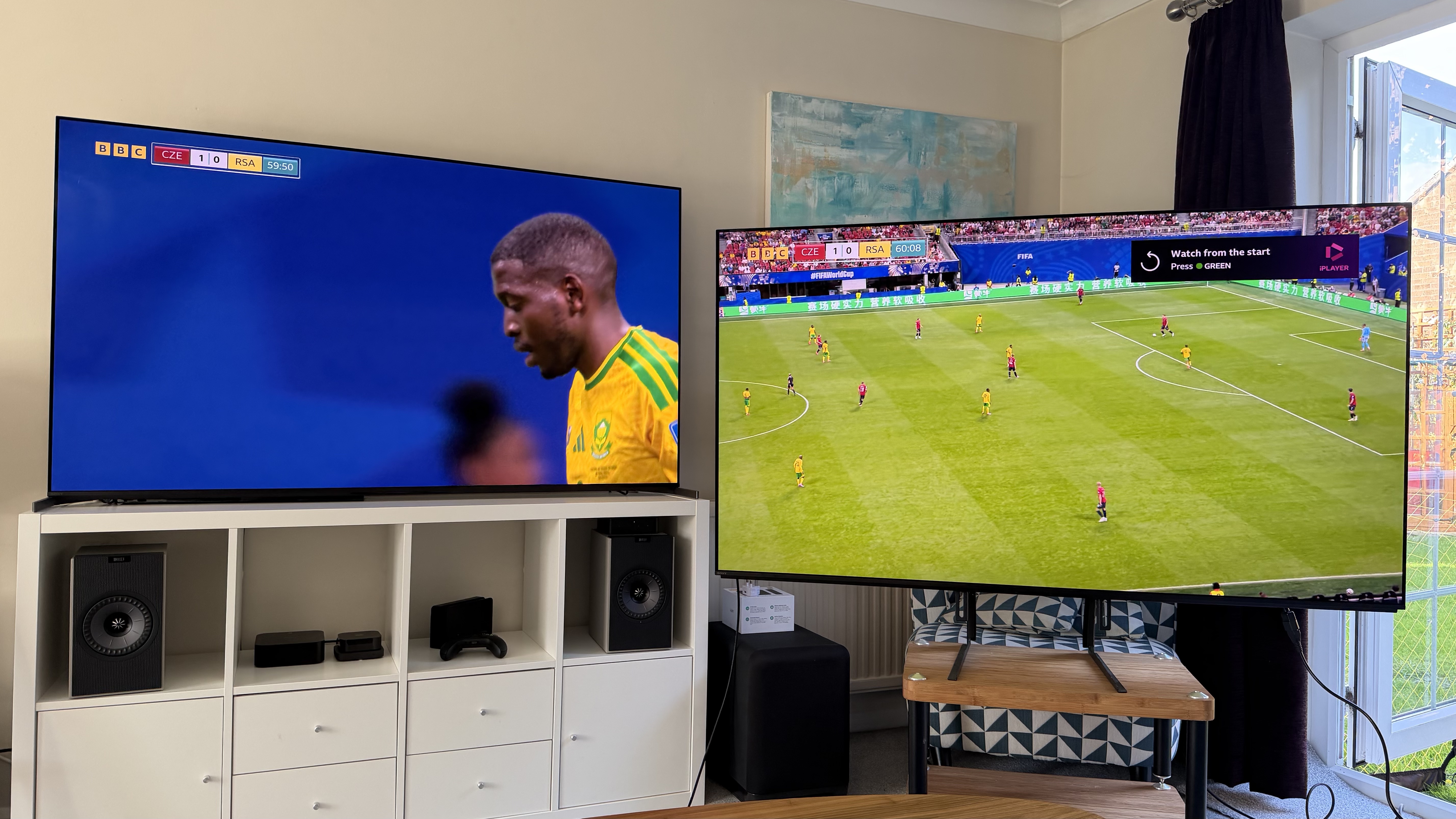
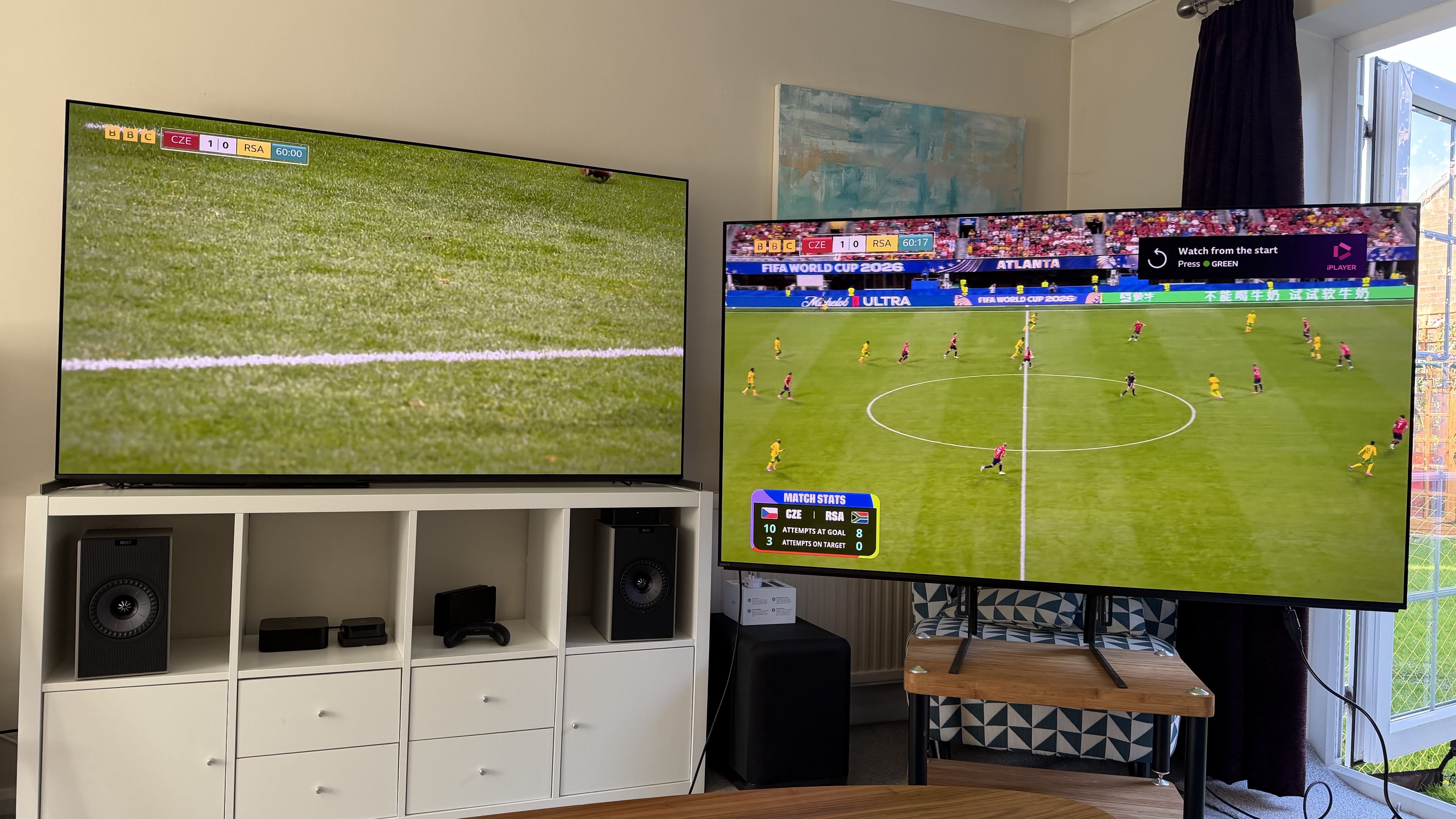
To scientifically measure these discrepancies without external variables, What Hi-Fi? designed a controlled laboratory environment in a standard domestic living room. The setup was engineered to eliminate differences in hardware processing speeds and display lag:
- Hardware Standardization: The test utilized two identical 65-inch Sony Bravia 8 II OLED televisions.
- Software and Calibration Alignment: Both displays were updated to the exact same firmware version and calibrated with identical picture processing, motion handling, and system settings to ensure that internal TV processing did not skew the latency measurements.
- The Control Feed: The "new" TV on the right was connected directly to a standard coaxial aerial to receive a digital terrestrial Freeview signal.
- The Variable Feeds: The TV on the left was connected to a series of streaming sources, including built-in smart TV applications, an Apple TV 4K, and a Sky Stream puck.
- The Test Event: The measurements were taken during a live broadcast of the Czechia vs. South Africa international match. The exact timecode of on-screen events—such as player movements, referee whistles, and clock updates—was cross-referenced across the two screens using high-speed video capture to calculate the precise frame-and-second offset.
Supporting Data: Understanding the Numbers Behind the Delay
To fully comprehend why these delays occur, it is necessary to examine the underlying transmission paths of each delivery method.
| Broadcast / Reception Type | Delay Relative to Live Action (Seconds) | Delay Relative to Freeview Aerial (Seconds) | Primary Delivery Infrastructure |
|---|---|---|---|
| Absolute Live Action | 0 | -8 | Physical event in stadium |
| Freeview (Aerial) | 8 | 0 | RF Signal / Digital Terrestrial (DTT) |
| Sky Q (Satellite) | 10 | +2 | DVB-S2 Satellite Feed |
| Sky Glass/Stream (Real Time Active) | 13 | +5 | Low-Latency IP Unicast (Optimized) |
| Sky Glass/Stream (Standard IP) | 26 | +18 | Standard HTTP Live Streaming (HLS) |
| BBC iPlayer (HD or UHD) | 31 | +23 | Standard CDN Chunk-based Streaming |
Why BBC iPlayer and Standard IP Streams Lag
Standard internet streaming typically relies on protocols like HTTP Live Streaming (HLS) or Dynamic Adaptive Streaming over HTTP (DASH). These protocols prioritize stream stability over low latency.
When a broadcaster films an event, the raw video is sent to an encoder. The encoder compresses the video and cuts it into segments (often 6 seconds long). These segments are uploaded to a origin server and then cached across edge servers on a CDN.
When your streaming device requests the feed, it downloads and buffers at least two to three of these segments before beginning playback to ensure that any temporary drop in your broadband speed does not cause the video to freeze. This safety buffer inherently adds 12 to 18 seconds of delay on top of the time it takes to encode, package, and transport the data.
How Sky’s "Real Time" Solves the Math
Sky’s "Real Time" technology bypasses this standard chunk-based pipeline by leveraging advanced low-latency streaming protocols. While Sky has not disclosed the exact proprietary architecture, the industry standard for achieving these speeds involves Chunked Transfer Encoding (via CMAF – Common Media Application Format) or Low-Latency HLS (LL-HLS).
Instead of waiting for an entire 6-second segment of video to be completed and encoded before sending it down the pipeline, Chunked CMAF breaks those segments down into much smaller "sub-chunks" (often just a fraction of a second long). These sub-chunks are immediately sent through the CDN to the playback device.
The player can begin decoding and displaying the video frames almost instantly, reducing the required playback buffer from several seconds to under two seconds. This optimization is what allows Sky Stream to slash its latency from 26 seconds down to just 13 seconds.
Official Responses: Broadcasters and Providers Weigh In
The transition to low-latency streaming has sparked a coordinated effort among major UK broadcasters and infrastructure providers, who recognize that latency is a critical metric for customer satisfaction.
Sky’s Position and Implementation
Sky has positioned its "Real Time" feature as a key differentiator for its IP-only products, Sky Glass and Sky Stream. Recognizing that users may still prioritize the absolute stability of standard streams under poor network conditions, Sky opted not to make "Real Time" the default setting.
Instead, during major sporting events broadcast on BBC HD, ITV1 HD, and ITV4 HD, users are presented with an on-screen prompt. Clicking the "Real Time" button transitions the device to an optimized low-latency stream.
A Sky spokesperson noted that the company’s engineering goal was to align the performance of its streaming devices as closely as possible with its legacy satellite product, Sky Q. The testing confirms that they have come within 3 seconds of this goal, representing a major milestone for IP delivery.
The BBC’s Hybrid Approach
The BBC has long acknowledged the latency challenges associated with its iPlayer platform, particularly during high-profile sporting events. The broadcaster has stated that its digital terrestrial transmission (Freeview) remains its gold standard for immediate delivery, averaging a 7-to-8 second delay from the pitch.
Regarding iPlayer, the BBC has consistently balanced stream stability, picture quality, and latency. During the testing, What Hi-Fi? discovered that there was no statistically significant latency difference between iPlayer’s standard HD feed and its high-bandwidth 4K UHD feed. This indicates that the BBC’s encoding pipeline for UHD has been highly optimized, though the overall platform latency remains limited by standard CDN buffering protocols.
Implications: The Future of Live Sports and the Death of the Dish
The results of this side-by-side test carry profound implications for the consumer technology landscape and the future of sports broadcasting.
The Sunset of Satellite and Terrestrial Infrastructure
In the United Kingdom and many global markets, television delivery is undergoing a structural migration toward internet-only distribution. Sky has actively deprioritized Sky Q in favor of Sky Stream and Sky Glass, and there is industry consensus that satellite TV delivery will eventually be phased out entirely. Similarly, the future of digital terrestrial television (Freeview/aerial) beyond the mid-2030s remains a subject of intense debate among regulators and broadcasters.
Until recently, the major roadblock to a pure-IP future was the compromise in live sports delivery. If streaming meant accepting a half-minute delay, sports fans would resist cutting the cord. Sky’s "Real Time" feature proves that IP-delivered television can match the speed of traditional broadcast media, removing one of the final hurdles to a fully internet-dependent TV ecosystem.
The Consumer Dilemma: Quality vs. Immediacy
For the end-user, watching live sports now requires a conscious choice:
- For Maximum Picture Quality: Platforms like BBC iPlayer offer stunning 4K HDR streams with high bitrates, but viewers must accept a ~31-second delay and isolate themselves from social media and noisy neighbors.
- For Maximum Immediacy: A traditional over-the-air aerial remains the safest bet to avoid spoilers, though it maxes out at standard HD resolutions.
- The Best of Both Worlds: Sky’s "Real Time" feature offers a compelling middle ground, providing crisp HD streaming with a negligible 5-second penalty compared to an aerial.
As low-latency protocols like LL-HLS and CMAF become standardized across the industry, other major streaming platforms—including ITVX, Channel 4, and global giants like Prime Video and DAZN—will face pressure to implement similar technologies. For years, choosing internet television meant accepting that you would hear about a goal before you saw it. Thanks to these engineering breakthroughs, that compromise is finally coming to an end.