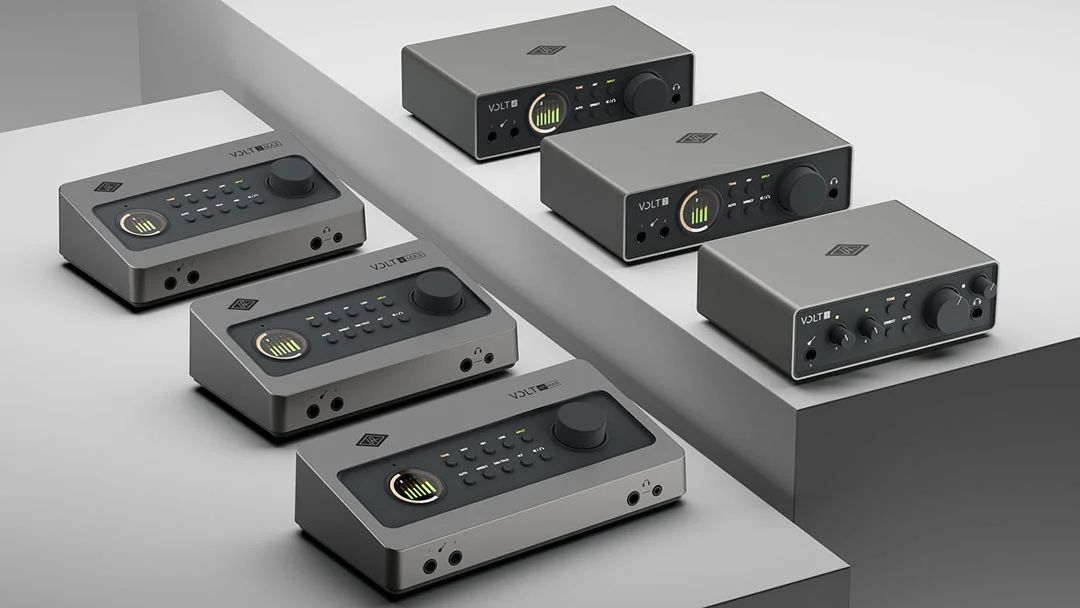
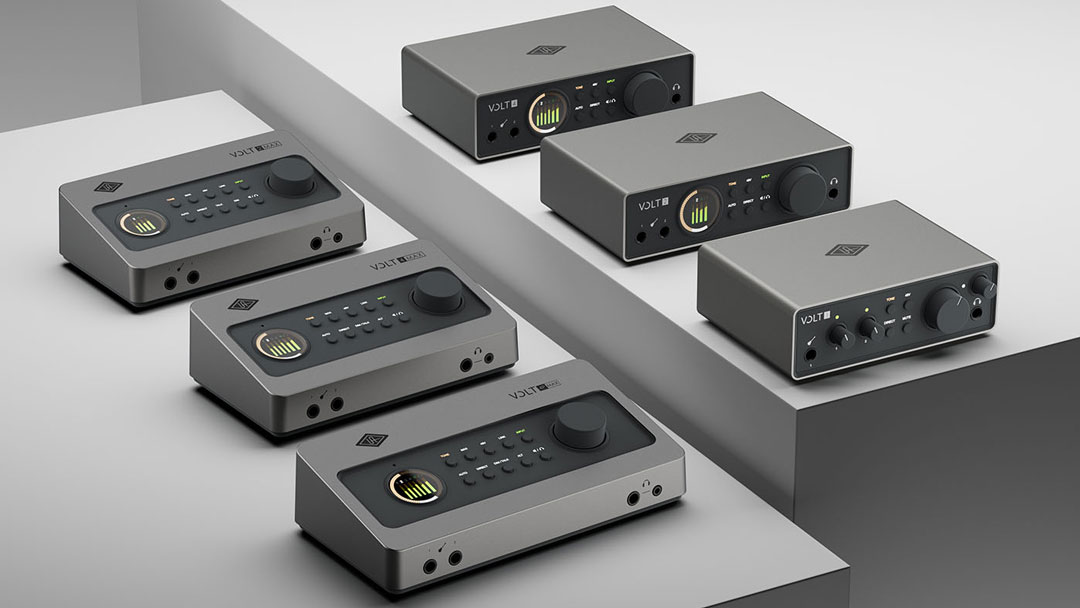
Scotts Valley, CA (October 2, 2026) — In a significant move that reshapes the entry-to-mid-level interface market, Universal Audio (UA) has officially unveiled the second generation of its highly successful Volt line. Building on the reputation of the original Volt series—which brought UA’s legendary analog heritage to a broader audience—this new launch introduces two distinct tiers: the streamlined Volt Gen 2 series and the feature-rich, powerhouse Volt Max line. With a total of six new models, Universal Audio is clearly positioning itself to dominate the workflows of everyone from bedroom podcasters to mobile recording engineers.
Main Facts: The New Lineup Defined
The expansion comprises a diverse range of hardware designed to meet varying input/output requirements. The series is divided into the standard Volt Gen 2 models, which prioritize core performance and portability, and the Volt Max models, which integrate advanced DSP-style processing and high-end metering.
The Volt Gen 2 Series
- Volt 1 Gen 2: The essential 2-in / 2-out interface with one premium preamp, designed for the solo creator.
- Volt 2 Gen 2: A 2-in / 4-out interface featuring two preamps, offering expanded routing capabilities.
- Volt 4 Gen 2: A robust 12-in / 6-out unit with two preamps, catering to users requiring more connectivity for synthesizers and outboard gear.
The Volt Max Series
- Volt 2 Max: A 10-in / 4-out interface with two preamps, introducing integrated dynamics processing.
- Volt 4 Max: A 12-in / 6-out powerhouse with two preamps.
- Volt 4P Max: The flagship of the new collection, offering 12-in / 6-out connectivity with four dedicated preamps, ideal for multi-mic setups.
A Chronological Evolution: From Volt to Max
To understand the weight of this announcement, one must look back at the trajectory of Universal Audio’s hardware strategy. When the original Volt series launched, it served as a "democratization" of the UAD brand. It was the first time the company had stepped away from the proprietary SHARC DSP-based Apollo ecosystem to offer a standard USB interface that didn’t require the UAD software environment to function.
2021: The Genesis
The original Volt series introduced the "Vintage" mode, which modeled the classic 610 tube preamp. It was a hit because it offered a tangible, sonic "color" that many budget interfaces lacked.
2024: Market Saturation and Feedback
As the Volt line became a staple in home studios, users began requesting more granular control. Specifically, creators wanted more than just a single "Vintage" button; they wanted the dynamics processing found in high-end studio chains and better visual feedback for gain staging.
2026: The "Max" Integration
Today’s announcement marks the culmination of that user feedback. By moving to 32-bit audio conversion and integrating "Max" processing, Universal Audio has bridged the gap between a simple "interface" and a "front-end processing suite." The inclusion of the full-color Smart Display on all models (except the Volt 1) reflects a shift toward the "prosumer" expectation of visual, tactile data.
Supporting Data: Technical Specifications and Innovations
The technological leap in the Gen 2 and Max series is centered on three pillars: 32-bit fidelity, Tone Shaping, and Smart Dynamics.
32-Bit Conversion
The jump to 32-bit conversion is a game-changer for digital recording. By increasing the headroom and dynamic range, UA ensures that even amateur recordists are unlikely to hit the "digital ceiling" that causes harsh clipping. This provides a safety net for unpredictable sound sources, such as live instruments or unscripted podcast dynamics.
The Tone Shaping Preamp Architecture
Universal Audio has evolved its signature preamp sound. Instead of a single toggle, the new Tone Shaping Preamps offer three distinct character modes:
- Warmth (Tube): Emulating the harmonic saturation of classic tube gear.
- Focus (Solid State): Providing the clean, punchy transient response characteristic of modern transformer-coupled circuits.
- Shine (British Class-A): Offering that unmistakable, chimey top-end boost associated with iconic vintage mixing consoles.
Max Dynamics Processing
The "Max" in the Volt Max series is not just branding; it is a proprietary, real-time processing engine. The interface can apply compression emulations—derived from the legendary 1176 and LA-2A—at the hardware level with zero latency. This is a massive advantage for vocalists who want to hear a "finished" sound in their headphones while tracking, without putting strain on the computer’s CPU. With 18+ sonic combinations per channel, users can dial in a "Rap Vocal" or "Jangly Acoustic" preset and commit that sound directly to their DAW.
Official Responses and Strategic Positioning
In a press briefing following the announcement, a Universal Audio spokesperson noted, "Our goal was to eliminate the ‘boring’ digital sound of entry-level recording. By adding Auto-Gain with Clip Protection and intelligent source detection, we aren’t just selling an interface; we are selling a recording assistant that ensures the technical side of the job is handled, leaving the artist free to focus on the performance."
Industry analysts have observed that this move is a direct challenge to competitors like Focusrite and SSL. By packing studio-grade dynamics into a portable, bus-powered format, UA is aggressively targeting the nomadic creative—producers who move between tour buses, hotel rooms, and home studios.
Implications: The Future of Home Recording
The release of these six models has several immediate implications for the music technology landscape.
1. The Death of the "Dry" Recording
With the ease of applying high-quality compression and preamp coloring at the front end, the culture of "record dry, process later" may begin to shift. If a user can record a vocal that already sounds like it has been processed through a vintage LA-2A, they are less likely to spend hours in the mixing phase trying to recreate that "glue."
2. The Standardization of "Smart" Hardware
The move toward Smart Displays and Auto-Gain indicates that hardware is becoming increasingly opinionated. The interface is no longer a passive conduit; it is an active participant in the creative process. Users will expect this level of visual feedback and "safety" features in all future gear, forcing competitors to upgrade their own entry-level offerings.
3. The Software Bundle as a Value Proposition
Universal Audio continues to leverage its ecosystem. By including the UAD Volt Studio Bundle—which includes 15 plug-ins and a copy of the Luna DAW—UA is creating a "walled garden" effect. A user buys the Volt 4P Max for $499, and they instantly have a complete production suite that rivals systems costing thousands more. This is an incredibly difficult value proposition for independent hardware manufacturers to beat.
4. Accessibility and Pro-Grade Results
Perhaps the most significant implication is the lowering of the barrier to entry for "pro" sound. Previously, to get 1176-style compression on a vocal, one needed expensive hardware or a significant investment in a UAD DSP accelerator card. By putting these algorithms into the Volt Max hardware, Universal Audio has effectively made the "pro sound" accessible to anyone with a $300 budget.
Conclusion: A New Standard
Universal Audio’s Volt Gen 2 and Volt Max series represent a mature evolution of a product line that has already proven its worth. By listening to the needs of the modern creator—who requires speed, sonic quality, and reliability—UA has produced a range of interfaces that feel less like equipment and more like instruments.
As the lines between professional and amateur production continue to blur, the hardware that bridges that gap will define the sound of the next decade of music. With this launch, Universal Audio has firmly planted its flag as the leader of this new era of "intelligent" recording. Whether you are a podcaster needing a quick, clean setup or a musician looking to capture the nuance of a vintage microphone, the new Volt lineup offers a compelling, future-proof solution.