Introduction: A New Paradigm in Remote Audio Production
In the world of high-end audio production, the "outside broadcast" (OB) truck has long been the tether that binds a sound engineer to a performance. Typically, a massive truck must be parked in close proximity to the venue, requiring significant power, space, and infrastructure. However, in a groundbreaking display of technical ingenuity on October 21, 2026, London-based Spiritland Productions effectively severed that tether.
Tasked with capturing the live premiere of Max Richter’s evocative Hamnet soundtrack, Spiritland faced a logistical paradox: the venue, Southwark Cathedral, offered zero room for a traditional OB truck, yet the project demanded the pristine, tactile quality of a direct-to-vinyl cut at the legendary Abbey Road Studios, six miles away. By leveraging the Solid State Logic (SSL) System T technology and a multi-layered, redundant IP network, Spiritland proved that in the modern age, the physical location of the mixing desk is becoming irrelevant.
The Chronology of an Improbable Session
The Challenge of the Venue
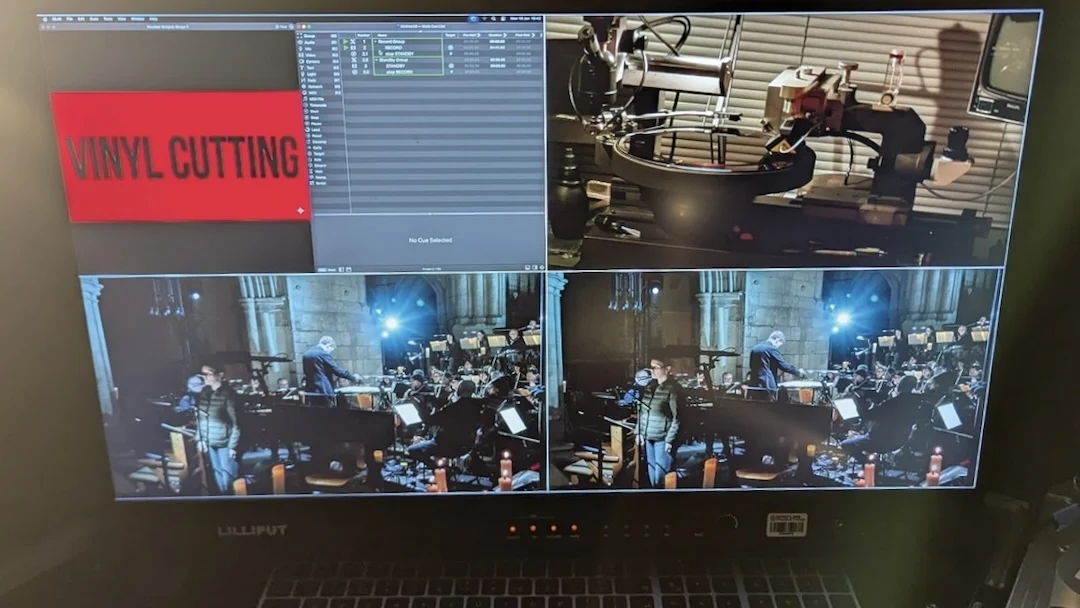
Southwark Cathedral, a historic site of architectural beauty and acoustic complexity, was the chosen stage for Max Richter’s live performance of the Hamnet score. The ensemble featured a specially assembled orchestra and the acclaimed Tenebrae choir, with Richter himself leading from the piano. The challenge was twofold: preserve the raw, emotional power of the live performance while simultaneously feeding a high-fidelity signal to a vinyl lathe at Abbey Road Studios.
The Technical Deployment
With no space for an OB truck, Spiritland Productions, led by director Antony Shaw, architected a "distributed production" model. Instead of transporting the raw, unmixed audio over the internet—which would have introduced unacceptable latency and potential packet loss—they moved the processing power to the source.
- On-Site Processing: Spiritland installed a pair of redundant SSL T25 Tempest Engines directly inside the cathedral. These engines performed the heavy lifting of audio processing locally at 96 kHz, ensuring the "feel" of the desk remained instantaneous for the performers and the local production team.
- The Remote Link: The "bridge" between the cathedral and Abbey Road was established using a robust network of five concurrent IP connections, including the cathedral’s house internet, dual-bonded Starlink satellite terminals, and multiple 4G boosters.
- Remote Control: Six miles away at Abbey Road, engineer Rupert Coulson sat before an SSL S500 control surface. Crucially, the control surface was not "mixing" the audio in the traditional sense; it was transmitting control data (fader movements, EQ changes, dynamics) to the Tempest Engines in the cathedral.
The Cutting Process
As the orchestra began the opening swells of the Hamnet score, the audio was processed in real-time at the cathedral, with the stereo master sent via Dante-connected stageboxes to the cutting lathe at Abbey Road. Simultaneously, the multitrack machines at the studio were placed under remote control, allowing for a seamless virtual sound check and the preservation of every nuance of the performance.
Supporting Data: The Architecture of Connectivity
To understand the magnitude of this feat, one must look at the data throughput and the management of latency.
- Bandwidth and Control: The system managed a line list of approximately 120 inputs. The total control data bandwidth required to maintain the SSL System T’s "feel" was roughly 40 Mbps. This lean data stream—containing only control metadata and a small number of monitoring audio feeds—allowed for a level of stability that would have been impossible had the team attempted to push 120 tracks of raw audio over the public internet.
- Latency Management: According to Antony Shaw, the system achieved a total round-trip latency of between 30 and 40 milliseconds. In the context of a live performance of cinematic, orchestral music—characterized by swelling crescendos and slow, emotive pacing—this delay was functionally imperceptible. The "feel" of the console was indistinguishable from an on-site deployment.
- Redundancy Protocols: The critical nature of the event necessitated a five-point fail-safe system. By bonding local hardline internet with Starlink and 4G boosters, the team created a "self-healing" network. Should one path experience jitter or a total drop, the other four pathways maintained the integrity of the control stream, ensuring the cutting lathe at Abbey Road never lost its feed.
Official Responses and Reflections
The success of the experiment sent shockwaves through the professional audio industry. Following the session, the lead engineer, Rupert Coulson, offered a simple but definitive assessment of the quality: "It sounded as good as the album."
Antony Shaw, the visionary behind the deployment, reflected on the shifting nature of the industry:
"As far as Rupert was concerned, he was using the SSL surface in the truck as if we were parked right outside. There was no obvious latency. When you are dealing with music that breathes and swells, you aren’t looking for millisecond-perfect timing in the fader response; you are looking for musicality. This system provided exactly that."
The choice of the SSL System T was not incidental. Its ability to decouple the control surface from the processing engine is a feature that SSL designed for large-scale broadcast facilities, but Spiritland’s application of this for a remote, high-stakes music production highlights a new frontier for live event capture.
Implications for the Future of Live Recording
The Hamnet recording at Southwark Cathedral is more than a technical curiosity; it is a blueprint for the future of production.
1. The Democratization of Venues
Historically, the world’s most acoustically significant or visually stunning locations have been off-limits for high-end recording because they lack the physical infrastructure for large production vehicles. By using a distributed architecture, production teams can now set up in cathedrals, historic landmarks, or remote outdoor locations without compromising on the quality of the mix or the final master.
2. Economic and Environmental Impact
The logistical burden of moving 40-ton OB trucks across cities is immense—both in terms of fuel costs and the carbon footprint of the production. A flypack-based system that can be transported in a van, combined with remote control via local internet, significantly reduces the environmental impact of major productions.
3. The New Role of the Engineer
This project highlights a shift in the role of the studio engineer. Rupert Coulson was able to work in the high-fidelity monitoring environment of Abbey Road—the "gold standard" for critical listening—while mixing a performance taking place in an entirely different acoustic space. This combination of "remote performance" and "local studio monitoring" allows for a higher level of precision than working in the often-compromised acoustic environment of an OB truck parked on a busy street.
4. Scalability of Distributed Production
While this project handled 120 inputs, the success of the SSL System T architecture suggests that even larger, more complex shows could be managed similarly. As 5G and satellite internet infrastructure continue to mature, the "six-mile" gap bridged by Spiritland could theoretically become hundreds of miles, opening the door for global collaborations where the mix engineer sits in London, the orchestra plays in Vienna, and the cutting lathe runs in New York.
Conclusion
Max Richter’s Hamnet soundtrack will likely be remembered for its haunting, cinematic beauty. However, for the engineers and technicians at Spiritland Productions and Abbey Road, it will also be remembered as the moment the physical walls of the recording studio finally dissolved. By embracing the flexibility of the SSL System T and the robustness of modern IP connectivity, they have successfully redefined the boundaries of what is possible in live recording, ensuring that the magic of a live performance can be captured in its purest form, regardless of where the truck is parked—or if it is even there at all.