Main Facts
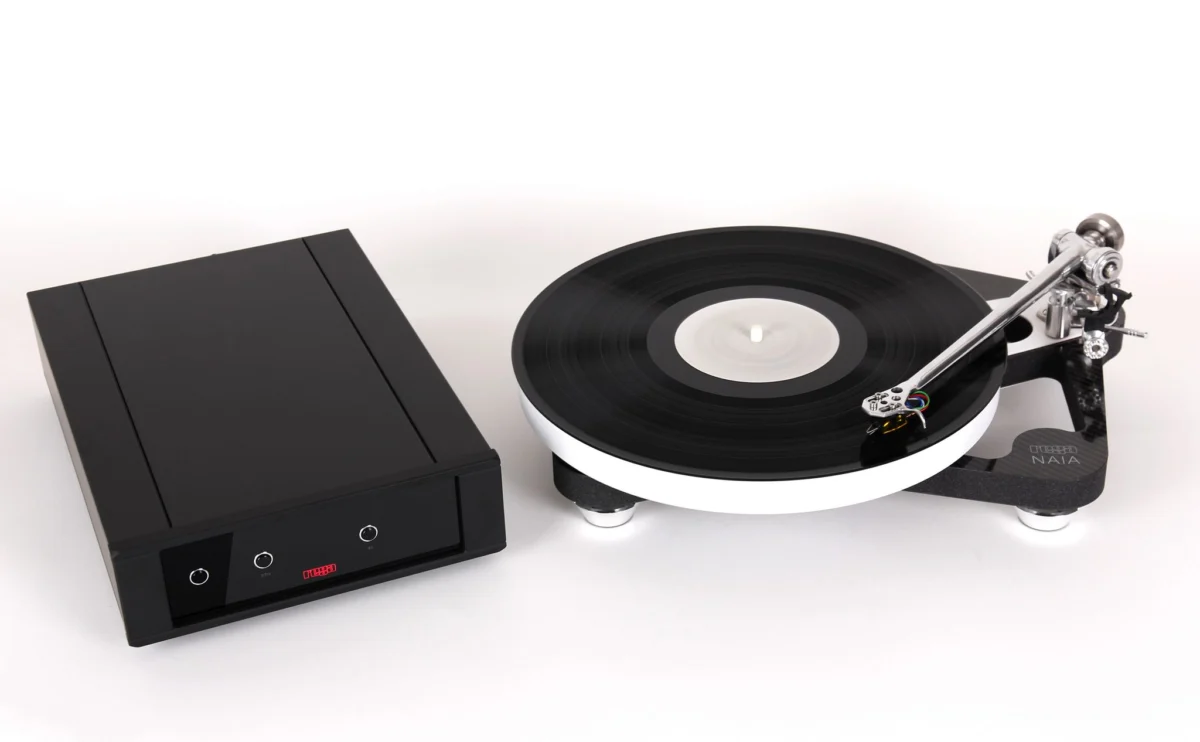
The high-end audio community has turned its collective gaze toward Rega’s latest crown jewel: the Rega Naia turntable, paired with the matching Aphelion 2 moving-coil (MC) cartridge. Arriving at a retail price of approximately $19,000 for the turntable alone—with the total package crossing higher when paired with the factory-mounted cartridge—the Naia sits firmly in the ultra-high-end tier of analog playback equipment.
However, unlike many ultra-tier turntables that require an engineering degree, tedious calibration, and constant maintenance, the Rega Naia challenges industry norms by offering a "fiddliness factor of zero." Reviewers note that buyers can unbox the unit, set the tracking force, and immediately begin spinning records without wrestling with complex suspension tuning, outboard motor pods, or labyrinthine tonearm adjustments.
The Naia builds upon the legacy of Rega’s limited-edition, proof-of-concept Naiad turntable, translating decades of research and development into a commercially available flagship. While its minimalist aesthetic shares visual DNA with the critically acclaimed Rega Planar 8 and Planar 10 models, every single molecule, material, and component of the Naia has been meticulously refined beyond anything the British manufacturer has previously attempted.
For audiophiles considering the investment, the package includes the Aphelion 2 MC cartridge—an acoustic leap forward from Rega’s previous top-tier Apheta 3. While buyers can purchase the Naia unequipped and save roughly $4,000, early impressions strongly advise against splitting up the pairing, citing the symbiotic engineering relationship between the turntable and the factory-installed transducer.
Chronology
To understand the magnitude of the Rega Naia’s market arrival, one must look back nearly two decades through the timeline of analog innovation:
- Mid-2000s (The Genesis): Rega founder Roy Gandy conceptualizes an uncompromising, ultra-lightweight, ultra-rigid turntable design. Early prototypes of what would become the legendary Naiad hang on the wall of Gandy’s listening room, serving as a physical manifestation of theoretical physics applied to vinyl playback.
- The Decade of Trickle-Down Engineering: Over the next fifteen years, Rega systematically distills the radical engineering breakthroughs of the Naiad project into more accessible commercial products, culminating in the development of the Planar 8 and Planar 10 turntables.
- The Limited Edition Naiad Era: Rega produces an extremely limited, ultra-exclusive run of the hand-built Naiad turntables, putting a price tag on them that places them out of reach for all but the most affluent collectors, cementing its status as an audio unicorn.
- Present Day (The Naia Release): Through refined manufacturing processes and optimized material science, Rega successfully bridges the gap between the ultra-exclusive Naiad and real-world high-end accessibility. The Naia arrives at review desks globally via distributors like The Sound Organisation, kicking off a heavily anticipated two-week evaluation period that precedes a comprehensive, full-length review.
Supporting Data and Technical Architecture
At a $19,000 price point, prospective buyers frequently question the value proposition compared to traditional heavy-mass turntables that routinely command $50,000 or more. The answer lies in Rega’s philosophy of low-mass, high-rigidity engineering, which stands in stark contrast to the massive, vibration-draining plinths favored by many competitors.
Material Science and Plinth Construction
The Naia features an advanced graphene-impregnated, carbon-fiber skeletal plinth. This material combination yields an astonishingly high strength-to-weight ratio. Traditional high-end turntables rely on sheer mass to absorb vibrational energy, which Rega argues also stores energy and smears transient responses. By making the plinth as light and rigid as possible, unwanted vibrational energy is prevented from being stored and fed back into the stylus.
The RBolla Tonearm and Ceramic Sub-Platter
Equipped with a custom-engineered titanium vertical bearing assembly and a zero-tolerance vertical spindle, the Naia’s tonearm structure represents a masterclass in mechanical execution. Every pivot, tolerance, and internal wire is scrutinized to eliminate friction and resonance.
The Aphelion 2 MC Cartridge
The matching Aphelion 2 moving-coil cartridge is more than just an accessory; it is the vital final link in the Naia ecosystem. Compared to the preceding Apheta 3, the Aphelion 2 delivers significantly more refinement, a fuller tonal body, and a wider sheer dynamic range. Its hand-wound micro-coils and boron cantilever track record grooves with surgical precision, extracting microscopic details from vinyl without introducing listener fatigue.
Official Responses and Industry Reception
Industry analysts, early reviewers, and distributors have responded to the Rega Naia with overwhelming enthusiasm, noting that it disrupts traditional expectations of what a flagship analog source should look, cost, and act like.
"Think of it as a $50,000 table that you don’t need to fuss with—ever," notes initial feedback from testing notes. The sentiment highlights a pervasive industry pain point: ultra-high-end audio gear often demands an exhausting maintenance cycle. Rega’s ability to bypass this tax on the user’s time has been universally praised.
The United States distribution partner, The Sound Organisation, has played a pivotal role in getting review samples into the hands of key publications. Representatives have emphasized that the Naia is not merely an incremental update to the P10, but a ground-up reimagining of how high-end performance can be achieved without sacrificing domestic harmony or ease of use.
Furthermore, industry veterans have expressed profound respect for Roy Gandy’s long-term vision. Having witnessed the original Naiad prototype hanging on a wall twenty years ago, long-standing audio journalists view the commercial realization of the Naia as a monumental milestone in British audio history.
Implications
The arrival of the Rega Naia carries several significant implications for the audiophile marketplace, equipment manufacturers, and vinyl enthusiasts alike.
1. The Redefinition of High-End Convenience
For decades, the high-end audio market has operated under an unwritten rule: the better the sound, the more difficult the setup and maintenance. Turntables costing upwards of $20,000 typically demand professional installation, meticulous leveling, constant belt adjustments, and finicky suspension tweaking. The Naia shatters this paradigm. By proving that elite, reference-grade analog playback can be truly plug-and-play, Rega is raising consumer expectations. Buyers paying luxury prices will increasingly demand plug-and-play reliability rather than tolerating perpetual maintenance.
2. The Stealth Upgrade Factor
With its visual silhouette closely mimicking the much smaller and more affordable Planar 8 and Planar 10 models, the Naia introduces an amusing domestic implication: the "stealth upgrade." For audiophiles sharing living spaces with partners who monitor audio expenditures closely, the Naia offers an aesthetic camouflage. While it represents a massive financial investment, its unassuming footprint allows it to slip past casual observers, weaponizing feigned ignorance as a tool for domestic tranquility.
3. Market Disruption in the Ultra-Tier
At $19,000 (plus cartridge), the Naia undercuts many heavyweight competitors that easily eclipse $40,000 to $60,000. By delivering performance that rivals—and in many areas surpasses—these ultra-costly legacy designs while eliminating the need for expensive after-market isolation platforms and motor controllers, Rega has redefined what constitutes value at the absolute pinnacle of vinyl playback.
As the full-length reviews roll out and awards season approaches, the Rega Naia is widely anticipated to sweep accolades across the audio journalism landscape, cementing its place as a modern classic of analog engineering.