Introduction: The Traditional Route to Home Cinema
Canadian audio specialist Paradigm is a household name for many home cinema enthusiasts, particularly those deeply embedded in the custom-installation market. Famed for its expansive array of discrete in-wall and in-ceiling speakers designed to blend seamlessly into high-end living spaces, the brand’s engineering prowess is well-documented.
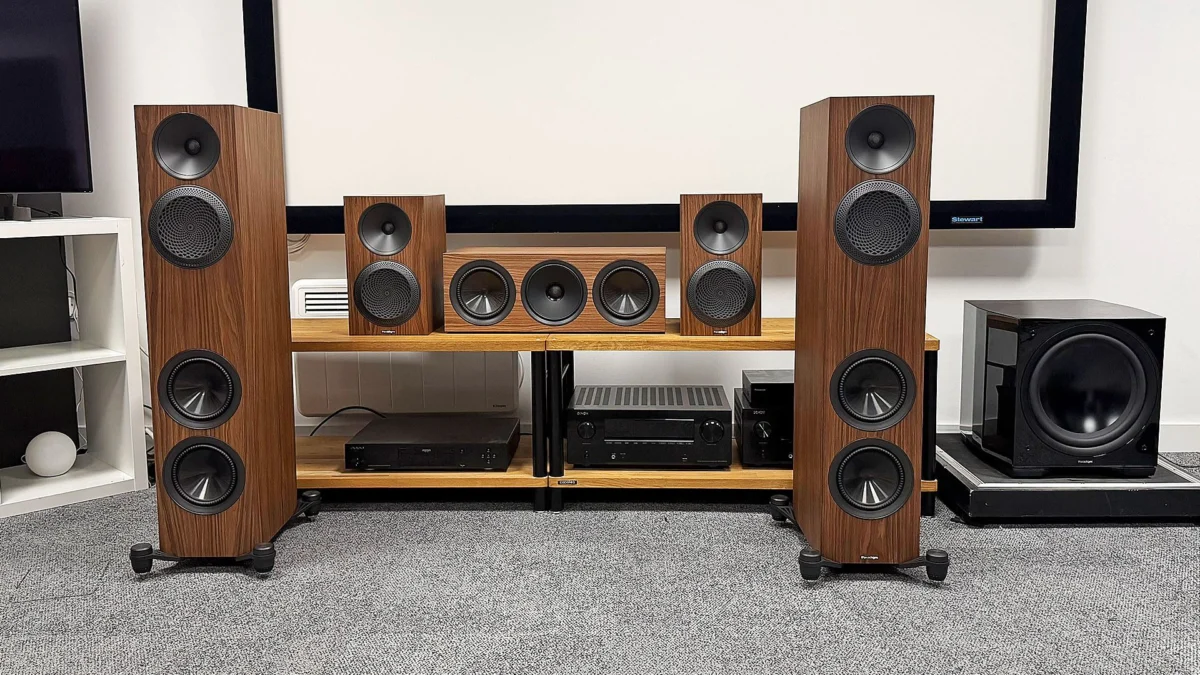
However, testing room limitations mean architectural hacksaws are off the table for traditional reviewers. Instead, attention turns to Paradigm’s traditional standalone speaker lineup: the newly updated Premier v2 range. This 5.1 surround-sound package eschews hidden in-wall installations for a conventional setup. It pairs stately floorstanding towers with robust standmounts, delivering a traditional multi-channel experience that can be integrated into any listening room—provided floor space is not at a premium.
With a name carrying the cinematic weight of “Premier,” these speakers aim for the red carpet, promising to handle blockbuster soundtracks in their stride. Yet, the mid-tier surround sound market has become fiercely competitive. Recent five-star offerings from heavyweights like Dali, KEF, and Wharfedale have significantly raised the stakes. Can Paradigm’s Premier v2 package keep pace with the industry’s finest, or does its assertive nature leave it trailing behind?
Pricing and Market Positioning
Because UK retailers do not currently offer the Premier v2 as a bundled, all-in-one kit, enthusiasts must purchase the components separately to construct a matching 5.1 layout.
For the exact configuration tested, buyers will need:
- Front Channels: Paradigm Premier 720F v2 floorstanders (£2,499 / pair)
- Surround Channels: Paradigm Premier 220B v2 standmount speakers (£1,299 / pair)
- Centre Channel: Paradigm Premier 520 LCR v2 (£999)
- Subwoofer: Paradigm Defiance S12 (£1,850)
This brings the total UK system cost to £6,647.
In the United States, individual component pricing dictates a total package cost of $5,600:
- Premier 720F v2: $1,000 each ($2,000 / pair)
- Premier 220B v2: $550 each ($1,100 / pair)
- Premier 520 LCR v2: $900
- Defiance S12 Subwoofer: $1,600
Australian consumers face a similarly structured regional rollout, with the 720F v2 floorstanders priced at AU$3,799 a pair, the 220B v2 standmounts at AU$1,999 a pair, the 520 LCR v2 centre at AU$1,599, and the Defiance S12 subwoofer commanding AU$2,999, bringing the total to AU$10,396.
Occupying a fascinating middle ground, the Premier v2 package slots squarely between two major Award-winning systems: the premium KEF R Meta 5.1 (£10,499 / $13,200 / AU$19,400) and the more accessible Dali Sonik 5 5.1 (£2,199 / $4,800 / AU$4,596). To be deemed a commercial success, the Paradigm setup must comfortably outclass the Dali. While unseating the KEF would represent an extraordinary upset, the substantial price gap makes that a secondary battle.
Design and Build Quality: Industrial Elegance
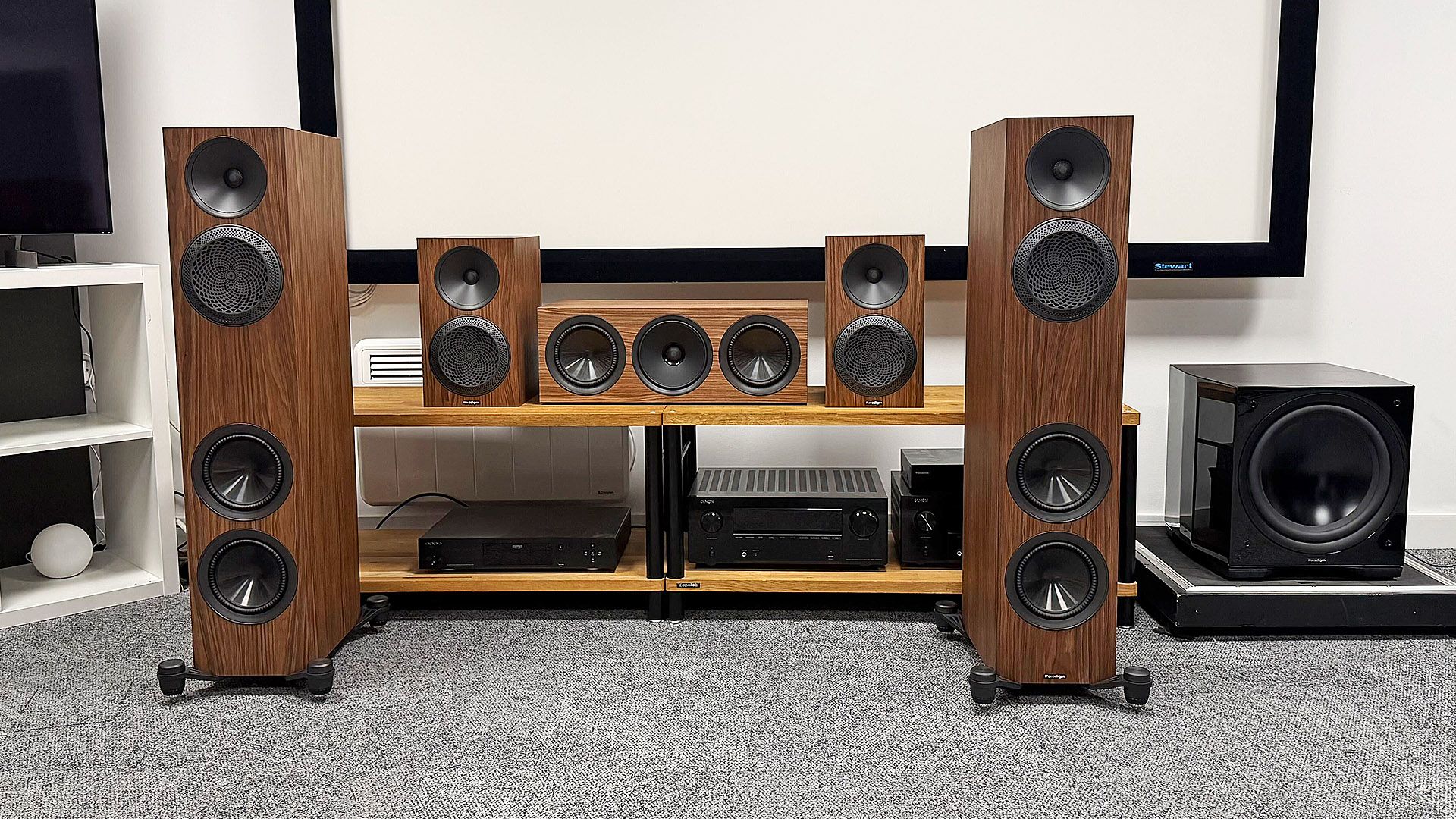
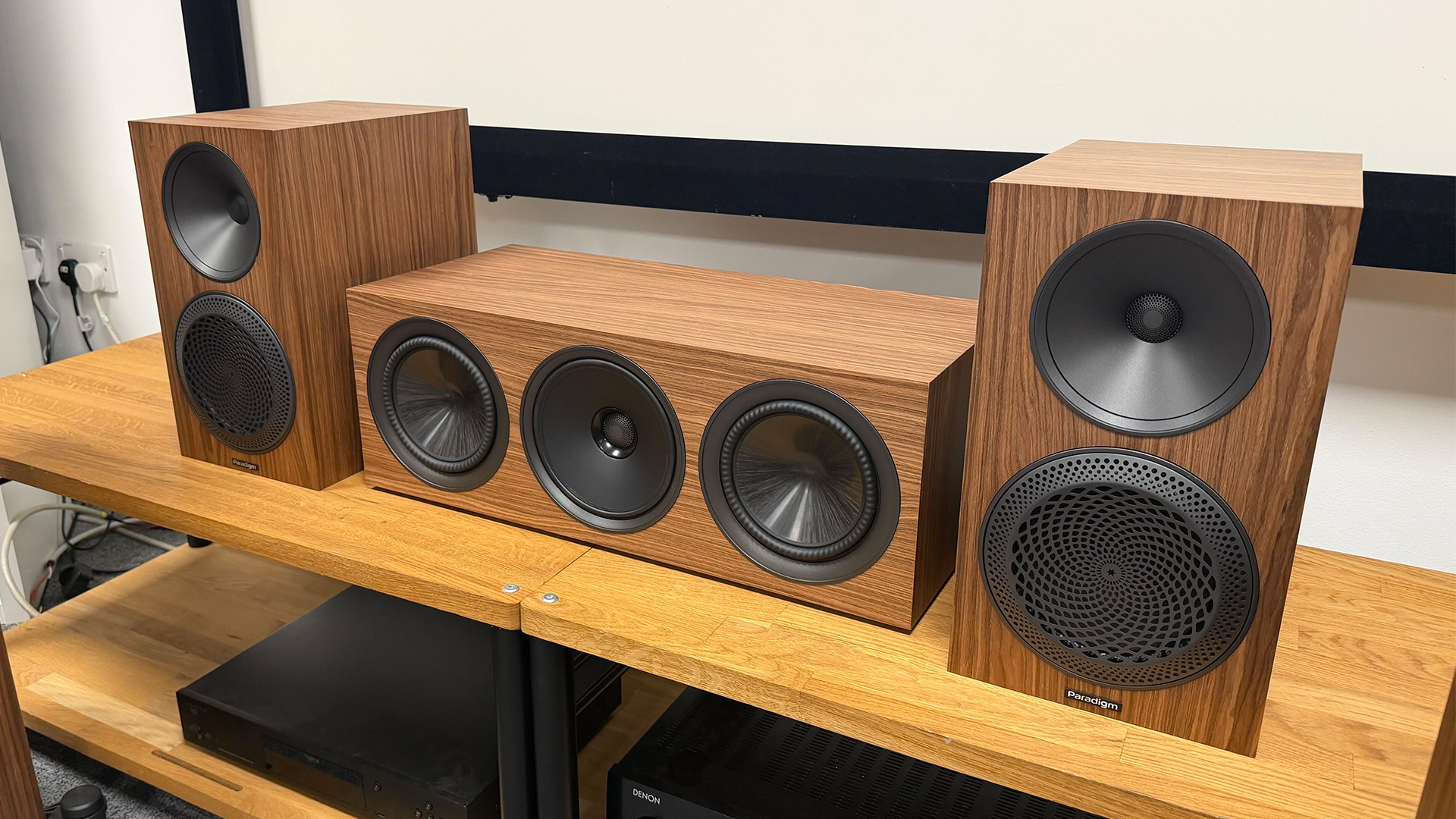
If there is one area where Paradigm achieves an unmitigated success, it is in the industrial design and aesthetic execution of the Premier v2 range. This is an eye-catching, robustly assembled collection of speakers that oozes premium appeal, ensuring it will look stylish in dedicated home cinemas and modern living rooms alike.
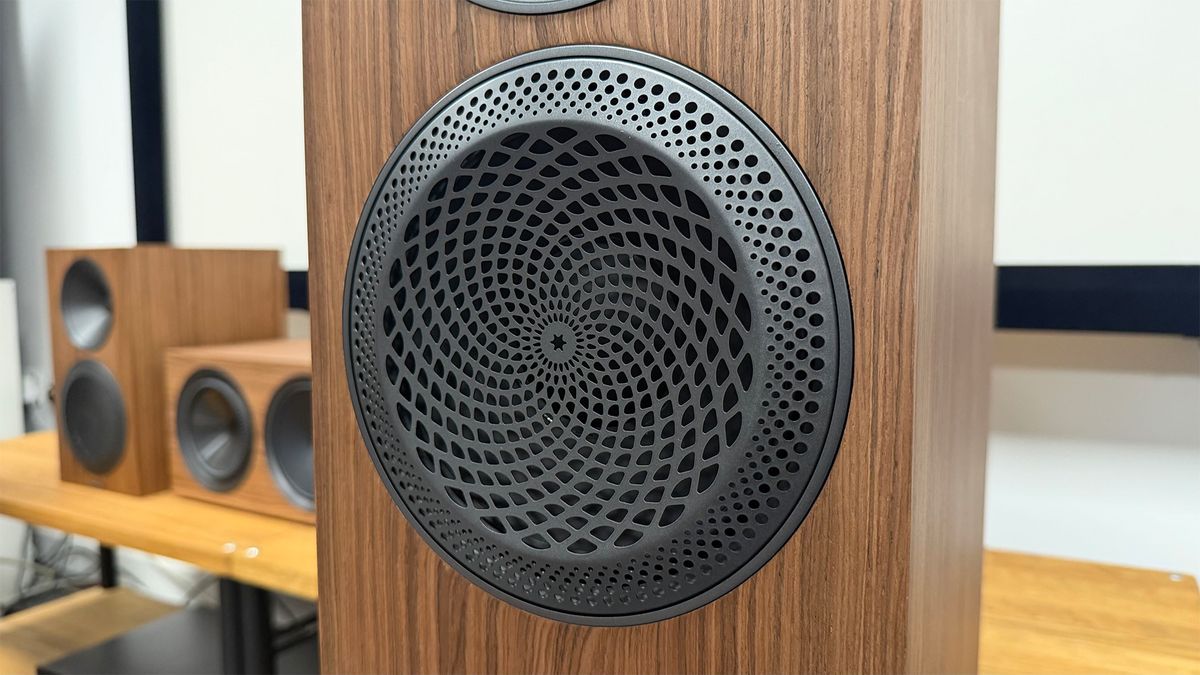
A cohesive design language flows seamlessly across every component in the lineup. The most striking visual element is the distinct spiral-patterned grille—a signature aesthetic motif featured across multiple generations of Paradigm loudspeakers.
Particularly noteworthy are the protruding industrial feet extending from the bottom corners of the 720F v2 floorstanders. Dubbed "Outrigger Shock-Mount Isolation Feet," these functional additions grant the towers a distinct visual identity while mechanically decoupling the speaker cabinets from the floor to suppress unwanted structural vibrations.
Dimensional Breakdown:
- Premier 720F v2 Floorstanders: Three-way, rear-ported towers measuring 100 x 32 x 43 cm (HWD) and weighing 26 kg each. They are broadly comparable in scale to KEF’s R7 Meta speakers, though noticeably lighter.
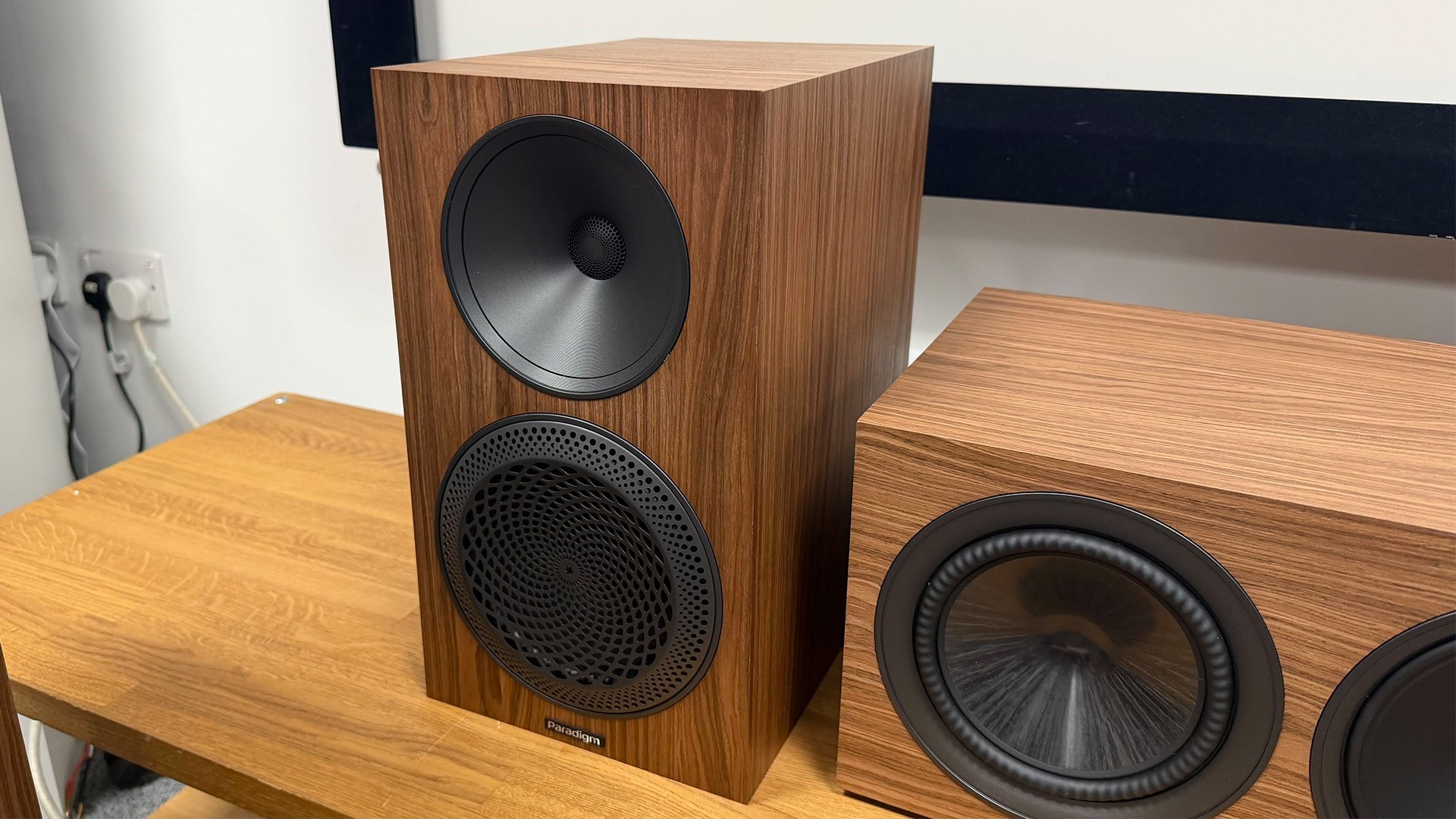
- Premier 220B v2 Standmounts: Substantial two-way ported surround speakers measuring 37 x 21 x 33 cm (HWD) and tipping the scales at 9.1 kg each. These require sturdy stands, as they lack integrated keyhole brackets for wall mounting.
- Premier 520 LCR v2 Centre: A three-way sealed centre-channel speaker measuring 21 x 59 x 31 cm (HWD) and weighing 14 kg. It fits comfortably beneath wall-mounted displays or projection screens, though accommodating its depth in traditional media furniture may prove challenging.
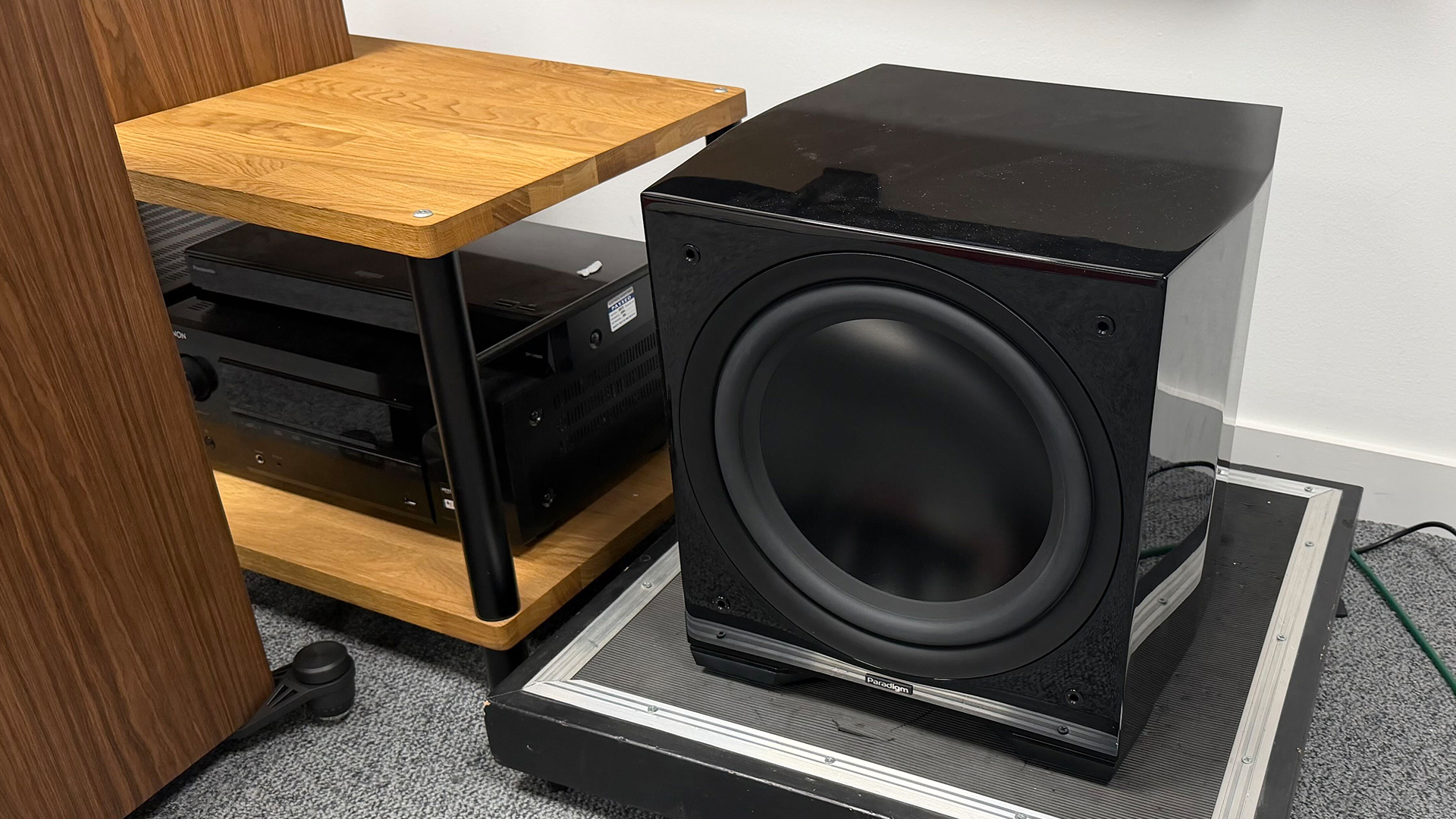
- Defiance S12 Subwoofer: A heavy-duty active sub measuring 38 x 40 x 43 cm (HWD) and weighing 24 kg, making it physically more imposing than alternatives like the KEF KC92.
Review samples arrived in an attractive Walnut finish, though buyers can also choose from Piano Black, Black Walnut, and Satin White. The Defiance S12 subwoofer, however, is available strictly in Gloss Black.
Proprietary Technology and Features
Underneath their sleek exteriors, the Premier v2 speakers are packed with proprietary driver technologies designed to optimize acoustic performance.
Both the 720F v2 floorstanders and 220B v2 standmounts utilize a 25mm AL-MAC Ceramic Dome tweeter coupled with a heavily dished waveguide. The "AL-MAC" designation refers to a rigid, ultra-lightweight composite compound of aluminum, magnesium, and ceramic formulated to ensure stable, lifelike high-frequency output. The surrounding waveguide precisely focuses high-frequency dispersion toward the primary listening position while minimizing undesirable room reflections.
The 520 LCR v2 centre channel modifies this formula by integrating the same tweeter coaxially within a 15.2cm AL-MAG midrange cone. This is backed by a 50mm high-temperature multilayered voice coil wound around an Apical (polyamide plastic film) former, engineered to withstand intense thermal stress without structural deformation.
On the front and surround speakers, the matching midrange driver sits behind a Perforated Phase-Aligning (PPA) Lens. This spiral-patterned acoustic filter ensures that soundwaves across various frequencies reach the listener’s ears simultaneously, fostering a more coherent soundstage while physically blocking out-of-phase signals.
Low frequencies are handled by 15.2cm CARBON-X Unibody Cone bass drivers featured on the floorstanders and the centre channel. Built for maximum rigidity and minimal mass, these cones deliver deep, authoritative bass even under high output levels. Furthermore, the front, surround, and centre speakers are fully bi-wireable.
The Subwoofer: Defiance S12
Anchoring the lower registers, the Defiance S12 subwoofer features a 30.5cm anodized aluminum cone housed within a rigid steel chassis. Driven by an 800W Class D amplifier, Paradigm claims a frequency response descending to an earth-shattering 16Hz.
Crucially, the S12 supports Paradigm’s proprietary ARC Genesis room correction software (shared with Anthem AVRs). While the calibration microphone and software are sold separately and require a Mac or PC to run, it allows the subwoofer to be independently calibrated to the acoustic quirks of the listening room.
Connectivity options are exhaustive. The S12 includes balanced XLR inputs, speaker-level connections, and standard RCA phono inputs for traditional hi-fi integration, alongside an LFE RCA input for AV receivers. Unusually, Paradigm includes a wireless transmitter bundled in the box for cable-free subwoofer placement.
Sound Quality Evaluation
An extensive spec sheet counts for little if the real-world delivery falters. To test its limits, the system was paired with a reference Denon AVC-A1H home cinema amplifier utilizing Audyssey XT32 room correction, fed by an Oppo UDP-230 4K Blu-ray player.
Cinematic Spectacle and Strengths
Evaluating the system with F1: The Movie, the Premier v2 package immediately showcases its considerable strengths: a massive, expansive, and high-impact soundstage. Engine roars, booming announcements, and screeching tires burst forth with thrilling muscularity.
This is underpinned by a high level of micro-detail; the system extracts subtle audio cues from the mix with ease. Dialogue through the centre channel remains clear and direct. During tense conversational exchanges in Sinners, character voices cut cleanly through the soundscape, ensuring no spoken word is lost.
Furthermore, the soundstage demonstrates impressive cohesion. The surround channels blend seamlessly with the front soundstage, creating a convincing three-dimensional audio bubble. Surprisingly, dispersion is wide enough to simulate overhead immersion even in the absence of dedicated height channels.
The standout performer, however, is the Defiance S12 subwoofer. During the punishing chapter two sequence of Blade Runner 2049, the sub pumps out rich, deep, and impeccably controlled bass. It digs into sub-audible frequencies without a hint of distortion, maintaining precise timing that ratchets up cinematic tension.
The Catch: Finesse and Natural Warmth Missing
Despite its immense power, the Premier v2 system leans too heavily into an aggressive, broad-shouldered sonic profile, ultimately neglecting delicate nuances.
Low-level dynamics present an immediate hurdle. Vocals frequently lack emotional expression and nuance. The hushed, emotionally charged dialogue in Sinners can sound overly projected and stern rather than vulnerable and intimate. Key emotional lines—such as Stack’s vulnerable confession ("that I love you? That I think about you every day?")—are rendered with an icy clarity rather than heartfelt warmth.
This flattening of vocal inflection strips characters of their natural warmth. Sarcastic or playful one-liners, such as Yelena’s dialogue in Thunderbolts™, can sound dry rather than witty, with voices occasionally piercing through action scenes with unnatural harshness.
Extended listening sessions reveal an overbearing, insistent nature. Whether tackling bombastic action set-pieces or quiet, dialogue-driven sequences, a persistent hardness characterizes the upper registers.
This sonic signature carries over into stereo music performance via the floorstanders alone. While rich in bass and clarity, Phoebe Bridgers’ softly sung Saviour Complex feels jarringly aggressive. More bombastic recordings, such as Kiss The Ring from Hans Zimmer’s Dune: Part Two soundtrack, fare better under the system’s muscular presentation, but overall, subtlety takes a back seat to brute force.
Verdict
Paradigm’s Premier v2 5.1 speaker package is a masterclass in industrial design, engineering depth, and physical build quality. It boasts an exceptional subwoofer and uncovers an impressive wealth of fine detail in complex soundtracks.
However, its relentless, overly assertive personality ultimately undermines its versatility. While it excels at delivering raw cinematic spectacle, home cinema enthusiasts seeking emotional nuance, natural vocal warmth, and sophisticated finesse will find that power needs a softer touch to achieve true cinematic immersion.
Pros:
- Exceptional build quality and striking industrial design.
- Big, spacious, and highly detailed soundstage.
- Superb, deep, and well-controlled bass from the Defiance S12 subwoofer.
- Advanced proprietary driver technology and ARC Genesis room correction support.
Cons:
- Lacks natural warmth and emotional nuance in dialogue.
- Upper registers can sound harsh and overbearing during extended listening.
- Standmount surround speakers lack integrated wall-mounting brackets.