By Jeff Dorgay
Main Facts
The high-end audio landscape has long been defined by a constant tension between historical reverence and technological progress. Nowhere is this truer than in the legacy of Quad Electroacoustics, a brand whose foundational electrostatic loudspeakers—most notably the historic ESL-57 and the subsequent ESL-63—set absolute benchmarks for midrange purity, phase coherence, and transparency.
However, traditional electrostatic designs have historically carried an infamous caveat: they were delicate, prone to arcing when pushed with high power, dynamically constrained at frequency extremes, and notoriously "polite" when asked to reproduce the visceral impact of modern rock, electronica, or large-scale orchestral works.
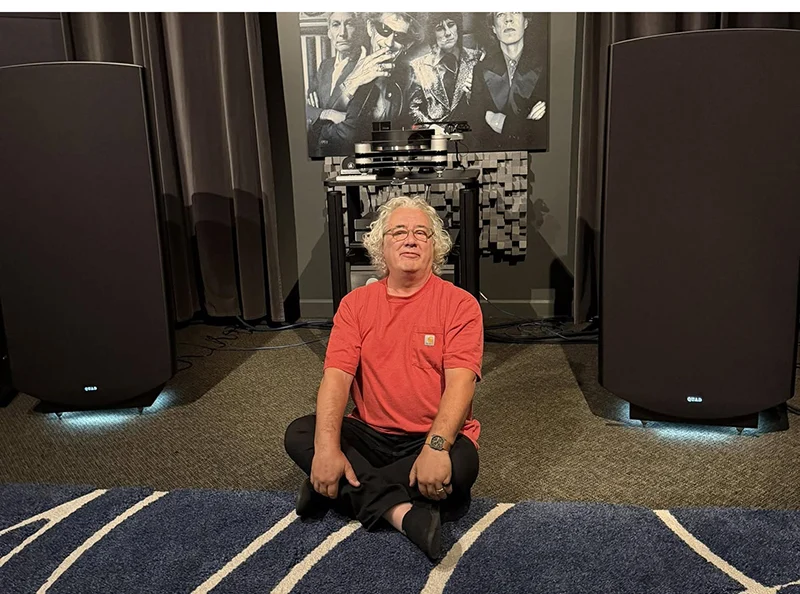
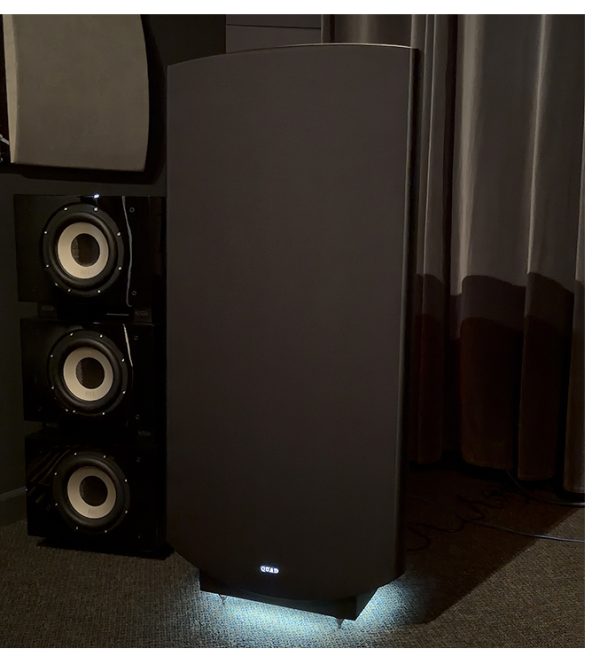
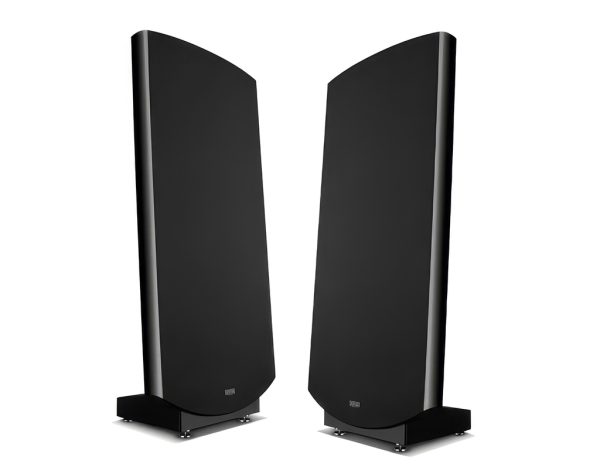
Enter the new Quad ESL-2912X, retailing at approximately $18,000 per pair and distributed via MoFi Distribution. During an exclusive post-show listening session at Upscale Audio, the new flagship panels were put through their paces. Paired with the formidable Musical Fidelity M8XI integrated amplifier (courtesy of Harmonia Distribution) and framed by a large portrait of the Rolling Stones, the 2912X demonstrated that Quad’s legendary electrostatic design has evolved.
The speakers successfully retain the ethereal, hyper-transparent midrange magic of the original 1957 model while dramatically expanding frequency extension at both ends, boosting dynamic headroom, and—crucially—allowing listeners to enjoy high-energy tracks like Keith Richards’ "Wicked as it Seems" at robust, room-filling volumes without fear of thermal or electrical distress.
Chronology
The Evolution of an Icon: From 1957 to the Modern Era
- 1957: Quad introduces the ESL-57, the world’s first commercially viable full-range electrostatic loudspeaker. It stuns the audio engineering community with its unprecedented low distortion and utter lack of box coloration, instantly becoming a reference standard for acoustic and vocal reproduction.
- 1963–1980s: Quad develops the ESL-63, introducing concentric annular electrodes to simulate a point source and correct the beaming issues of earlier designs, further cementing the "Quad sound" in the collective memory of audiophiles worldwide.
- The Intervening Decades: Successive iterations refined the technology, yet the fundamental limitations remained: enthusiasts understood that while Quads offered peerless midrange realism, they required careful matching with low-powered, often fragile tube amplifiers and could easily be damaged by high-current solid-state designs.
- The 2026 Upscale Audio Demonstration: Following the close of a major high-end audio event at Upscale Audio, a private listening window opened for an extended evaluation of the new Quad ESL-2912X. Over the course of an hour, a rotating series of reference tracks—spanning acoustic recordings, intricate vocal arrangements, and high-octane rock—pushed the speakers past traditional electrostatic boundaries.
- Current Status: With review pairs inbound to testing facilities, the ESL-2912X is poised to redefine consumer expectations of what a large-scale electrostatic panel can achieve when driven by modern, high-current amplification.
Supporting Data & Technical Analysis
Evaluating an electrostatic loudspeaker requires understanding the delicate physics of thin-film membranes suspended between charged stator plates. Traditional boxes rely on dynamic drivers moving air via voice coils and magnetic gaps, introducing structural resonances and cabinet colorations. Electrostatics distribute the driving force evenly across the entire surface area of the diaphragm, yielding exceptional impulse response and a near-total absence of stored energy.
Performance Metrics & Acoustic Observations
- The Midrange Magic: The ESL-2912X retains roughly 92% of the original ESL-57’s uncanny tonal purity. Vocals hang in free space with a three-dimensional palpability that conventional dynamic box speakers simply cannot replicate.
- Extension and Dynamics: Unlike their predecessors, which rolled off early in the sub-bass and high-frequency regions, the 2912X units exhibit substantially greater extension at both extremes. Dynamic swing is markedly improved, allowing micro-and macro-dynamics to breathe without compression.
- Transparency Benchmarks: When compared against other major planar and electrostatic competitors, the Quads occupy a unique space. They possess a level of tonal purity unattainable by MartinLogan hybrid designs (which integrate dynamic woofers with electrostatic panels) and a transparency that Magnepan magnetic planars do not approach in the critical upper-midrange transitions.
- System Synergy and Amplification:
- The Paradigm Shift: Driving early Quads with high power was a recipe for fried panels. The ESL-2912X, however, thrives on current and high damping factors.
- Amplifier Pairing: While driving legacy panels with ultra-high-end gear—such as the mighty Pass XS300 monoblocks—yielded glorious results, the Musical Fidelity M8XI integrated amplifier ($7,999) proves to be a vastly more practical, real-world solution. It provides the muscle, bass grip, and control necessary to make the big Quads "rock."
- System Economics: Pairing the ESL-2912X with a robust integrated amplifier and a high-end analog front-end (totaling roughly $5,000 to $10,000 in source gear) yields a reference-grade system comparable in total investment to a Certified Pre-Owned BMW 3-Series.
Official Responses & Industry Perspectives
The reception of the Quad ESL-2912X within high-end audio circles highlights a growing appreciation for components that honor classical acoustic principles while leveraging contemporary engineering to eliminate historical weaknesses.
Industry insiders and veteran reviewers have noted that the market has long been divided between two camps: those willing to sacrifice dynamic scale and low-end authority for the midrange purity of electrostatics, and those who prioritize slam and output levels at the expense of harmonic distortion and cabinet coloration.
According to preliminary evaluations from extended listening sessions:
"If you’ve never heard the originals, you might just think these are one of the most incredible speakers ever made. Oddly enough, after experiencing the originals, chances are high you will still think the same thing, as here’s the Quad sound you know and love, but oh so much more of it…"
Furthermore, distributors and retail partners like Upscale Audio and Harmonia Distribution emphasize that modern component matching has transformed the usability of electrostatic loudspeakers. By removing the historical fear of amplifier clipping and panel arcing, manufacturers are opening up electrostatic technology to a broader demographic of music lovers—including those whose listening tastes extend far beyond chamber music and audiophile vocal test discs.
Implications
The introduction and validation of the Quad ESL-2912X carry several profound implications for the high-end audio market:
1. The Redefinition of Electrostatic Versatility
For decades, owning a pair of full-range electrostatic speakers meant accepting a lifestyle compromise. Listeners had to curate their music libraries, avoid complex bass-heavy passages at elevated volumes, and carefully vet every amplifier that touched the system. The 2912X signals a maturation of the technology. By successfully handling high-current solid-state amplification and delivering substantial bass grip alongside dynamic slam, Quad has effectively removed the "glass jaw" stigma from full-range electrostatics.
2. A Direct Challenge to High-End Box Speakers
At an approximate price point of $18,000 per pair, the ESL-2912X enters a fiercely competitive bracket traditionally dominated by massive, multi-driver dynamic floorstanders housed in heavily braced wooden enclosures. While dynamic speakers often boast immense output capabilities and deep sub-bass subterranean reach, they frequently struggle with cabinet resonance and driver integration issues. The Quads offer a level of detail retrieval, transient speed, and lack of coloration that makes similarly priced box speakers sound sluggish by comparison. Now that the Quads "rock," the traditional argument that box speakers are mandatory for modern genres falls flat.
3. Economic Accessibility of Reference Sound
While an $18,000 loudspeaker is undeniably a luxury investment, the ecosystem required to make it sing is surprisingly pragmatic. As demonstrated by its synergy with the Musical Fidelity M8XI, the ESL-2912X does not strictly demand exotic six-figure monoblocks to perform at an elite level. This allows audiophiles to assemble a world-class, uncompromising analog or digital front-end and speaker chain for the price of a modest luxury automobile—offering a return on emotional investment that far outweighs conventional consumer goods.
As long-term evaluation pairs make their way into critical listening rooms, the Quad ESL-2912X stands ready to convert a new generation of listeners to the electrostatic gospel, proving that true sonic magic only improves with time, engineering refinement, and a little bit of rock-and-roll attitude.