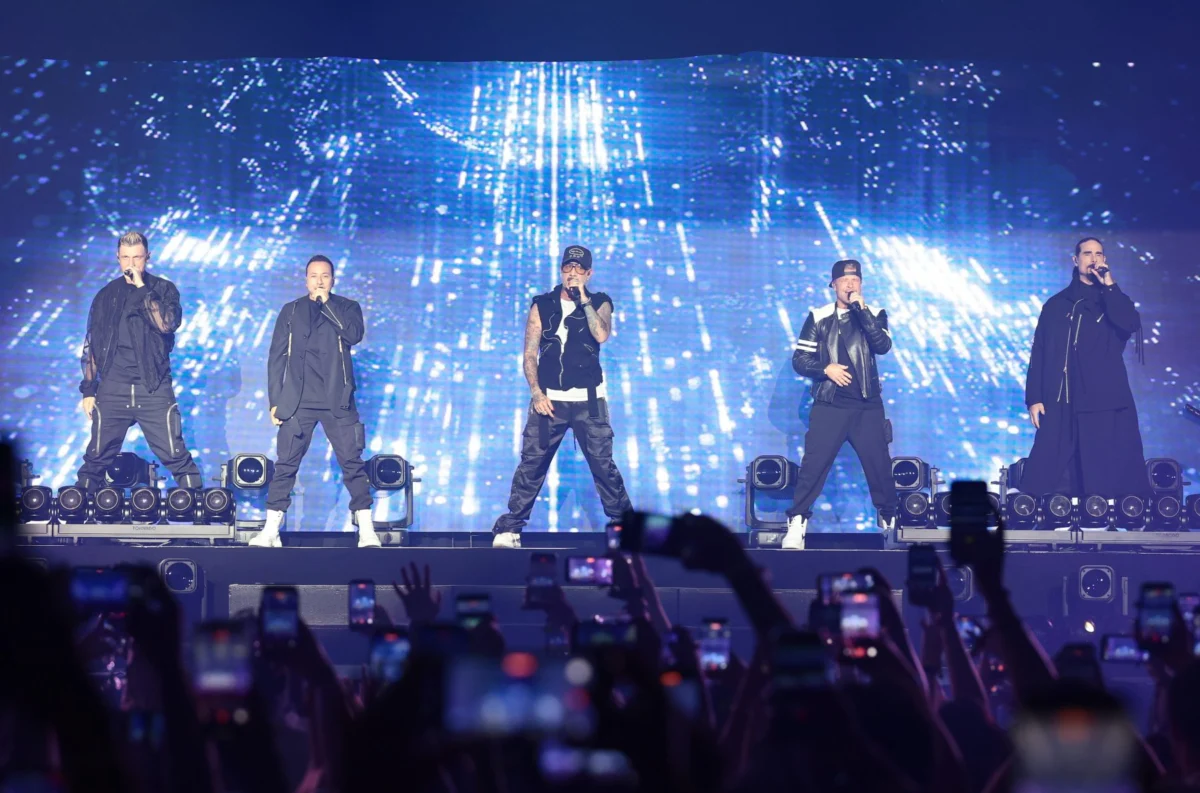
In an era where technology can replicate the human spirit with alarming precision, the music industry’s most recognizable voices are taking an unconventional stand. The Backstreet Boys, one of the best-selling boy bands in history, have officially joined the ranks of high-profile artists seeking to protect their sonic identity through federal trademark law.
The move, filed with the U.S. Patent and Trademark Office (USPTO) on June 24, centers on an audio registration for the band’s signature phrase, “Hi, we’re the Backstreet Boys.” While trademarking a sound—a category historically reserved for corporate jingles or iconic brand noises—is a complex legal gambit, it underscores the growing desperation of artists facing an existential threat: AI-powered voice cloning and the proliferation of hyper-realistic deepfakes.
The Chronology of a Digital Arms Race
The legal landscape regarding AI and intellectual property has shifted rapidly over the last twelve months. As generative AI models become more sophisticated, the ability to mimic a specific artist’s vocal cadence, tone, and inflection has become accessible to anyone with a subscription to an AI-powered voice generator.
- April 2026: Taylor Swift initiates a trend by filing for a trademark registration on her voice saying, “Hey, it’s Taylor.” This move signaled a pivot from traditional copyright protections to the broader, more aggressive scope of trademark law.
- Early June 2026: Lionel Richie follows suit, filing a trademark application for the sound of his voice, specifically the iconic lyric: “Hello, is it me you’re looking for?”
- June 24, 2026: The Backstreet Boys formally submit their application to the USPTO, citing an audio clip of the five members—Nick Carter, Howie Dorough, AJ McLean, Brian Littrell, and Kevin Richardson—speaking their group identity in unison.
- June 26, 2026: Legal experts and industry observers note that the filings highlight a lack of federal recourse, as existing "Right of Publicity" laws remain fractured across state lines.
The Failure of Existing Legal Frameworks
For decades, artists have relied on state-level “Right of Publicity” laws to prevent the unauthorized commercial use of their name, likeness, and voice. However, these statutes were designed for an era of physical impersonators and unauthorized endorsements, not for the instantaneous, scalable, and decentralized nature of generative AI.
The core issue is that current laws often require proving that a voice was used in a way that creates consumer confusion or implies an endorsement. AI-generated content, however, often exists in a grey area—fan-made "parodies" or "tributes" that mimic an artist’s voice perfectly without necessarily claiming to be that artist.
"The problem is that our current intellectual property framework assumes that a human is behind the creation," says an industry analyst. "AI breaks that assumption. When an algorithm can synthesize the specific frequency and resonance of a Backstreet Boy, it doesn’t violate copyright because the machine isn’t ‘copying’ a specific song—it is ‘learning’ a persona."
The Trademark Pivot: A Stopgap Measure
By pursuing trademarks on specific audio clips, artists are attempting to leverage the Lanham Act, which governs trademarks in the United States. A trademark is designed to prevent consumer confusion regarding the source of goods or services. By claiming their vocal catchphrases as a "mark," these artists are effectively arguing that their voice functions as a brand identifier.

However, legal scholars remain skeptical of the long-term efficacy of this approach. Trademark law protects specific symbols—like the NBC chime or the AFLAC duck—that denote the origin of a product. It does not provide a blanket protection over an individual’s entire vocal identity.
“It is a defensive maneuver, not a cure,” notes Josh Gerben, a trademark attorney who has been tracking these filings. “If the Backstreet Boys win this registration, it grants them a narrow monopoly over that specific audio clip. It does not necessarily stop a malicious actor from using an AI to make the band ‘say’ something else, provided they don’t use the specific, trademarked clip.”
The Legislative Horizon: The NO FAKES Act
While artists navigate the complexities of trademark law, the U.S. Congress is moving toward a more structural solution. The "NO FAKES Act" (Nurture Originals, Foster Art, and Keep Entertainment Safe) has gained significant momentum, recently clearing a key Congressional committee.
The bipartisan bill aims to establish a federal right against the unauthorized creation of digital replicas. If passed, it would provide a uniform standard across all 50 states, effectively outlawing the non-consensual use of an individual’s voice or likeness in digital media.
The coalition supporting the bill includes not just individual performers, but major record labels, talent agencies, and guilds. The proposed legislation would mandate that tech platforms—including social media sites and AI-hosting services—expedite the removal of deepfake content that violates these rights. For artists like the Backstreet Boys, this federal legislation is the ultimate goal, as it would provide a clearer path to litigation than the current, patchwork approach of trademarking individual phrases.
Implications for the Future of Music
The implications of this movement go far beyond the Backstreet Boys or Taylor Swift. We are witnessing the first wave of a massive, industry-wide reclassification of "identity" as an intellectual property asset.
1. The Commodification of Identity
If voices are successfully trademarked, it creates a precedent where an artist’s physical presence becomes a branded asset. This could fundamentally change licensing deals. Future record contracts might include specific clauses regarding the "trademarked vocal profile" of an artist, strictly limiting how that data can be fed into machine learning models.

2. The Burden of Proof
The burden of proof in trademark cases is notoriously high. The Backstreet Boys must demonstrate to the USPTO that their specific audio clip is not just a collection of words, but a distinct sound that consumers recognize as a source identifier for their music and merchandise. If they fail, it could signal to other artists that the "trademark route" is a dead end, forcing the industry to rely entirely on the outcome of the NO FAKES Act.
3. The Digital "Sound-Alike" Economy
The rise of AI has birthed a massive underground economy of "sound-alike" tracks, where AI tools are trained on specific vocal datasets to produce new music. These artists, often operating under aliases, are capitalizing on the "vibe" of 90s icons. By trademarking their signature sounds, stars are attempting to put a "No Trespassing" sign on their vocal likeness, hoping that the threat of trademark infringement litigation will deter platforms from hosting these unauthorized clones.
A Cultural Crossroads
The decision by a legacy act like the Backstreet Boys to engage with the intricacies of trademark law highlights how profoundly the digital revolution has altered the music business. The band, which has navigated the shifts from CDs to streaming and from radio to social media, now finds itself defending its most basic asset: the sound of its own members speaking.
Whether or not these trademarks are granted, the message from the artist community is clear: they are no longer willing to wait for the law to catch up with technology. By taking matters into their own hands—and into the courtrooms—they are forcing a necessary conversation about the definition of personhood in the age of generative AI.
As the legal battles unfold, the public remains the ultimate judge. Will consumers embrace AI-generated imitations, or will they continue to demand the authenticity of the human voice? For now, the Backstreet Boys and their contemporaries are ensuring that, at the very least, they have a legal stake in the argument. The digital arms race has officially moved from the recording studio to the halls of the U.S. Patent and Trademark Office, and it is clear that in the future of music, the most valuable instrument is the one that cannot be easily cloned.