
In a move that underscores the insatiable global hunger for artificial intelligence computing capacity, Crusoe—the data center developer once known for its unconventional roots in crypto mining—has officially entered the stratosphere of high-value tech unicorns. On Thursday, the company announced the closure of a $3.9 billion Series F funding round, vaulting its valuation to an eye-watering $30.9 billion.
This massive capital injection, co-led by Atreides Management, Mubadala Capital, and Valor Equity Partners, signals a pivotal shift in the AI hardware landscape. With participation from industry heavyweights including Nvidia, the Founders Fund, GIC, the Qatar Investment Authority (QIA), Radical Ventures, and TPG, Crusoe is no longer just a niche player; it is rapidly becoming a cornerstone of the world’s AI infrastructure.
A Pivot from Crypto to Compute: The Chronology of Crusoe
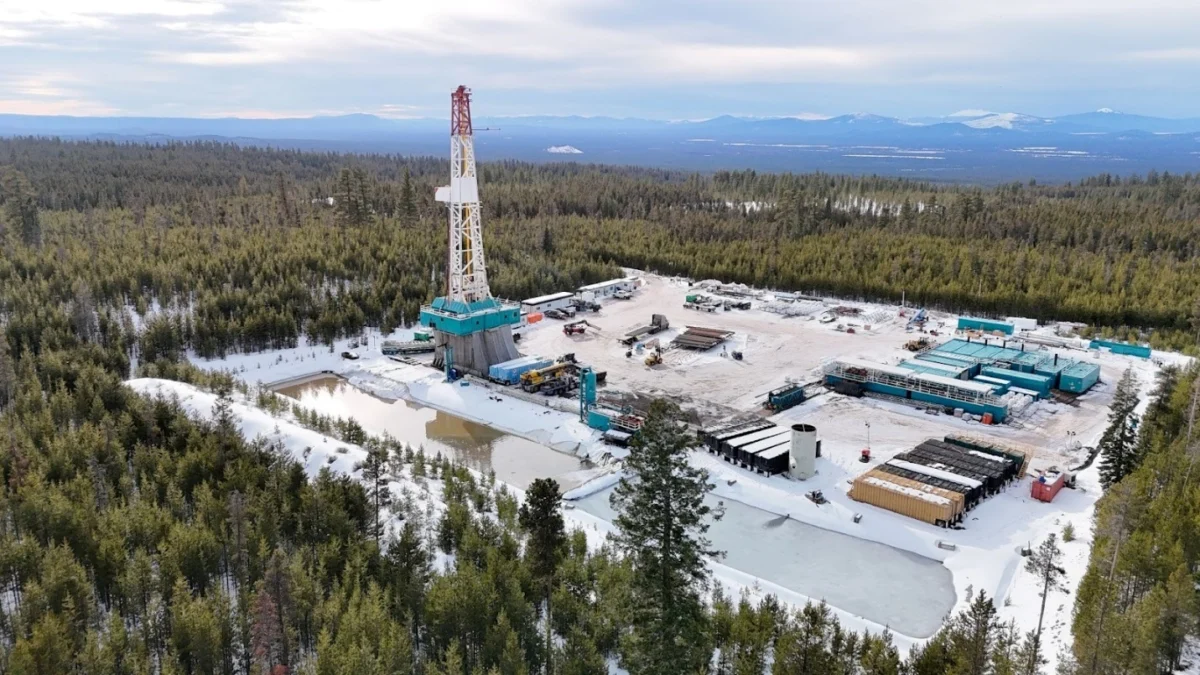
The trajectory of the eight-year-old company is a masterclass in strategic agility. Founded in 2018, Crusoe initially gained notoriety for a climate-conscious, highly specialized mission: capturing flared natural gas at oil drilling sites to power modular cryptocurrency mining operations. While the crypto sector provided a testing ground for portable, energy-efficient compute, the company’s leadership quickly recognized the seismic shift occurring in the broader technology sector.
As the demand for Large Language Models (LLMs) and generative AI began to skyrocket, Crusoe pivoted its focus from blockchain to the high-stakes world of AI infrastructure. By leveraging its expertise in deploying energy-efficient compute in remote or unconventional locations, the company successfully transitioned into a full-scale provider of AI cloud services.
The growth has been exponential. Just 10 months ago, in October, Crusoe secured $1.38 billion in a Series E round that pegged its valuation at $10 billion. The leap from $10 billion to $30.9 billion in less than a year serves as a stark metric of how quickly the market is pricing the "picks and shovels" of the AI revolution.
The Three-Pronged Business Model
Crusoe’s resilience and rapid growth are anchored in a diversified, three-pronged revenue strategy that shields it from the volatility of any single sector.
- Infrastructure Leasing: The company offers data center space to hyperscalers and enterprises that bring their own high-performance GPUs.
- GPU Rental: Crusoe maintains its own fleet of hardware, which it rents out to developers, startups, and research institutions.
- Inference-as-a-Service: The company sells direct compute power specifically tuned for running inference—the process by which trained AI models make predictions or generate content.
This model has attracted high-profile clients, including Meta, Microsoft, and Oracle. Furthermore, the company’s commercial momentum is evidenced by a recent landmark $13 billion, five-year cloud contract with quantitative trading giant Jane Street, which will see Crusoe supplying the firm with significant GPU and infrastructure capacity.
Infrastructure as a Competitive Advantage: The "Spark" Strategy
Beyond capital, Crusoe is attempting to solve one of the most pressing bottlenecks in the AI era: the time-to-market for data centers. Traditional data centers take years to permit, build, and connect to the grid.
Crusoe’s answer is "Spark"—a modular AI factory system. These units can be manufactured in-house and transported via truck to almost any location with access to significant power sources. By moving away from massive, stationary construction projects, Crusoe achieves two strategic goals:
- Rapid Deployment: It bypasses the traditional, labor-intensive construction phase, allowing for compute capacity to come online months or even years ahead of the competition.
- Community Relations: Massive data centers are increasingly meeting with fierce resistance from local communities, who cite concerns over noise, water usage, and the visual impact of sprawling industrial complexes. The "Spark" modules allow for a more discreet, scalable footprint that can be integrated into existing infrastructure rather than built from the ground up in sensitive areas.
The fresh $3.9 billion will be aggressively deployed to expand these projects, including a massive site in Abilene, Texas, currently dedicated to serving OpenAI’s operational requirements.
Boardroom Overhaul: Strategic Guidance for the Next Phase
Concurrent with its funding news, Crusoe announced three key appointments to its board of directors, signaling a focus on financial discipline, industrial expertise, and sustainable energy management.
- Thomas Seifert: The CFO of Cloudflare brings deep expertise in scaling cloud infrastructure and navigating the public markets.
- Bill Stein: A partner and CIO at Primary Digital Infrastructure, Stein offers a veteran perspective on the physical requirements of global data center networks.
- JB Straubel: The founder and CEO of Redwood Materials and a sitting member of the Tesla board. Straubel’s appointment is particularly significant; he is an early investor in Crusoe, and the company was the first client for Redwood’s energy storage business. His involvement underscores Crusoe’s ongoing commitment to integrating advanced energy management into its data centers.
Official Responses and Strategic Vision
In a statement reflecting on the company’s rapid ascent, Crusoe co-founder and CEO Chase Lochmiller articulated a bold vision for the future of AI.
"I believe AI will usher in an era of abundance," Lochmiller noted. "But to get there, we must master the entire stack—controlling the infrastructure from the raw electrons to the final tokens. We are incredibly grateful to have investors who share this conviction and understand the magnitude of the challenge we are undertaking."
Lochmiller’s emphasis on "electrons to tokens" encapsulates the company’s vertical integration strategy. By managing the power source, the physical hardware, and the software deployment, Crusoe aims to remove the friction that currently prevents AI from achieving widespread, low-latency utility.
Implications: An IPO on the Horizon?
The scale of this funding round, combined with the company’s recent engagement with investment banking giants Goldman Sachs and Morgan Stanley, has fueled intense speculation regarding a potential Initial Public Offering (IPO).
For investors, the rapid valuation growth suggests that Crusoe is being positioned as a "pure play" infrastructure asset in an market crowded with software companies. As the AI hype cycle matures, the market is beginning to distinguish between companies that build AI models and companies that enable them. Crusoe sits firmly in the latter category, and as demand for inference capacity continues to outstrip supply, the company’s moat—built on modular hardware and strategic power access—is widening.
Challenges and Future Outlook
Despite the optimism, the path forward is not without hurdles. The energy-intensive nature of AI remains a focal point for global regulators and environmental advocates. Crusoe’s heritage in natural gas flaring mitigation gives it a unique "green" narrative, but it must continue to balance its power consumption with the rising demand for renewable energy sources.
Furthermore, the competition is intensifying. As companies like Amazon, Google, and Microsoft continue to build their own proprietary infrastructure, Crusoe must ensure that its modular, high-speed approach remains cost-competitive and technologically relevant.
However, the lineup of investors—ranging from sovereign wealth funds like the Qatar Investment Authority to specialized tech venture firms like Founders Fund—suggests a high degree of confidence in the company’s roadmap. As Crusoe moves toward the next stage of its corporate life cycle, the focus will undoubtedly turn to operational efficiency and the successful execution of its massive, multi-billion dollar contracts.
With $3.9 billion in fresh liquidity, a board stacked with industry veterans, and a business model that is proving to be as scalable as it is profitable, Crusoe has solidified its status as a foundational pillar of the AI age. Whether or not it proceeds to an IPO in the coming months, the company has already proven that in the new economy, the most valuable assets aren’t just the algorithms themselves, but the physical infrastructure that brings them to life.