In the high-stakes race to provide 24/7, carbon-free baseload power to the world’s burgeoning AI data centers, a dark horse has emerged from the depths of the Earth. Mazama Energy, a geothermal startup incubated at Khosla Ventures, announced Thursday that it has successfully closed an oversubscribed $135 million Series B funding round.
This capital infusion marks a pivotal moment for "enhanced geothermal systems" (EGS), a technology that promises to move beyond the constraints of traditional volcanic-adjacent geothermal energy. By drilling into "super-hot" rock at unprecedented depths, Mazama aims to unlock a near-limitless supply of energy that could redefine the global grid.
Main Facts: The New Frontier of Deep-Earth Energy
The Series B round was co-led by Centaurus Capital and Doerr Capital, with significant strategic backing from energy giants ConocoPhillips and Shell Ventures. Existing heavyweights, including Khosla Ventures and Gates Frontier, bolstered their positions, while new participants—such as SiteGround Capital, H. Barton Asset Management, and the Jeffrey and Marieke Rothschild Foundation—underscored the growing institutional appetite for deep-geothermal innovation.
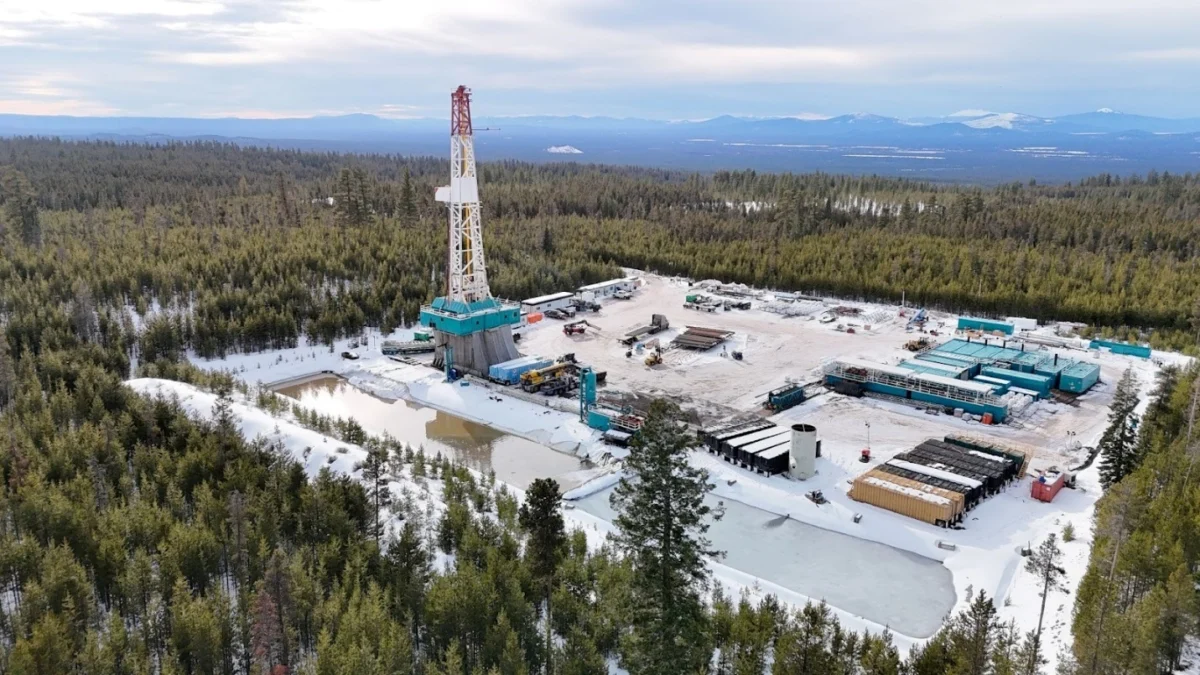
The core of Mazama’s value proposition lies in its engineering prowess. While conventional geothermal projects rely on naturally occurring steam vents—which are geographically rare—Mazama is utilizing advanced drilling techniques adapted from the oil and gas industry to reach depths of 15,000 feet. At these depths, the company taps into rock temperatures reaching 750°F (400°C).
At such extreme temperatures and pressures, water transitions into a "supercritical" fluid—a state that is neither liquid nor gas. This state allows the fluid to carry vastly more energy than ordinary steam, enabling each horizontal well to generate an estimated 15 megawatts (MW) of electricity. For context, this is roughly 10 times the power output of traditional geothermal wells.
A Chronology of Rapid Advancement
The trajectory of Mazama Energy has been one of exponential growth and increasingly ambitious projections.
- Incubation and Early Development: Born out of the labs at Khosla Ventures, Mazama began by proving the efficacy of horizontal drilling in crystalline basement rock.
- The 2024 Benchmark: Last year, as the company moved toward its first site in Oregon, investor Vinod Khosla publicly noted the site’s potential to produce 5 gigawatts (GW) of electricity. This projection was considered aggressive at the time, reflecting the high-risk, high-reward nature of the venture.
- The 2025 Revision: Just one year later, the company has updated its assessment. The same Oregon site is now estimated to have the capacity to produce 10 GW—doubling the previous estimate and signaling that the company’s understanding of the site’s geological heat flux has significantly matured.
- The Path to 2030: With the new capital, Mazama has set a concrete roadmap. The company expects to begin initial power generation as early as next year. By 2030, the firm plans to have fully scaled its first site to a capacity of 200 MW, a critical milestone on the road to its multi-gigawatt ambitions.
Supporting Data: Why "Super-Hot" Rock Matters
The logic behind Mazama’s aggressive expansion is grounded in hard, geological data. The sheer scale of the energy locked in the Earth’s crust is staggering. According to research from the University of Twente and the Clean Air Task Force, tapping into just 1% of the world’s super-hot rock resources could theoretically generate more than 63 terawatts (TW) of electricity.
To put that in perspective, the total global electricity consumption is roughly 25 to 30 TW. Effectively, if technology can bridge the gap to these deep-crust heat reservoirs, the Earth could provide all the energy humanity needs for centuries.
Mazama’s operational efficiency is equally compelling. The company recently demonstrated the ability to drill past 10,000 feet in just 15 days. By optimizing the drilling process, Mazama is reducing the "capital expenditure per megawatt" (CAPEX/MW) to levels that make geothermal competitive with natural gas and utility-scale solar-plus-storage.
Implications for the AI and Data Center Boom
The surge in funding for Mazama comes at a time when the tech sector is facing a massive energy crunch. The rise of generative AI and the massive data centers required to train Large Language Models (LLMs) have created an insatiable demand for electricity.
Historically, data center operators have looked toward natural gas, wind, and solar. However, these sources present challenges: gas produces emissions, and wind and solar are intermittent, requiring expensive battery storage to maintain the 24/7 "uptime" that data centers demand.
Geothermal is the "holy grail" of the transition. It is inherently baseload—meaning it runs 24 hours a day, 365 days a year—without the need for massive battery backups or the intermittency issues of renewables. As tech giants like Microsoft, Google, and Amazon look for ways to meet their "net-zero" pledges while simultaneously powering massive compute loads, companies like Mazama are positioning themselves as the primary utility provider for the next generation of computing infrastructure.
Official Responses and Strategic Alliances
The presence of ConocoPhillips and Shell Ventures in the cap table is perhaps the most significant indicator of the industry’s changing tide. These legacy fossil fuel companies possess the exact expertise required to scale Mazama’s operations: advanced drilling, reservoir management, and deep-well logistics.
"We are not just building power plants; we are building a new class of energy infrastructure," a representative for the startup noted during the funding announcement. By leveraging the workforce and technology of the oil and gas sector, Mazama is effectively pivoting traditional energy expertise toward a carbon-neutral future.
For the new investors, the decision to back Mazama is a hedge against the inevitable decline of fossil fuels. As energy markets transition, assets that can provide high-density, reliable power without carbon risk are becoming the most valuable commodities in the global economy.
The Challenges Ahead: Can the "Dark Horse" Win?
Despite the optimism, significant technical and regulatory hurdles remain. Drilling to 15,000 feet requires materials that can withstand immense pressure and highly corrosive geothermal fluids. Furthermore, while the company has secured land in Oregon, scaling to a 200 MW facility requires navigating complex permitting processes and local grid connectivity upgrades.
Yet, the momentum is undeniable. Mazama’s ability to secure land for a second site while still in the early stages of its Oregon project indicates that the company is moving with the speed of a software startup, despite the heavy-industry nature of its work.
Conclusion: A Turning Point for the Grid
The $135 million raised by Mazama Energy is more than just a capital injection; it is a signal that the geothermal industry has finally exited its experimental phase. By treating geothermal as an engineering problem—specifically, a drilling and fluid-dynamics problem—rather than a geological discovery mission, companies like Mazama are opening the door to a new energy era.
If the 2030 development goals are met, Mazama will not only prove the viability of super-hot rock energy but will likely trigger a gold rush of investment into deep-crust exploration. In the battle to power the future of AI and the global economy, the heat beneath our feet may well prove to be the ultimate, and most sustainable, resource.
As the startup moves toward its first generation milestone next year, the energy sector will be watching closely. Should Mazama succeed, the "dark horse" of the energy transition may soon become the backbone of the global grid.