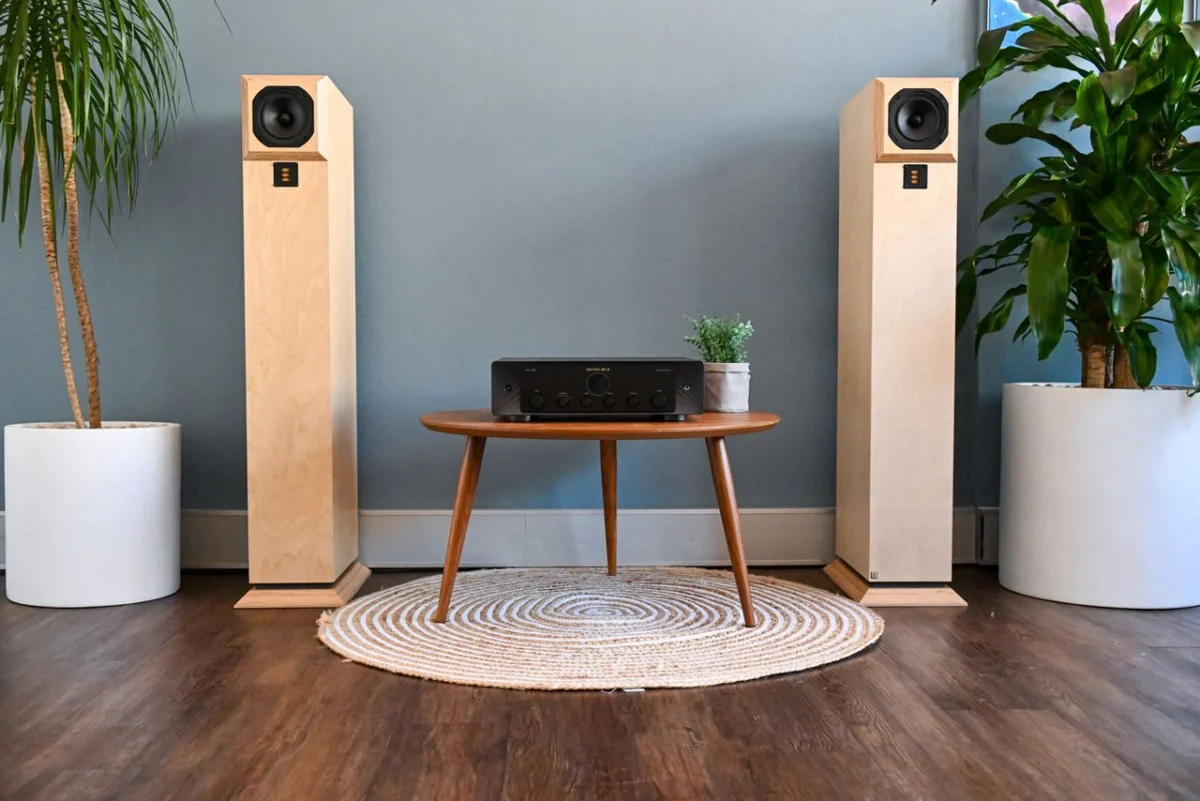
If you take care when choosing partnering equipment and make sure to experiment with placement, you will be well rewarded with an insightful, emotionally engaging, and technically brilliant listen from these talented floorstanding speakers.
1. Main Facts: An Introduction to the Tower 3 Signature
In the crowded landscape of high-end loudspeakers, brands often struggle to balance living-room-friendly aesthetics with uncompromised acoustic performance. Microphase Audio Design (M.A.D.), an artisanal brand helmed by French audiophile, engineer, and speaker designer Jean-Marie Lière, addresses this dilemma head-on with the Tower 3 Signature.
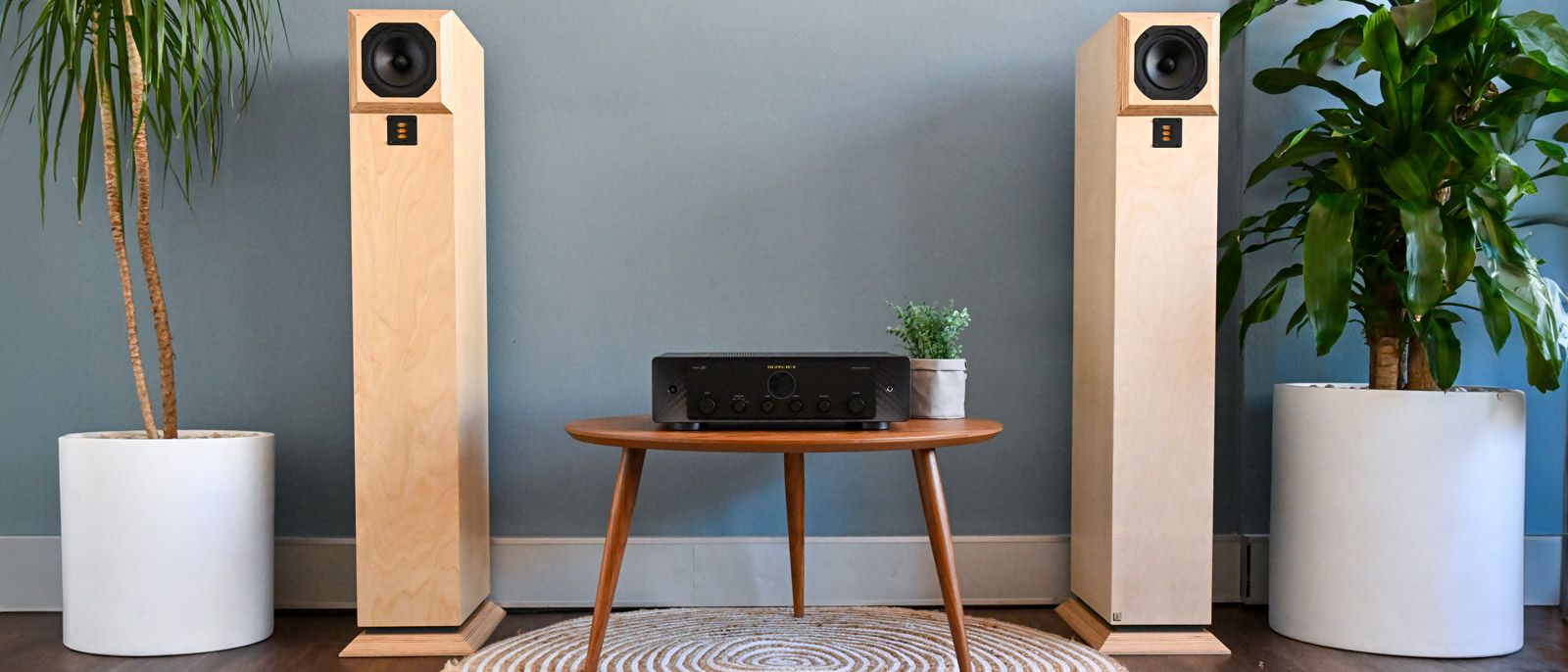
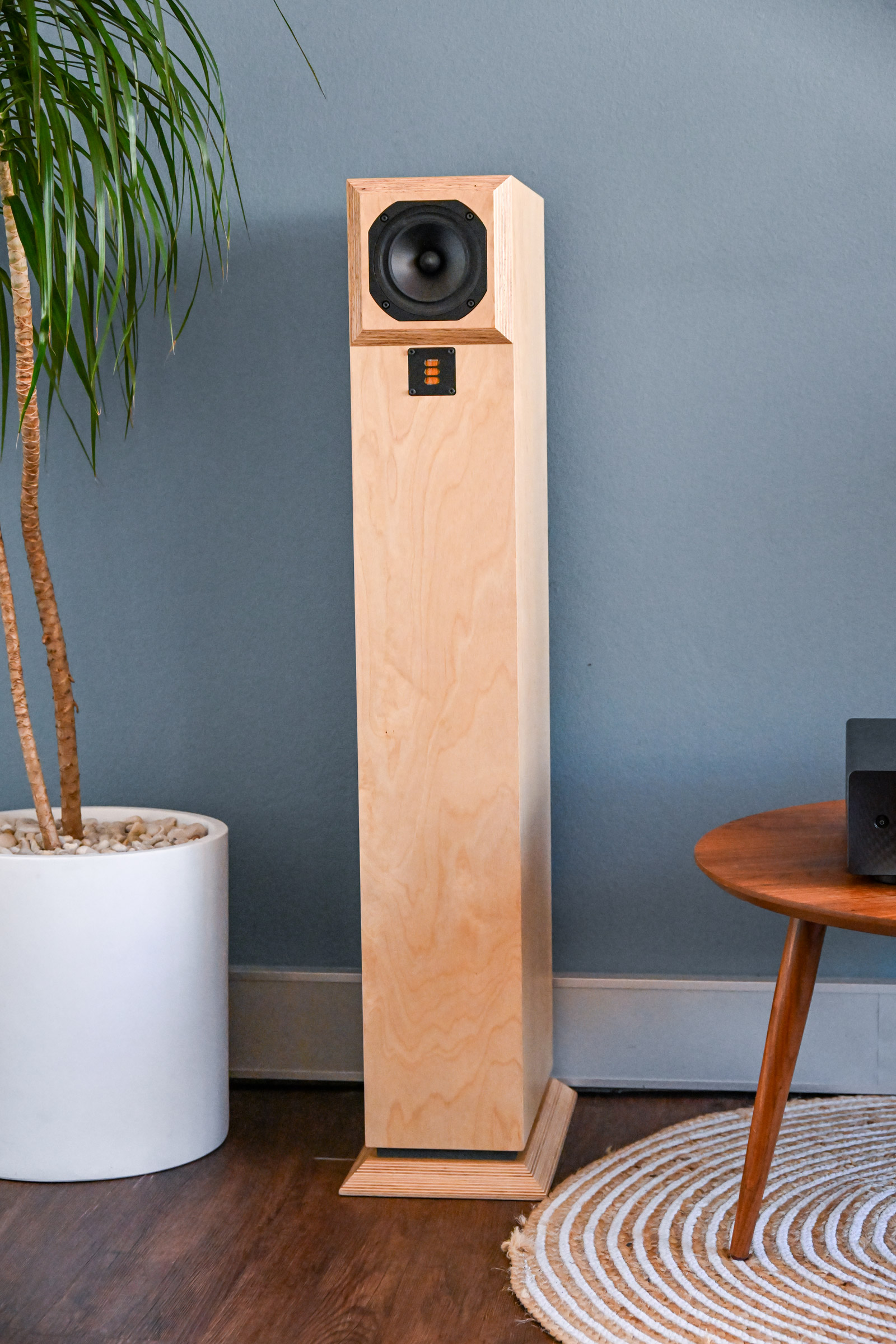
Manufactured with internationally sourced premium components and hand-assembled in Australia, the Tower 3 Signature is a slim, visually striking floorstander designed with a singular, uncompromising focus: absolute phase coherence.
Key Technical Specifications
- Cabinet Width: 192mm (requires a 250mm wide plinth for stability)
- Cabinet Height: 1200mm (including plinth)
- Cabinet Depth: 440mm (including plinth)
- Weight: Approximately 25kg per speaker
- Enclosure Material: Finnish marine-grade birch plywood finished in a fingerprint-resistant polyurethane coating
- Driver Configuration:
- Tweeter: Mundorf Air Motion Transformer (AMT) ribbon tweeter (Germany)
- Midrange: Custom 130mm paper-cone driver by Audax (France)
- Bass: 31cm side-firing paper/fiber cone woofer by SB Acoustics (Denmark/Indonesia)
- Crossover: 3-way passive network; transition points at 150Hz (12dB/octave) and 4kHz (6dB/octave)
- Frequency Response (Claimed): 40Hz–25kHz ±2.5dB
- Nominal Impedance: 4 ohms
- Sensitivity (Claimed): 90dB/1W/1m (Measured at 87dBSPL @ 2.83Veq by Newport Test Labs)
At the core of the Tower 3 Signature’s design is an ultra-narrow 192mm front baffle. While supermodel-thin cabinets are fashionable, M.A.D. employs this geometry for acoustic reasons: minimizing baffle-step diffraction, which can color midrange frequencies and smear stereo imaging. To prevent these tall, narrow enclosures from tipping, they are anchored to a robust 250mm wide plinth. This eliminates the need for floor spikes, ensuring stability on both thick carpets and polished hardwood floors.
2. Chronology: The Evolution of Microphase Audio Design
To understand the Tower 3 Signature, one must trace the history of Jean-Marie Lière’s design philosophy, which began in France during the golden era of European hi-fi.
[1970s] Inspired by Joseph Léon (Elipson) & phase coherence research
   │
   ▼
[Mid-1980s] Launch of the ultra-compact SAT (Satellite) Monitor (200x200x150mm)
   │
   ▼
[1990s-2010s] Continuous refinement of the SAT design (MK1 through MK3)
   │
   ▼
[Recent Years] Development of the SAT MK3.3 (Passive and Active variants)
   │
   ▼
[Present] Launch of the Tower 3 Signature (Integrating an inverted SAT MK3.3 with an SB Acoustics side-firing sub-bass driver)
In the 1970s, Lière found inspiration in the work of Joseph Léon, the legendary engineer behind Elipson. Léon had mastered the complexities of acoustic phase alignment, primarily utilizing spherical cabinet designs to eliminate internal standing waves and external diffraction.
Lière set out to replicate Elipson’s phase-coherent performance but sought to bypass the bulky, expensive spherical enclosures. He wanted a design that was rectangular, exceptionally compact, affordable, and accessible to a broader audience.
This research culminated in the mid-1980s with the launch of the Microphase SAT (Satellite) monitor. Measuring a diminutive 200 x 200 x 150mm, the SAT became a critical and commercial success across France, Belgium, Germany, and Scandinavia.
Over the decades, the SAT design evolved, culminating in the modern SAT MK3.3 (available in both active and passive formats). The Tower 3 Signature is the direct descendant of this lineage; it integrates the driver configuration of the SAT MK3.3 in an inverted layout, pairing it with a larger, side-firing 31cm bass driver to create a true full-range floorstander.
3. Supporting Data: Technical & Acoustic Engineering
Achieving true phase coherence across a three-way design requires meticulous driver selection and physical time-alignment.
The Stepped Baffle and Time Alignment
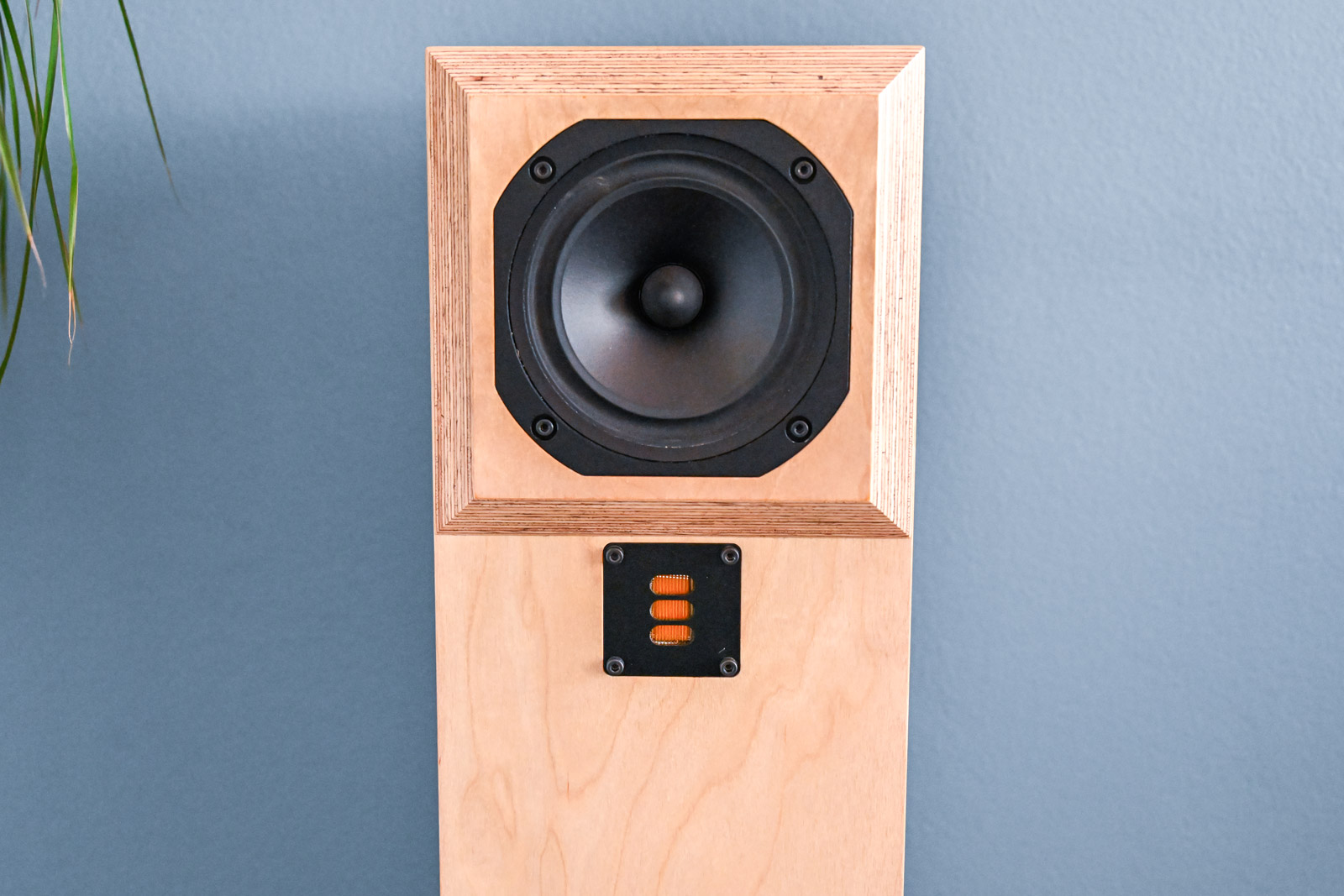
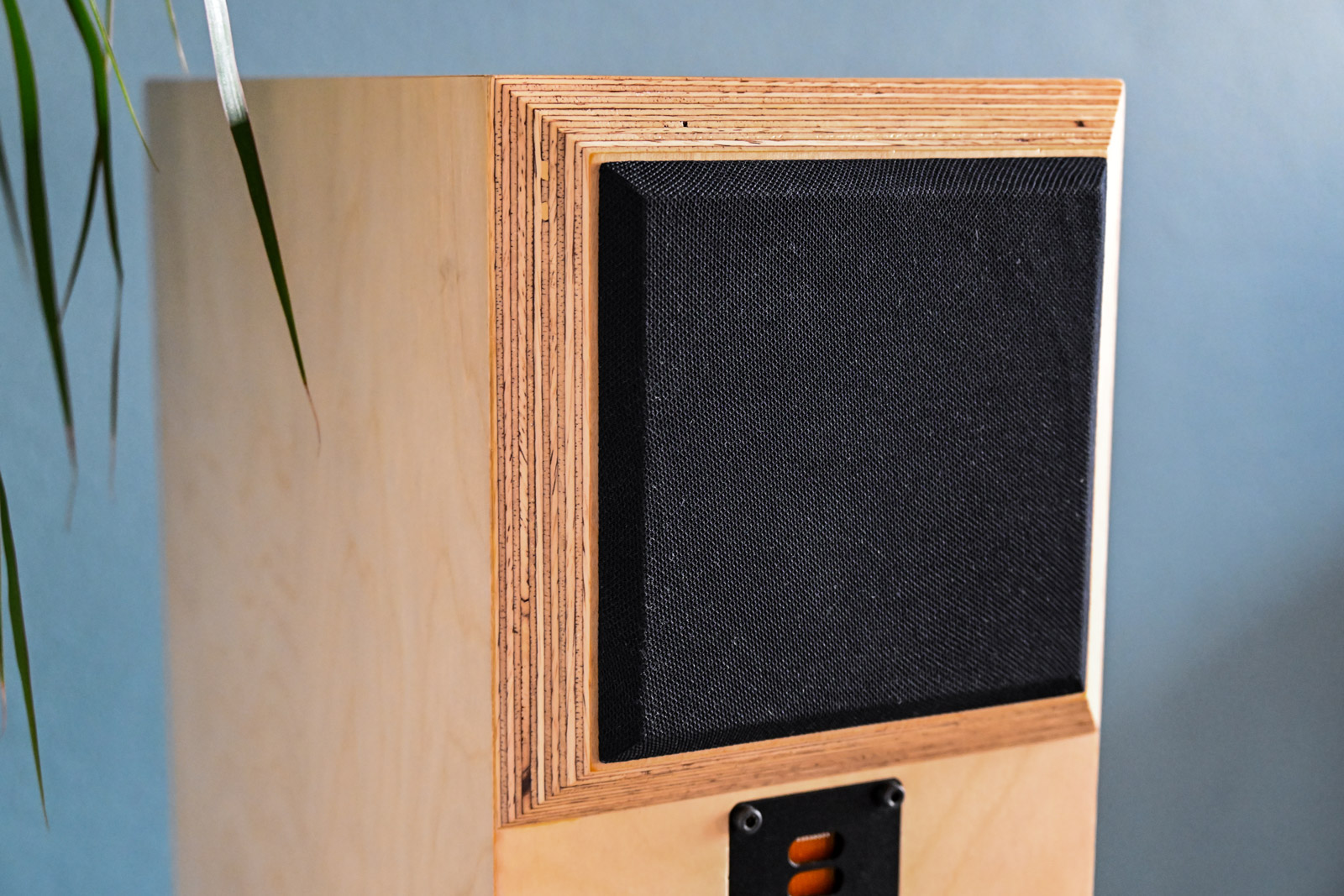
The front baffle of the Tower 3 Signature is physically stepped. By recessing the midrange driver relative to the tweeter, M.A.D. physically aligns the acoustic centers (the voice coils) of both drivers. This physical offset ensures that the wavefronts from the midrange and tweeter travel the exact same distance to the listener’s ears, arriving at the precise same microsecond. This mechanical time-alignment minimizes the phase anomalies that typical flat-baffle speakers must correct using complex, sound-degrading crossover components.
  Stepped Front Baffle (Side View)

       [ Mundorf AMT Tweeter ]  ─── Wavefront Start
                 │
   Offset ──────►│
                 │  [ Audax Midrange ]  ─── Wavefront Start (Aligned)
Premium Driver Complement
- The Highs: High frequencies are handled by a premium Air Motion Transformer (AMT) ribbon tweeter sourced from Mundorf in Germany. Unlike conventional dome tweeters that push air like a piston, the AMT uses a pleated diaphragm of folded ridges. When an audio signal is applied, the folds squeeze together and pull apart, expelling air at a velocity significantly faster than the diaphragm’s physical movement. This results in high efficiency, transient speed, and low distortion.
- The Midrange: The critical midrange band is reproduced by a custom 130mm paper-cone driver manufactured by Audax in France. Audax has partnered with Lière since the inception of the original SAT speaker in the 1980s. The light, stiff paper cone is prized for its natural, uncolored vocal reproduction.
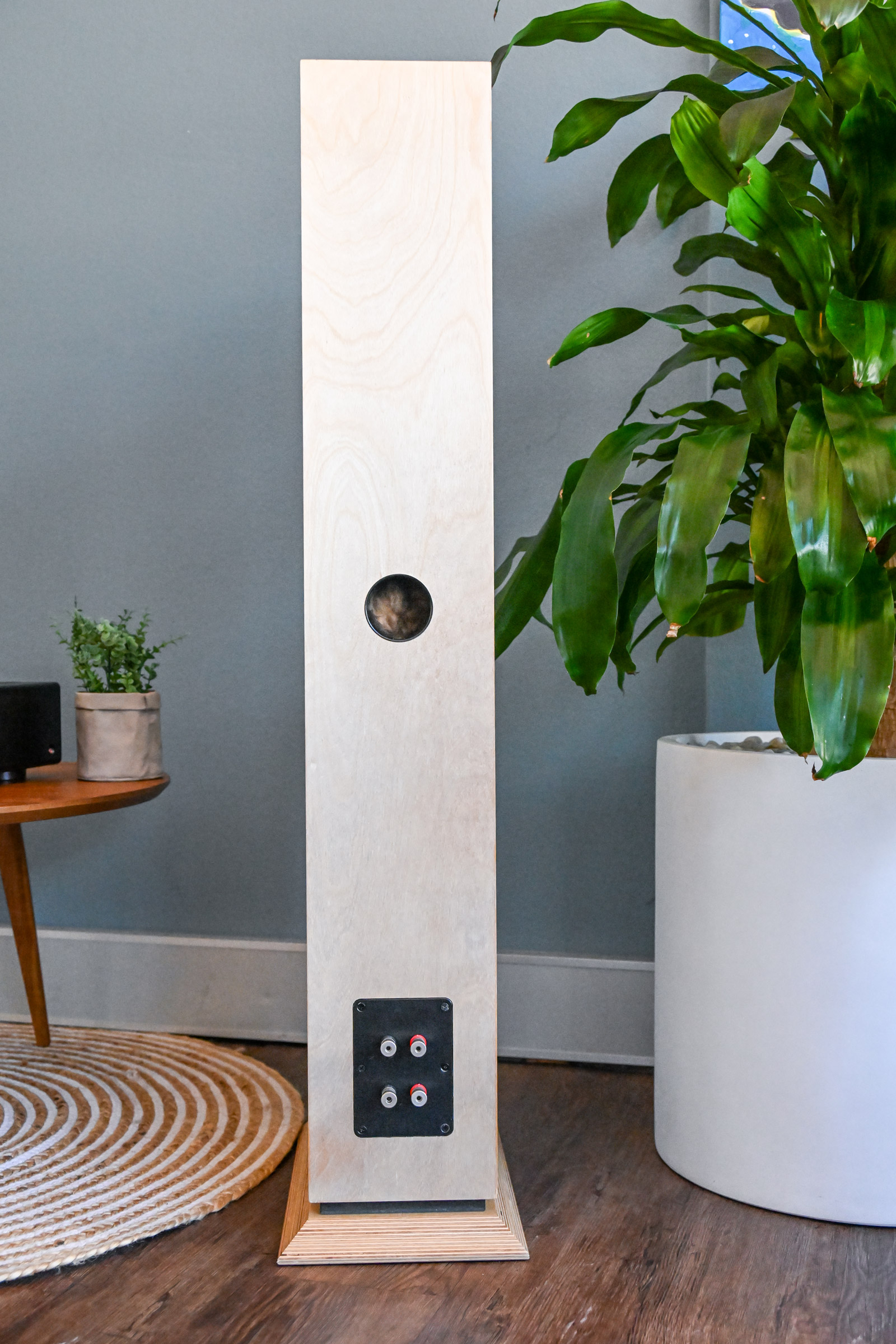
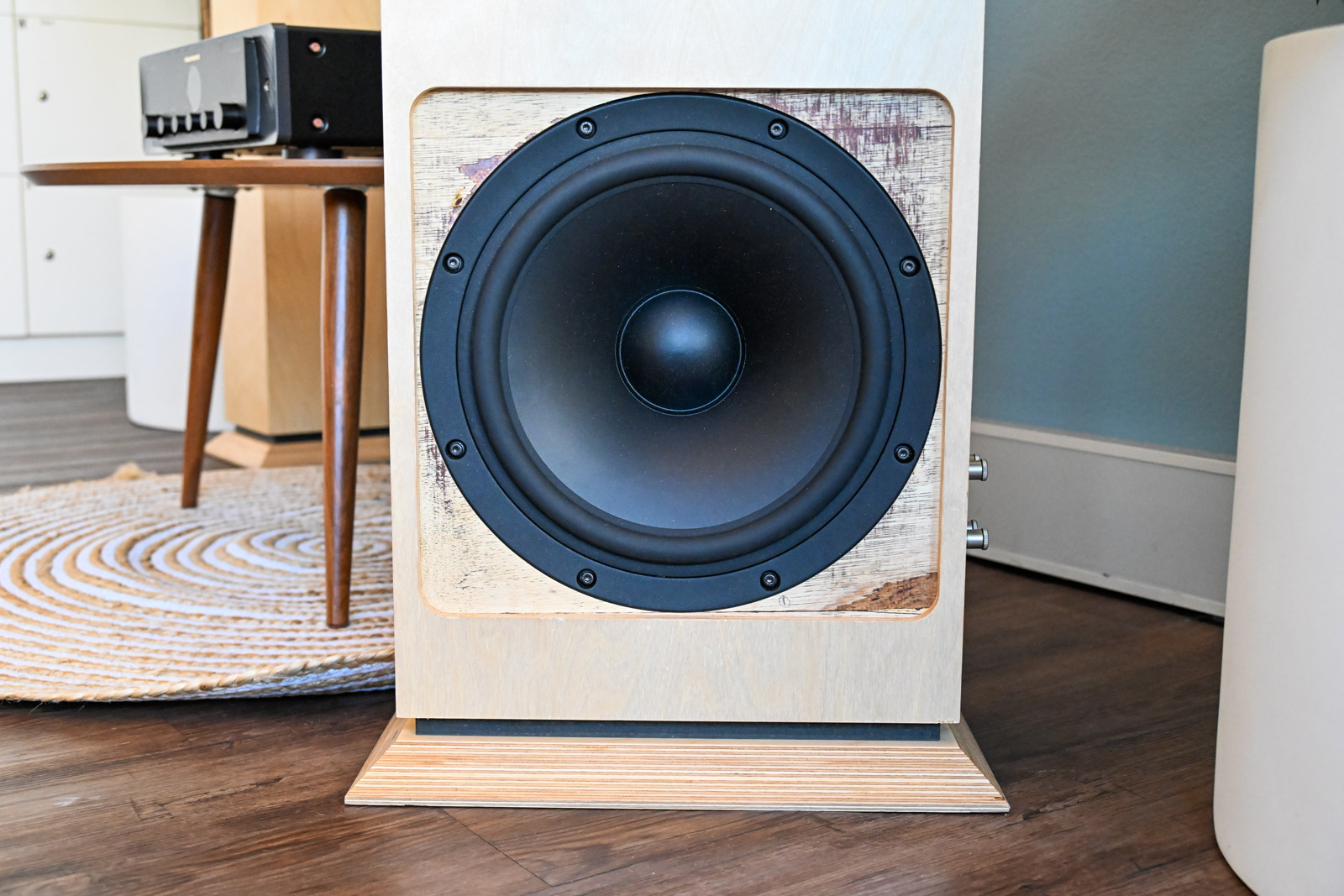
- The Lows: Rather than attempting to squeeze multiple small, compromised woofers onto the narrow front baffle, Lière implemented a single, side-firing 31cm (12-inch) woofer sourced from SB Acoustics. This driver features a proprietary paper/fiber blend cone, designed to deliver deep, low-distortion bass.
Crossover and Enclosure Design
The crossover network is a custom three-way design utilizing gentle, low-order slopes:
- Low-to-Mid Transition: 150Hz at a 12dB/octave slope.
- Mid-to-High Transition: 4kHz at a gentle 6dB/octave slope.
These gentle slopes preserve the natural phase relationships between the drivers but require highly linear drivers to prevent out-of-band distortion.
The cabinet is constructed from premium Finnish marine-grade birch plywood, selected for its natural damping properties and structural rigidity. The exterior is coated in a clear, semi-gloss polyurethane finish that highlights the wood’s natural grain while offering superior resistance to fingerprints and scuffs.
4. Laboratory Analysis: Newport Test Labs Data
To verify the manufacturer’s performance claims, independent testing was conducted by Newport Test Labs. The results reveal an exceptionally engineered loudspeaker system.
Frequency Response Analysis
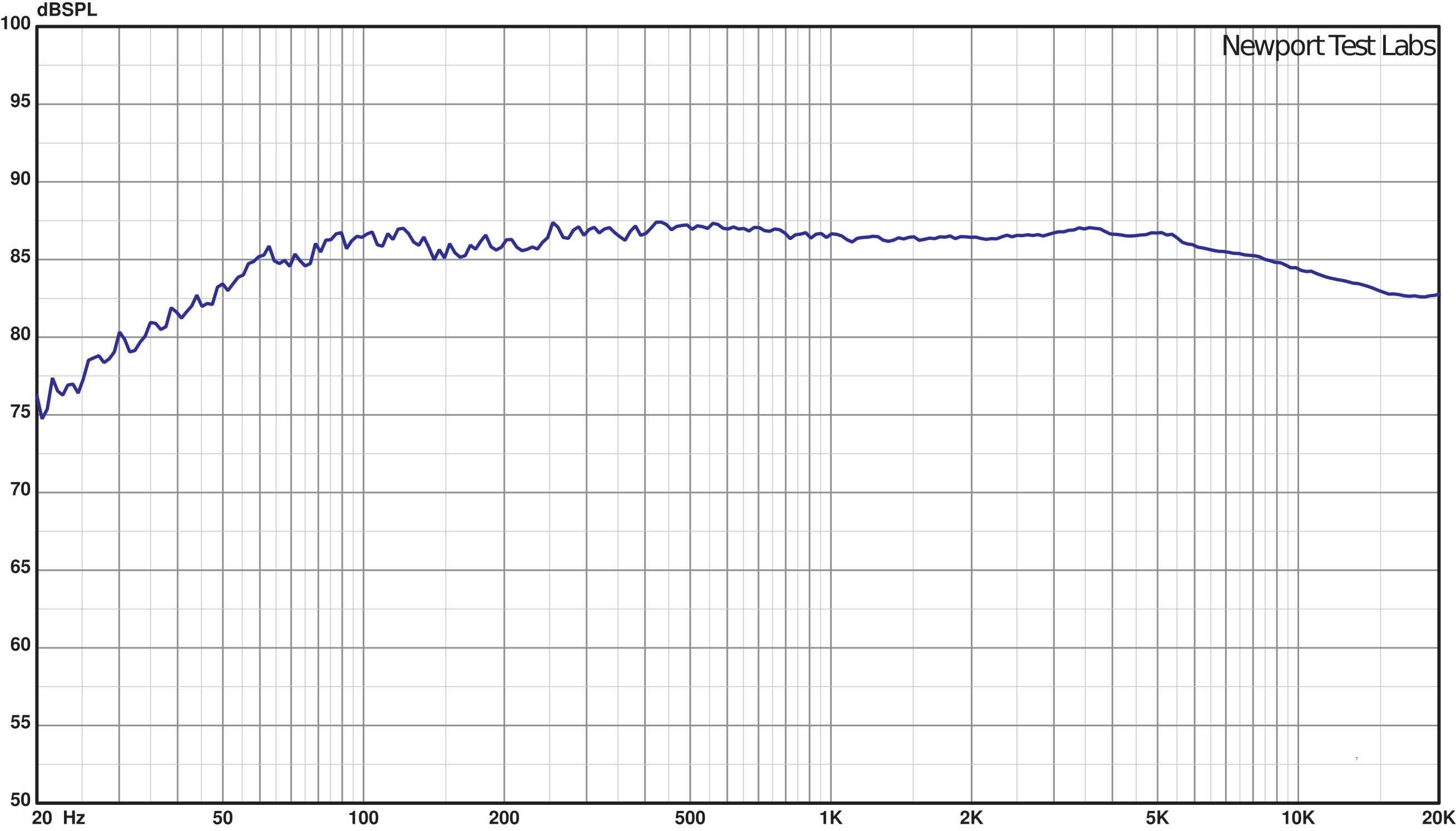
The measured in-room frequency response (Graph 1) of the Tower 3 Signature is remarkably linear, particularly in the critical midrange and presence regions.
Newport Test Labs - Measured Frequency Response Limits:
┌───────────────────────────────────────────┬────────────────────────┐
│ Frequency Range                           │ Deviation              │
├───────────────────────────────────────────┼────────────────────────┤
│ 60Hz to 8kHz (Critical Audio Band)        │ ±1.25 dB (Total 2.5dB) │
│ 54Hz to 20kHz (Standard Envelope)         │ ±3.00 dB (Total 6.0dB) │
└───────────────────────────────────────────┴────────────────────────┘
A response of ±1.25dB between 60Hz and 8kHz is an outstanding achievement for any loudspeaker, indicating a highly neutral tonal balance free from aggressive peaks or deep, phase-canceling nulls.
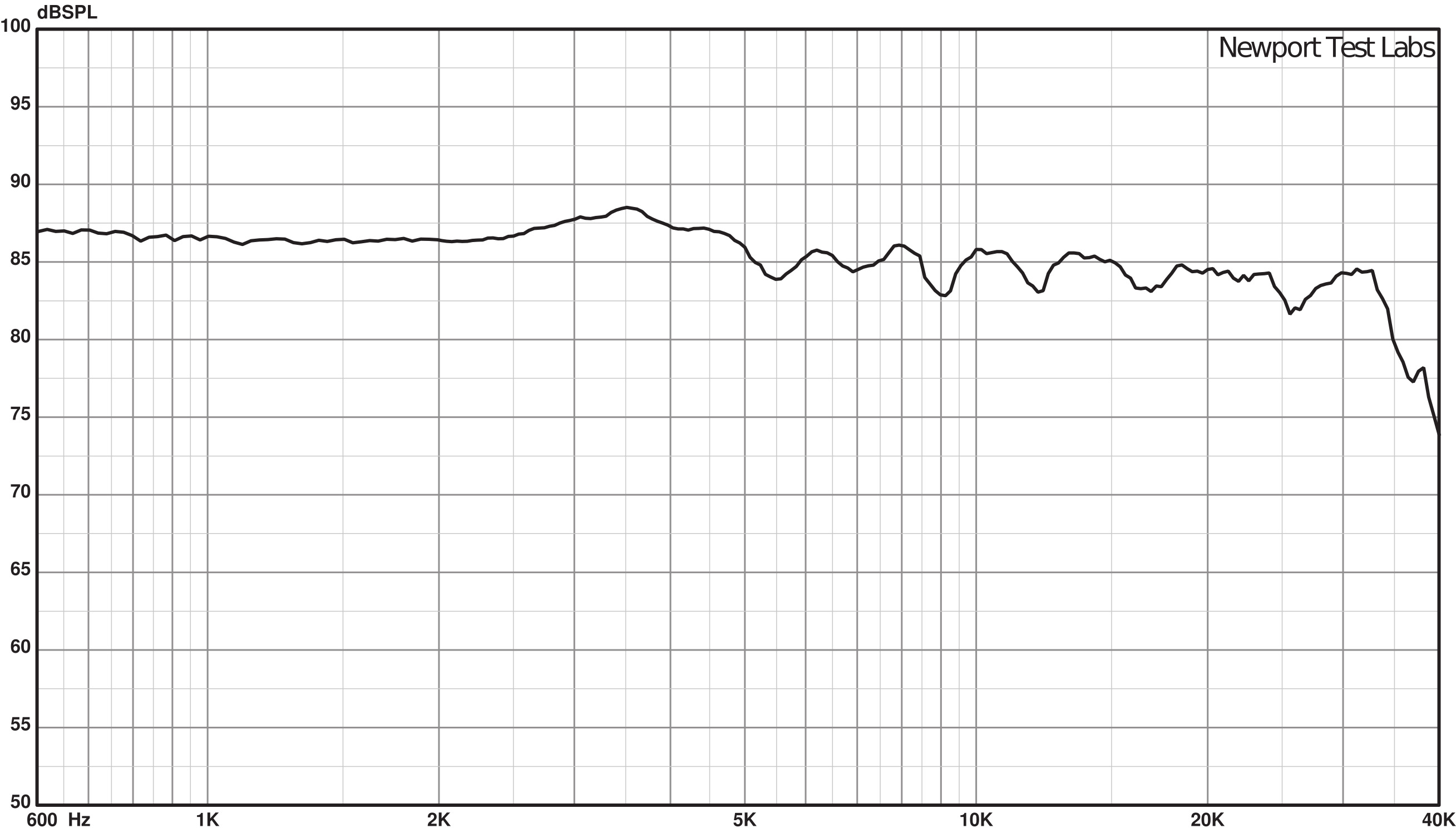
High-frequency gating measurements (Graph 2), which replicate an anechoic chamber to eliminate room reflections, revealed that the speaker’s horizontal off-axis response (measured at 15 degrees) is slightly flatter and more linear than its on-axis response. This off-axis behavior is ideal, as most listeners do not sit directly on-axis.
The high-frequency response exhibits a very gentle roll-off beginning at 4.5kHz, stabilizes near 10kHz, and extends cleanly out to 33kHz before rolling off rapidly. The minor irregularities visible in the raw, unsmoothed laboratory traces are of very high Q (narrow bandwidth) and low amplitude, rendering them entirely inaudible to the human ear.
Impedance and Sensitivity
The electrical impedance curve of the Tower 3 Signature is intriguing. Despite the presence of a small rear reflex port designed to optimize the side-firing woofer, the impedance curve closely resembles that of a sealed (acoustic suspension) enclosure. This suggests a highly controlled bass alignment that avoids the wild phase-angle swings and impedance dips common to poorly tuned ported speakers.
- Impedance Characteristics: The impedance remains safely below 8 ohms between 72Hz and 550Hz, and again from 4kHz to beyond 40kHz. Crucially, the impedance curve never drops below 4 ohms. Newport Test Labs officially rates the nominal impedance at 4 ohms, making it a highly consistent, non-reactive load for any high-quality amplifier.
- Sensitivity: While M.A.D. rates the sensitivity at 90dB/1W/1m, Newport Test Labs’ standard, highly stringent testing methodology measured the sensitivity at 87dBSPL at 1 meter with an input of 2.83Veq. While numerically lower than the manufacturer’s spec, 87dB is average for a high-fidelity loudspeaker of this size and configuration. Because of the speaker’s stable, non-reactive impedance profile, it will sound perceptibly louder and prove easier to drive than competing speakers with higher nominal sensitivity ratings but erratic impedance dips.
5. Performance and Listening Tests
Evaluating the Tower 3 Signature requires partnering electronics of equal pedigree. For these listening sessions, the speakers were driven by a Marantz Model 50 integrated amplifier (delivering a robust 100W per channel into 4 ohms) paired with the matching Marantz CD 50n high-resolution streamer and CD player.
          [ Marantz CD 50n Streamer ]
                       │ (Analog Interconnect)
                       ▼
          [ Marantz Model 50 Amplifier ]
             │                       │
             │ (Bi-Wire Cable)       │ (Bi-Wire Cable)
             ▼                       ▼
      [ Tower 3 Left ]        [ Tower 3 Right ]
Sonic Evaluation
1. Low-End Authority and Rhythmic Drive
To test the integration of the 31cm side-firing SB Acoustics woofer, we played Slayyyter’s synth-pop track "Dance…", which features a heavy, driving electronic bass line.
The Tower 3 Signatures delivered the opening drum strikes with speed, weight, and definition. There was no sign of the muddy, slow, or overhang-heavy bass that often plagues large woofers mounted in slim cabinets.
This rhythmic agility was further confirmed with Hayley Williams’ "Simmer". The side-firing woofers locked onto the track’s complex, syncopated drum pattern, delivering clean, visceral impacts that kept the music driving forward naturally.
2. Midrange Purity and Vocal Intimacy
Switching to Jessie Ware’s "Ride", the strength of the custom Audax midrange driver became immediately apparent. Ware’s sultry, emotive vocals were projected with stunning clarity and suspended precisely in space between the two enclosures.
The transition from the paper midrange to the Mundorf AMT tweeter was seamless, capturing the subtle breathiness and micro-details of the vocal performance without adding sibilance or harshness. The midrange-to-tweeter phase alignment created an organic, physically convincing vocal presence.
3. Soundstaging and Complex Imaging
To evaluate the speaker’s handling of complex acoustic spaces, we played Tool’s instrumental track "Chocolate Chip Trip" from Fear Inoculum.
Danny Carey’s polyrhythmic drum solo, which features rapid percussion panning across the soundstage, was reproduced with pinpoint accuracy. Each drum strike occupied a distinct, holographic position in three-dimensional space.
The soundstage extended well beyond the outer physical boundaries of the cabinets, maintaining depth and height without losing central focus.
The Critical Role of Speaker Placement
Because the Tower 3 Signature utilizes a side-firing woofer, placement is key to unlocking its full potential.
      Inward-Facing Woofers                  Outward-Facing Woofers
   (Best for larger listening rooms)       (Best for smaller/medium rooms)

     [Speaker]           [Speaker]           [Speaker]           [Speaker]
      ( Woofer)         (Woofer )           (Woofer )             ( Woofer)
         │                 │                   │                     │
         ▼                 ▼                   ▼                     ▼
◄──[ Bass Buildup Area ]──► ◄──[ Boundary Reflection ]──►- Inward vs. Outward Woofers: During testing, positioning the woofers facing inward (pointing toward each other) in a smaller listening room resulted in excessive low-frequency coupling, creating a bloated, boomy presentation. Swapping the speakers so the woofers faced outward (pointing toward the side walls) immediately balanced the sound. The bass tightened, and the low-frequency boundaries integrated smoothly with the room. In larger spaces, however, an inward-facing configuration can help reinforce the central bass image.
- Rear Wall Distance: Spacing the speakers 30cm away from the rear wall, as opposed to 20cm, dramatically expanded the depth and openness of the soundstage, allowing the small rear-firing port to breathe.
- Toe-In Angle: While the narrow baffle provides wide high-frequency dispersion, angling the speakers inward by approximately 20 degrees toward the listening position locked the central vocal image in place and sharpened the soundstage’s depth.
6. Official Responses and Designer Philosophy
In discussions regarding the design of the Tower 3 Signature, Jean-Marie Lière addressed the "MAD" moniker of his company. While "Microphase Audio Design" is the official name, Lière jokes that his willingness to reject modern mass-production trends in favor of hand-built, phase-optimized cabinets could easily be deemed "mad" by corporate accounting standards.
The use of a single side-firing woofer is a deliberate nod to historical acoustic engineering. The concept was popularized in the 1970s by Roy Allison, the legendary designer and former VP of Engineering at Acoustic Research. Allison’s famous AR-9 loudspeakers utilized opposing side-firing woofers to improve room coupling and minimize the "Allison Effect"—a destructive acoustic cancellation caused by reflections from the wall behind the speaker.
By placing the woofer close to the floor and firing to the side, the Tower 3 Signature uses the room’s boundaries to support the low frequencies naturally, rather than fighting against them.
Lière also emphasizes that while the drivers are sourced from premier European manufacturers, the final crossover tuning, cabinet assembly, and quality control are performed entirely in Australia. This allows M.A.D. to maintain tight tolerances and ensure that every pair of Tower 3 Signatures matches the performance of the reference laboratory prototype.
7. Market Implications and Final Verdict
The Microphase Audio Design Tower 3 Signature enters a highly competitive market segment, positioning itself as an alternative to mass-produced, industrial floorstanders from larger global brands.
Pros
- Superb Driver Integration: The transition between the Audax midrange and Mundorf AMT tweeter is seamless, offering class-leading phase coherence.
- Holographic Soundstage: Exceptional, three-dimensional imaging with a wide, stable sweet spot.
- Living-Room-Friendly Design: At just 192mm wide, the cabinets are visually unobtrusive and handsomely finished.
- Boundary-Friendly Bass: The side-firing woofer offers flexible room-matching options compared to traditional rear- or front-firing designs.
Cons
- Requires Careful System Matching: With a 4-ohm nominal impedance and 87dB measured sensitivity, these speakers require a high-quality, high-current amplifier to perform at their best.
- Sensitivity to Placement: Listeners must invest time in experimenting with woofer orientation, wall distance, and toe-in to unlock the speaker’s full potential.
Final Verdict
The Microphase Audio Design Tower 3 Signature is a triumph of boutique loudspeaker engineering. By combining decades of research into phase coherence with premium cabinet craftsmanship and high-quality drivers, Jean-Marie Lière has created a floorstander that prioritizes musical communication and acoustic truth over sheer power.
For audiophiles who value natural vocal reproduction, pinpoint imaging, and an elegant, space-saving design, the Tower 3 Signature is a must-listen. Provided you partner them with a capable amplifier and take the time to optimize their placement, these talented Australian-assembled floorstanders will reward you with an insightful, deeply satisfying musical experience.