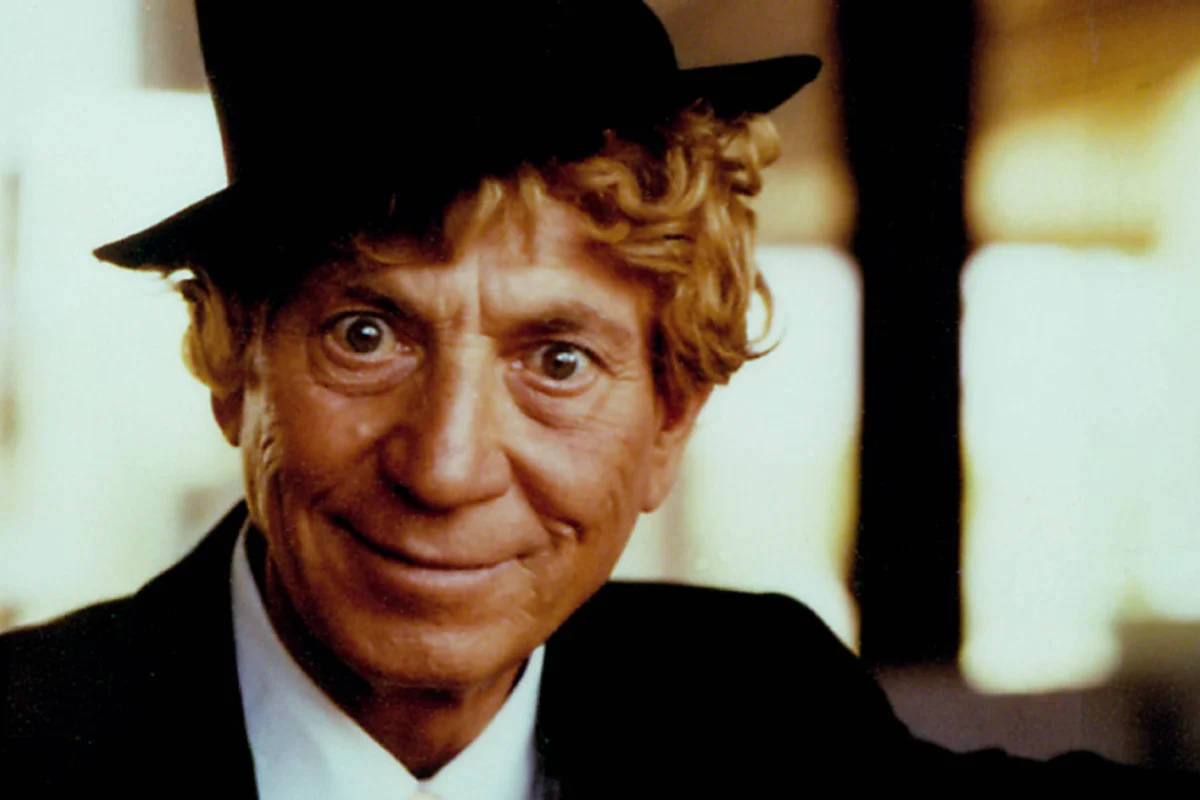
More than sixty years after the death of the man who defined silent comedy, the voice of Harpo Marx has returned to the public consciousness. In a remarkable turn of events that feels like a script pulled from a Marx Brothers film, a long-lost 1964 recording of the legendary comedian narrating Peter and the Wolf has not only been unearthed and restored but has also ascended to the Billboard charts.
The release, titled Harpo Speaks!: The Riverside Symphony Concert featuring Peter and the Wolf, recently debuted at No. 6 on the Billboard Traditional Classical Albums chart and No. 25 on the overall Classical Albums chart. This unexpected commercial success underscores the enduring legacy of an artist who, despite being the "silent" member of the world’s most famous comedy troupe, possessed a depth of musicality and charisma that continues to captivate audiences in the digital age.
The Genesis of a Rare Performance
To understand the gravity of this release, one must look back to the final act of Harpo Marx’s life. By 1964, the Marx Brothers—comprised of the iconic lineup of Chico, Harpo, Groucho, Gummo, and Zeppo—had long since established themselves as titans of the silver screen. Harpo, specifically, had cultivated a persona of a mute, curly-haired prankster who communicated through whistles, honks, and the expressive manipulation of his harp.
However, the concert recorded on March 20, 1964, was a radical departure from the persona his millions of fans knew. Performed with the Riverside Symphony, the event served as a benefit to raise funds for the orchestra’s nonprofit initiatives in Southern California. In a rare and documented instance, Harpo stepped onto the stage to narrate Sergei Prokofiev’s beloved children’s tale, Peter and the Wolf.
For a man who had built an entire career on the absence of speech, this performance was an act of profound vulnerability. It marked the first time in nearly half a century that the public heard the authentic voice of Harpo Marx. Unfortunately, it would also be his last public musical performance. Following years of health struggles and multiple heart attacks, Harpo passed away just six months later at the age of 75. For decades, the tapes of this historic evening were presumed lost, effectively erasing this final, poignant chapter of his life from public memory.
The Archaeological Dig: Restoring a Lost Masterpiece
The road to the charts began not in a recording studio, but in the archives. The recovery of the Peter and the Wolf tapes is a testament to the dedication of modern cultural preservationists. John Tefteller, a renowned archivist of the Marx Brothers, spent years tracking down the elusive recordings. Once located, the tapes were in a state of decay, their sonic quality threatened by the ravages of time.
Tefteller collaborated with Robert Bader, an esteemed Marx biographer, to undertake the delicate process of restoration. The resulting product, released via Ramseur Records and Thirty Tigers, is nothing short of a technical triumph.
"The fact that we have a recording is a miracle," Bader stated in a press release following the album’s success. "The work that was done to rehabilitate it is stunning. It’s as if you’ve found something covered with layers of mold and dirt, got it all cleaned off, and now are able to see something brand new underneath it."
The restoration process involved advanced audio engineering to strip away the hiss and artifacts of the 1964 analog magnetic tape, leaving behind a crisp, intimate recording that allows listeners to hear the subtle nuances of Harpo’s delivery—a voice that most of the world had never heard before.
A Legacy Beyond the Silence
Harpo Marx was far more than a comedic prop. While his stage persona was that of a mischievous, silent clown, his personal life was defined by a quiet, dedicated pursuit of musicianship. He taught himself to play the harp—an instrument he felt a spiritual connection to—and sought formal training under the legendary classical harpist Mildred Dilling.

His son, Bill Marx, has been instrumental in bringing this project to the public. For Bill, the release of this album is not just a novelty; it is a vital piece of the human story of his father.
"Dad didn’t really want people to know what he sounded like because it would have destroyed the character of Harpo that he created," Bill Marx reflected. "But I think, now, he would accept this graciously and gratefully because it goes beyond just seeing a guy being funny. It goes to the heart of what life is about: doing what you love and doing it the best you can."
The album serves as a bridge between the caricature and the man. It allows the listener to move past the "silent" label and witness the genuine artistic spirit of Arthur "Harpo" Marx.
Chronology of an Unexpected Chart-Topper
- March 20, 1964: Harpo Marx performs Peter and the Wolf with the Riverside Symphony in a rare, public spoken-word and musical appearance.
- Late 1964: Harpo Marx passes away at 75, following complications from heart surgery.
- The Decades Between: The recording is misplaced, eventually becoming a "holy grail" for Marx Brothers enthusiasts and historians.
- 2020s: Archivist John Tefteller discovers the lost tapes, initiating a multi-year restoration project with biographer Robert Bader.
- June 2026: Harpo Speaks!: The Riverside Symphony Concert featuring Peter and the Wolf is released.
- June 20, 2026 (Chart Date): The album debuts at No. 6 on the Billboard Traditional Classical Albums chart and No. 25 on the Classical Albums chart.
Implications for Historical Archiving
The success of this release has significant implications for how we treat the "lost" media of the 20th century. As digital restoration technology becomes more accessible, the barrier to entry for rescuing historical artifacts has dropped, yet the demand for high-quality provenance remains high.
The Harpo Speaks! release proves that there is a viable market for historical curiosities that offer a "new" look at established icons. It challenges the notion that an artist’s legacy is static, showing that with the right combination of archival detective work and audio engineering, we can continue to learn new things about the legends of the past.
Furthermore, it highlights the importance of institutional and private partnerships. Without the collaboration between Ramseur Records, Thirty Tigers, and the dedicated archival work of Tefteller and Bader, this piece of cultural history would have remained lost in a dusty box.
The Final Note: Why It Matters Today
Why does a comedy icon narrating a classical children’s story resonate with 2026 audiences? In an era dominated by high-speed digital content and manufactured personas, there is a renewed hunger for authenticity. Harpo’s voice, which he spent a lifetime hiding to preserve the magic of his character, feels like a secret being whispered to a new generation.
The album is more than a curio for comedy buffs; it is a document of a performer’s evolution. It captures a man at the end of his life, returning to the instrument he loved and the classical tradition he respected, shedding the silence of the stage for the clarity of the concert hall.
As the album continues to circulate, it is likely that the narrative surrounding Harpo Marx will shift. He will no longer be remembered solely as the silent brother with the honking horn, but as an artist who—when the time was right—chose to share his voice. In doing so, he has secured his place on the charts one last time, proving that true artistry, no matter how long it stays hidden, will eventually find its way to an audience.