With major sporting events dominating television schedules and seasonal warm weather enticing people outdoors, the demand for high-quality, portable projection technology has reached an all-time high. Backyard viewing parties, impromptu campsite cinemas, and open-air sports gatherings have transitioned from niche hobbies to mainstream summer activities.
However, navigating the consumer electronics market for a reliable outdoor projector is notoriously difficult. Online marketplaces are saturated with low-cost, unbranded hardware promising unrealistic brightness levels and resolution specs, only to deliver muddy pictures, weak audio, and frustrating setups.
For AV enthusiasts and casual viewers alike, finding a portable projector that balances performance, battery life, and ease of use is paramount. One standout device has emerged as the benchmark for this category: the Anker Nebula Mars 3 Air.
Currently featured in an early Amazon Prime Day promotion, this highly regarded portable projector has dropped to its lowest price ever, making premium outdoor home cinema more accessible than ever.
1. Main Facts: The Deal and Product Overview
During the current promotional window, Amazon has slashed the price of the Anker Nebula Mars 3 Air to £339 for Prime members. This represents a significant £211 discount off its standard retail price, marking the deepest price cut recorded for this model since its launch.
+-----------------------------+----------------------------------+
| Parameter                   | Specification / Detail           |
+-----------------------------+----------------------------------+
| Promotional Price           | £339 (Amazon UK Prime Exclusive) |
| Standard Retail Price       | ~£550                            |
| Total Discount              | £211                             |
| Native Resolution           | Full HD (1920 x 1080)            |
| Light Source Brightness     | 400 ANSI Lumens                  |
| Operating System            | Google TV (with native Netflix)  |
| Battery Life                | Up to 2.5 hours (Eco Mode)       |
| Audio System                | Dual 8W Speakers (Dolby Audio)   |
| Smart Calibration           | Auto-Focus, Auto-Keystone,       |
|                             | Screen Fit, Obstacle Avoidance   |
+-----------------------------+----------------------------------+
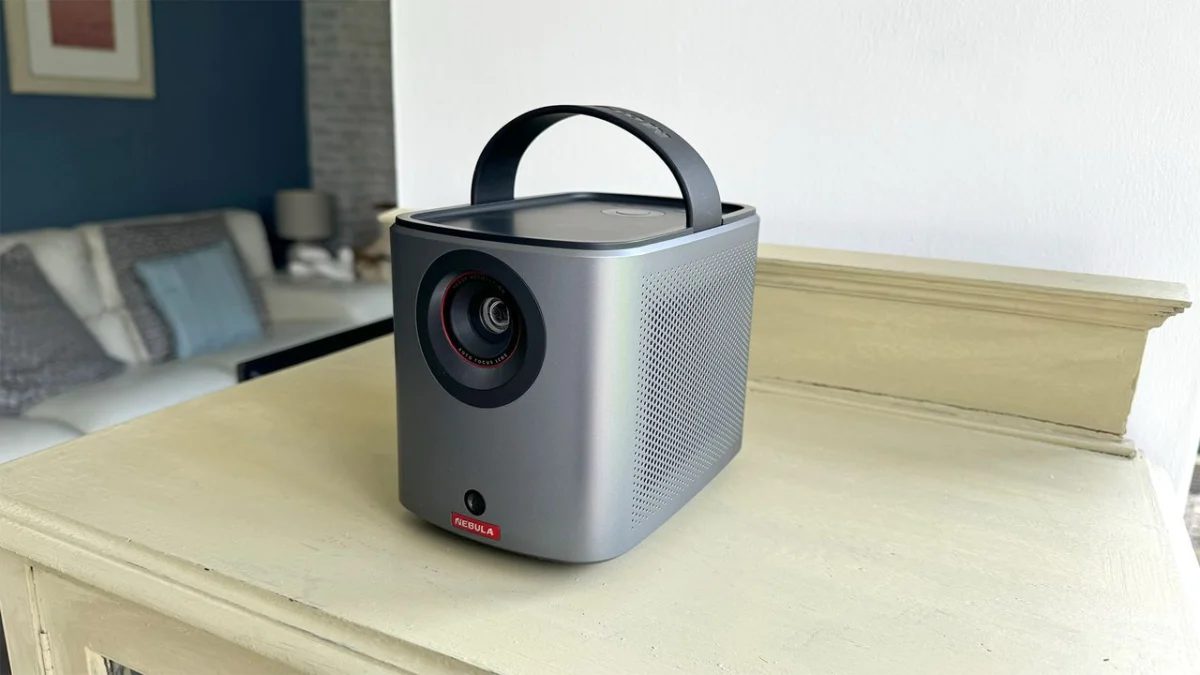
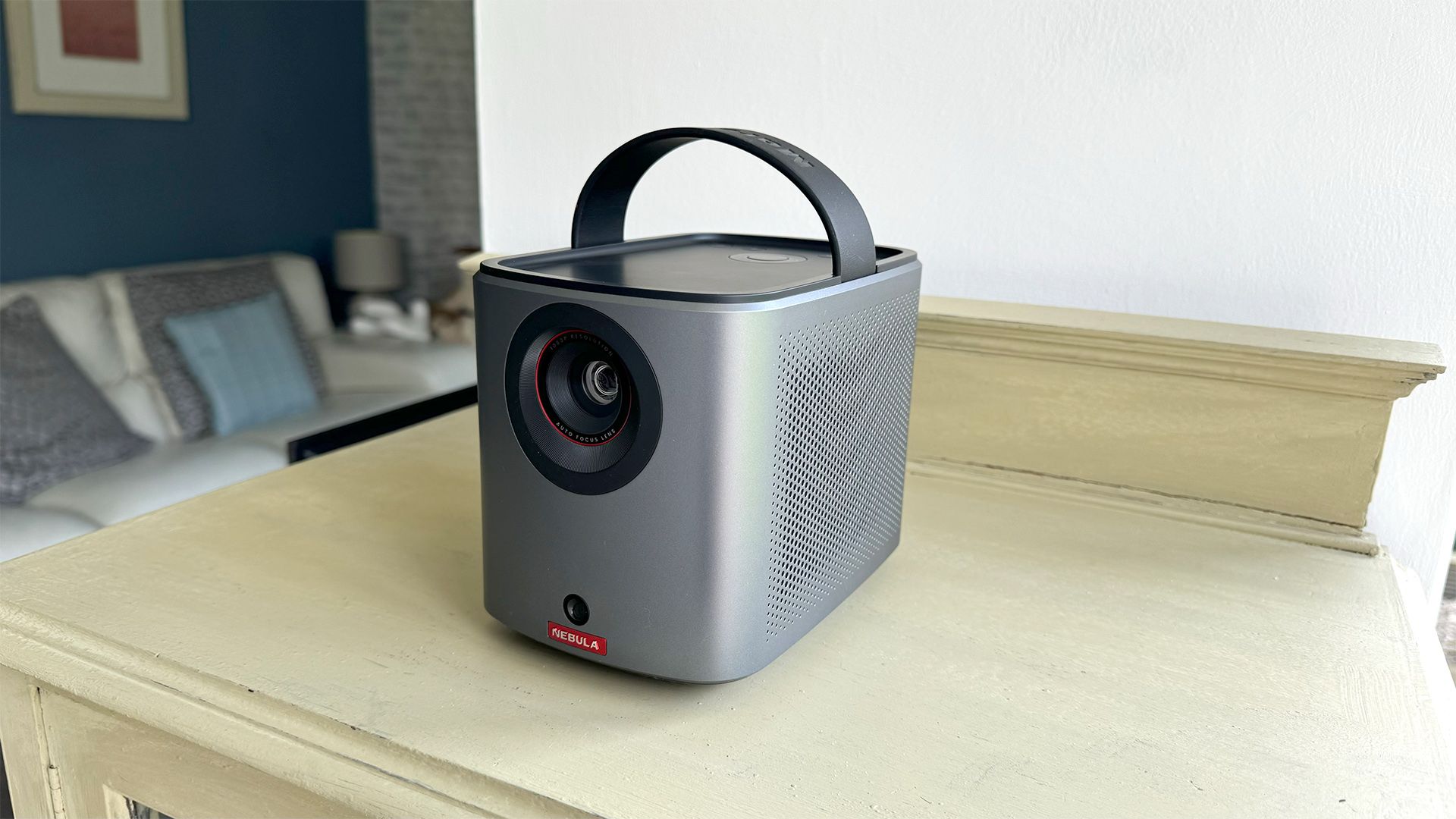
The Mars 3 Air is a self-contained, highly portable entertainment hub. Designed to operate completely free of mains power, it integrates a high-definition light engine, a rechargeable battery, a powerful stereo audio system, and a smart TV streaming interface into a single chassis equipped with a rugged carrying handle.
Unlike many competitors that require external streaming sticks or media players, the Mars 3 Air runs on the Google TV platform, providing native, certified access to major streaming services—including Netflix, Prime Video, Disney+, and YouTube—directly out of the box.
2. Chronology: The Evolution of Portable Projection
To understand the significance of the Mars 3 Air, it is helpful to look at how the portable projection market has evolved over the past decade.
[Early 2010s] ----------------> [Late 2010s] ---------------> [2020 - 2023] ------------> [Present (Mars 3 Air)]
Low-res "Pico" Projectors      Smart SD Projectors           HD Smart Projectors         Optimized 1080p Engines
- Sub-480p resolution          - Android OS integrated       - 1080p resolution standard - Certified Google TV OS
- Weak LED lamps (<50 lm)      - Low-brightness LED engines  - Native app workarounds    - Auto-calibration suites
- External source required     - Basic internal batteries    - Bulky form factors        - Balanced battery/brightness
The Era of "Pico" Projectors (Early 2010s)
The earliest consumer-grade portable projectors, often called "pico" projectors, were highly compromised devices. Utilizing low-resolution DLP chips (often sub-480p) and weak LED lamps that struggled to output even 50 ANSI lumens, these devices required pitch-black rooms to display a legible image. They also lacked smart interfaces, requiring users to connect external DVD players, laptops, or early smartphones via proprietary cables.
The Rise of Smart Projection (Late 2010s)
As mobile processor technology advanced, manufacturers began integrating basic Android operating systems directly into projectors. Anker, under its Nebula sub-brand, became a pioneer in this space with the release of the soda-can-sized Nebula Capsule and the original Nebula Mars series. While these models introduced built-in batteries and wireless streaming, they were still limited by standard-definition resolutions, complex app-sideloading workarounds, and modest light output.
High-Definition and Auto-Calibration (2020–2023)
By the turn of the decade, Full HD (1080p) resolution became the standard for mid-range portable projectors. However, consumers still faced two major pain points: manual image calibration (focusing and adjusting for skewed angles) and licensing issues with streaming services like Netflix, which frequently refused to run in high definition on uncertified Android TV devices.
The Arrival of the Mars 3 Air (Late 2023–Present)
Anker addressed these historic pain points by launching the Mars 3 Air. Positioned as a lighter, more streamlined, and more affordable companion to the flagship, ruggedized Nebula Mars 3, the Air model combined a refined 1080p optical engine with official Google TV licensing.
This development eliminated the need for software workarounds, while advanced Intelligent Environment Adaptation (IEA) technology automated the setup process entirely. The current Prime Day discount marks the democratization of this refined technology, bringing a once-premium AV experience down to entry-level pricing.
3. Supporting Data: Performance and Technical Analysis
The Anker Nebula Mars 3 Air’s reputation as a class-leading portable projector is backed by rigorous testing and benchmark data across three critical categories: visual fidelity, audio performance, and usability.
Visual Fidelity and the Optical Sweet Spot
The Mars 3 Air features a native resolution of 1920 x 1080 pixels, delivering crisp images that avoid the screen-door effect common in cheaper 720p models. While the manufacturer advertises a maximum projection size of up to 150 inches, real-world testing reveals that the 400 ANSI lumen light source is best utilized at smaller scales.
Projected Screen Size vs. Image Quality
===================================================================
[ 50" -  70" ]  Excellent brightness, vivid colors, usable in low ambient light.
[ 70" -  90" ]  Optimal balance of cinematic scale, contrast, and brightness. (RECOMMENDED)
[ 90" - 120" ]  Good in pitch-black conditions; slight loss of shadow detail.
[ 120"- 150" ]  Image becomes noticeably dim; colors lose saturation.
===================================================================
At the recommended 70 to 90-inch range, the Mars 3 Air excels. Despite its compact lens aperture, the projector renders high-definition sources with impressive sharpness. Pixel structures remain invisible from standard viewing distances, resulting in a smooth, film-like texture.
While it cannot compete with mains-powered home cinema projectors in contrast ratio and deep black levels, its color reproduction is remarkably natural, avoiding the oversaturated, cold blue casts characteristic of low-cost competitors.
Audio Engineering and Soundstage Expansion
Portable projectors are historically notorious for thin, tinny audio delivered through weak mono speakers. Anker bypasses this limitation by equipping the Mars 3 Air with dual 8-watt speakers configured for stereo playback, supported by Dolby Audio decoding.
- Frequency Response: The enclosure is acoustically engineered to maximize bass resonance, giving movie soundtracks and sports broadcasts a satisfying sense of weight and impact.
- Soundstage Width: The physical placement of the drivers on either side of the chassis helps create a wider soundstage than expected from a single unit.
- Alternative Use: The projector can also function as a standalone Bluetooth speaker, adding utility for outdoor gatherings when the screen is not in use.
Battery Efficiency and Intelligent Calibration
The built-in rechargeable battery is rated for up to 2.5 hours of playback in its default Eco mode, which adjusts the light output to conserve power. This is sufficient to cover a standard football match, including pre-game and post-game coverage, or a standard-length feature film.
Battery Life Expectations by Mode
+-------------------+--------------------+------------------------+
| Operating Mode    | Average Runtime    | Best Used For          |
+-------------------+--------------------+------------------------+
| Eco Mode          | 150 minutes (2.5h) | Nighttime outdoor movies|
| Standard Mode     | 90-100 minutes     | Dusk sports viewing    |
| Bluetooth Speaker | 8-10 hours         | Audio-only playback    |
+-------------------+--------------------+------------------------+
Setup is streamlined by Anker’s autofocus and auto-keystone system. Using an onboard camera and distance sensors, the Mars 3 Air calculates its distance from the projection surface and adjusts focus, corrects vertical and horizontal skew, fits the image to an detected screen, and shrinks the display to avoid obstacles like light switches or wall art—all within three seconds of being turned on or moved.
4. Market Context and Industry Responses
Industry analysts and AV reviewers have consistently praised the Mars 3 Air for its thoughtful design choices, particularly its software integration.
The Google TV Advantage
In reviews from publications like What Hi-Fi?, the inclusion of native Google TV is frequently highlighted as a major competitive advantage. Many portable projectors in this price range run on open-source Android mobile platforms. This forces users to navigate streaming apps designed for touchscreens using a standard remote, or to stream content in standard definition due to a lack of Widevine L1 copy-protection certification.
By securing official Google TV certification, Anker ensures that apps like Netflix run natively in Full HD with a clean, remote-friendly interface.
Competitive Landscape
When compared to its direct market rivals, the Mars 3 Air occupies a unique sweet spot:
- vs. Samsung The Freestyle (Gen 2): While Samsung’s popular cylinder projector offers highly polished software and a flexible rotating design, it lacks an integrated battery, requiring users to purchase an expensive proprietary battery base or carry a high-output power bank.
- vs. XGIMI Halo+: The Halo+ offers higher peak brightness (900 ANSI lumens) but comes at a much higher price point (typically retailing over £650). At its discounted price of £339, the Mars 3 Air offers comparable smart features and audio quality at a fraction of the cost.
5. Implications: The Future of Outdoor Entertainment and Smart Projection
The growing popularity and steady refinement of devices like the Anker Nebula Mars 3 Air signal a broader shift in consumer entertainment habits. The traditional living room television is no longer the sole focus of home entertainment. Instead, consumers are increasingly prioritizing flexible, "nomadic" technology that adapts to different spaces inside and outside the home.
Traditional TV Setup                   Nomadic Smart Projection
--------------------                   ------------------------
- Fixed location                       - Dynamic placement (indoor/outdoor)
- High ambient light resistance        - Requires low light, but offers massive scale
- Complex cable routing                - Zero cables (integrated battery & OS)
- Rigid screen size limit              - Scalable image (50" to 150")
The Rise of the "Micro-Cinema"
As panel sizes for traditional TVs cap out around 85 to 98 inches due to shipping and physical space limitations, portable projectors offer an affordable path to true cinematic scale.
The ability to easily project a 90-inch screen onto a bedsheet, garage door, or portable screen has democratized the backyard movie night, turning it from a complex technical chore into an instant, single-button experience.
Technical Hurdles and the Road Ahead
Despite these advancements, the portable projection industry still faces physical challenges. The primary bottleneck remains the relationship between brightness, battery size, and chassis weight.
Generating high light output (measured in ANSI lumens) requires significant electrical power and produces substantial heat. To keep projectors portable and light enough to carry with a simple handle, manufacturers must balance battery capacity against lamp brightness.
While laser light sources (ALPD) are beginning to make their way into portable designs to improve efficiency, high-quality LED engines like the one found in the Mars 3 Air remain the most cost-effective and reliable solution for mainstream consumers. As battery chemistry improves over the coming years, we can expect future iterations to push past the 3-hour runtime barrier without increasing physical weight, further cementing portable projectors as staples of modern home entertainment.