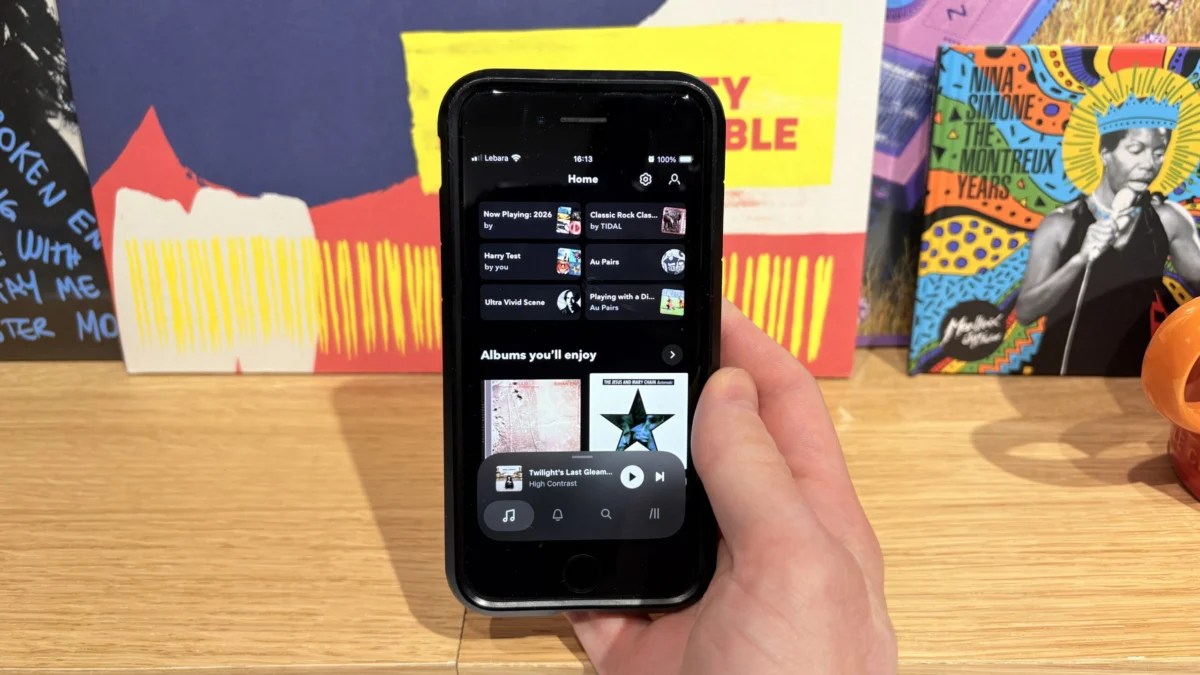
The relationship between high-fidelity music streaming services and their subscribers has long been defined by a stark trade-off: pristine, studio-grade audio quality in exchange for a temperamental, occasionally frustrating user experience. For years, Tidal—the Norwegian-American platform that pioneered mainstream lossless streaming—has sat at the center of this tension. While audiophiles celebrate its extensive high-resolution catalog and class-leading audio bitrates, the service’s mobile and desktop applications have frequently drawn criticism for clunky navigation, erratic device integration, and a notoriously unreliable offline playback system.
However, a recent series of user interface (UI) updates suggests that Tidal is actively working to bridge this usability gap. By overhauling its download engine and introducing a dedicated, isolated offline section, the platform is addressing a critical vulnerability that has long plagued traveling audiophiles. Yet, as the service matures under its parent company, Block Inc., several legacy design choices continue to highlight the ongoing battle between pure high-resolution delivery and seamless consumer convenience.
1. Main Facts: The Offline Playback Overhaul
At the heart of Tidal’s latest software refinement is a reconstructed download interface designed to stabilize offline playback. Historically, one of the most persistent complaints from long-term subscribers was the application’s handling of downloaded content. Users frequently reported a frustrating paradox: despite dedicating gigabytes of local storage to downloading albums and playlists while connected to Wi-Fi, the app would fail to play those same tracks once cellular or wireless connections were severed.
+-------------------------------------------------------------------+
|                     TIDAL OFFLINE PLAYBACK BUG                    |
+-------------------------------------------------------------------+
|  [ Wi-Fi Connection ]  --->  User downloads Hi-Res FLAC tracks.    |
|                                                                   |
|  [ Airplane Mode ]     --->  App attempts to play cached files.   |
|                                                                   |
|  [ System Error ]      --->  App demands network handshake;       |
|                              tracks fail to load.                 |
+-------------------------------------------------------------------+
This issue was particularly acute during air travel or transit through cellular dead zones. The application would occasionally demand a network handshake to verify licensing metadata, rendering cached high-resolution files inaccessible precisely when they were needed most.
The latest update directly addresses this vulnerability by:
- Isolating Downloaded Content: Introducing a revamped, structurally separate "Downloads" section within the user’s library. This dedicated folder acts as an offline sanctuary, bypasses standard network verification checks, and ensures that cached files remain playable.
- Improving Playback Stability: Eliminating the erratic "lottery" system where only select tracks within a downloaded playlist would play offline, while others remained greyed out or threw loading errors.
- Enhancing Offline UI Consistency: Streamlining the transition between online and offline states, preventing the app from freezing or displaying persistent connection-seeking animations when operating without data.
Despite these significant strides, the update is not a complete panacea. Users still face limitations, such as the inability to queue downloaded tracks while offline—a restriction that triggers a prominent network error banner—and a continued lack of individual track-download capabilities.
2. Chronology: The Evolution of Tidal’s Platform
To understand why offline functionality has become a critical battleground for Tidal, it is necessary to examine the platform’s decade-long evolution from an indie upstart to an audiophile staple.
  2014: Launched as "WiMP" by Aspiro; rebranded as Tidal.
    │
  2015: Acquired by Jay-Z's Project Panther Bidco for $56M; artist-first model.
    │
  2017: Partnered with MQA Ltd. to introduce "Tidal Masters" (proprietary codec).
    │
  2021: Jack Dorsey's Square (now Block Inc.) acquired majority stake for $302M.
    │
  2023: MQA entered administration; Tidal transitioned to open-standard HiRes FLAC.
    │
  2024: Consolidated subscription tiers; prioritized UI/UX stability.
The Early Years and the Artist-First Era (2014–2016)
Originally launched in 2014 by the Norwegian company Aspiro, the service was rebranded as Tidal before being acquired in 2015 by Project Panther Bidco, a consortium led by rap mogul Shawn "Jay-Z" Carter, for $56 million. Positioned as a high-fidelity, artist-owned alternative to Spotify, Tidal focused heavily on exclusive album windowing and high-resolution streaming tiers, though its early apps suffered from frequent stability issues.
The MQA Partnership and Integration Era (2017–2022)
In 2017, Tidal integrated Master Quality Authenticated (MQA) technology to power its "Tidal Masters" tier. MQA was designed to package high-resolution audio into smaller, streamable file sizes—a crucial asset at a time when mobile bandwidth was more restricted. However, MQA required proprietary hardware decoding (MQA-enabled DACs) to achieve full playback resolution, sparking intense debate within the audiophile community regarding licensing fees and whether the codec was truly lossless.
The Transition to HiRes FLAC and UI Refinement (2023–Present)
Following MQA Ltd. entering administration in April 2023, Tidal pivotally shifted its primary high-resolution delivery format to open-source, royalty-free High-Resolution FLAC (Free Lossless Audio Codec). While this transition was widely lauded by audio purists, it dramatically increased the average file size of high-resolution streams.
This technical pivot put unprecedented pressure on the application’s offline caching and storage management systems, ultimately necessitating the UI and backend overhauls observed in 2024.
3. Supporting Data: The High-Fidelity Competitive Landscape
The necessity of robust offline management is underscored when analyzing the sheer volume of data required for high-resolution audio compared to standard, lossy streaming services.
| Feature / Metric | Tidal (HiRes FLAC) | Spotify (Premium) | Apple Music (ALAC) | Qobuz (Studio) |
|---|---|---|---|---|
| Maximum Audio Resolution | 24-bit / 192 kHz | 16-bit / 44.1 kHz (Ogg Vorbis) | 24-bit / 192 kHz | 24-bit / 192 kHz |
| Peak Bitrate | Up to 9216 kbps | Up to 320 kbps | Up to 9216 kbps | Up to 9216 kbps |
| Average File Size (3-Min Song) | ~120 MB to 150 MB | ~7 MB | ~120 MB to 150 MB | ~120 MB to 150 MB |
| Offline Individual Track Downloads | No (Requires playlist/album container) | Yes | Yes | Yes |
| Offline Visual Indicators | Dedicated folder only; no inline icons | Inline green arrow | Inline download icon | Inline download icon |
The Storage Burden of Lossless Audio
As shown in the data above, a single 24-bit/192kHz FLAC file on Tidal can consume up to 20 times the storage space of a standard Spotify track. For a user downloading a moderate library of 500 high-resolution songs, this translates to roughly 60 GB to 75 GB of local storage on a mobile device.
Because the storage commitment is so high, any failure in the offline playback engine is magnified for the user. When a Spotify track fails to load, the user has wasted 7 MB of cache; when a Tidal album fails, they have sacrificed gigabytes of storage and significant download time for zero functional return.
4. User Experience Gaps: The Remaining Hurdles
While Tidal’s recent update has stabilized the offline playback of successfully cached files, several design paradigms continue to hinder its usability when compared to older, more mainstream platforms.
The Multi-Step Download Pipeline
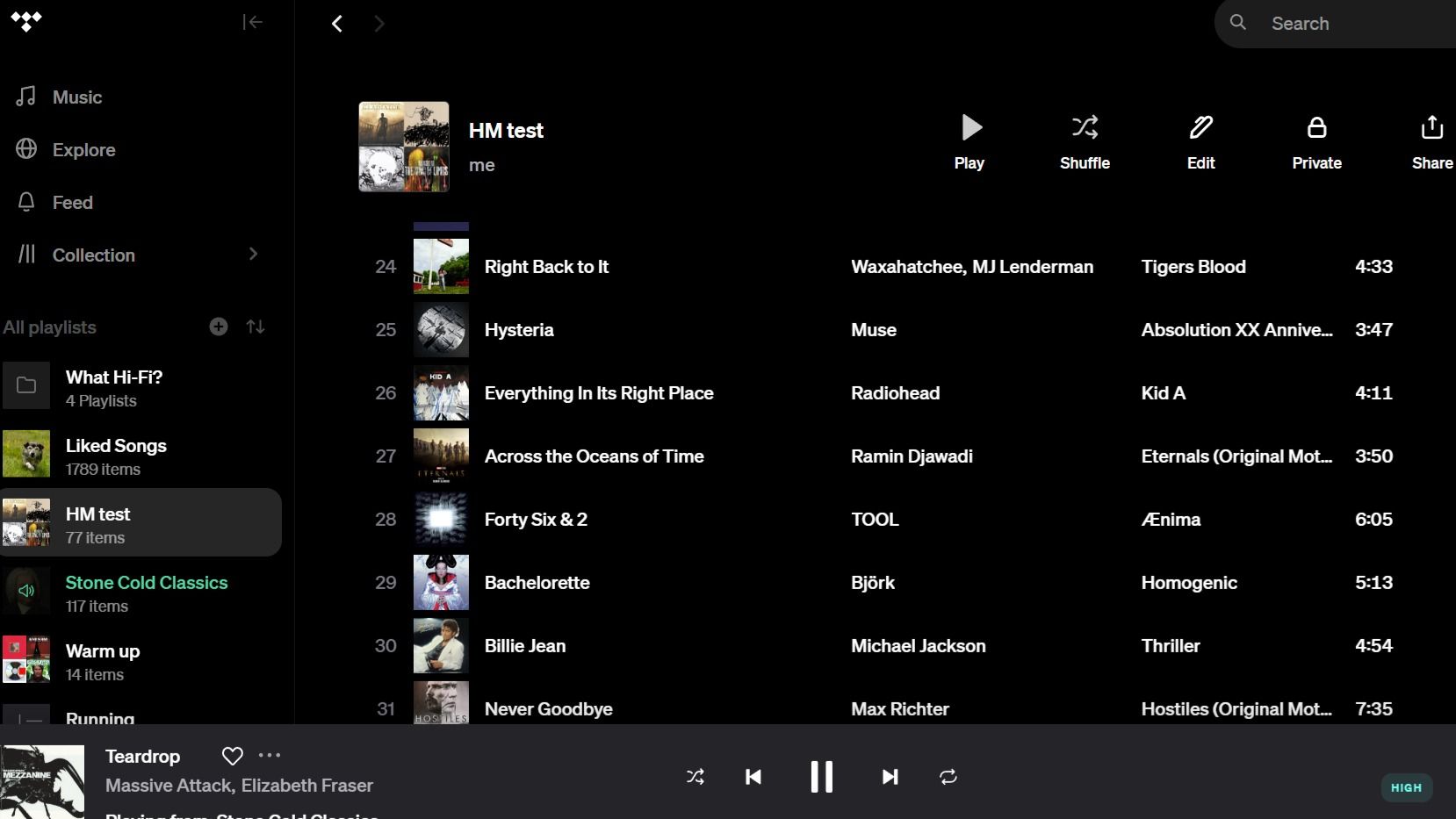
Unlike Spotify, Apple Music, or Qobuz, Tidal does not allow users to download individual tracks directly from search results or general album listings. Instead, a user must first add a song to their "Collection" or insert it into a custom playlist before the download option becomes available.
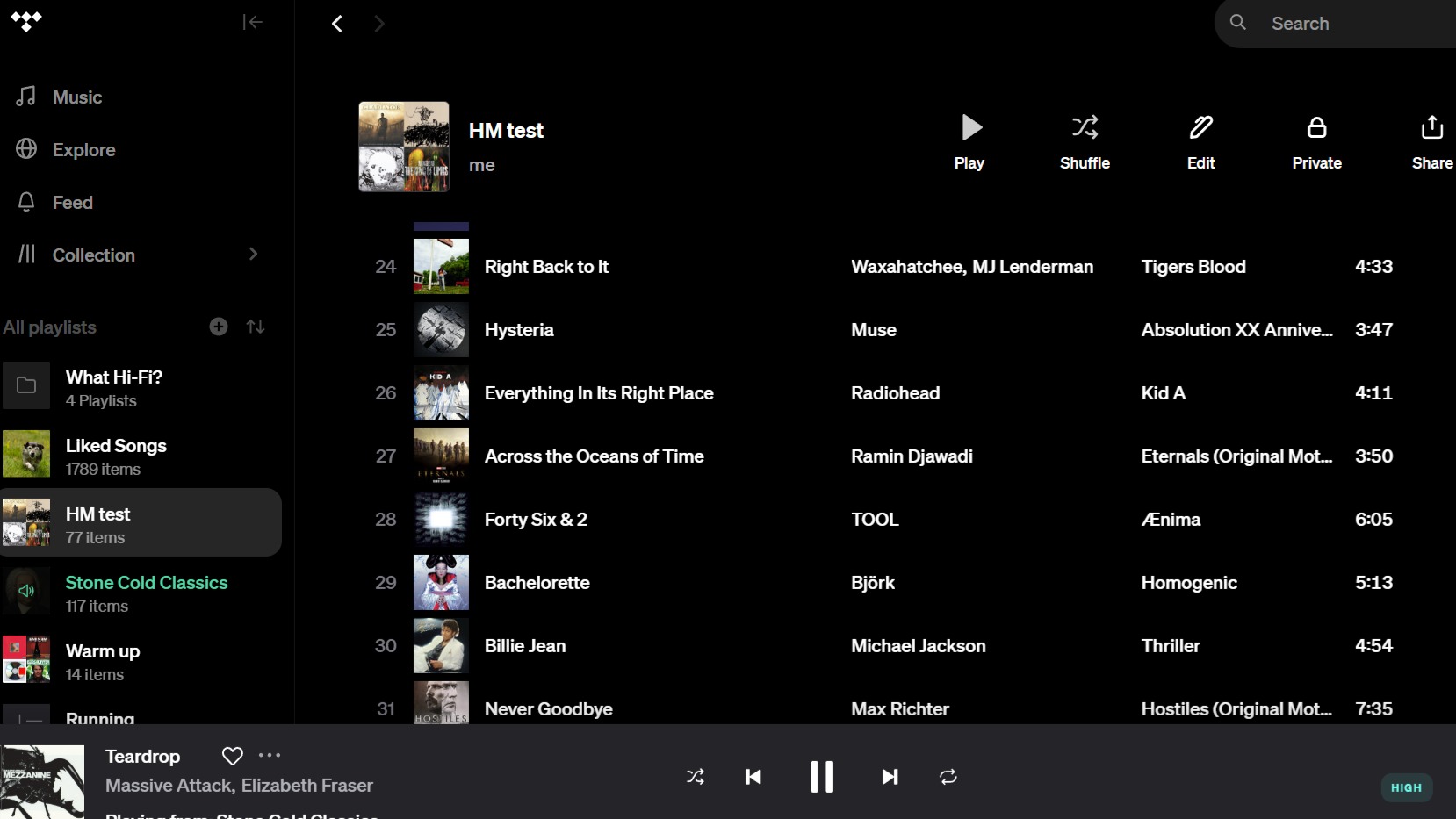
This design choice creates unnecessary friction, forcing users to manage their library structure simply to save a single track for offline listening.
Tidal's Download Process:
[ Find Song ] ──> [ Add to Collection/Playlist ] ──> [ Toggle Download ] (3 Steps)

Spotify's Download Process:
[ Find Song ] ──> [ Tap Download Icon ] (2 Steps)
The Offline Queuing Deficit
Another notable limitation is the app’s behavior when trying to modify the playback queue while offline. If a user is on a flight with no internet connection, attempting to queue a downloaded song using the "Play Next" or "Add to Queue" feature triggers a network error message.
From a software engineering perspective, this suggests that Tidal’s playback queue is still managed via server-side handshakes rather than a localized, on-device database—a significant oversight for a service designed for on-the-go listening.
Missing Visual Metadata
Outside of the dedicated "Downloads" folder, Tidal’s general interface offers no visual cues to indicate which songs are stored locally. On Spotify, a distinct green arrow icon appears next to every downloaded track across the entire interface, whether viewing an artist’s discography or a public playlist. On Tidal, a user browsing their general library must guess which tracks are cached, creating cognitive load and anxiety when preparing to disconnect from a network.
5. Official Responses and Industry Context
Tidal’s developers have acknowledged these interface challenges, adopting a more transparent, developer-log-style approach to updates over the past year. In public release notes and community forums, the platform has emphasized its commitment to iterative UI polishes, noting that transitioning its core user base away from MQA to FLAC required a complete re-evaluation of how the app caches and processes local data.
This engineering focus is also driven by shifting corporate priorities. Under the leadership of Jack Dorsey’s Block Inc., which acquired a majority stake in Tidal in 2021, the platform has sought to position itself not just as a niche audiophile service, but as a sustainable, competitive consumer product.
In April 2024, Tidal consolidated its confusing subscription tiers—merging its $19.99/month "HiFi Plus" tier and its $10.99/month "HiFi" tier into a single, comprehensive $10.99/month plan. This price cut put Tidal in direct competition with Apple Music and Amazon Music, both of which offer lossless audio at no extra charge.
       SUBSCRIPTION CONSOLIDATION (APRIL 2024)

  OLD MODEL:
  [ HiFi Tier: $10.99/mo ] --------> Lossless CD Quality (16-bit/44.1kHz)
  [ HiFi Plus: $19.99/mo ] --------> HiRes FLAC / MQA / Dolby Atmos

  NEW CONSOLIDATED MODEL:
  [ Single Tier: $10.99/mo ] ------> Access to ALL Audio Formats & Quality Tiers
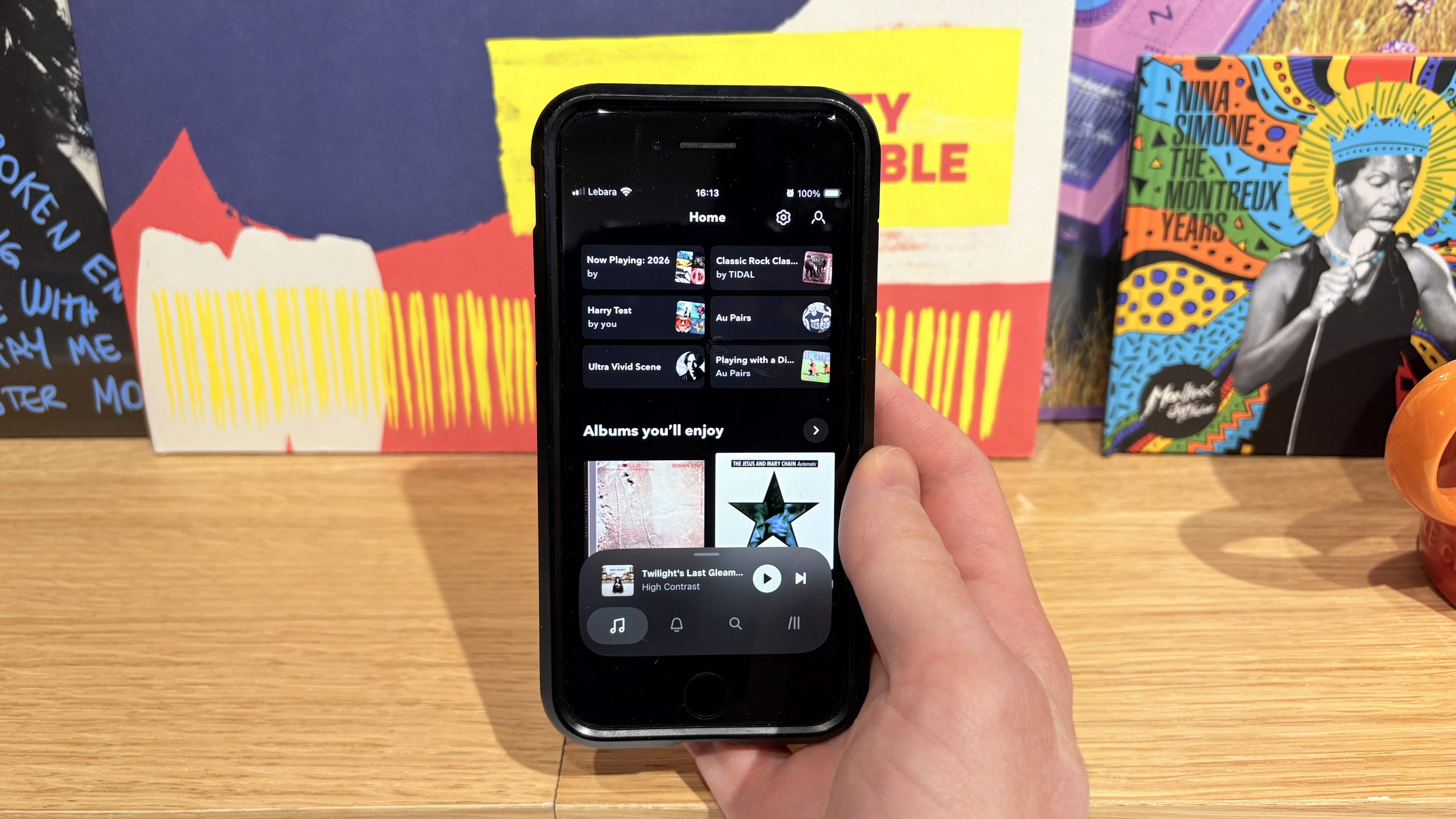
With the pricing playing field now leveled, Tidal can no longer rely solely on its audio quality to retain subscribers. The battle has officially shifted to the user experience. If Tidal’s mobile application remains prone to offline glitches while Apple Music offers a seamless, system-integrated lossless experience, the premium platform risks losing its hard-won market share.
6. Implications for the Audio Streaming Market
The ongoing refinement of Tidal’s offline capabilities carries broader implications for the high-resolution audio market and consumer expectations.
UI/UX as the Ultimate Retention Tool
For years, streaming platforms competed on the size of their music catalogs and the resolution of their audio files. Today, with major labels offering their libraries universally and lossless distribution becoming standardized, software stability and interface design have emerged as the primary metrics for subscriber retention. Tidal’s focus on stabilizing its download engine demonstrates an industry-wide realization: a high-resolution track is only valuable if the software is reliable enough to play it.
The Spatial and Offline Demands of Mobile Hardware
As high-resolution FLAC and spatial audio formats (such as Dolby Atmos) become mainstream, mobile operating systems and streaming applications must evolve to handle massive data throughput. Tidal’s struggles and subsequent updates serve as a blueprint for how niche platforms must adapt their local caching, metadata verification, and memory management to survive on modern smartphone hardware.
The Traveler’s Premium
For frequent travelers, commuters, and those living in regions with spotty cellular infrastructure, reliable offline playback is not a luxury—it is a core utility. By stabilizing its offline performance, Tidal is reinforcing its value proposition to professional and high-income users who are willing to pay for premium audio but demand that it works flawlessly in transit, whether at sea level or 40,000 feet in the air.
Ultimately, Tidal’s latest update is a significant step in the right direction. While quirks like the lack of individual track downloads and offline queuing limitations remain, the platform’s willingness to listen to user feedback and systematically overhaul its legacy code indicates a healthier, more consumer-focused future for high-resolution audio.