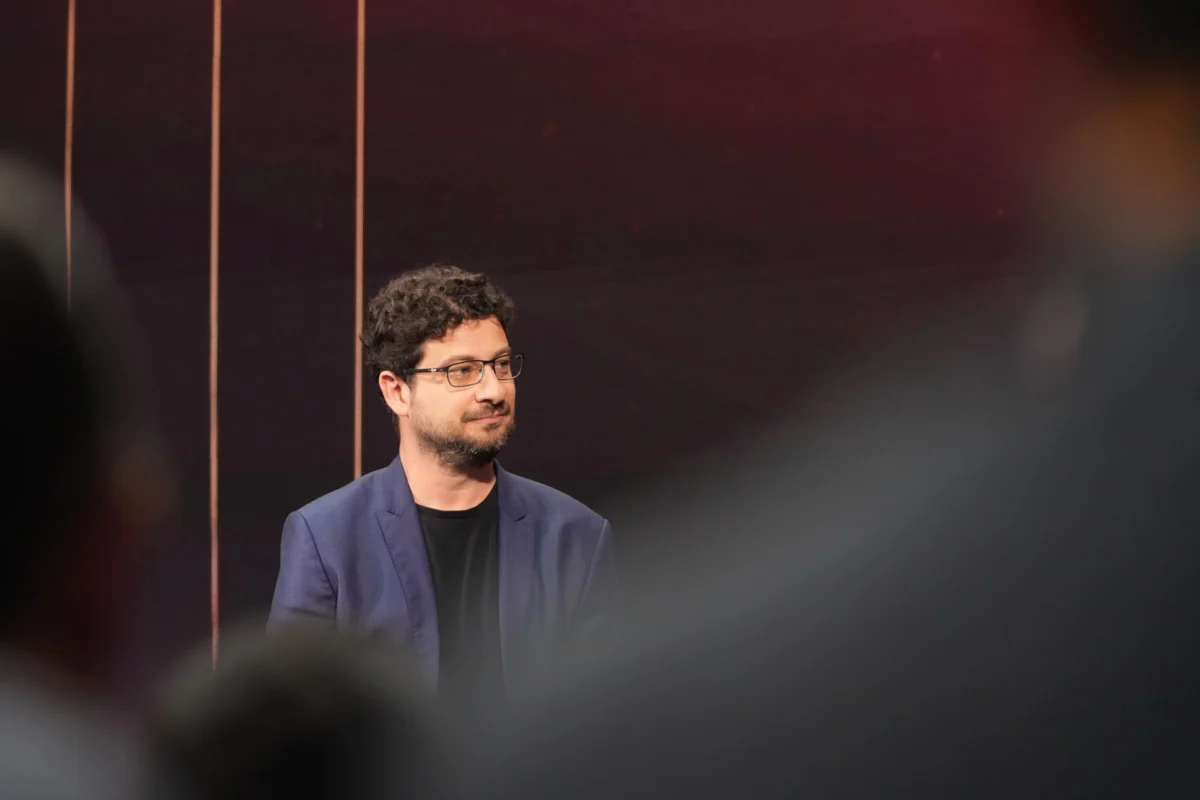
If you have ever opened a video file on a computer, you have likely encountered the orange traffic cone. VLC Media Player, the ubiquitous open-source software, has been downloaded more than 6 billion times, serving as the gold standard for multimedia playback for over two decades. But for Jean-Baptiste Kempf, the lead developer behind that iconic software, the future isn’t about how we watch video—it’s about how we control the physical world.
Kempf, a titan of the open-source community and a serial entrepreneur, is currently steering his latest venture, Kyber, toward a bold objective: becoming the foundational infrastructure layer for the next generation of autonomous devices. As the era of "Physical AI" dawns, Kempf believes that the world is on the precipice of a seismic shift, where hundreds of millions of robots and drones will occupy our streets, skies, and workspaces. To make this vision a reality, he is building the digital connective tissue required to synchronize, manage, and command these machines in real time.
The Core Proposition: Bridging the Gap Between Compute and Action
At its heart, Kyber is an SDK (Software Development Kit) designed to synchronize video feeds, audio streams, sensor telemetry, and control inputs with extreme precision and minimal latency.
The fundamental problem Kempf seeks to solve is one of spatial and computational distribution. In modern industrial and robotic applications, the human operator, the centralized compute engine (often powered by AI), and the physical device being controlled are rarely in the same location. This geographical separation introduces latency, which, in the context of high-speed robotics or mission-critical drones, can be the difference between a successful operation and a catastrophic failure.
"If you control things in the real world, every millisecond matters," Kempf explains. The company’s name, a nod to the "Kyber crystals" that power lightsabers in the Star Wars universe, reflects this obsession with speed and energy. By applying the rigorous optimization techniques he honed while developing VLC and later as CTO of the cloud gaming startup Shadow, Kempf is creating a "real-time internet" for hardware.
A Chronology of Innovation: From VLC to the Physical Web
The genesis of Kyber can be traced back to the intersection of two distinct domains: high-performance video streaming and IoT (Internet of Things) optimization.
- The VLC Legacy: Kempf’s work on VLC established his reputation for creating software that could run efficiently on almost any hardware configuration, regardless of age or processing power. This "universal compatibility" is a cornerstone of the Kyber philosophy.
- The Shadow Era: During his tenure as CTO at Shadow, a cloud-based gaming platform, Kempf grappled with the challenges of streaming high-fidelity, interactive experiences to users over variable network conditions. The lessons learned in keeping latency imperceptible for gamers proved directly transferable to the remote operation of drones and robotic arms.
- The Birth of Kyber: Recognizing that the market lacked a standardized, scalable infrastructure for remote device control, Kempf began building Kyber as a side project. It was designed to move beyond the siloed, custom-built solutions that large corporations had previously developed in-house.
- Capital Infusion: The potential of this technology did not go unnoticed. In recent months, Kyber secured a $5 million funding round led by Lightspeed Venture Partners. This backing—from the same firm that has invested in AI powerhouses like Anthropic and Mistral AI—signals a broader industry consensus that the "brains" of AI are useless without the "nerves" provided by platforms like Kyber.
Supporting Data: Why Scale is the New Frontier
While many companies have successfully deployed small fleets of remote-operated vehicles, they have largely relied on bespoke, proprietary software that becomes unwieldy at scale.
Kempf points to the current limitations of the industry: "The largest fleets today have maybe 2,000 or 3,000 vehicles. Imagine you need to manage millions of them; that’s not the same thing."
Managing millions of devices requires a radical rethink of observability. In a traditional setup, if a fleet manager needs to monitor 100 drones, they might get by with rudimentary dashboards. When that number climbs into the millions, the system must be capable of autonomous self-monitoring. If a robot begins to drift or a sensor reports an anomaly, the infrastructure must be able to handle the telemetry, diagnose the issue, and push a firmware patch or control adjustment without human intervention.
Kyber is built to handle this "N-to-Many" complexity. By utilizing a hybrid model that combines open-source accessibility with enterprise-grade productization, Kyber allows developers to start small while ensuring the architecture is ready for the "millions-of-units" scale.
Official Responses and Strategic Focus
The investment from Lightspeed serves as a major validation of the startup’s trajectory. In a public statement on LinkedIn, the VC firm noted, "Physical AI is only as good as the underlying systems running it." This sentiment highlights a shift in venture capital interest from the generative AI models themselves toward the infrastructure that allows those models to interact with the physical world.
Kyber has strategically divided its focus into three primary pillars:
- Robotics: Providing the low-latency control loops necessary for dexterous and autonomous movement.
- Drones: Enabling remote command and control for logistics, inspection, and surveillance, often over unpredictable cellular networks.
- Remote IT Access: Moving beyond the legacy solutions provided by companies like Citrix. Kempf sees the current remote access market as fragmented and inefficient, and he aims to provide a standardized, high-performance alternative that works across diverse hardware ecosystems.
To achieve these goals, the company has adopted a "Forward-Deployed Engineer" (FDE) model, similar to that of Palantir. By embedding engineers directly with clients in defense, telecommunications, and AI, Kyber ensures that its SDK is not just a black box, but a tailored solution that integrates seamlessly into complex existing infrastructures.
Implications for the Future of Work and Autonomy
The implications of Kyber’s technology extend far beyond the technical hurdle of latency. By standardizing how we communicate with physical devices, the company is effectively lowering the barrier to entry for the robotics industry.
The Death of the "Custom Silo"
Historically, any company wanting to deploy a massive fleet of robots had to reinvent the wheel, spending millions of dollars and years of engineering time to build a proprietary communications layer. By offering a shared, hardened infrastructure, Kyber allows companies to focus their resources on their specific domain—be it warehouse automation, agricultural harvesting, or remote surgery—rather than the underlying plumbing of remote connectivity.
The Rise of the Autonomous Workforce
As AI agents become more sophisticated, the role of the human operator will evolve from "driver" to "supervisor." When an AI manages a fleet of millions of devices, the observability tools provided by Kyber will become the primary way we monitor the state of our physical infrastructure. This shift will likely lead to a surge in efficiency, but it also places a massive burden of reliability on the infrastructure provider. If Kyber’s software fails, the robots stop, the deliveries halt, and the "Physical AI" grinds to a halt.
A Global Infrastructure
With headquarters in Paris and additional offices in San Francisco and Singapore, Kyber is positioning itself as a global utility. The diversity of its client base—spanning defense contractors to telco providers—suggests that the need for secure, low-latency remote control is a universal pain point.
Conclusion: The Final Piece of the Puzzle
Jean-Baptiste Kempf’s journey from the icon of the open-source multimedia world to the architect of the robotic age is a logical progression. VLC taught the world how to consume media; Kyber is teaching the world how to command reality.
As the lines between software and physical machinery continue to blur, the companies that succeed will be those that can master the space between the two. By building the infrastructure that everyone else can use, Kempf is not just launching a company; he is setting the standard for how the next generation of intelligent machines will live, work, and move among us. The "traffic cone" may have dominated the screen, but the "Kyber crystal" is poised to define the physical world.