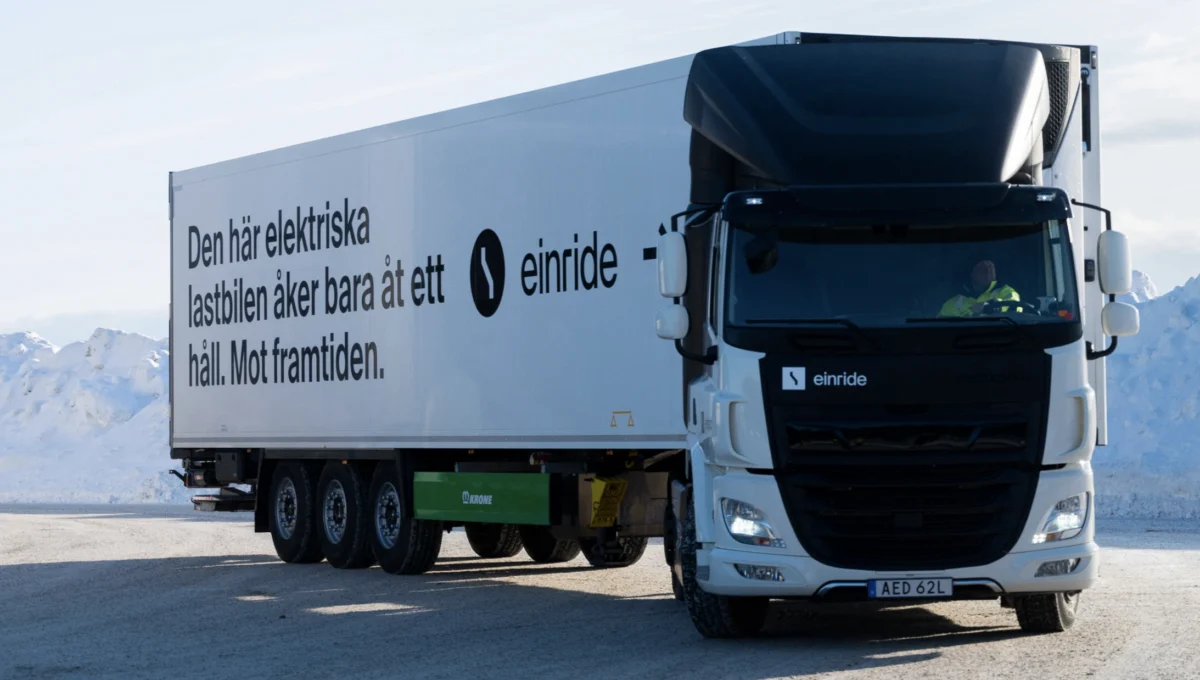
In a strategic move to solidify its position as a global leader in autonomous and electric freight, Swedish logistics technology firm Einride has announced its acquisition of Flipturn, a venture-backed EV charging software startup. The all-stock deal, valued at approximately $38 million, marks a significant milestone for Einride, representing its first major acquisition since its successful public debut on the Nasdaq exchange this past June.
By integrating Flipturn’s sophisticated charging management platform into its existing infrastructure, Einride aims to streamline the complex transition to electric heavy-duty trucking for corporate fleets. As the transportation industry faces mounting pressure to decarbonize, this acquisition provides Einride with the "missing link" in its vertically integrated ecosystem: intelligent energy orchestration.
The Core of the Deal: Merging Logistics with Energy Management
The acquisition, expected to close within the current month, brings a team of 17 specialized software engineers and industry experts from Flipturn into the Einride fold. According to spokespeople, Flipturn will continue to operate under its current team structure, ensuring that the integration process remains seamless for existing clients.
Founded in 2022, Flipturn quickly distinguished itself by raising $15.5 million in venture capital to tackle the "bottleneck" of commercial EV charging. Its platform is built on the Open Charge Point Protocol (OCPP), the industry-standard language that allows management software to communicate with a wide array of hardware. This interoperability is crucial, as it allows fleet managers to monitor the health of charging infrastructure, analyze vehicle battery states in real-time, and synchronize charging schedules with route data and energy storage systems.
For Einride, the acquisition is more than a technology purchase; it is a commitment to "Energy-as-a-Service." By controlling the software that dictates when and how a truck charges, Einride can optimize energy costs, prolong battery life, and ensure that fleets remain operational without the downtime typically associated with inefficient charging cycles.
Chronology: From Autonomous Pods to Full-Stack Logistics
To understand the weight of this acquisition, one must look at Einride’s rapid trajectory over the past decade.
- 2016–2019: The Disruptor Emerges. Einride made global headlines with its futuristic, cabless autonomous "pods." These vehicles, which lack a driver’s seat and rely entirely on remote operation and AI, challenged the traditional design of heavy-duty trucks.
- 2020–2022: Global Scaling. Moving beyond the pilot phase, Einride began deploying fleets for industry giants, including Heineken, PepsiCo, and Carlsberg Sweden. The company expanded its operations across Europe, North America, and the United Arab Emirates.
- June 2026: Public Debut. Einride successfully completed its merger with a blank-check company, listing its shares on the Nasdaq. This transition to a publicly traded entity provided the capital necessary for aggressive expansion and strategic acquisitions.
- April 2026: The Amazon Partnership. Einride landed a major operational partnership with Amazon, integrating its fleet and Saga AI software into Amazon’s "Relay" freight network. Unlike traditional truck sales, this model allows Einride to own and manage the assets, providing a service-oriented solution to one of the world’s largest logistics operations.
- Current Day: The acquisition of Flipturn signals a pivot toward "infrastructure mastery," moving the company away from being a mere operator of trucks to becoming an end-to-end energy and logistics provider.
Supporting Data: Why Charging Software Matters
The transition to electric heavy-duty vehicles (HDVs) is hampered by two primary challenges: range anxiety and grid capacity. Commercial fleets cannot afford the "plug and pray" method of residential EV charging.
Flipturn’s software addresses three critical performance metrics:
- Hardware Interoperability: Because Flipturn uses the OCPP standard, it can aggregate data from chargers of different manufacturers. This is vital for large logistics hubs that often utilize a mix of legacy and modern charging hardware.
- Energy Load Balancing: Large-scale commercial charging can strain local electrical grids. Flipturn’s platform integrates with on-site solar and stationary battery storage to peak-shave, preventing expensive utility surcharges.
- Predictive Analytics: By integrating vehicle battery telemetry with delivery schedules, the software can predict exactly when a truck needs to be plugged in and for how long, ensuring the vehicle is at 100% capacity exactly when the driver is ready to start their route.
With a current fleet of 200 heavy-duty electric trucks in operation globally, Einride manages a massive amount of data. Flipturn’s integration allows this data to flow directly into the "Saga AI" platform, which powers Einride’s logistics network.
Official Responses and Strategic Vision
In a statement regarding the deal, Einride CEO Roozbeh Charli emphasized that the acquisition is a "decisive step in our U.S. scaling strategy." The company’s leadership views the U.S. market as the most significant growth opportunity for electric freight, provided that the necessary charging infrastructure can be reliably deployed.
"By bringing Flipturn into the Einride family, we are no longer just delivering trucks; we are delivering the energy ecosystem that makes those trucks commercially viable," said a company spokesperson. "We are removing the friction that prevents logistics companies from retiring their diesel fleets."
The acquisition is structured as an all-stock deal, a move that indicates Flipturn’s leadership team has confidence in the long-term value of Einride’s publicly traded stock. It also allows Einride to preserve its cash reserves for further expansion and capital-intensive infrastructure projects in the North American market.
Implications: The Future of the "Electric Big Rig"
The implications of this move for the broader logistics industry are profound.
1. The Death of the "Truck-Only" Model
For years, OEMs (Original Equipment Manufacturers) have focused on the truck itself—horsepower, range, and cabin comfort. Einride’s approach suggests that the truck is merely a component in a much larger energy puzzle. Future logistics clients will likely demand a "turnkey" solution where the software, the hardware, and the energy management are bundled together.
2. Influencing the Laggards
Many large shipping and logistics firms remain apprehensive about transitioning to electric fleets due to the perceived complexity of charging infrastructure. By providing a software layer that simplifies this, Einride makes the transition "low-risk." This could accelerate the adoption of electric heavy-duty vehicles among the mid-market logistics players who have been waiting for a more mature ecosystem.
3. Strengthening the "Saga" Platform
Einride’s Saga AI is the "brain" of its operations. With the addition of Flipturn, Saga gains a deeper level of insight into energy consumption. This data-rich environment will likely attract more enterprise partners like Amazon, who rely on real-time data to maintain the tight margins of the freight business.
4. A Shift in Competitive Moats
As more electric trucks hit the road, the competitive advantage will shift from whoever builds the "best truck" to whoever manages the "best fleet network." By controlling both the autonomous dispatch software and the charging infrastructure management, Einride is building a significant "moat" around its business model. Competitors will struggle to match this level of integration without significant R&D spending or similar acquisitions.
Conclusion: A Turning Point for Green Logistics
The acquisition of Flipturn represents a coming-of-age for Einride. Having moved from a boutique innovator of "pod" technology to a public company managing massive enterprise freight networks, the company is now doubling down on the reality that logistics is fundamentally an energy management challenge.
As the industry moves toward 2030, the success of the electric freight transition will not be measured solely in vehicle sales, but in the efficiency of the charging networks supporting them. With this $38 million deal, Einride has signaled that it intends to be the architect of that network, providing the software foundation upon which the next generation of global freight will run. For customers, investors, and competitors alike, the message is clear: the electric trucking revolution is no longer just about the vehicle—it’s about the entire energy grid that powers the road ahead.