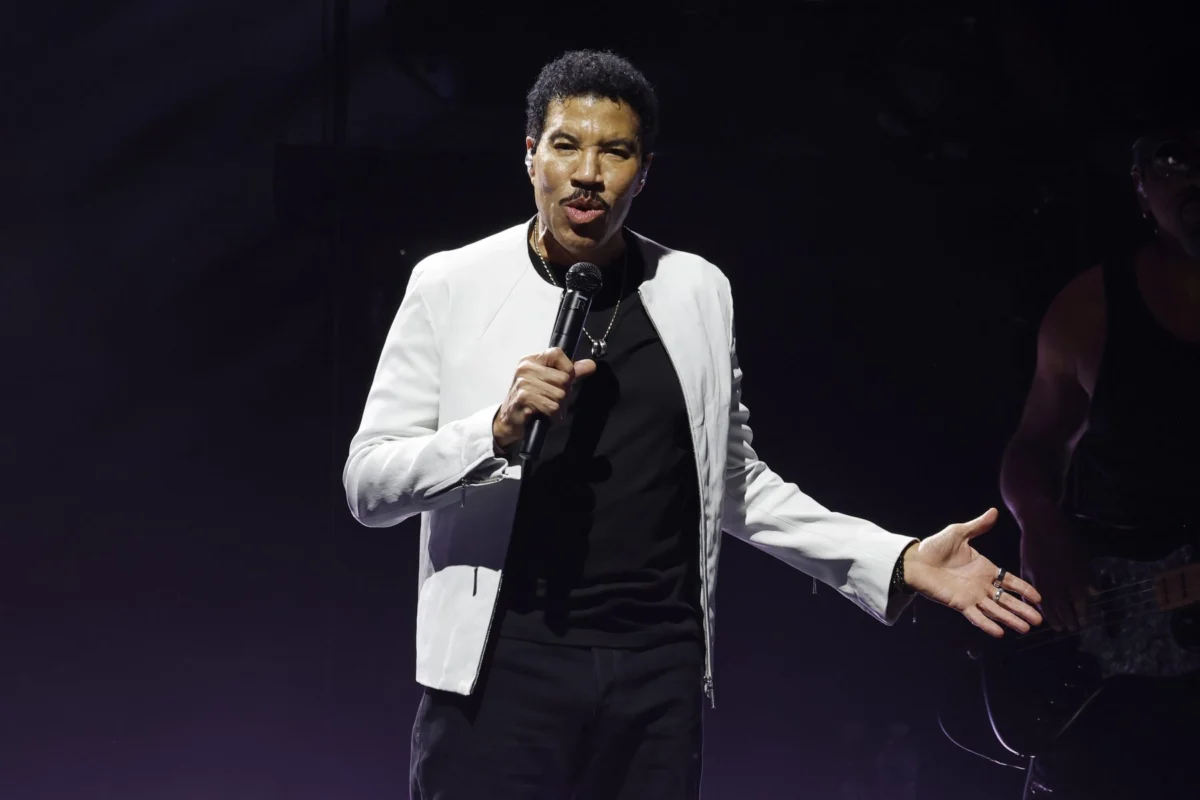
In a move that underscores the rapidly escalating tension between artistic legacy and the unchecked rise of artificial intelligence, music legend Lionel Richie has taken a preemptive legal stand. On Thursday, June 11, 2026, the Grammy-winning icon filed four separate trademark applications with the U.S. Patent and Trademark Office (USPTO). These filings are not for mere logos or merchandise, but for the very essence of his career: the specific, recognizable cadence and melody of his voice singing his most iconic choruses, including "Hello," "Say You, Say Me," "Easy," and "All Night Long (All Night)."
Richie’s decision to pursue federal trademark protection for his vocal performances places him at the forefront of a growing movement among A-list celebrities—including Taylor Swift and Matthew McConaughey—who are increasingly viewing traditional copyright and publicity laws as insufficient tools to combat the era of deepfakes and AI-generated vocal cloning.
The Chronology of a Digital Arms Race
The legal landscape regarding artificial intelligence has shifted dramatically over the past 24 months. As AI models have evolved from experimental tools to sophisticated engines capable of mimicking human speech and singing patterns with frightening accuracy, the music industry has found itself in a defensive posture.
- Early 2025: The proliferation of unauthorized "AI covers"—where models trained on the catalogs of famous artists produced songs that sounded indistinguishable from real studio recordings—triggered widespread industry alarm.
- Late 2025: High-profile cases of celebrity likenesses being used in non-consensual advertising and deepfake videos prompted a wave of discussions regarding the "Right of Publicity."
- March 2026: Taylor Swift, responding to the potential for AI-driven impersonation, made headlines by filing to trademark specific vocal phrases associated with her brand, such as "Hey, it’s Taylor."
- June 11, 2026: Lionel Richie formally submits his applications to the USPTO, seeking to solidify legal ownership over the audio profiles of his most famous hooks.
This timeline reflects a reactive strategy. For decades, artists relied on standard copyright to protect the composition of their songs. However, copyright does not protect the unique timbre, resonance, or stylistic delivery of a human voice. As generative AI can now "learn" these characteristics to produce entirely new songs in an artist’s voice, the legal protections that once sufficed have become obsolete.
The Mechanics of Voice Trademarks
Trademark law is historically designed to protect identifiers of source—logos, brand names, and slogans that help consumers distinguish between competing products. Applying this to human sound is a complex, often murky legal endeavor.
Josh Gerben, a prominent trademark attorney who has monitored these filings, characterizes this shift as the most significant challenge to the music industry since the dawn of Napster. "Left unchecked, the AI platforms could use the artists’ images and voices to create any type of content imaginable," Gerben notes. "This could lead to revenue losses and, more importantly, irreparable reputational damage. The goal of these filings is to establish a legal barrier that prohibits AI platforms from allowing users to generate content that replicates the specific, recognizable persona of the artist."
The process is rigorous. To succeed, Richie must prove that the sounds in question act as "source identifiers." In layman’s terms, he must demonstrate that when the public hears those specific notes or that specific inflection, they associate it uniquely with Lionel Richie, just as they would a corporate logo. The USPTO will scrutinize whether these sounds are truly functional as trademarks or if they are simply famous lyrics that do not qualify for such protection.

Supporting Data: The Limitations of Publicity Rights
To understand why Richie and others are turning to trademarks, one must look at the weaknesses in existing "Publicity Rights." Currently, the protection of an individual’s identity is managed through a patchwork of state-level laws. In many jurisdictions, these laws are limited in scope, often only applying to unauthorized commercial advertisements or endorsements.
The limitations are stark:
- Jurisdictional Inconsistency: Publicity rights in New York may differ significantly from those in California or Tennessee, making it difficult for an artist to have a unified national defense against AI models based on servers located elsewhere.
- The "Creative" Loophole: AI developers often argue that generative content falls under "transformative use" or "creative expression," creating a legal gray area that frequently leaves the original artist without recourse in a courtroom.
- Scale of Infringement: While a lawsuit against a single unauthorized advertisement is manageable, the internet allows for the instantaneous generation of thousands of AI-cloned songs, making traditional litigation a "whack-a-mole" strategy that is both costly and inefficient.
Official Responses and Industry Perspectives
While Richie’s camp has remained silent following the initial filings, industry experts are vocal about the implications. Ruth Zive, Chief Marketing Officer of the voice platform Voices, emphasizes that these filings are as much about "provenance" as they are about protection.
"What Richie is really establishing is a verifiable link between the person and the sound," Zive explains. "The infrastructure to solve this crisis needs to be built at the platform level. We need clear consent, documented agreements, and fair compensation models before any voice is used to train a model. Richie’s trademark filings are an early, aggressive move in a much larger structural shift."
Meanwhile, Washington remains a focal point. The proposed NO FAKES Act (Nurture Originals, Foster Art, and Keep Entertainment Safe) aims to create a federal framework for the protection of likeness and voice. However, progress has been slow, leaving artists to fend for themselves through whatever creative legal avenues are currently available.
The Implications: A New Era for Creative Ownership
The implications of Richie’s filings extend far beyond his own catalog. If these trademarks are granted, it could set a precedent that fundamentally changes how the entertainment industry operates in the age of AI.
1. The Death of the "Generic" Sound-Alike
If major stars successfully trademark their vocal signatures, AI platforms may be forced to implement stricter filtering protocols. If a platform allows a user to generate content that infringes on a trademarked vocal profile, that platform could face liability for "trademark dilution" or "contributory infringement," providing a much stronger legal hammer than traditional copyright lawsuits.

2. The Commercialization of AI Training
Conversely, this shift could lead to a future where artists "license" their vocal trademark to AI companies. Instead of fighting the technology, artists could opt to be the official, compensated providers of their own digital twins, ensuring that their likeness is used with their blessing and under their quality control.
3. The Burden on the USPTO
The USPTO is currently bracing for a wave of similar applications. This will likely lead to new examination guidelines regarding "sound marks." The administrative burden will be massive, and the legal standards will likely tighten, requiring artists to provide extensive evidence of the commercial value of their vocal identity.
4. Cultural Preservation
There is also a profound cultural dimension to this struggle. For artists like Lionel Richie, their voice is their legacy. Allowing that voice to be manipulated to sing political propaganda, offensive content, or simply low-quality material that dilutes the artist’s discography is a threat to their life’s work. Trademarking serves as a way to "fence off" the artistic estate from the digital wild west.
Conclusion
Lionel Richie’s move to trademark his voice is a bellwether for the music industry. It highlights a critical realization: in the age of AI, the old boundaries between a person, their art, and their brand have dissolved. As the technology continues to outpace the law, artists are forced to invent new ways to assert ownership over their own identity.
Whether or not the USPTO approves these specific filings, the message to Silicon Valley and the AI development community is clear: the era of "free-for-all" data scraping and vocal synthesis is coming to an end. The battle for the future of the human voice has officially begun, and it will be fought in the courtrooms and patent offices of the world just as fiercely as it is being debated in the recording studios of Los Angeles. As the industry awaits the outcome of these filings, one thing is certain—the definition of what it means to "own" a voice is being rewritten in real-time.