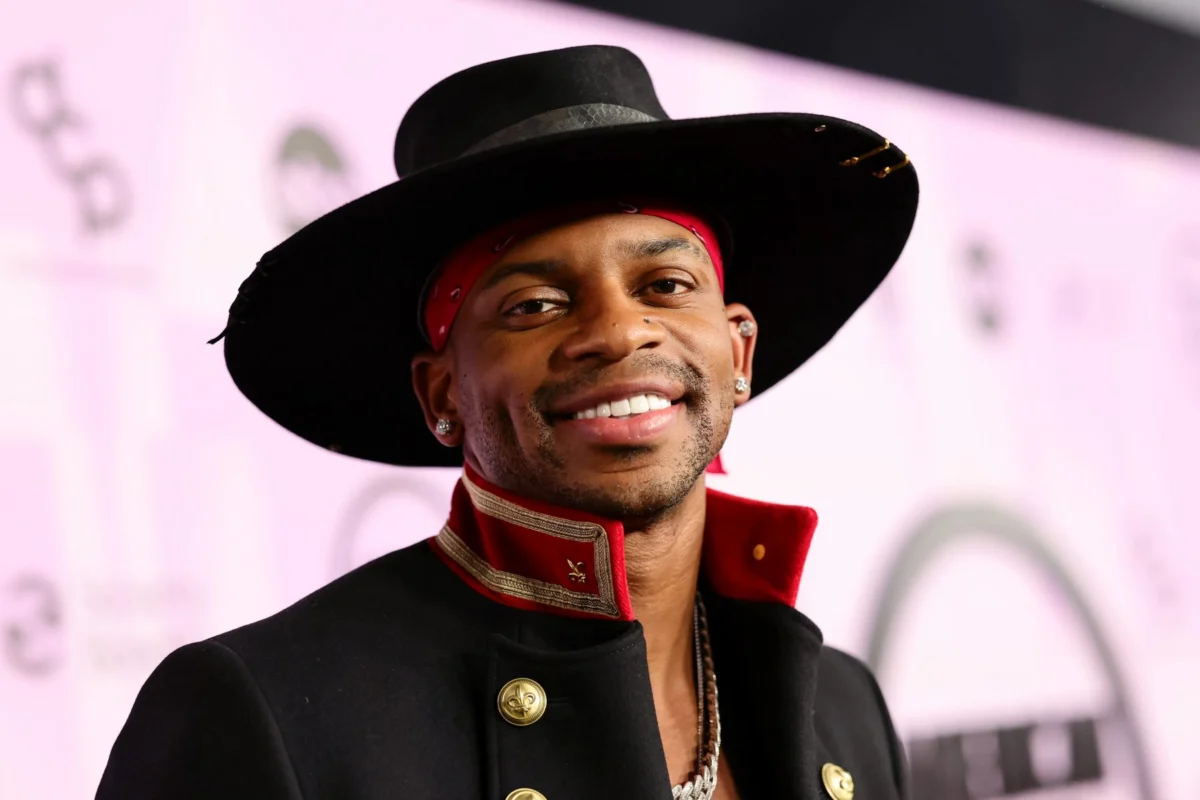
The landscape of modern country music has been rocked by the conclusion of a high-profile legal battle involving former rising star Jimmie Allen. On Thursday, June 18, a federal judge ordered the singer to pay $1.8 million in damages to a woman who accused him of sexual assault and non-consensual filming. The ruling marks a definitive and devastating chapter in a case that has seen the once-celebrated artist’s career dismantled amid allegations of predatory behavior and systemic negligence.
Judge Aleta A. Trauger’s final order confirms that the financial penalty is composed of $597,000 in compensatory damages and a significant $1.2 million in punitive damages. The judgment follows a default ruling issued last August, after Allen repeatedly failed to adhere to court deadlines, missing key opportunities to present a defense against the harrowing accusations brought forth by the plaintiff, identified in court documents as "Jane Doe."
A Pattern of Conduct: The Core Allegations
The lawsuit, which originated in 2023, centers on an encounter in a Las Vegas hotel room. According to the plaintiff’s filing, the incident began with what she believed to be a consensual sexual encounter. However, the situation turned into a violation of trust and autonomy when, according to the court’s findings, Allen engaged in sexual acts that explicitly disregarded the victim’s boundaries.
The most egregious aspect of the complaint involves the allegation that Allen surreptitiously set up his cellphone to record the encounter without the woman’s knowledge or consent. The magistrate judge’s report, which was adopted by Judge Trauger, described the "reprehensibility" of Allen’s actions as "severe."
"The evidence shows that Mr. Allen intentionally and surreptitiously filmed his sexual encounter with plaintiff without her consent," the court report stated. "These intentional acts caused plaintiff to suffer extreme emotional distress and trauma."
The court’s decision to award punitive damages—which are designed to punish a defendant for particularly malicious or oppressive behavior—reflects the gravity of the invasion of privacy. By recording the act, Allen did not merely violate the victim’s physical autonomy; he created a permanent, digital record of a non-consensual act, exacerbating the long-term psychological impact on the victim.
Chronology of a Career Collapse
The timeline of Jimmie Allen’s downfall is inextricably linked to the legal pressures he faced throughout 2023 and 2024. Once a darling of the country music industry with a string of No. 1 hits on the Billboard Country Airplay charts, Allen’s reputation plummeted as two separate, serious lawsuits surfaced in rapid succession.

2020–2022: The Initial Accusations
The first of these suits came from Allen’s former day-to-day manager, who alleged a persistent pattern of sexual harassment and abuse spanning 18 months. Allen vehemently denied those claims and eventually filed a countersuit for defamation. That specific case was settled in 2024, but the damage to his professional standing was already well underway.
2023: The Second Lawsuit and Industry Isolation
The second lawsuit, involving the Vegas incident, proved to be the final straw for the industry’s patience. As the allegations became public, Allen was swiftly dropped by his record label, BBR Music Group, as well as his management company, booking agency, and publicist. The music industry, often criticized for being slow to react to allegations of misconduct, took a firm stance, effectively distancing itself from the artist.
2024–2025: Legal Evasion and Default
As the legal proceedings intensified, Allen’s conduct in court became increasingly erratic. He cycled through multiple legal teams and repeatedly missed deadlines for providing discovery materials and sitting for depositions. In February 2025, a legal representative for the singer cited "economic hardships" resulting from the mounting litigation, indicating that Allen was struggling to secure legal counsel.
The judge’s decision to rule by default in August 2025 was a direct result of this lack of cooperation. When a defendant refuses to engage with the judicial process, they effectively waive their right to contest the claims, leading the court to find them liable by default for battery, assault, invasion of privacy, and the intentional infliction of emotional distress.
Breakdown of Damages and Expert Assessment
The $1.8 million award is meticulously calculated to address both the past and future impact of the assault on the victim’s life. The breakdown, as recommended by the magistrate judge and upheld by the court, includes:
- Past Medical and Therapeutic Expenses: $3,505.
- Emotional Distress (Compensatory): $253,142.
- Future Therapeutic and Rehabilitative Costs: $340,200.
- Punitive Damages: $1,193,694.
The inclusion of over $340,000 for future treatment underscores the court’s recognition that the trauma inflicted is not a temporary setback but a condition requiring long-term intervention. Elizabeth Fegan, the attorney representing Jane Doe, emphasized that the total amount reflects the severity of the violation.
"This award recognizes the profound trauma Allen inflicted on Jane Doe 2 for his own sexual gratification," Fegan said in a statement to Billboard. "It underscores a fundamental principle at the heart of this case: it is never acceptable to record sexual activity without a partner’s consent."

Official Responses and Legal Perspectives
While the plaintiff’s legal team has been vocal about the importance of the ruling, the defense side has been notably silent. Following the verdict, no representative for Jimmie Allen immediately returned requests for comment.
Legal observers note that the "default" nature of the judgment is a rare and extreme outcome in civil litigation. It signals to the court that the defendant has no viable legal defense or has abandoned the effort to defend himself entirely. By failing to appear or produce evidence, Allen left the court with no choice but to accept the plaintiff’s account as the factual basis for the judgment.
Broader Implications for the Music Industry
The Jimmie Allen case serves as a landmark moment in the #MeToo era of the music industry. For years, allegations against prominent figures were often handled behind closed doors through non-disclosure agreements or private settlements. The public nature of this litigation, culminating in a multi-million-dollar court-ordered payment, sets a precedent for how the industry and the legal system handle accusations of non-consensual recording and sexual assault.
1. The Death of Silence
The fact that this case went to a full damages ruling demonstrates that victims are increasingly willing to push through the entirety of the legal process, even when faced with high-profile defendants. It also highlights that the music industry is now under greater pressure to perform due diligence before associating with artists who face credible allegations of misconduct.
2. The Weight of Digital Evidence
The case highlights the growing intersection of sexual assault and technology. The "surreptitious recording" aspect of the case adds a layer of violation that resonates with a modern audience aware of the dangers of digital privacy breaches. This ruling reinforces that the law views the act of recording intimate encounters without consent as a severe, distinct tort, regardless of the sexual act itself.
3. The End of the "Rising Star" Trajectory
For Jimmie Allen, the financial penalty is merely the most recent blow in what is a permanent career erasure. The loss of his label, booking agency, and management, followed by this massive judgment, ensures that his return to the spotlight is, for all intents and purposes, impossible. The case stands as a cautionary tale about the cost of professional and personal misconduct in the digital age.
As the legal proceedings conclude, the focus shifts to whether the judgment can be collected. Given the singer’s earlier claims of financial hardship, the process of enforcing the $1.8 million award may prove to be the next hurdle for the plaintiff. However, for many in the industry, the moral and legal verdict has already been delivered: the court has affirmed that the dignity and autonomy of the individual are paramount, and the violation of those rights carries a price that cannot be negotiated away.