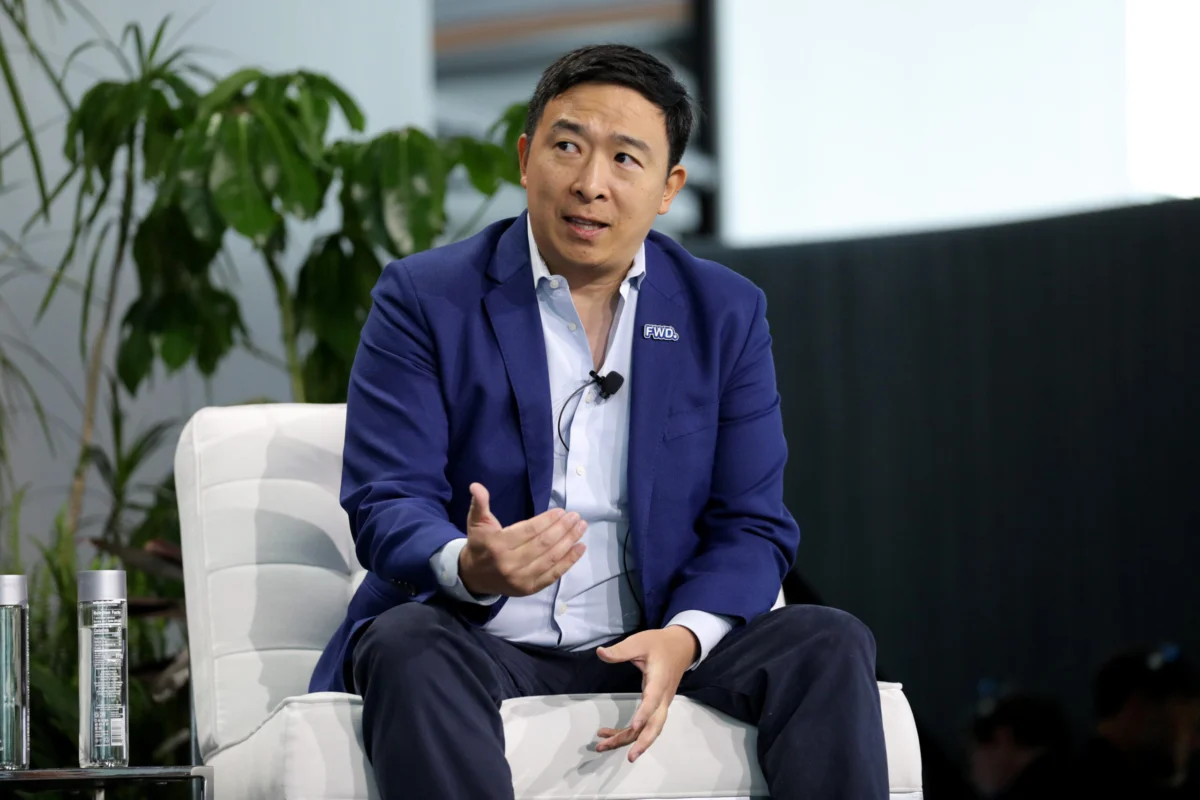
In the halls of Silicon Valley, where the prevailing mantra has long been "growth at all costs," a former presidential candidate is quietly attempting to turn the venture capital playbook on its head. Andrew Yang, the entrepreneur and political firebrand who first rose to national prominence on a platform of Universal Basic Income (UBI), is now betting his reputation on a radical business thesis: that the next great wave of startup innovation won’t come from extracting value from consumers, but from systematically giving it back.
At the core of Yang’s new venture, Noble Mobile, lies a deceptively simple question that challenges the extractive nature of modern capitalism: What if a business model was designed not to maximize profit margins, but to minimize the cost of living for its users?
The Inspiration: The "Cost Plus" Philosophy
Yang’s pivot from political advocacy to entrepreneurship didn’t emerge in a vacuum. He cites Mark Cuban’s Cost Plus Drugs as the blueprint for this emerging economic category. Cuban’s pharmacy venture, which sells life-saving medications at a transparent, modest markup rather than inflating prices to bear what the market can withstand, signaled a shift in how essential services could be delivered.
Yang applied this "Cost Plus" lens to his own life, identifying a list of fundamental pillars that anchor the average American household budget: housing, education, food, fuel, transportation, media, and wireless services. "These are the things we all spend money on," Yang noted in a recent appearance on TechCrunch’s Equity podcast. By targeting these essential categories, Yang believes entrepreneurs can tap into a "rich vein of opportunity" while simultaneously solving the looming crisis of wage stagnation and inflationary pressure.
Chronology of a Disruption
The path to Noble Mobile began long before the launch button was pressed in September 2025. It was forged in the heat of the 2020 presidential campaign, where Yang warned that artificial intelligence and automation would inevitably compress wages and displace vast swaths of the American workforce.
- 2020: Yang’s presidential campaign centers on UBI, framing it as a necessary firewall against the AI-driven displacement of human labor.
- 2024: As AI capabilities accelerate, Yang realizes that the speed of government policy is insufficient to address the cost-of-living crisis. He pivots toward private-market solutions.
- September 2025: Noble Mobile launches. The business model is a mobile virtual network operator (MVNO) that provides high-quality cell service at a fraction of the cost of legacy carriers, with a unique "cash-back" mechanism for users who consume less data.
- 2026: Noble Mobile forms a strategic partnership with the Light Phone, a minimalist device manufacturer. The move is designed to combat "doomscrolling" while simultaneously rewarding users for reduced digital footprint, bridging the gap between hardware and service.
The Economics of Redistribution
Noble Mobile is not a charity; it is a for-profit entity that aims to prove that ethical, consumer-centric business models can scale. The company currently reports "thousands and thousands" of subscribers and millions in revenue.
The mechanism is straightforward: The company is unit-profitable per customer, but it deliberately shares a portion of that margin back with the subscriber. Yang argues that this is a customer-acquisition and retention strategy that transcends traditional marketing. When a user feels they are being treated as a partner rather than a resource to be harvested, they become brand advocates.
The long-term financial impact is significant. Yang posits that if an average American household saves $50 a month through these types of cost-reduction models, and that money is invested and compounded over 40 years, it equates to roughly $24,000—a meaningful down payment on retirement. In an economy characterized by extreme financial precarity, this "small" saving becomes a structural upgrade to personal finance.
Supporting Data: The AI-Driven Wage Gap
The necessity of this model is underscored by current economic data. As AI continues to optimize corporate operations, the benefits are accruing largely to the owners of capital, while labor faces increasing pressure.
Yang’s thesis is supported by a growing list of companies that occupy this "deflationary" space:
- Noble Mobile: Reducing the cost of connectivity.
- Cost Plus Drugs: Reducing the cost of healthcare.
- Misfits Markets: Reducing the cost of food by tackling supply chain inefficiencies.
- Minimalist Hardware: Reducing the cost and psychological burden of excessive digital consumption.
These companies represent a shift from the "attention economy"—where businesses profit by keeping users online as long as possible—to a "utility economy," where value is measured by how effectively the company helps the user solve a problem with minimal friction and expense.
Official Perspectives and Investor Skepticism
Despite the logical appeal of the model, Yang admits that the venture capital community remains largely skeptical. The current market is hyper-focused on AI infrastructure and high-margin software-as-a-service (SaaS) models.
"I had at least one investor say to me around Noble Mobile, ‘Love you, Andrew, want to work with you—if you could just make this an AI company, we’ll invest,’" Yang shared. This anecdote highlights the "groupthink" that dominates Silicon Valley, where investors often prioritize AI-branded products over businesses that solve tangible, real-world human problems.
However, the narrative is beginning to shift. Even the most ardent proponents of aggressive capital extraction are realizing that a terminal decline in consumer purchasing power is unsustainable. If the average American cannot afford the products that AI companies produce, the entire economic system risks collapse.
Yang points out that some of his conversations with high-net-worth individuals have turned surprisingly pragmatic. "There are some folks I know in Silicon Valley who are open to this for a variety of reasons," Yang said, noting that some are motivated by the fear of civil unrest. "They just don’t want to have to hire private security."
Implications for the Future
The implications of Yang’s "Noble" approach are twofold. First, it suggests that the private sector may be better positioned than the government to facilitate the redistribution of wealth. Yang remains a vocal proponent of UBI, yet he expresses doubt about whether government bureaucracy is the right tool to deliver it efficiently. If the money can move directly from a company to a consumer through lower costs and direct rebates, it bypasses the "holes" of government waste.
Second, it challenges the next generation of founders to think beyond the "extraction" paradigm. Yang encourages entrepreneurs to move away from the pursuit of vanity metrics and toward building enterprises that foster genuine human well-being.
"Think bigger and more broadly about trying to tackle problems," Yang advised. "Don’t subscribe so much to groupthink, because there are some valuable opportunities out there that don’t look like the traditional startup."
As the integration of AI into the global economy continues, the divide between those who own the machines and those who are serviced by them will only grow wider. Andrew Yang’s experiment with Noble Mobile represents a potential bridge across that divide. Whether or not it succeeds on a massive scale remains to be seen, but it has already succeeded in posing a question that every startup founder will eventually have to answer: In an age of automated abundance, is your company helping the customer thrive, or is it just another tax on their existence?